






Aktualności
Wycieczka do Wiednia

- Szczegóły
- Opublikowano: sobota, 04, czerwiec 2016 00:04
Szkolna wycieczka do Wiednia
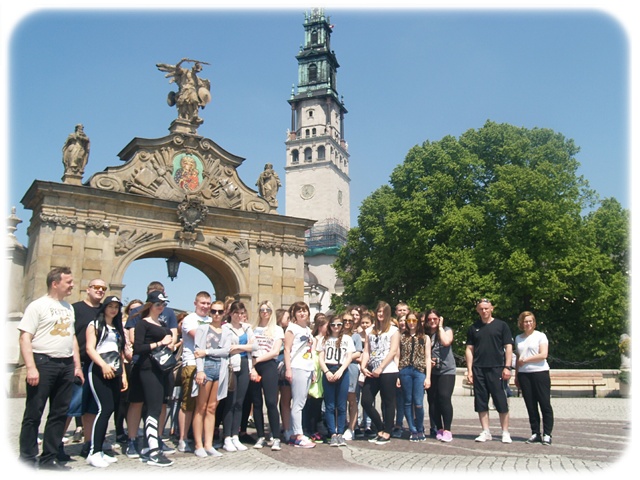
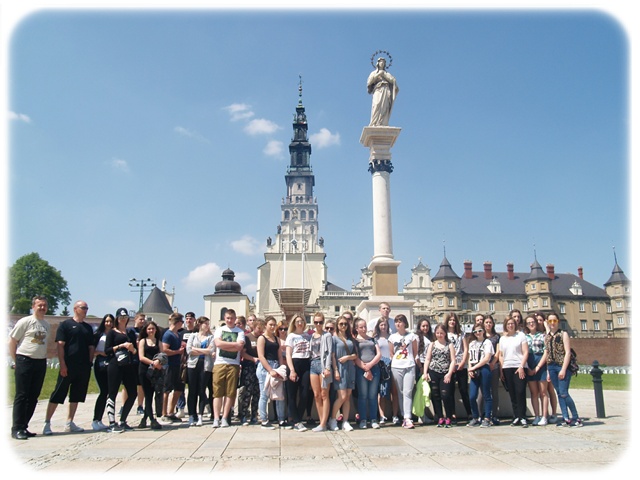
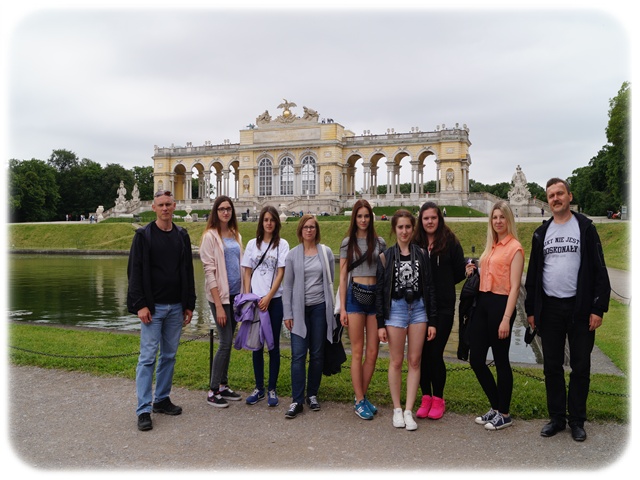
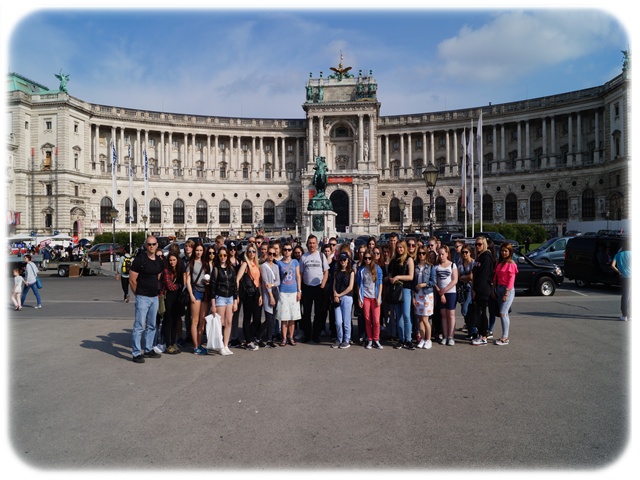
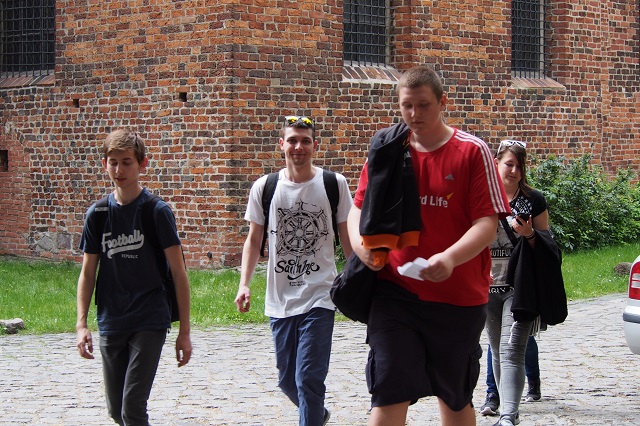
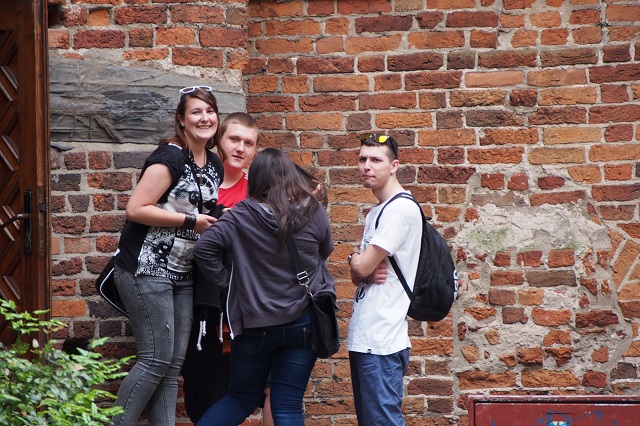
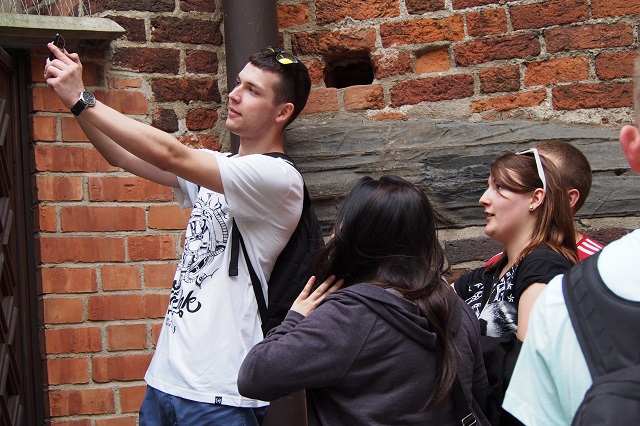
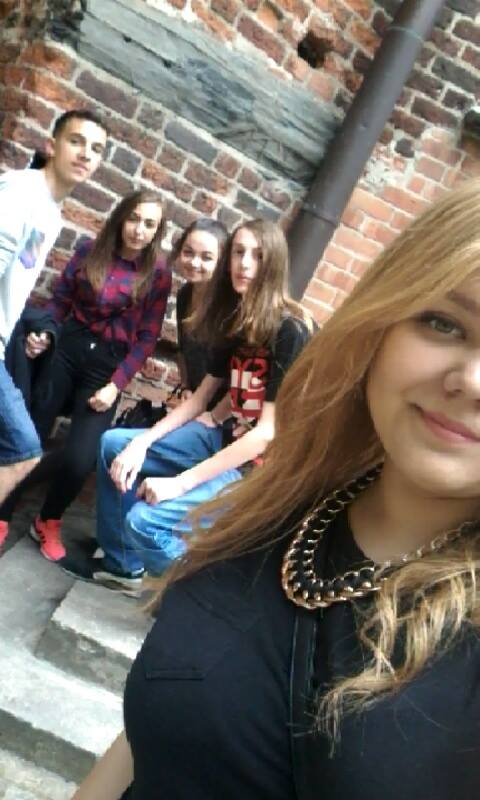
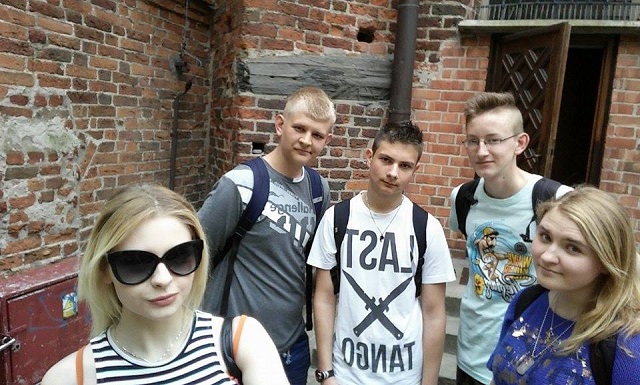
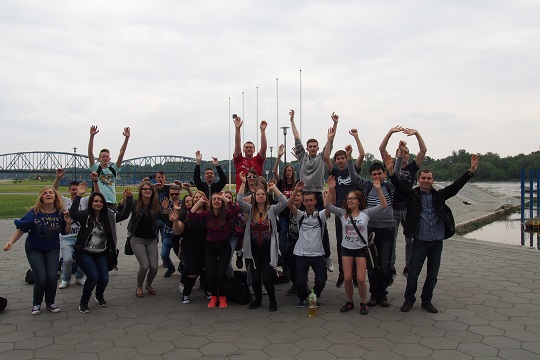
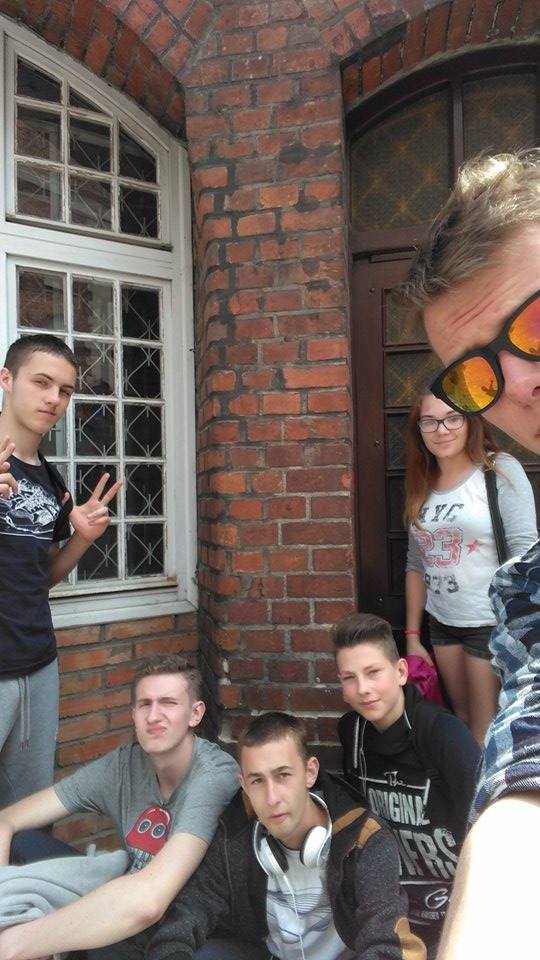
W dniach 24-27 maja odbyła się szkolna wycieczka, której głównym punktem programu było jedno z najczęściej odwiedzanych miast - Wiedeń.
Naszą podróż zaczęliśmy, wyjeżdżając z Torunia wczesnym rankiem. Do Cieszyna dojechaliśmy późnym popołudniem, po drodze zatrzymując się w Częstochowie, by zwiedzić Sanktuarium Matki Bożej Częstochowskiej na Jasnej Górze z cudownym wizerunkiem Matki Bożej.
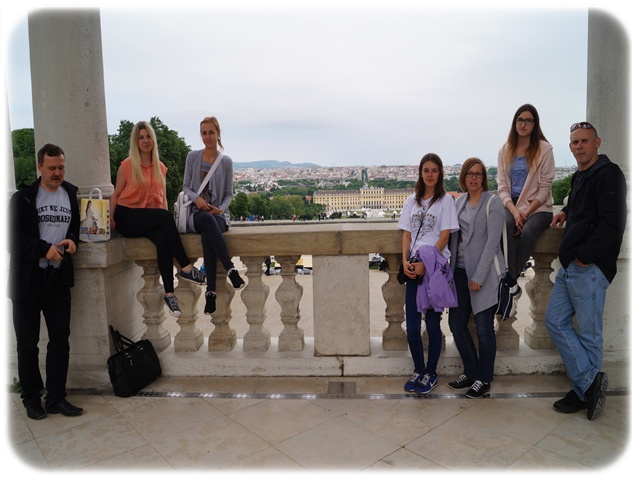
Drugi dzień to najbardziej oczekiwany punkt programu - Wiedeń. Do austriackiej granicy jechaliśmy przez Czechy. Zgodnie z harmonogramem o 9 byliśmy na miejscu, czyli na Wzgórzu Kahlenberg. Tam zwiedziliśmy Kościół Św. Józefa i Muzeum, w którym można zobaczyć szablę Jana III Sobieskiego. Ze wzgórza rozciągał się piękny widok na Wiedeń.
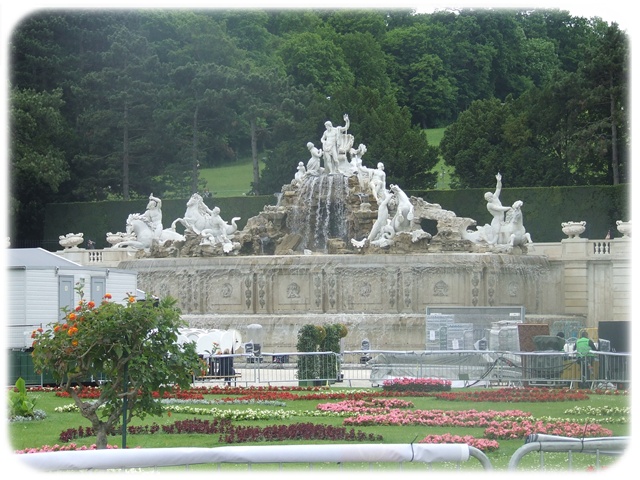
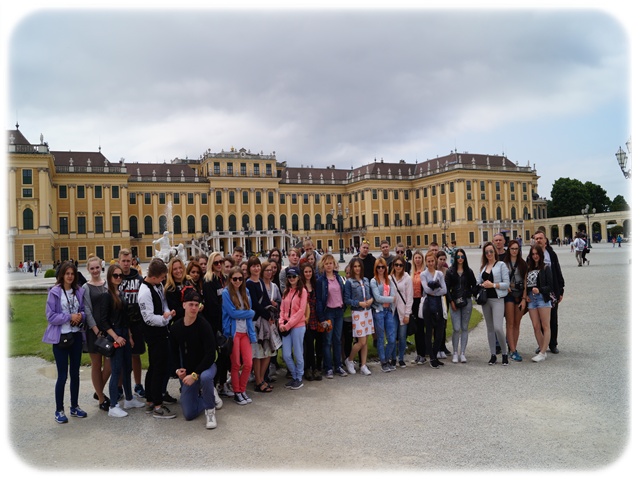
Następnie udaliśmy się do jednego z najważniejszych zabytków Wiednia – pałacu Schonbrunn. Pałac i ogrody wpisano na listę Światowego Dziedzictwa UNESCO. Pałac Schonbrunn był ulubioną letnią rezydencją cesarzowej Sissi. Poza wspaniałymi komnatami, są tu takie atrakcje jak: park krajobrazowy, palmiarnia, ogród zoologiczny.
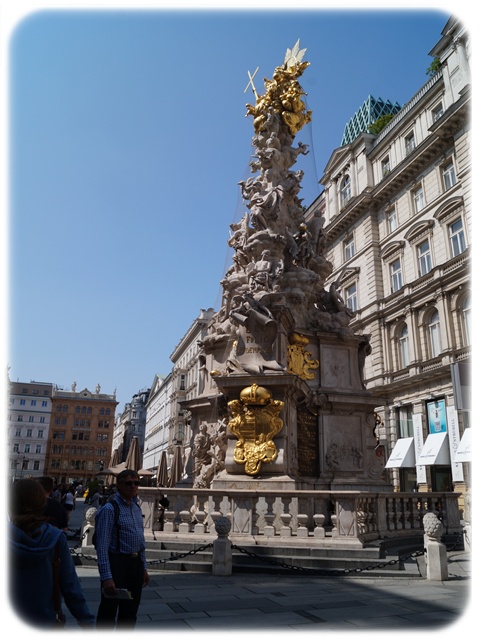
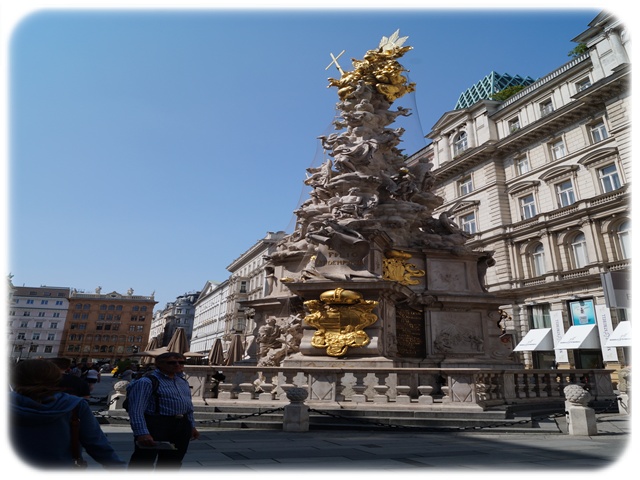
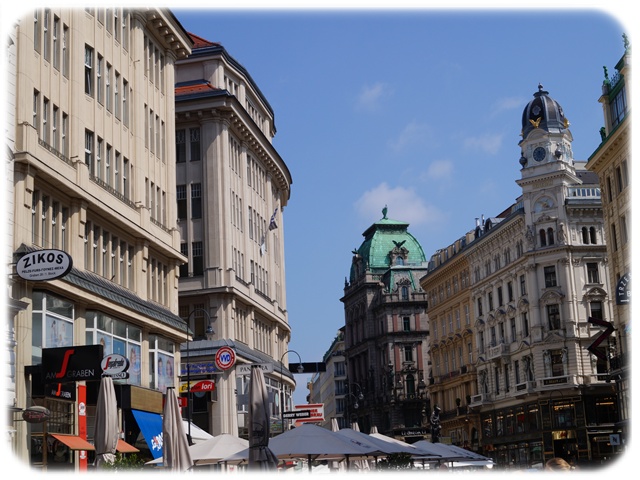
Zwiedzanie Starego Miasta zaczęliśmy od Stephans Platz. Tutaj znajduje się katedra św. Szczepana, symbol Wiednia, jedna z najpiękniejszych budowli gotyckich w Europie. Charakterystycznym fragmentem katedry jest 138-metrowa wieża, którą budowano przez 75 lat. Następnie przeszliśmy na ulicę Golden Quarter, na której znajdują się luksusowe sklepy i markowe butiki. Na placu Graben mijaliśmy Kolumnę św. Trójcy, zwaną Kolumną Morową, wzniesioną na cześć ofiar dżumy w 1679 r. Wycieczkę po Wiedniu zakończyliśmy na zwiedzaniu rezydencji Habsburgów, barokowo-klasycystycznego pałacu Hofburg z ogrodem różanym oraz Hiszpańskiej Szkoły Jazdy na placu Św. Michała.
Dzień trzeci zaczęliśmy od zwiedzania Wisły i Skoczni Narciarskiej im. Adama Małysza w Wiśle Malince. Na punkt widokowy wjechaliśmy wyciągiem krzesełkowym, z którego podziwialiśmy widok na cale miasto. Następnie udaliśmy się do Hotelu Gołębiewski, jednego z największych hoteli w Polsce. Popołudnie spędziliśmy na zwiedzaniu Cieszyna oraz Cieszyna Czeskiego. Oprócz Rynku udaliśmy się na Cmentarz Żydowski, na którym zachowało się ponad 1500 nagrobków. Zwiedziliśmy również Wzgórze Zamkowe, a na nim m.in. XI-wieczną romańską rotundę św. Mikołaja, która pełniła funkcje kaplicy (jej podobizna zdobi m.in. rewers banknotu 20-złotowego), gotycką wieżę zamkową z XIV wieku (tzw. Wieża Piastowska), pałac Habsburgów z XIX wieku, fragmenty piastowskiego zamku, park angielski z pomnikami przyrody.
W ostatni dzień, w drodze powrotnej ,pojechaliśmy do Wadowic, gdzie zwiedziliśmy Muzeum Dom Rodzinny Jana Pawła II, z którego wyszliśmy bardzo wzruszeni oraz skosztowaliśmy słynnych papieskich kremówek.
Organizatorem wycieczki byli p. Jacek Czarnomski oraz p. Agnieszka Dutkiewicz, Agnieszka Turska i Tomasz Knut.




Projekty 2015 a
- Szczegóły
- Opublikowano: czwartek, 02, czerwiec 2016 01:30




PROJEKT ESP „Das Bild der Anderen”
 Od stycznia 2015 r. uczniowie klasy II C wraz z p. Izabelą Koziarzewską biorą udział w projekcie pt.: "Das Bild der Anderen". Współpraca młodzieży ZSG-H oraz Højmarkskolen w Danii odbywa się za pośrednictwem mediów elektronicznych. Projekt realizowany jest w ramach European School Project.
"Das Bild der Anderen" przeznaczony jest dla grup młodzieży, które używają języka niemieckiego jako języka obcego. Działaniom ESP patronuje Goethe Institut.
Cele projektu:
- podniesienie jakości pracy na lekcjach języka niemieckiego
- wyjście poza ściany klasy w nauczaniu języka obcego
- nawiązanie nowych przyjaźni między uczniami z różnych stron świata
- nawiązanie partnerstwa między szkołami
Na czym polega współpraca?
Najpierw szkoły, które nawiązały kontakt, uzgadniają temat projektu. Następnie uczniowie dobierają się parami i wymieniają e-maile na interesujące je zagadnienia. Warunkiem przeprowadzenia projektu jest korespondencja w języku niemieckim, opracowanie wspólnych wniosków lub produktu końcowego. Dzięki wymianie wiadomości, młodzież wzbogaca swoją wiedzę o innych krajach i doskonali umiejętności językowe.
Tematem projektu ZSG-H oraz Højmarkskolen jest: „Essgewohnheiten und traditionelle Speisen in Polen und Dänemark”, czyli „Nawyki żywieniowe i tradycyjne potrawy w Polsce i Danii”. Jego rezultatem będzie opracowane przez uczniów przy pomocy technologii informacyjno-komunikacyjnych portfolio.

 Deutsche Zusammenfassung:
„Das Bild der Anderen“ entstand 1989 im Rahmen des Eurpean Schools Project (ESP). ESP wurde 1988 von Mitarbeitern der Universität Amsterdam gegründet. Das Ziel des Projekts ist:
- Qualität des Unterrichts zu verbessern
- Außerschulische Realität ins Klassenzimmer zu holen
- Neue Kontakte mit Schülern aus anderen Ländern aufzunehmen
- Neue Partnerschaften mit Schulen aus aller Welt anzuknüpfen
Das Medium: E-Mail-Austausch
„Das Bild der Anderen“ ist ein Projekt für Lerngruppen, die möglichst im gleichen Alter sind und beide Deutsch als Fremdsprache benutzen. Es ist nicht für Muttersprachler aus deutschsprachigen Ländern gedacht.
Das Thema unseres Projekts ist: „Essgewohnheiten und traditionelle Speisen in Polen und Dänemark“.
Die Bedingung ist: die Schüler werden auf Deutsch schreiben und zu den vorgeschriebenen Themen korrespondieren. Die Vorteile aus dem Projekt sind viele.
- Die Schüler können ihre Schreibfertigkeiten verbessern, Wortschatz festigen und Sprachkenntnisse verbessern.
- Die Jugendlichen verlieren die Angst vor dem Schreiben und werden selbständiger.
Das Lernen wird lebendiger und die allgemeine Motivation Deutsch zu lernen steigt, da die Kommunikation echt ist.
Die Lernenden beschäftigen sich mit der Kultur und dem Alltag des Briefpartners, es werden Kontakte angeknüpft und manchmal auch Freundschaften geschlossen.
Jedes Jahr nehmen mehrere tausende Deutschlernende aus der ganzen Welt an "Bild"-Projekten teil. Die folgenden Abbildungen stellen die Entwicklung der letzten Jahre dar bzw. die Länder, aus denen die meisten ProjektemacherInnen kommen.

W wyniku oceny wniosków złożonych w ramach Akcji 1 - "Mobilność edukacyjna" Programu Erasmus+ Młodzież w roku 2014, projekt Zespołu Szkół Gastronomiczno-Hotelarskich pt.: "Smaki dzieciństwa" został zatwierdzony do realizacji.
 PROFIL UCZESTNIKÓW PROJEKTU
Uczestnikami projektu pt.: "Smaki dzieciństwa" jest młodzież uczęszczająca na zajęcia kół zainteresowań w Zespole Szkół Gastronomiczno-Hotelarskich w Toruniu, młodzież zaangażowana w działalność Samorządu Szkolnego oraz redakcji gazetki szkolnej Gimnazjum im. Anny Krepsztul w Butrymańcach na Litwie oraz uczniowie klas o profilu turystycznym w Strednej Odbornej Skole w Nowym Mieście nad Wagiem w Słowacji.
TEMAT I CELE PROJEKTU
Tematem projektu jest niematerialne kulturowe dziedzictwo: zwyczaje, przekaz ustny, wiedza i umiejętności oraz związane z nimi przedmioty i przestrzeń kulturowa, które są uznane przez wspólnotę, grupę lub jednostki.
Główne cele projektu „Smaki dzieciństwa” to: kształtowanie poczucia tożsamości – własnego „ja” poprzez poznawanie dziedzictwa kulturowego oraz zbudowanie mostu pokoleniowego osób z różnych środowisk: młodzieży uczestniczącej w projekcie oraz seniorów ze Stowarzyszenia "Wspólnota Polska" w Toruniu. Inne cele to rozwijanie przedsiębiorczości i kreatywności uczestników projektu poprzez promowanie alternatywnych form twórczości artystycznej np. audycji radiowej, fotografii, sztuki kulinarnej.
OPIS DZIAŁAŃ I ZAKŁADANE REZULTATY
W czasie projektu zaplanowano warsztaty art-edukacyjne, w czasie których zewnętrzny cel edukacyjny zostanie zastąpiony celem wewnętrznym: rozwojem osobowości, wrażliwości, empatii i tolerancji. Te warsztaty mają być wstępem do realizacji międzypokoleniowej i międzyetnicznej sesji zdjęciowej. Kolejnym etapem będzie nauczenie się podstawowych technik fotografowania - korekty zdjęć i przygotowania do publikacji podczas warsztatów fotografii cyfrowej w CSW "Znaki czasu" w Toruniu. Następnie odbędzie się sesja zdjęciowa w przestrzeni Starówki Torunia - miejsca wpisanego na Listę Światowego Dziedzictwa Kulturowego i Naturalnego UNESCO. Z wykonanych w czasie sesji zdjęć powstanie wystawa prezentowana w Bibliotece Pedagogicznej w Toruniu.
Ponadto odbędą się warsztaty storytellingu, w efekcie których powstaną intertekstualne historie inspirowane baśniami krajów partnerskich. Ostatnim etapem będzie nagranie słuchowiska. Kolejną aktywnością będą warsztaty kulinarne. Będą to zajęcia praktyczne, w czasie których młodzież wraz z zaproszonymi seniorami „Wspólnoty Polskiej” będą przyrządzali specjały kuchni zaproszonych do współpracy krajów partnerskich. Każda grupa opracuje propozycję potrawy, skład surowcowy oraz technikę wykonania. Następnie odbędzie się wspólne gotowanie. W efekcie powstanie kolekcja zdjęć, które wykorzystane zostaną w książce kucharskiej online. Znajdą się tam także przygotowane przepisy oraz wspomnienia "smaków dzieciństwa" seniorów.
 The participants of the project "Flavours of the Childhood" are youth from organizations of the partner countries: attending theatre and media education extracurricular classes in ZSG-H in Torun, youth involved in the activities of the Student Council and editing a school newspaper in Gymnasium of Anna Krepsztul in Butrymańce in Lithuania, youth attending classes of tourist profile at SoŠ in Nove Mesto in Slovakia. The theme of the project is the intangible cultural heritage: customs, verbal (spoken) transmission and related items and cultural space, which are accepted by the community, group or individuals.
The main objective of the project "Flavours of the childhood" is to forge a sense of identity - their "self" by exploring the cultural heritage and by building a generational bridge between people from different communities: the youth participating in the project and seniors from the "Poland Community " Association in Torun. Other goals include the development of entrepreneurship and creativity of the project participants through the promotion of alternative forms of art such as radio, photography, culinary arts. Organisations involved in the project have a common mission of strengthening young people sense of belonging to the European Union based on common values and elements of European history and cultural heritage, and the recognition of national and regional diversity, strengthening intercultural dialogue. During the project the art-educational workshops are planned, where an external educational objective will be replaced with an internal goal: development of personality, sensitivity, empathy and tolerance. These workshops are a prelude to the implementation of intergenerational and an inter-ethnic photo session. The next step will be to learn the basic photography techniques - photo correction and preparation for publication during a workshop called "Signs of the Times" at the Museum of Modern Art in Torun. This will be followed by a photo session in the old town of Toruń – the city enlisted on the UNESCO World Cultural and Natural Heritage. The pictures taken during the session will be presented in Pedagogical Library in Toruń. In addition, there will be workshops of storytelling, which will result in creating intertextual stories inspired by the tales of the participating countries. Recording podcasts will close this stage .
 Cooking workshops will be a practical part, during which young people along with senior guests fromthe "Poland Community” will prepare specialities of the partner countries. Each group will develop a proposal of a dish, ingredients and a cooking technique. It will be followed by cooking selected dishes together. The senior citizens will serve as mentors during these workshops. As a result a collection of pictures will be prepared which will be used to create an online cookbook. It will also present prepared recipes and senior citizens’ memories of “Flavours of the childhood". All mentioned institutions wish to realize this particular project together. This will lead to an increase of the prestige of the abovementioned institutions and their promotion in the environment, beginning from the local and ending with the European one. This type of partnership will have a long-lasting character and contribute to the development of human capital – it will create opportunities to take part in the international exchange workshops, practical classes, etc. At the same time it should help to establish common values, standards, common working methods, based on cooperation and ties between the participants. The project will have an influence on raising national and cultural awareness of its participants. It is also expected to activate the local community for intercultural and intergenerational dialogue and to increase the awareness of the society. The youth participating in the project is at a specific stage of development, which might be described by the following catchphrases: development of the personality, job preferences, maturation process. Therefore, we assume that, the project will impact participants of the project in the abovementioned areas and it will be positive, long-term and multifaceted.
W wyniku oceny wniosków złożonych w ramach akcji 1 – Mobilność kadry edukacji szkolnej w sektorze Edukacja szkolna w roku 2015 r. wniosek pt.: „Let the play begin. Designing gamification” został zatwierdzony do realizacji przez Fundację Rozwoju Systemu Edukacji – Narodową Agencję Programu Erasmus+
Temat projektu
Tematem projektu jest grywalizacja. Jest to dziedzina, która wykorzystuje mechanikę gier do zmiany aktywności postrzeganych są jako nieatrakcyjne w – angażujące uczestnika. Planowana jest zmiana sposobu uczenia poprzez wykorzystanie mechanizmów motywacyjnych spotykanych w grach, angażujących uczniów w proces kształcenia i rozwijania swoich kompetencji oraz postaw przedsiębiorczych. Wybrano metodę gamifikacji, ponieważ może doprowadzić do zmiany w rozumieniu procesu uczenia się i organizowania środowiska edukacji dla młodzieży.
Cele projektu:
- wdrożenie nowych form nauczania i oceniania typu Game-based learning, Project-based learning, Outdoor education,eLearning, blended learning, digital literacy, cechujących się wyższą skutecznością niż formy tradycyjne;
- ograniczenie i zapobieganie przedwczesnemu kończeniu nauki szkolnej oraz zapewnianie równego dostępu do dobrej jakości kształcenia, z uwzględnieniem formalnych, nieformalnych i pozaformalnych ścieżek kształcenia;
- zwiększenie udziału nauczycieli w zewnętrznych formach edukacyjnych, głównie poprzez programy mobilności kadry edukacji szkolnej;
- rozwój kompetencji uczestników projektu z zakresu efektywnego komunikowania się w języku angielskim;
- podniesienie kompetencji miękkich, takich jaki umiejętność komunikacji, współpracy, osiągania kompromisów uczestników jako obywateli wspólnoty europejskiej poprzez inicjowanie i podejmowanie współpracy z inną narodowością;
Główne działania
W czasie projektu 9 nauczycieli ZSG-H weźmie udział w następujących mobilnościach:
- “Discover the city” Toskania/Włochy
- “Interactive technologies for the future classroom” Bruksela/Belgia
- “Digital Extra” Coventry/Zjednoczone Królestwo
- “Tap-Swipe-Pinch. Game-Based Learning and Gamification” Barcelona/Hiszpania
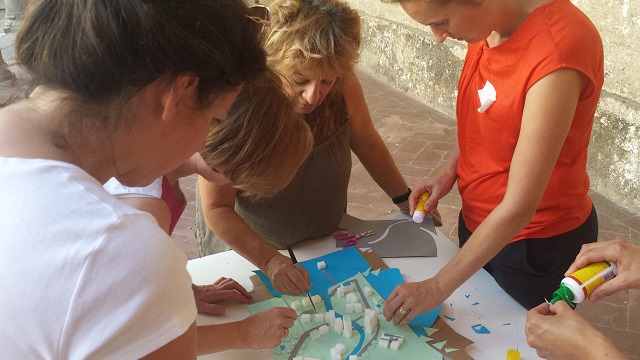
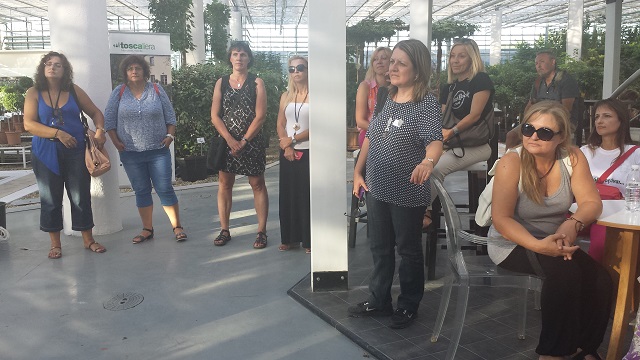
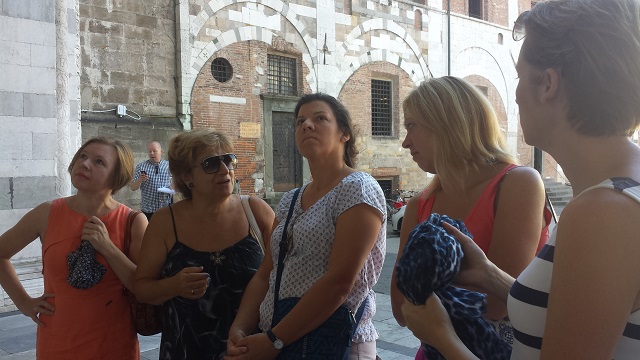
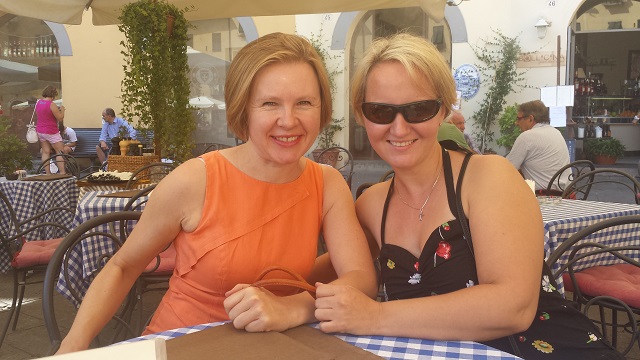
W ramach realizacji projektu mobilności kadry edukacji szkolnej pt.: „Let the play begin. Designing gamification” Programu Erasmus+ od 30 sierpnia do 5 września 2015 roku dwie nauczycielki naszej szkoły wzięły udział w kursie pt. "Reading the City" w Toskanii. Panie Agata Rzeszut oraz Małgorzata Sadłowska miały możliwość zdobycia wiedzy i doświadczenia nt. możliwości wykorzystania mobilnych urządzeń cyfrowych w edukacji, wymiany doświadczeń z nauczycielami z innych krajów Europy (Grecji, Szwecji, Chorwacji, Łotwy i Wielkiej Brytanii). Zwiedziły również lokalną szkołę, poznały włoski system edukacji, brały udział w wykładach nt. dziedzictwa kulturowego oraz tożsamości europejskiej, przygotowały projekt „Miasto i tożsamość” we współpracy z nauczycielami z innych krajów europejskich oraz z wykorzystaniem mobilnych urządzeń cyfrowych.
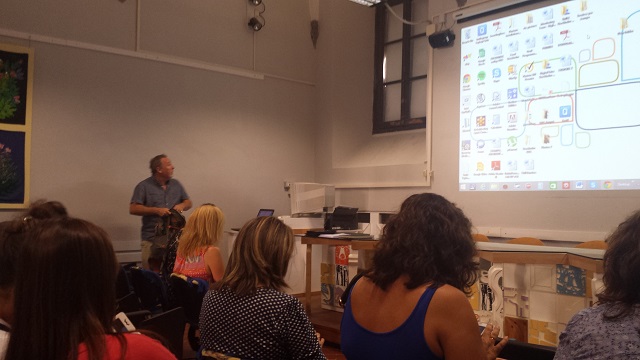



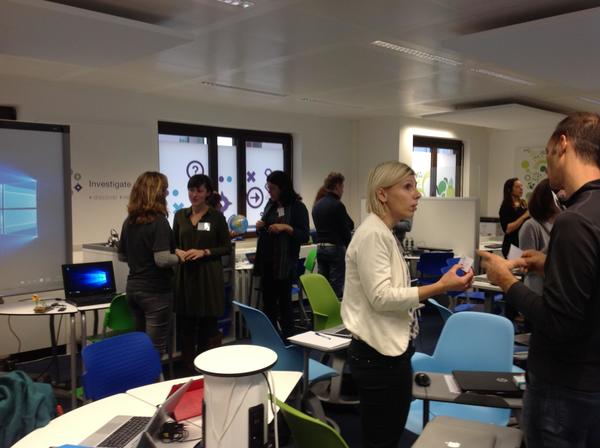
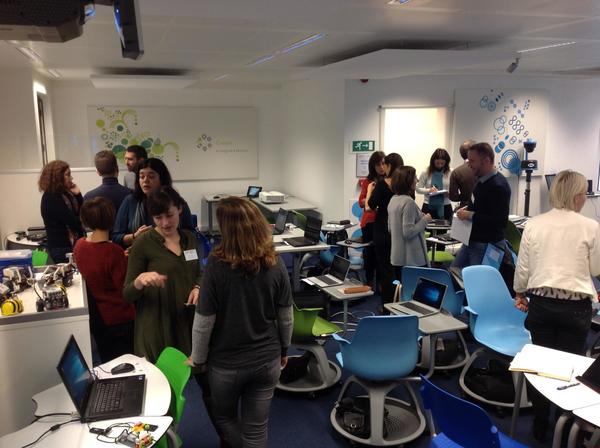
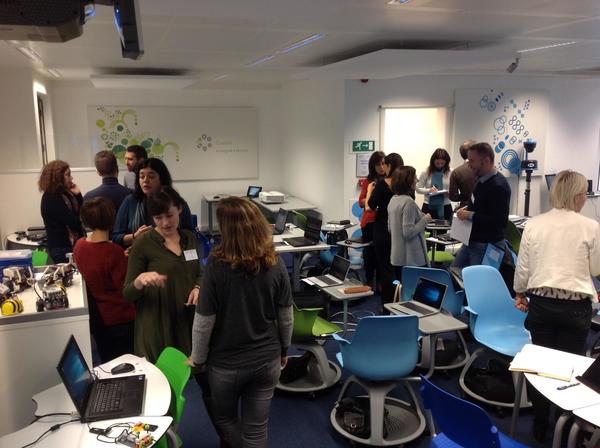
W ramach realizacji projektu pt.: "Let the play begin. Designing Gamification" mobilności kadry edukacji szkolnej Programu Erasmus+, w dniach od 16 do 20 listopada 2015 roku panie Anna Kułaczkowska i Anna Krynicka wzięły udział w kursie "Interactive Technologies for the future classroom" organizowanym przez European Schoolnet Academy oraz Future Classroom Lab w Brukseli. Szkolenie umożliwiło zdobycie wiedzy i umiejętności w zakresie stosowania różnorodnych aplikacji i programów takich jak i3LEARNHUB, Mentimeter, Kahoot, ToonDoo, Voki, Socrative, Quizlet czy Stop Motion Studio w praktyce edukacyjnej. Podczas kursu nauczyciele z wielu krajów Unii Europejskiej, takich jak Portugalia, Włochy, Cypr czy Węgry, wymieniali się wiedzą i doświadczeniem na temat wykorzystania urządzeń i programów cyfrowych na lekcjach. Uczestnicy szkolenia brali również udział w wycieczkach po starym mieście w Brukseli oraz Parlamentarium – nowoczesnym centrum dla zwiedzających przy Parlamencie Europejskim.
Interactive Technologies for the future classroom
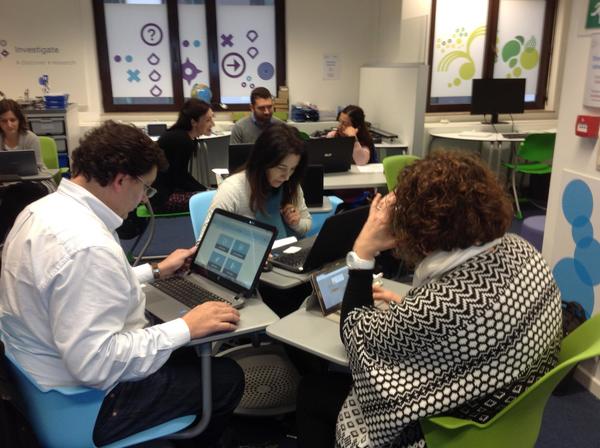
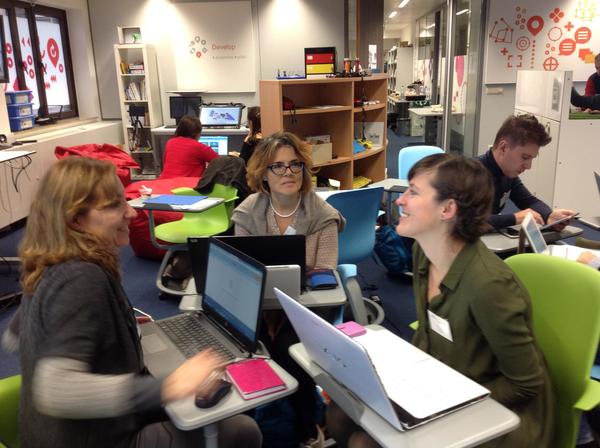
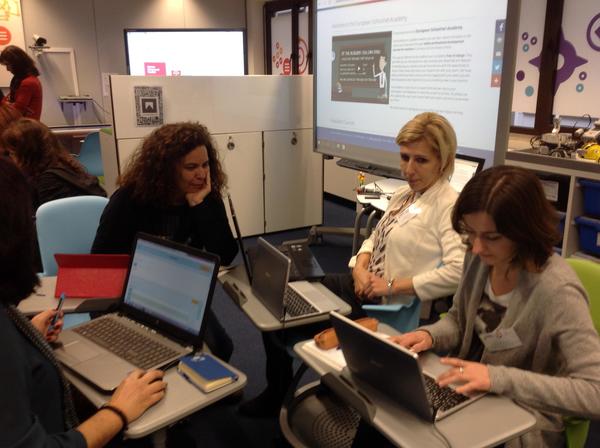
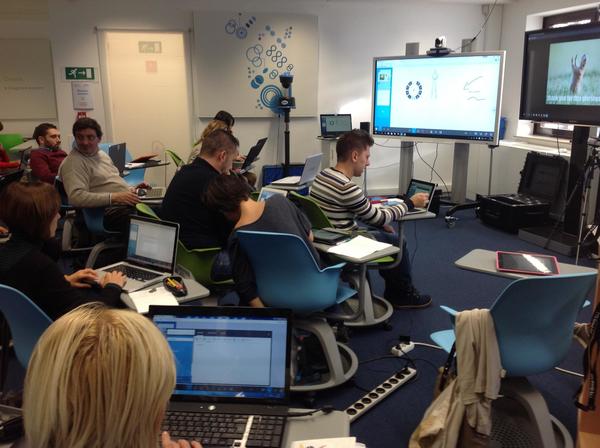
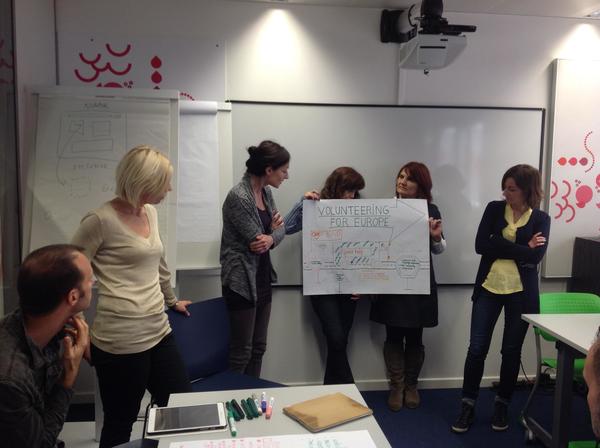



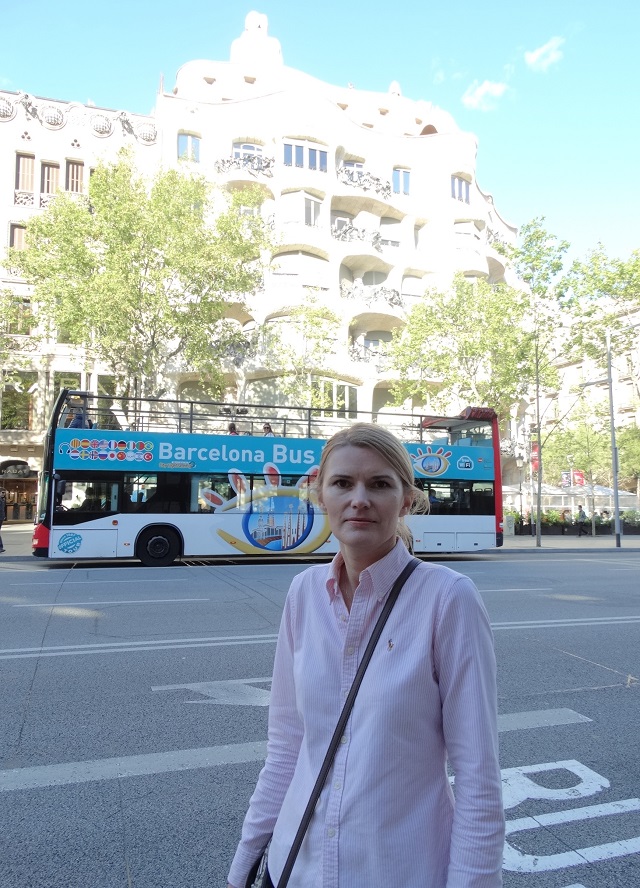
W ramach realizacji projektu pt „ Let the play begin. Designing gamification” programu Erasmus + w dniach 10.04 – 16.04.2016 panie Alina Grudzińska, Iwona Pawlak i Alina Piekańska wzięły udział w kursie „ Tap – Swine Pinch. Game – Based Learning and Gamification” w Barcelonie.
Celem kursu było zapoznanie się z nowymi formami nauczania i oceniania opartego na grywalizacji oraz poznanie technik i narzędzi wykorzystywanych w nauczaniu tą metodą.
Miały okazję tworzyć QR kody, multimedialne quizy, wykorzystywać Skype w edukacji oraz poznały podstawy tworzenia edukacyjnych gier.
Interesującym wydarzeniem była wizyta w hiszpańskiej szkole publicznej, w której często wykorzystuje się metodę grywalizacji jako narzędzie motywujące uczniów do nauki.
Uczestnicy szkolenia, m.in. nauczyciele z Holandii, Finlandii, Turcji, Słowenii i Rumunii wymieniali się doświadczeniami, tworzyli scenariusze lekcji z zastosowaniem cyfrowych urządzeń.
Game-Based learning and Gamification




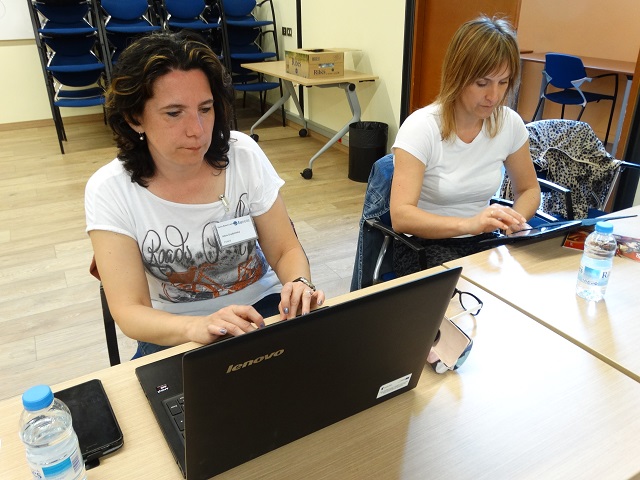


Jakie są potrzeby uczniów ery Web 2.0?
To używanie rozwiniętej technologii informatycznej, posiadanie coraz nowszych modeli laptopów, tabletów oraz smartfonów, które zawierają wiele atrakcyjnych aplikacji. Ponadto, poszukują oni interakcji i zaangażowania, swobody wypowiedzi ale przede wszystkim dużej dawki rywalizacji.
Można jednak odwrócić tendencję mówiącą, że najnowsza technologia informacyjna odciąga młodzież od wychowania fizycznego i nie sprzyja wysiłkowi. Wykorzystać w procesie nauczania multimedialne narzędzia i technologie informatyczne oraz zainteresowania uczniów ery Web 2.0. Z powodzeniem robią nauczyciele Zespołu Szkół Gastronomiczno-Hotelarskich w Toruniu.
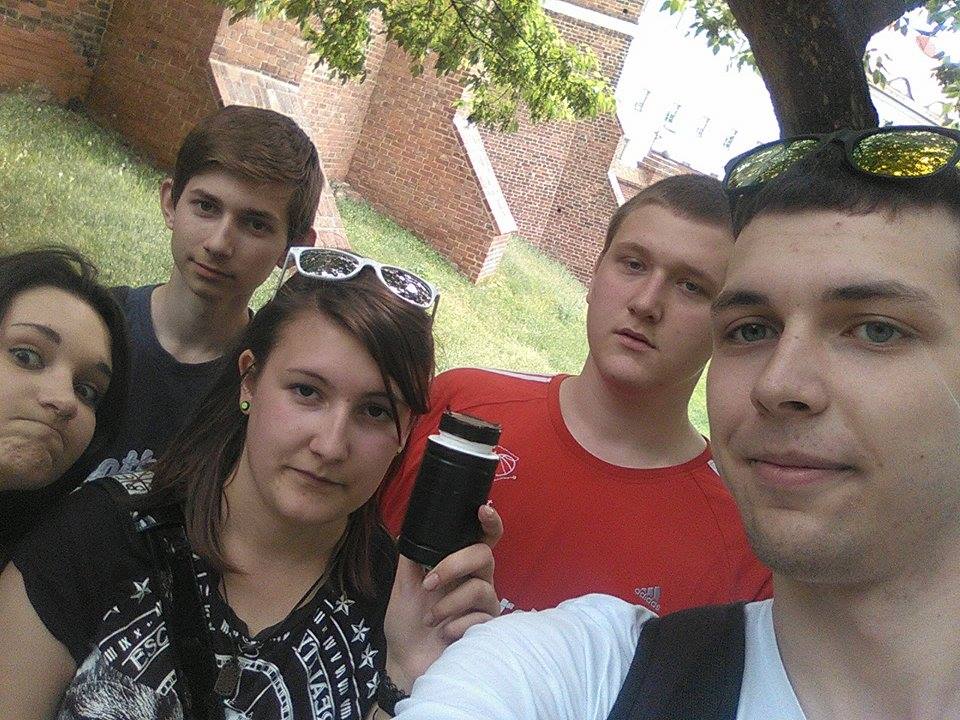
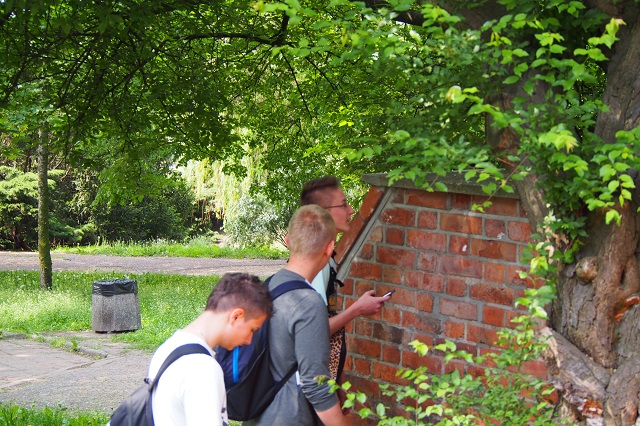
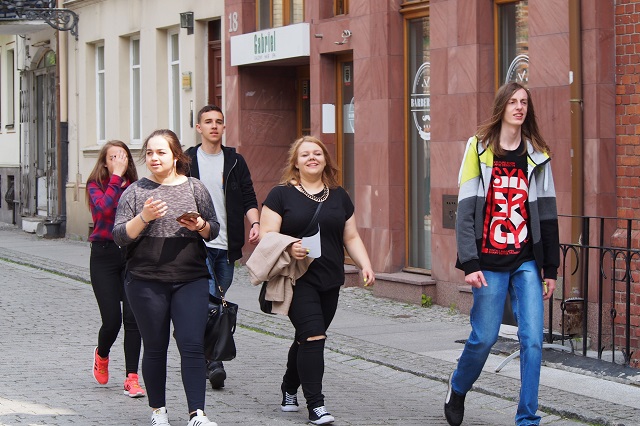
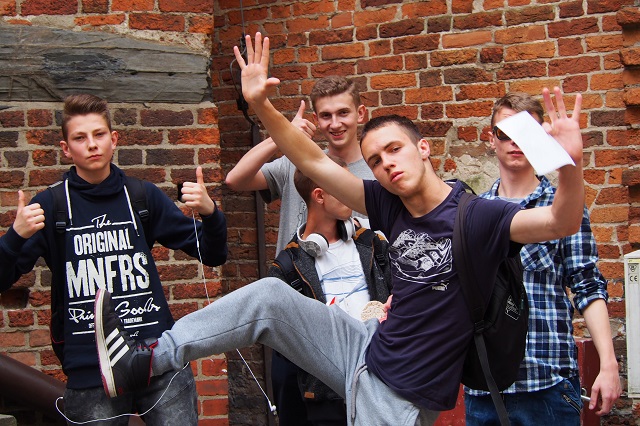
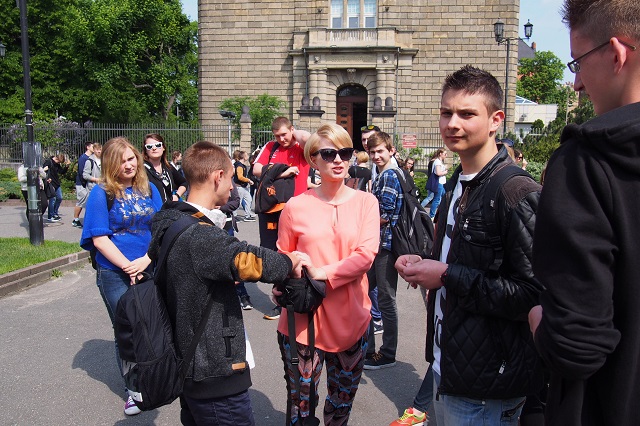
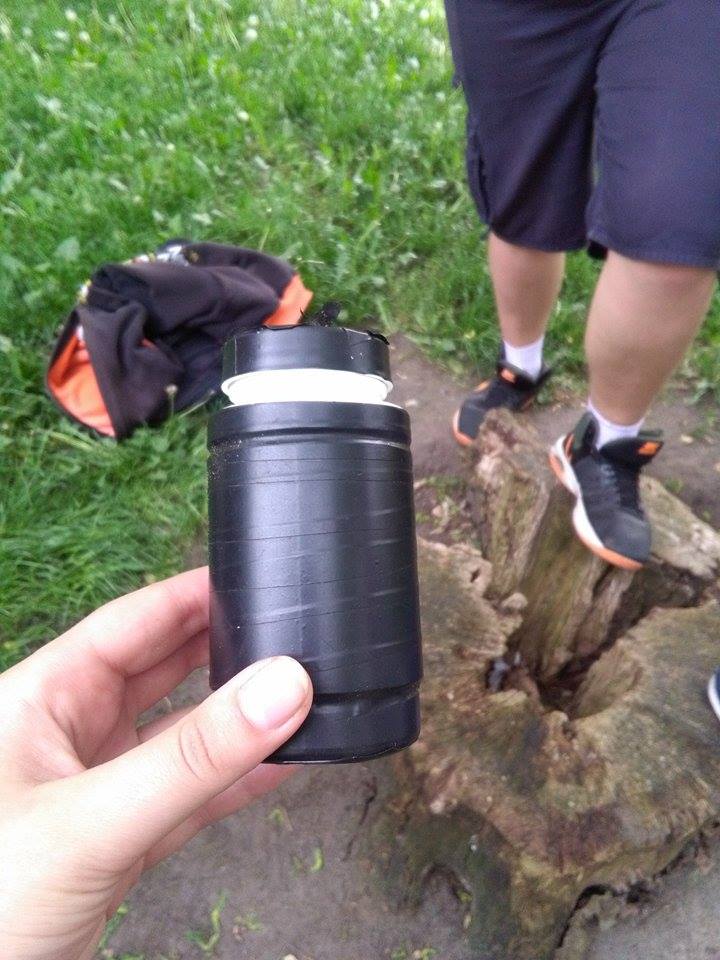
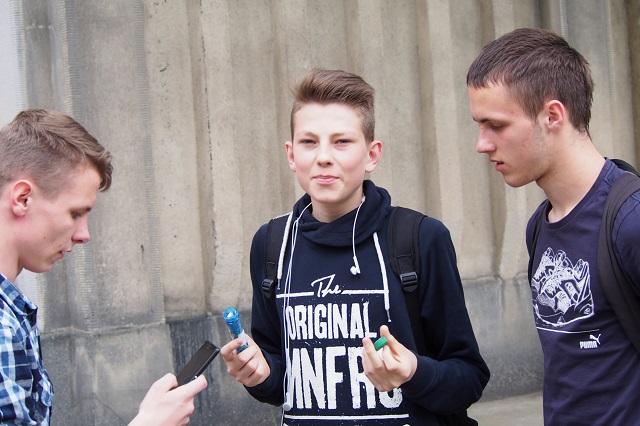
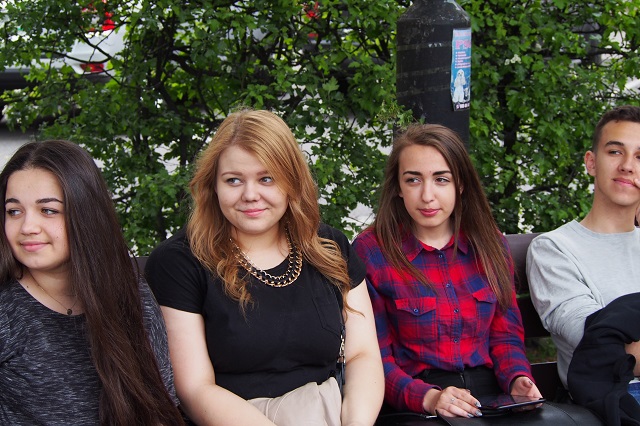
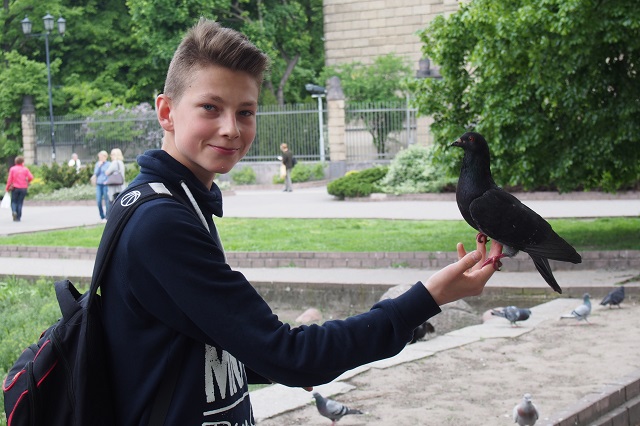
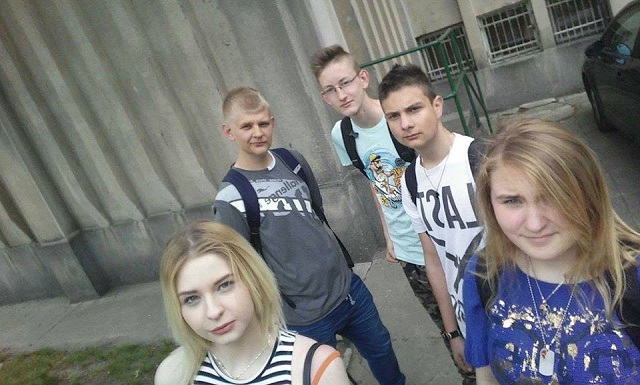
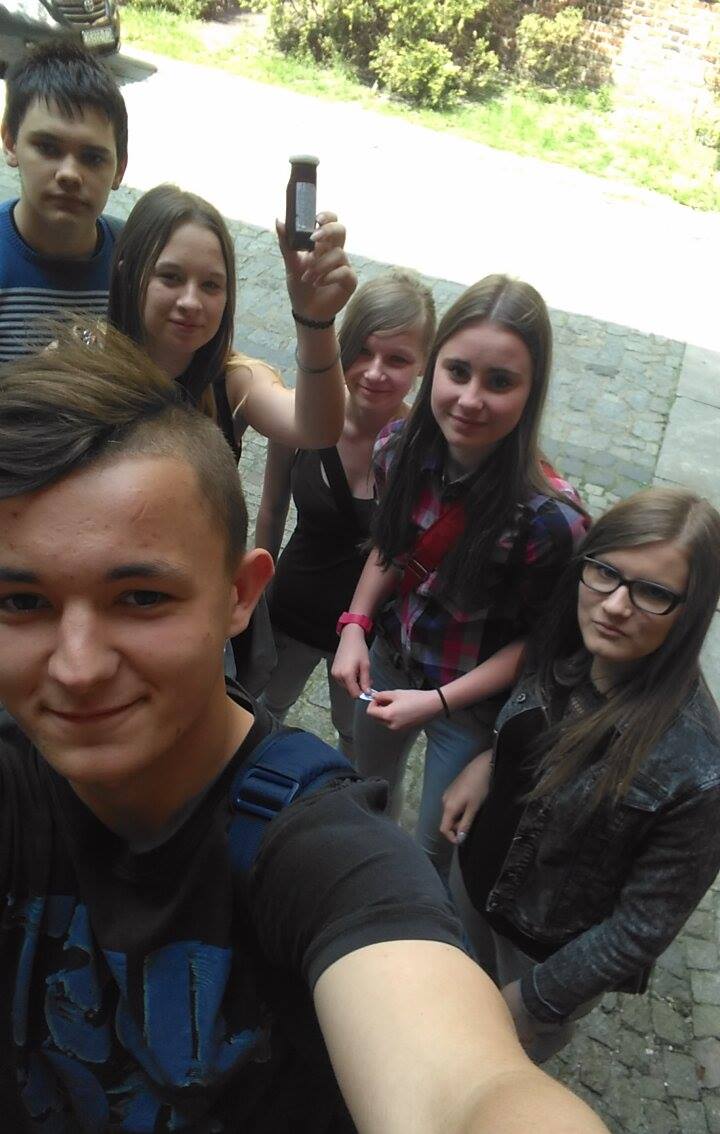
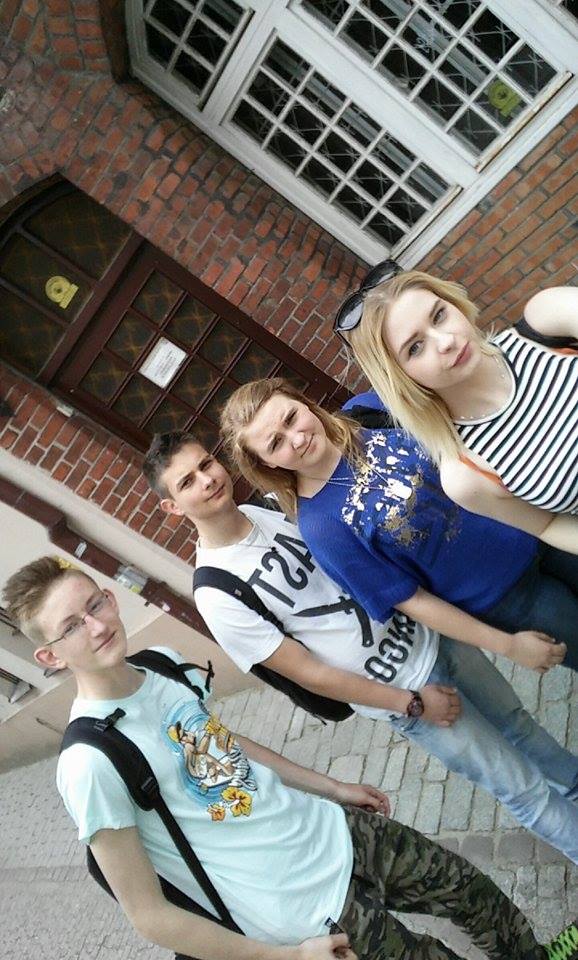
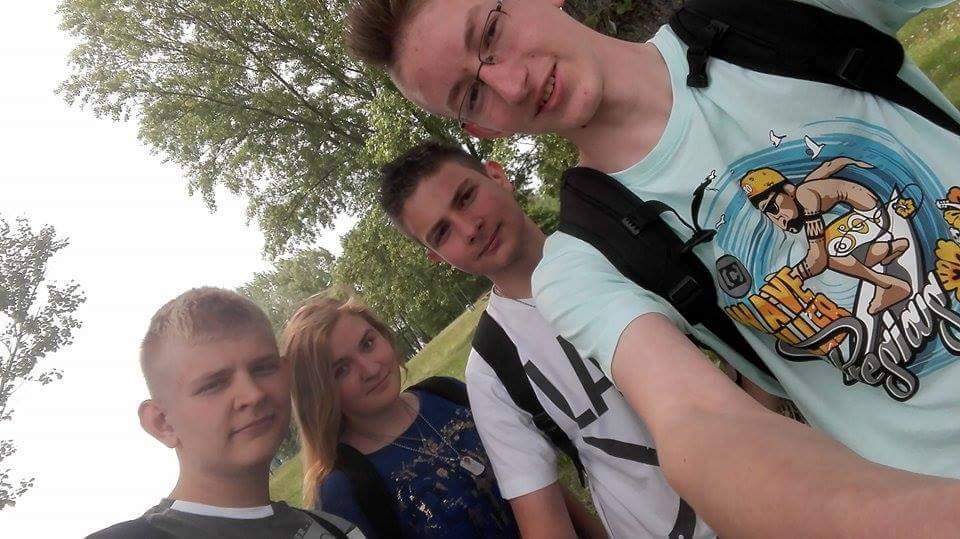
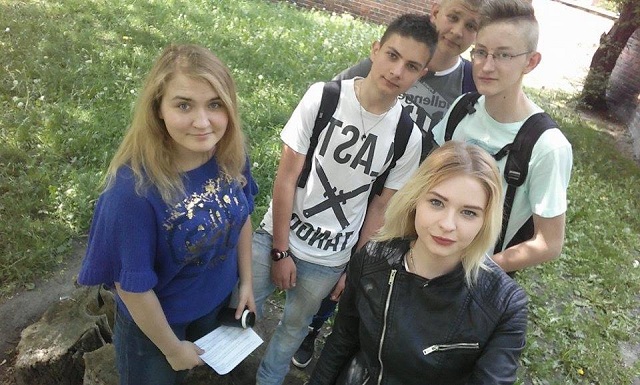
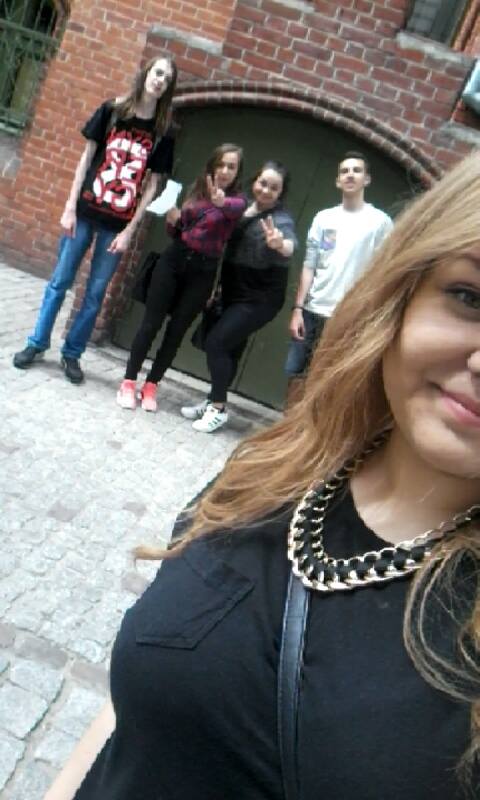
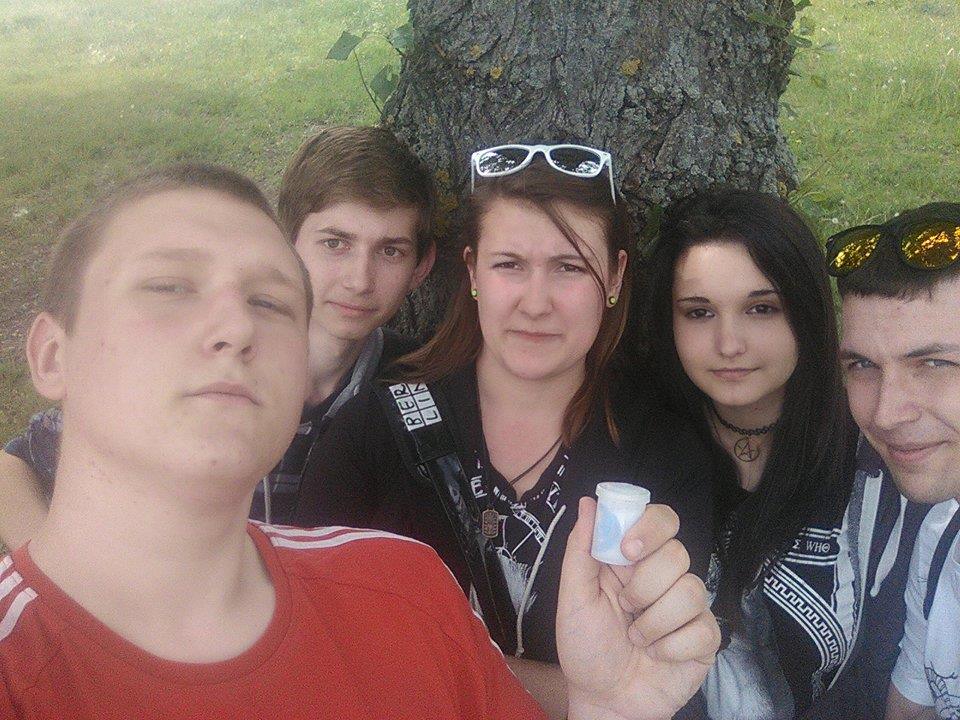
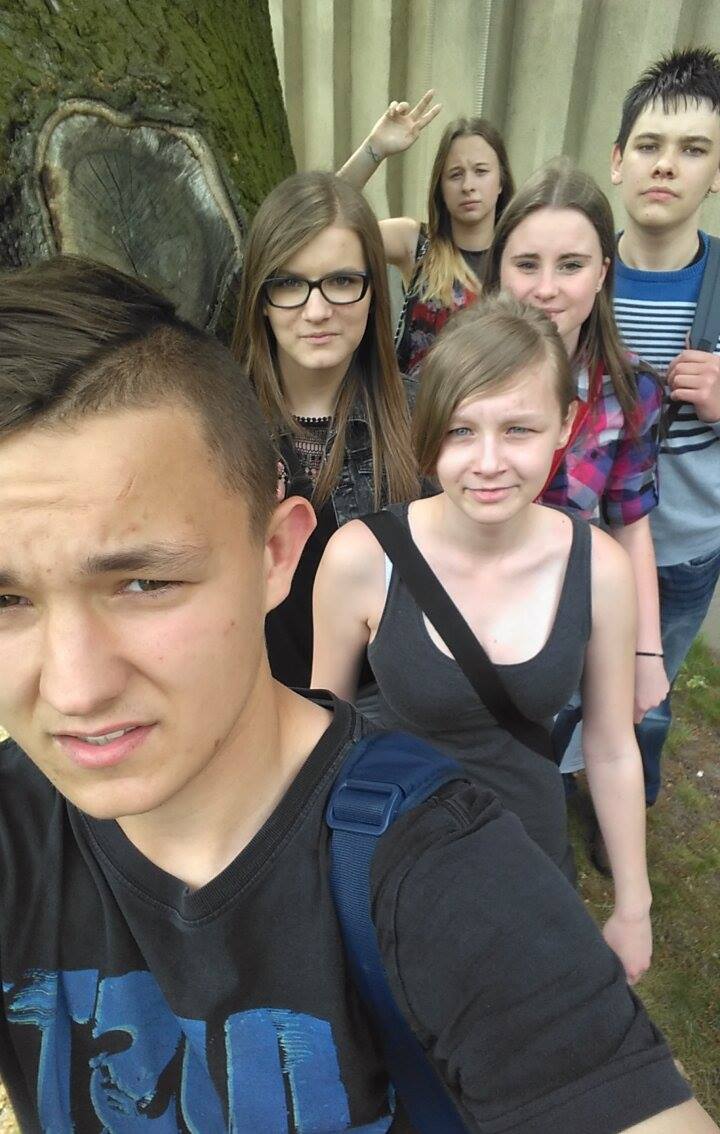
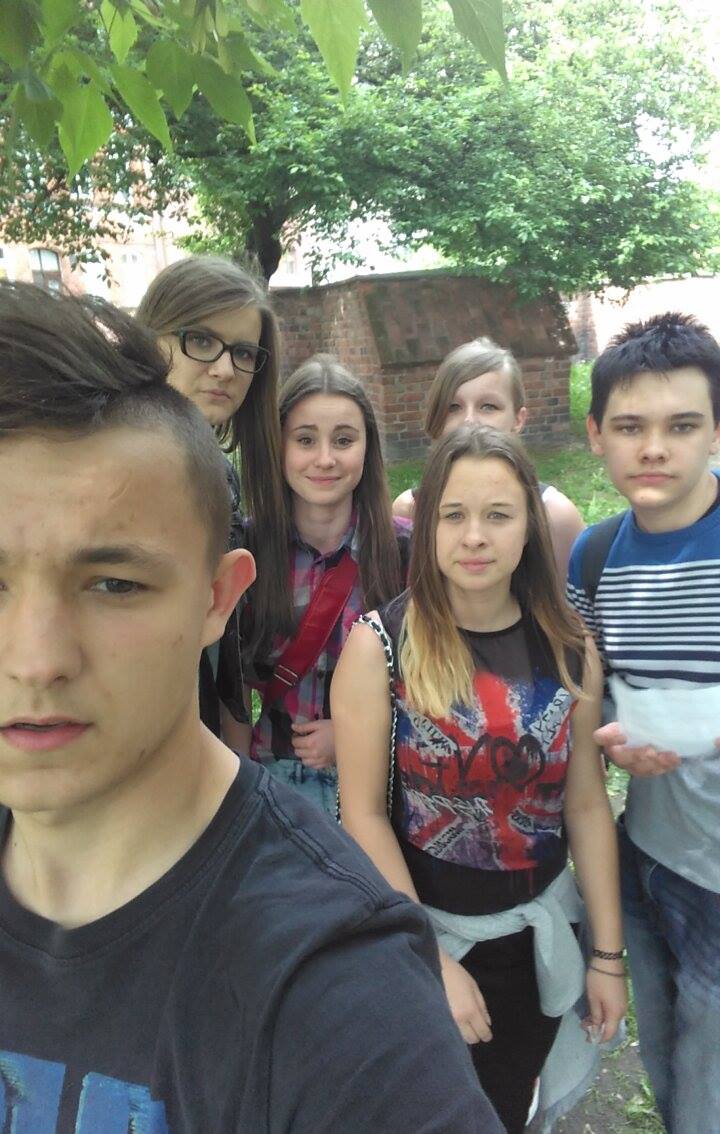
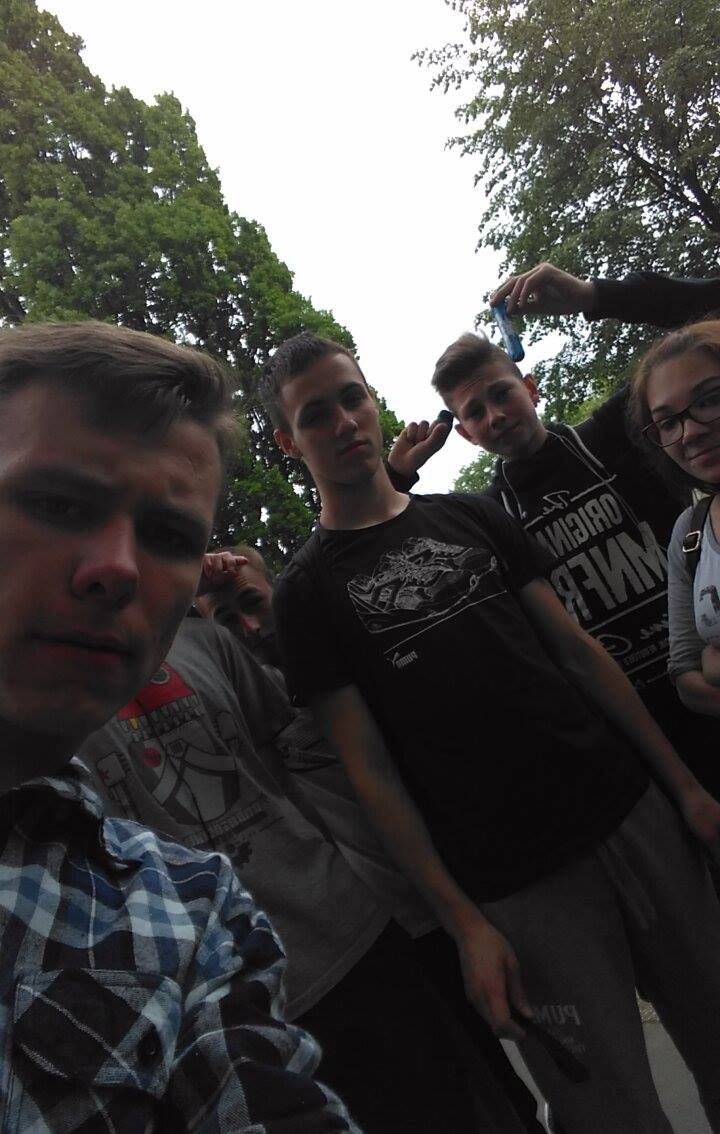
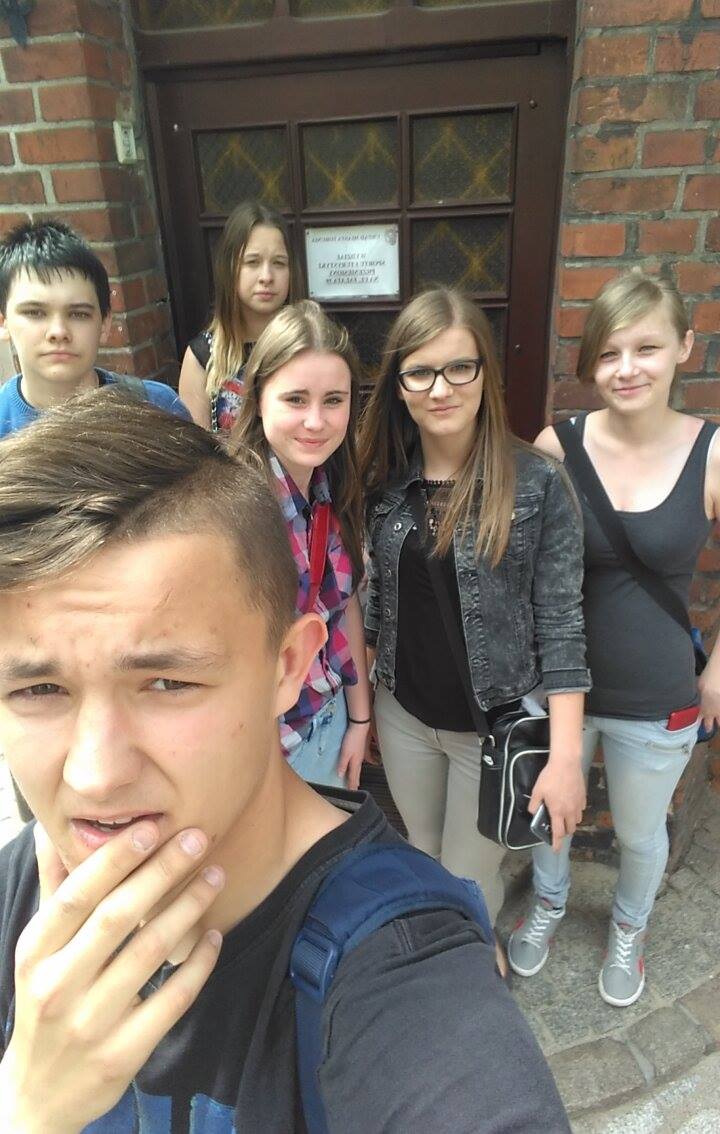
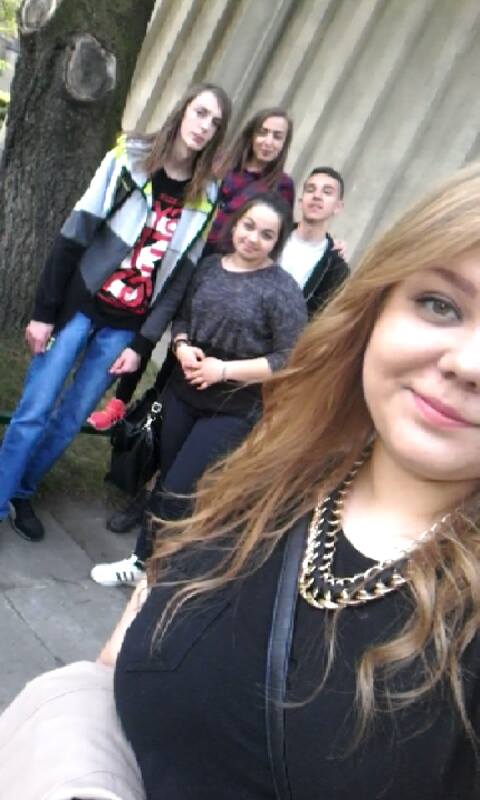
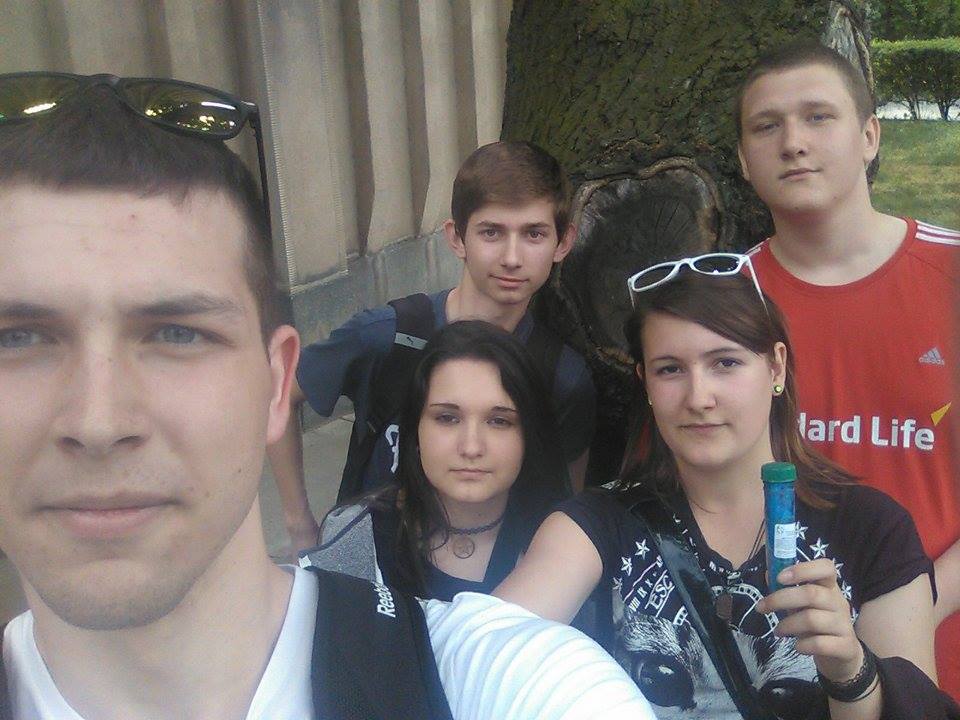
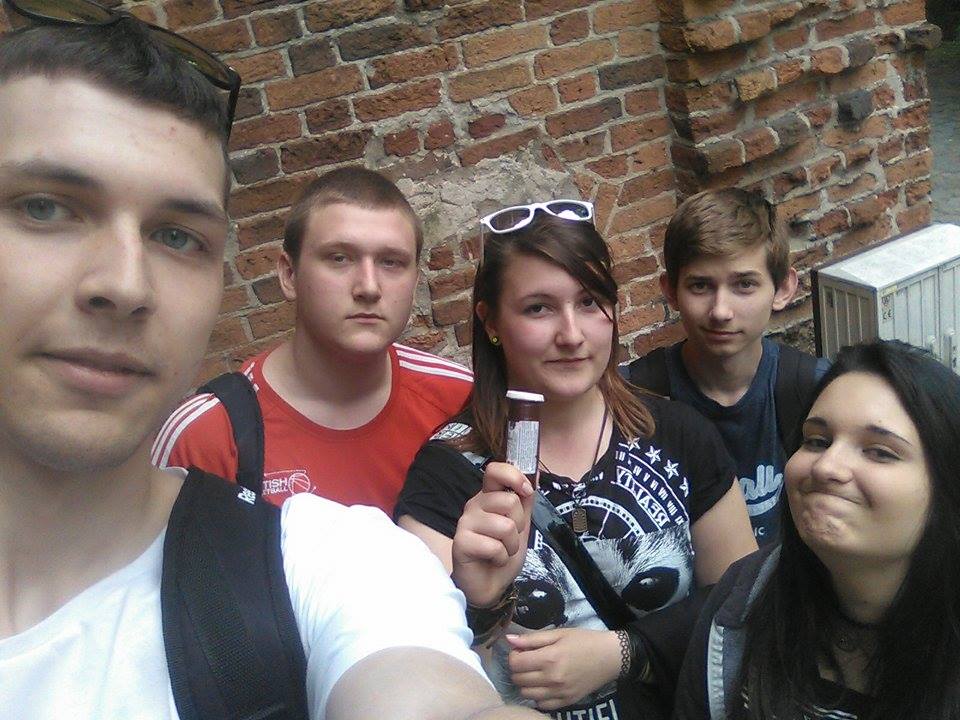
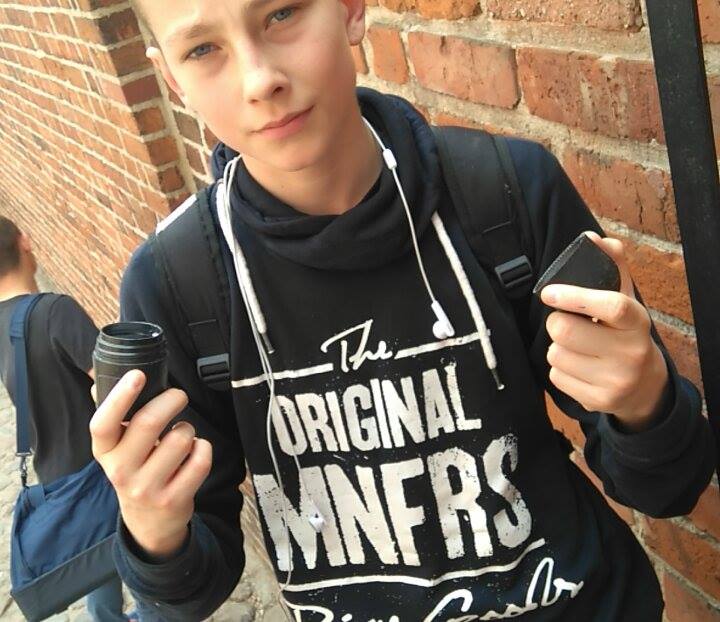
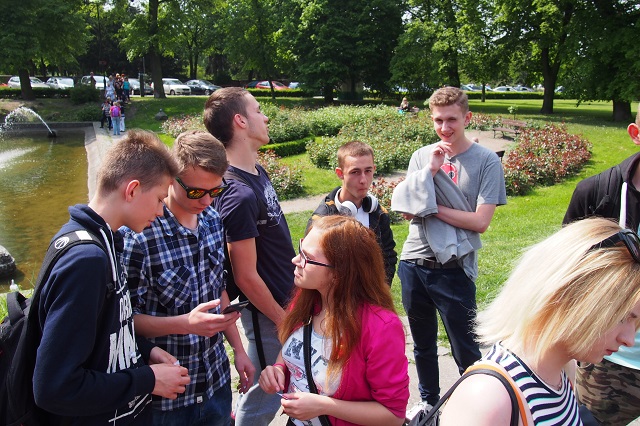
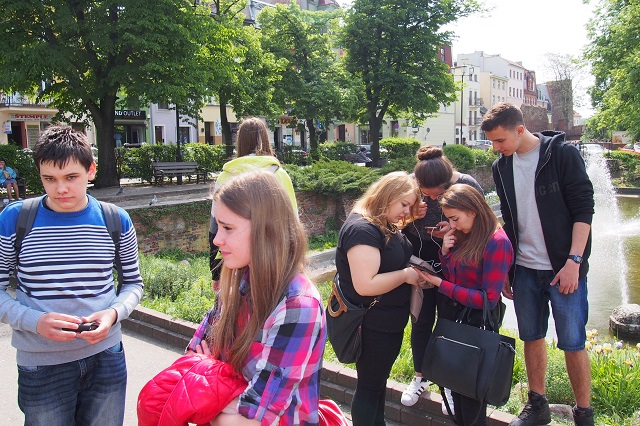
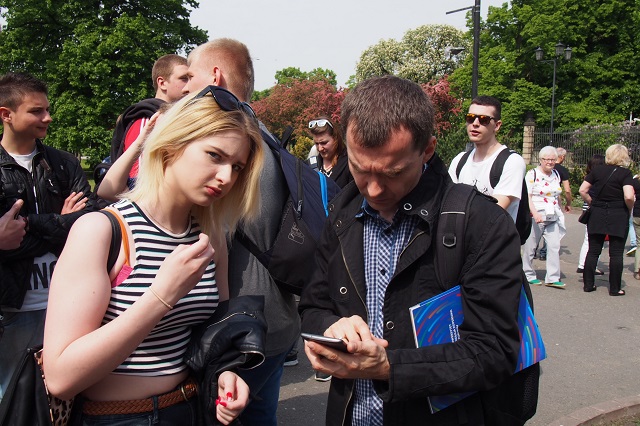
W piątek 20 maja 2016 r. odbyła się lekcja otwarta, prowadzona w ramach realizowanego przez szkołę projektu Erasmus+ „Let the play Begin. Designing Gamification”. Wykorzystano w niej grę terenową, gdzie te technologie mogą służyć rozwijaniu pasji związanych z uczestniczeniem w kulturze fizycznej i dodatkowo wyposażać młodzież w wiedzę z różnych dziedzin życia. Geocaching jest to zabawa w poszukiwanie skarbów za pomocą odbiornika GPS. Ideą przewodnią jest znalezienie ukrytego wcześniej w terenie pojemnika (nazywanego "geocache") i odnotowanie tego faktu na specjalnej stronie internetowej. Geocaching jest zabawą międzynarodową kierowaną do poszukiwaczy przygód w każdym wieku.
Lekcję przygotował p. Paweł Lemparty.
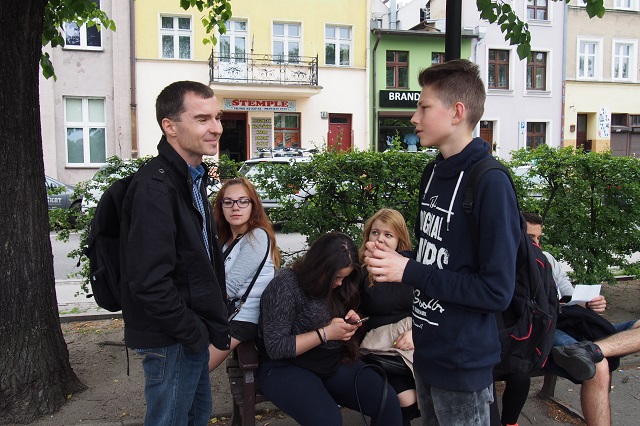
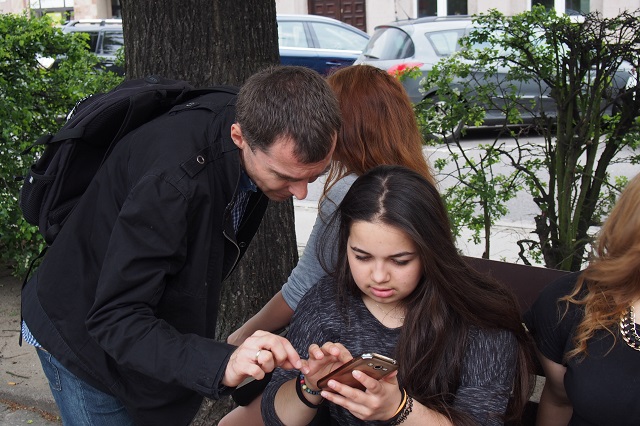
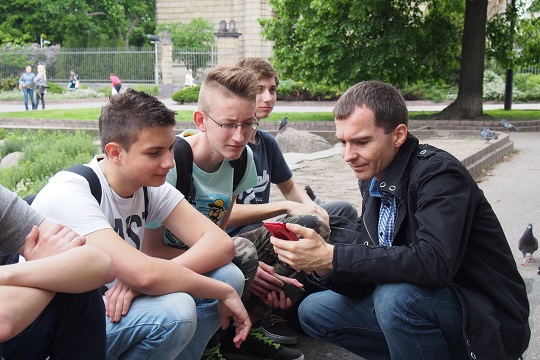

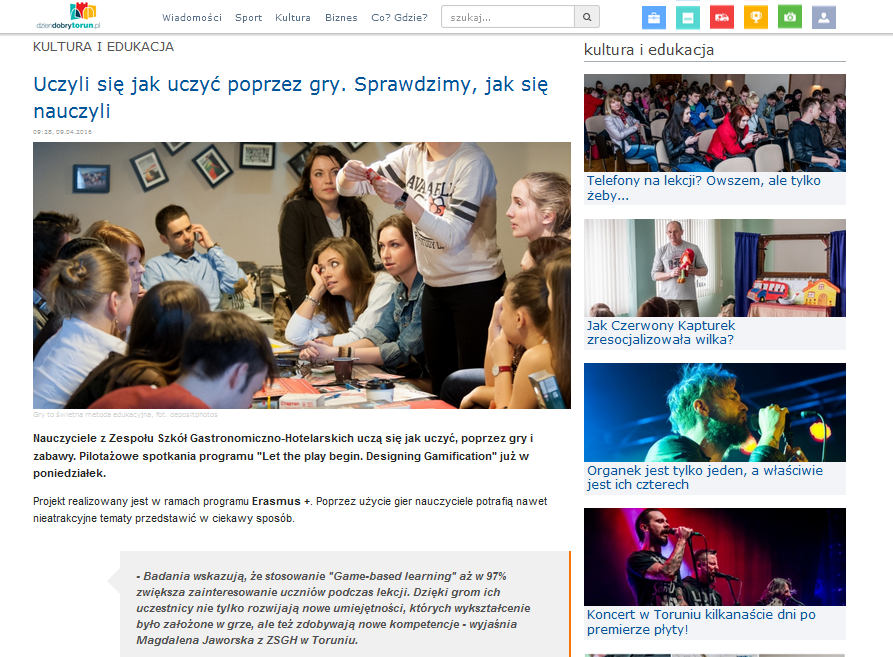
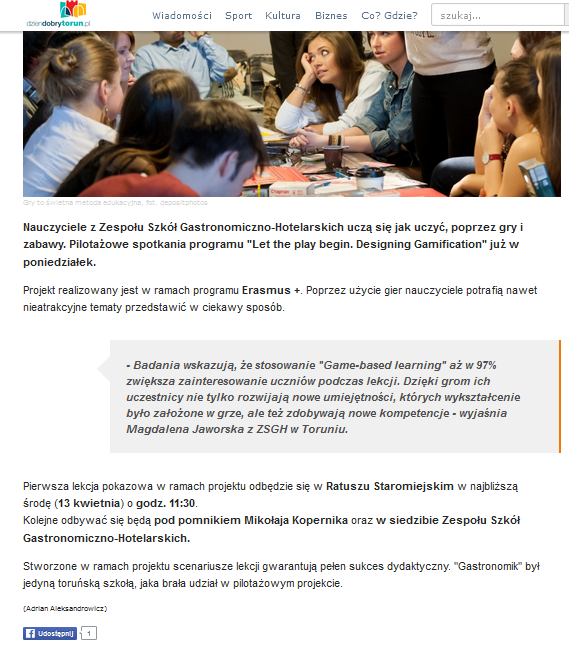
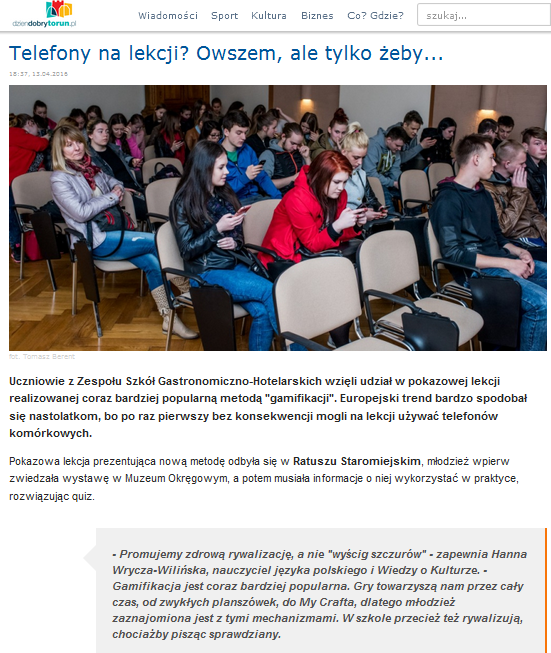

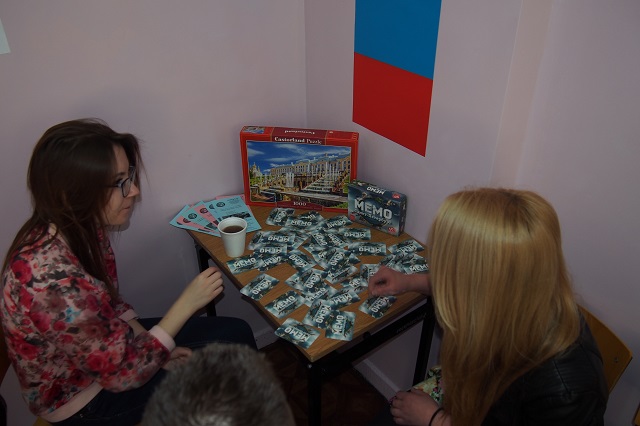


The project: "Let the play begin. Designing gamification" is dedicated to the teachers from ZSG-H, who have experience in conducting additional teaching with the use of a foreign language and ICT or extracurricular activities for students. Participants should also have experience in international cooperation, eg. through eTwinning and develop: EU projects, school development plan, the educational program.
The project is intended to :
- implementation of new, innovative forms of teaching and assessment type of game-based learning, project-based learning, outdoor education, e-learning, blended learning, digital literacy, which are characterized by higher efficiency than traditional forms;
- reducing and preventing early school leaving and ensuring equal access to quality education, including formal, informal and non-formal learning;
- increase the participation of teachers in the external forms of education, especially through programs mobility of school education;
- development of competence in the field of project participants to communicate effectively in English;
- build the image of the school as an institution effectively undertaking Union fundraising and international cooperation;
- improving soft skills, such as communication , cooperation, reaching a compromise by initiating and cooperation with another nationality;
- strengthening self-esteem through the implementation of various actions and activities in international groups.
During the project, the participants will take part in the following mobilities:
- "Discover the city" Tuscany/Italy
- "Interactive technologies for the future classroom" Brussels/Belgium
- "Digital Extra" Istambul/Turkey
- "Tap-Swipe-Pinch. Game-Based Learning AND gamification" Malaga/Spain
Gamification is the theme of this project. This is an area that uses game mechanisms to change activities, which participants consider unattractive into more attractive ones. It is planned to change the way of learning through the use of incentive mechanisms encountered in games that involve students in the learning process and develop their competencies and entrepreneurial attitudes The method of gamification was chosen because it can lead to the change in the way of thinking about the learning process and organizing educational environment for young people.
The school will include gained experience and acquired competencies of the teachers participating in the project to develop a strategic plan for the institution in the future through activities that will have long-term impact on participants in the project, institution, policy makers / authority of the teacher and the local environment. These are:
- Implementation of new, innovative forms of teaching and assessment, which are characterized by higher efficiency than traditional forms.
- The popularization of the use of digital technologies and active participation in the digital culture. Raising awareness ZSG-H staff about the benefits of digital technology. Update the knowledge and skills of teachers in the field of ICT.
- Reducing and preventing early school leaving and ensuring equal access to quality education, including formal, informal and non-formal learning pathways. Increasing students' motivation to participate in classes.
- Improving knowledge of foreign languages among teachers. Development of participants’ language competence in effective communication in English.
W wyniku oceny wniosków złożonych w ramach akcji 1 – Mobilność uczniów i kadry w sektorze Kształcenie i Szkolenia Zawodowe w roku 2015 r. wniosek pt.: „Staż zagraniczny szansą na lepszy start zawodowy młodzieży” został zatwierdzony do realizacji przez Fundację Rozwoju Systemu Edukacji – Narodową Agencję Programu Erasmus+
Partnerzy projektu
Uczniowie naszej szkoły będą mieli możliwość odbycia dwutygodniowego stażu zawodowego w zakładach gastronomiczno- hotelarskich w Słowenii i Macedonii w ramach programu Erasmus+. Naszymi partnerami, którzy udostępnili nam miejsca praktyk, są szkoły gastronomiczno-hotelarskie Grm Novo mesto- Center Biotehnike In Turizma w Słowenii i Naum Naumowski Borce, Krushevo w Macedonii.
Uczestnicy
W projekcie weźmie udział 32 uczestników. 16 uczniów z klas drugich i trzecich, kształcących się w zawodach: technik żywienia i usług gastronomicznych, cukiernik, technik hotelarstwa i technik obsługi turystycznej wyjedzie na staż zawodowy do Słowenii w marcu 2016 roku. Druga grupa, również 16-osobowa, wyjedzie na staż do Macedonii w marcu 2017 roku.
Cele projektu
Celem projektu jest poniesienie kompetencji zawodowych uczestników poprzez:
- nabycie nowych umiejętności zawodowych takich jak: przygotowanie wybranych dań charakterystycznych dla kuchni słoweńskiej i macedońskiej i dobieranie do nich win, sporządzanie wyrobów cukierniczych słodkich i słonych, obsługa gościa zagranicznego w hotelu w zakresie usług dodatkowych, organizacja imprez turystycznych i obsługa specjalistycznych programów komputerowych;
- doskonalenie znajomości języka angielskiego;
- kształtowanie postawy otwartości na inne kultury i umiejętności dzielenia się swoim dziedzictwem kulturowym;
- kształtowanie umiejętności pracy w zespole międzynarodowym;
- pobudzenie przedsiębiorczości uczestników;
- wzmocnienie wiary we własne możliwości
Działania
Podczas pobytu na stażu młodzież nakręci filmy prezentujące proces przygotowania dań i ciast słoweńskich i macedońskich, stworzy prezentacje multimedialne o kompleksach hotelarskich i atrakcjach turystycznych Słowenii i Macedonii. Materiały te posłużą do upowszechniania rezultatów projektu w szkole, w mieście i regionie.
Aktywność uczestników projektu nie ograniczy się do pracy. Podczas zajęć integracyjnych z młodzieżą słoweńską i macedońską, wycieczek do najbardziej interesujących miejsc w kraju, wizyt w gospodarstwach agroturystycznych uczestnicy zapoznają się z dziedzictwem kulturowym i kulinarnym kraju. Polscy uczniowie będą mieli okazję pochwalić się naszą kulturą i kuchnią podczas uroczystej kolacji, którą przygotują technicy żywienia i cukiernicy na zakończenie pobytu. Przygotują i podadzą dania i ciasta typowe dla kuchni regionalnej Pomorza i Kujaw. Uczniowie klasy hotelarskiej i turystycznej zadbają o oprawę muzyczną wieczoru (polski folklor z Pomorza i Kujaw) oraz przedstawią prezentację o naszym kraju i regionie.
Wymiernym rezultatem projektu będzie podniesienie kwalifikacji uczestników, potwierdzonych dokumentem Europass- Mobilność.

Relacja uczniów biorących udział w projekcie "Staż zagraniczny szansą na sukces zawodowy młodzieży"
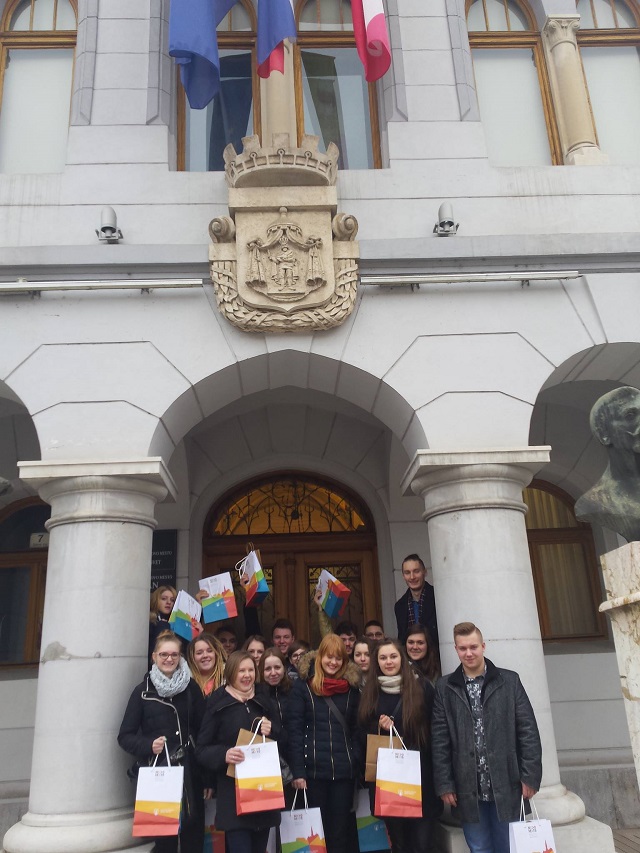
Mija drugi dzień pobytu na stażu zawodowym w Novo mesto w Słowenii. W towarzystwie uczniów słoweńskich zwiedziliśmy miasto, które słynie ze znalezisk archeologicznych z epoki brązu. Novo mesto jest też siedzibą koncernu farmaceutycznego KRKA. Zwiedziliśmy także szkołę gastronomiczno-turystyczną, gdzie powitał nas dyrektor, opiekunowie praktyk i uczniowie. Następnie udaliśmy się do Ratusza na spotkanie z burmistrzem miasta, gdzie poznaliśmy historię miasta. Po południu skorzystaliśmy z okazji przejażdżki konnej podczas zwiedzania szkoły rolniczej. Widzieliśmy serowarnię, hodowlę krów i pszczół. Spotkaliśmy się z panem Edwardę Pałką, Polakiem, emerytowanym wykładowcą uniwersytetu w Lubljanie i pracownikiem firmy KRKA. Mieliśmy również okazję poznać niezwykle ciekawego pisarza, który należy do pierwszej dziesiątki pisarzy eksperymentalnych na świecie.
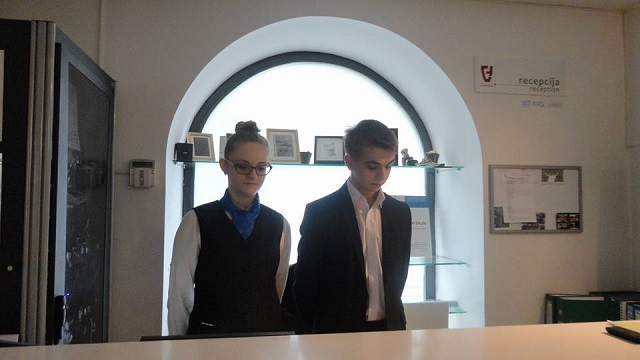
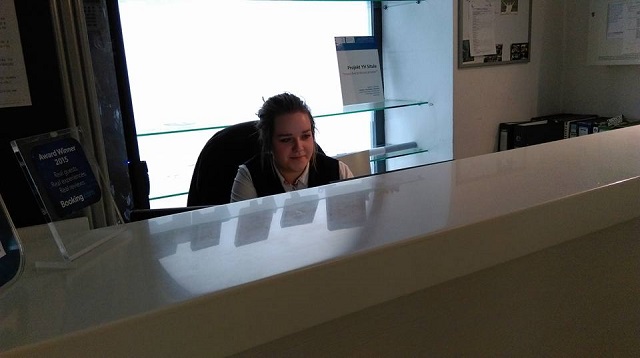
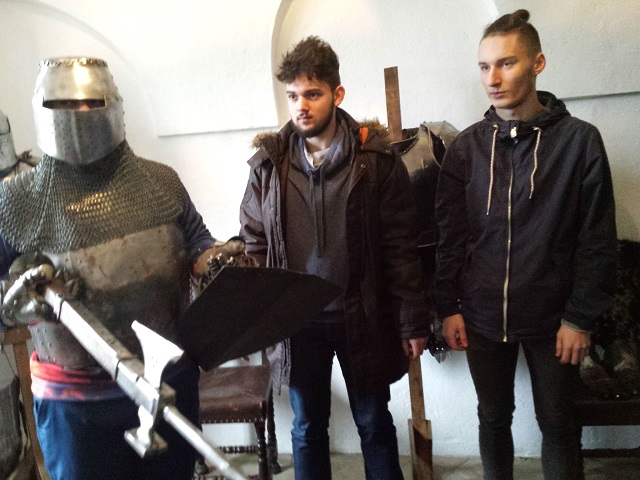
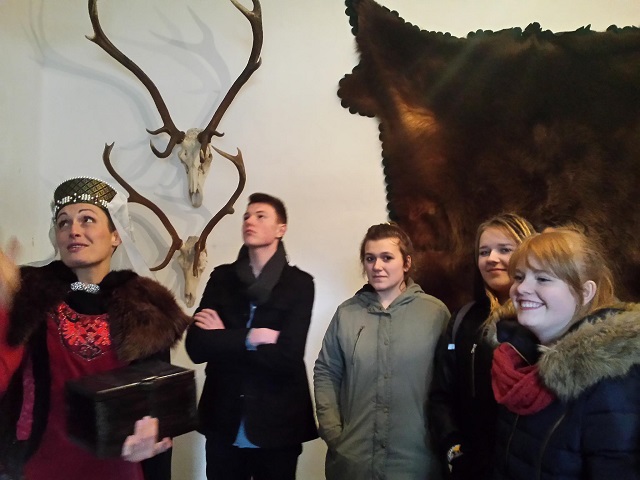
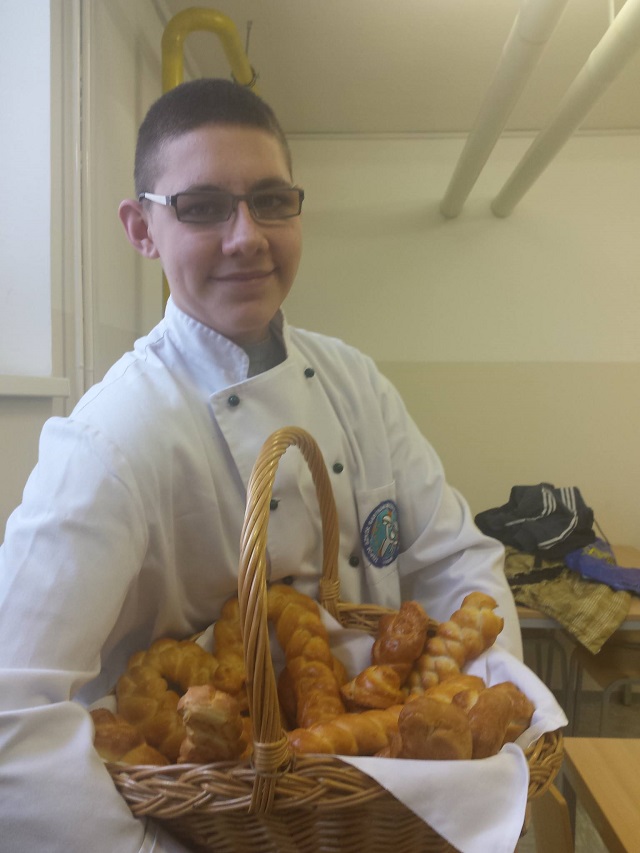
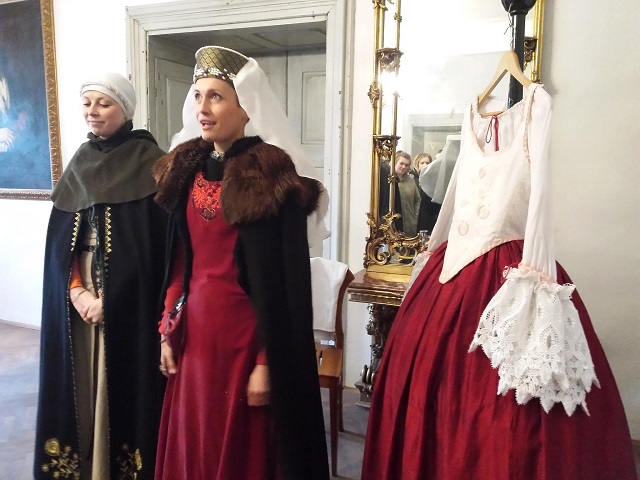
Dzisiaj pracowaliśmy w restauracji, cukierni, piekarni i hostelu Situla. Popołudniu byliśmy w zamku Struga, gdzie uczestniczyliśmy w rekonstrukcji życia zamku z okresu średniowiecza. Świetnie się bawiliśmy udając dworzan i księżniczki, poznając przy tym historię i kulturę tego terenu. Przed nami kolejny dzień pełen wrażeń.
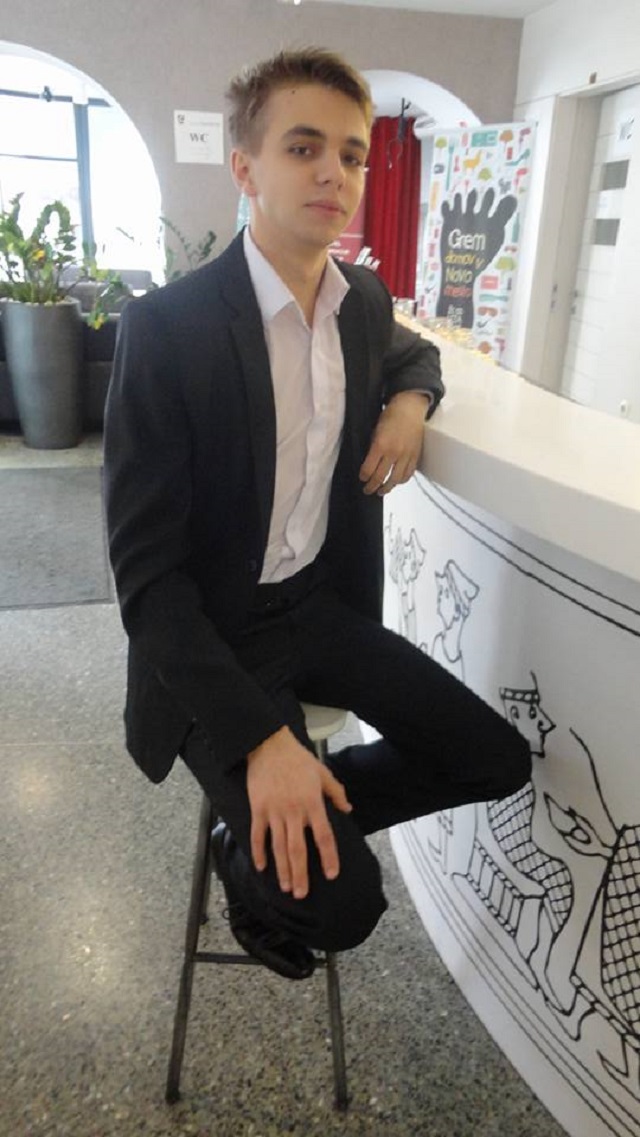
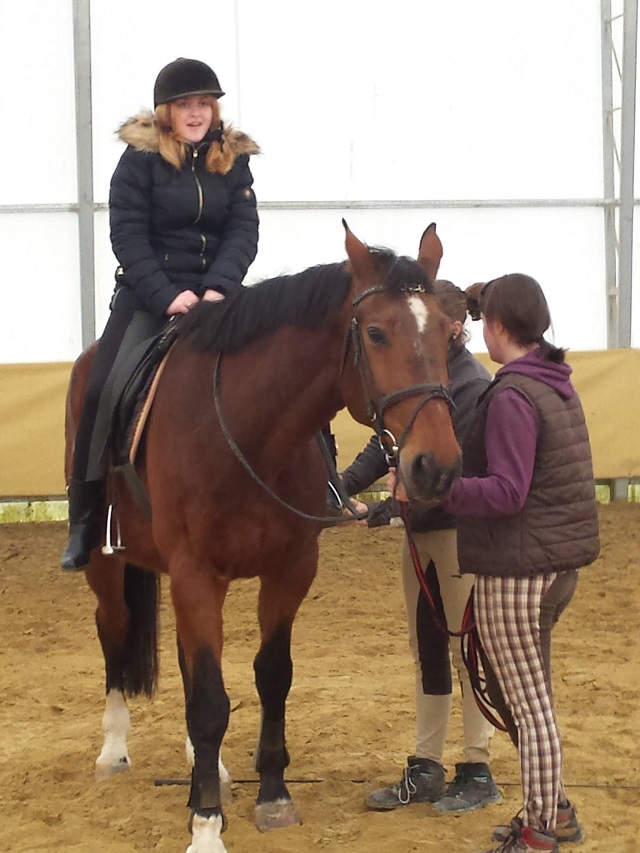


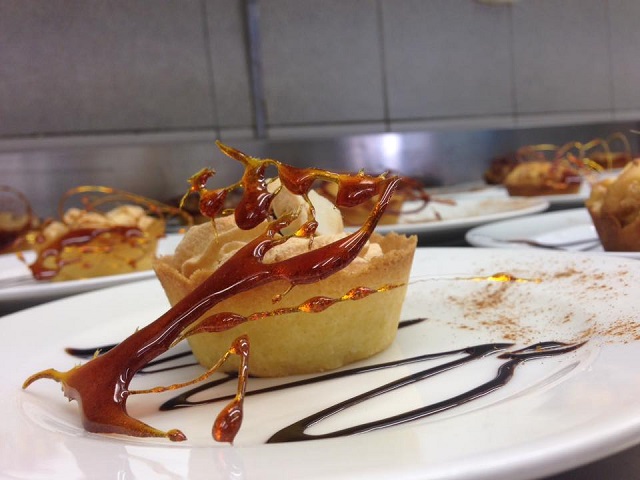
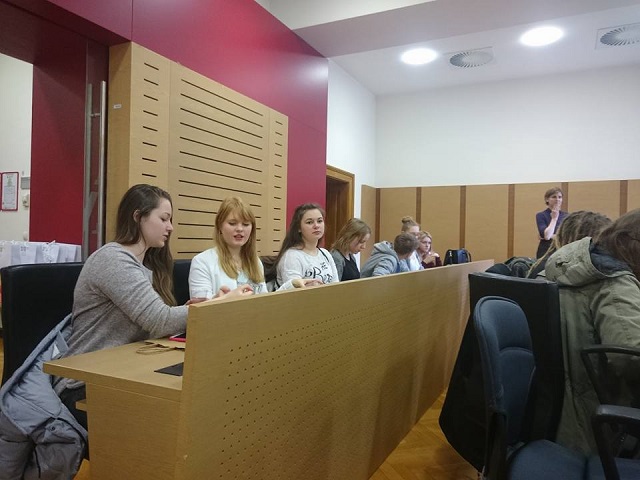
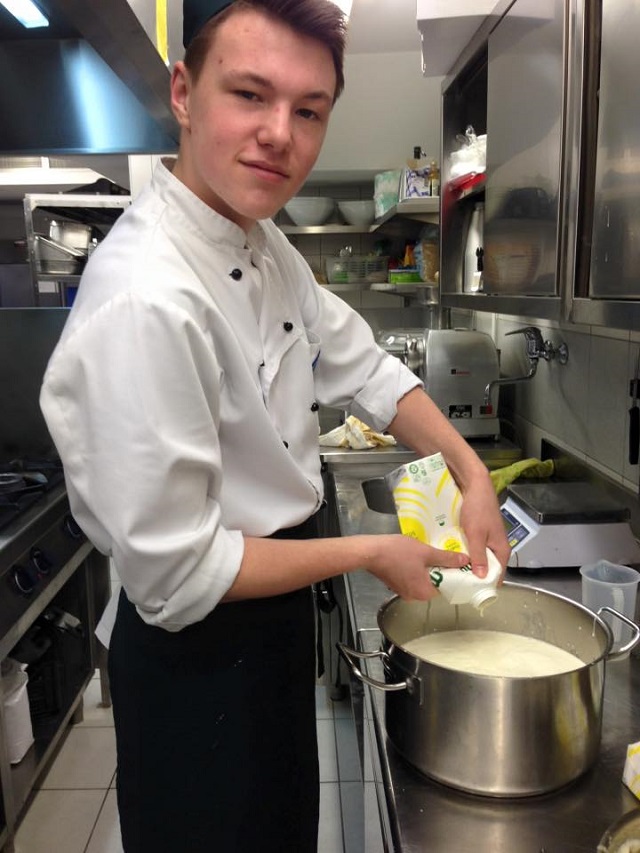
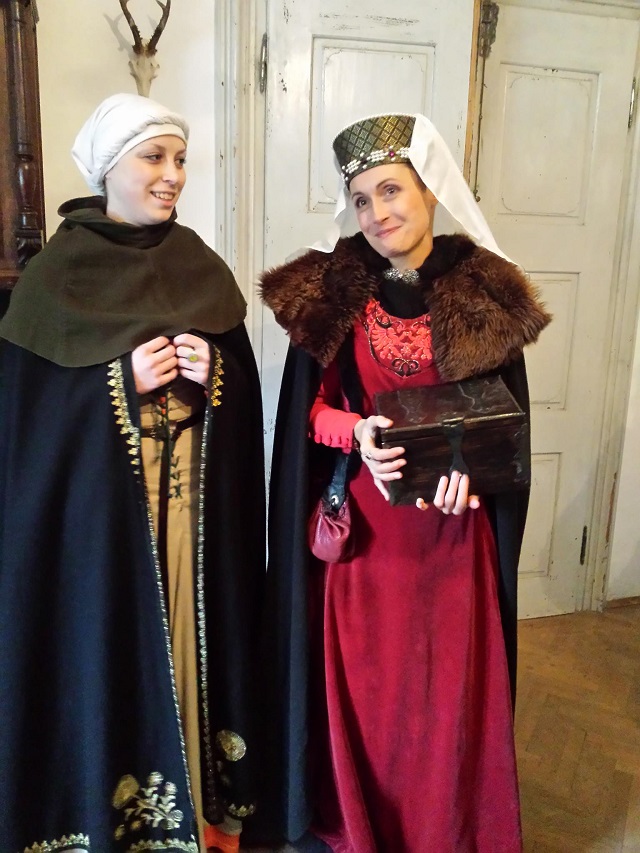
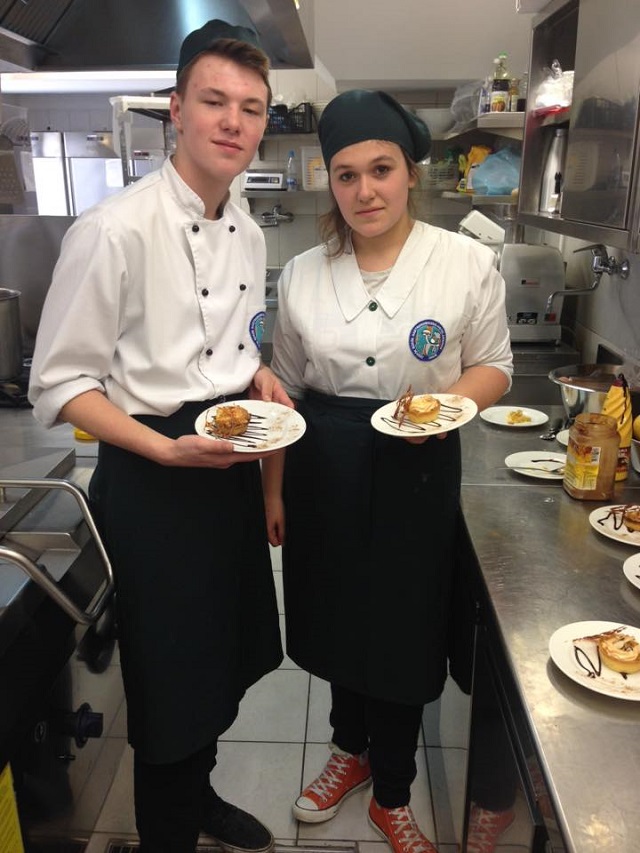
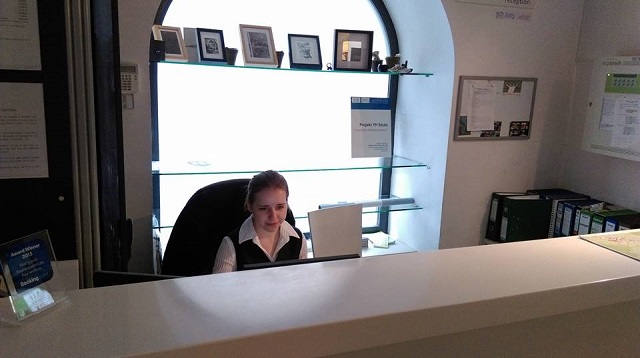
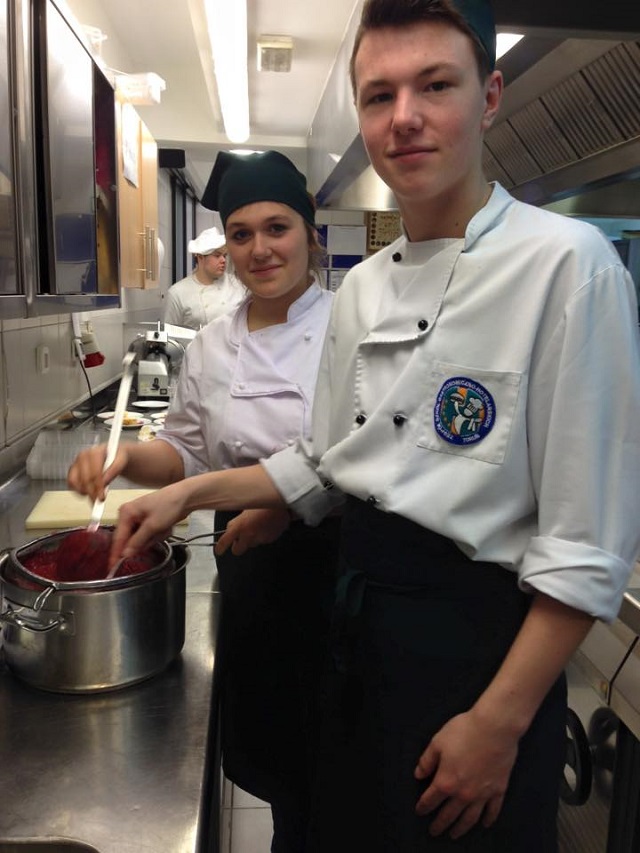
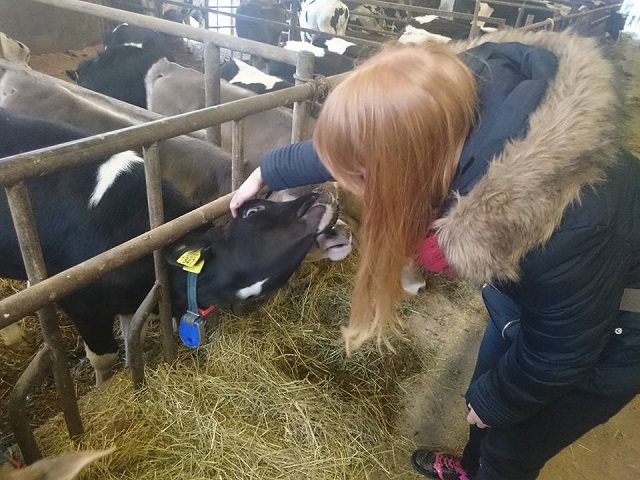
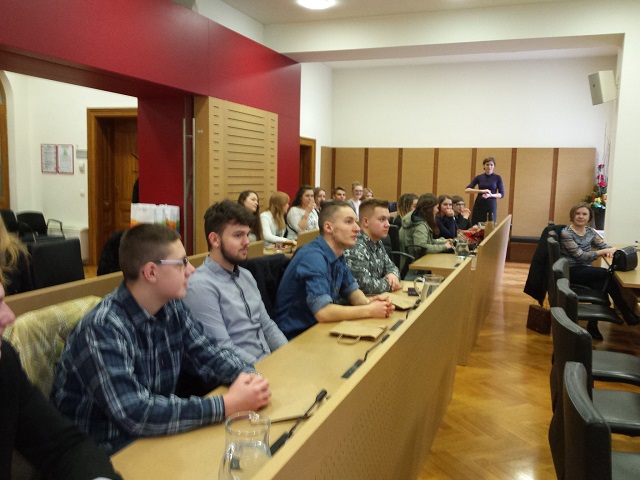
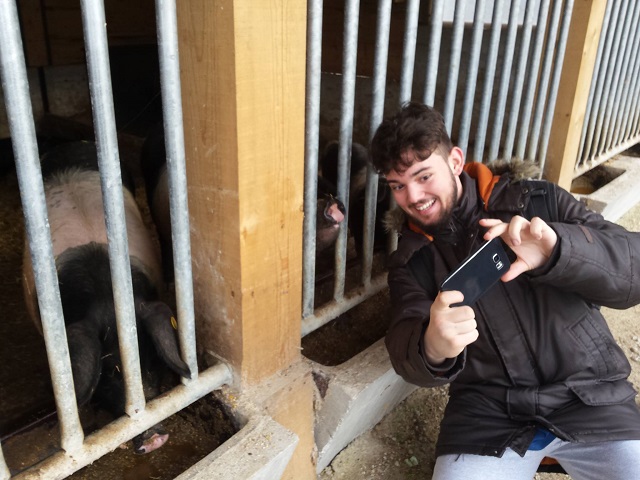
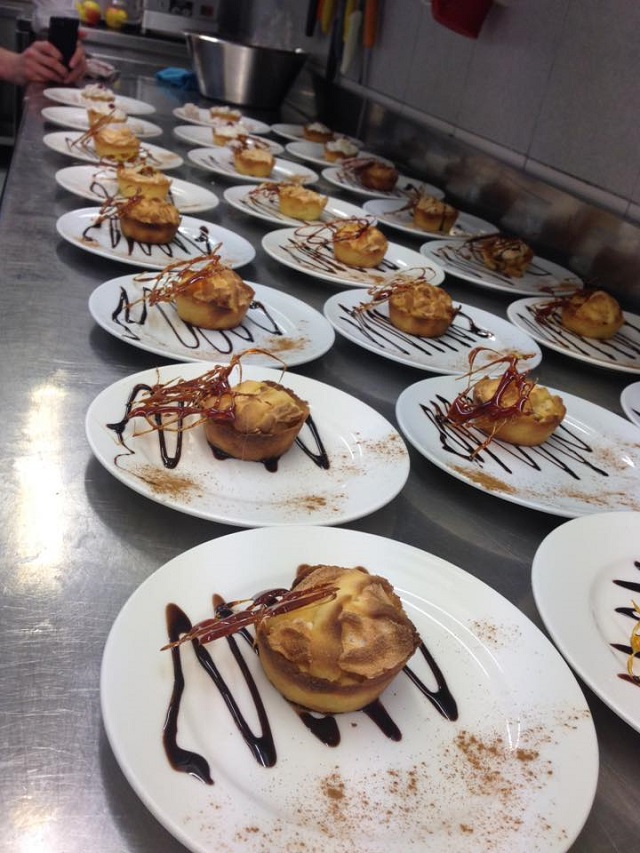
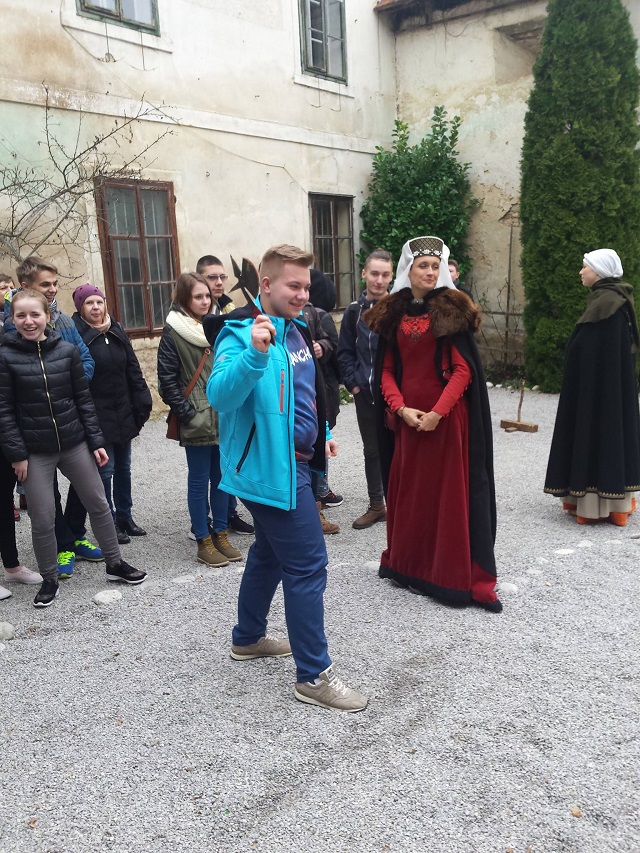
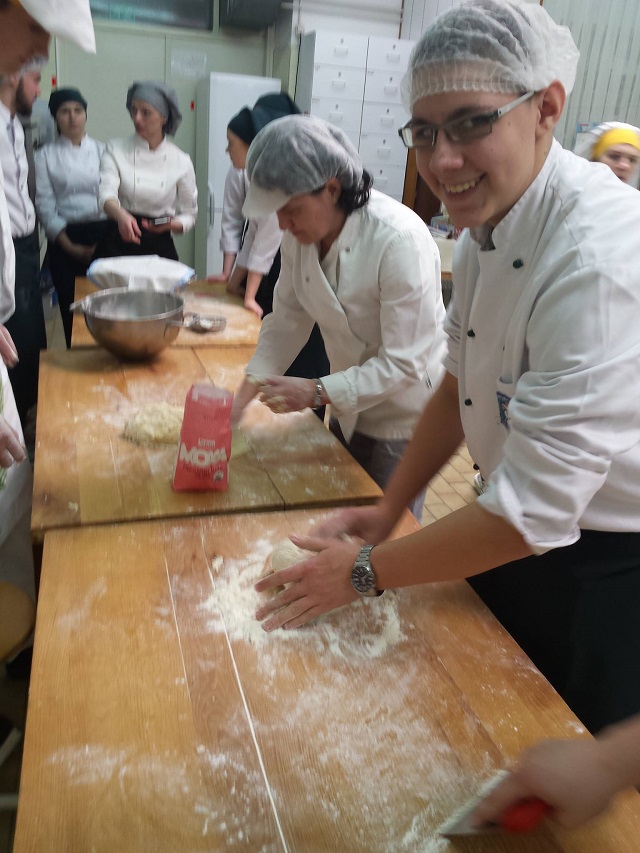
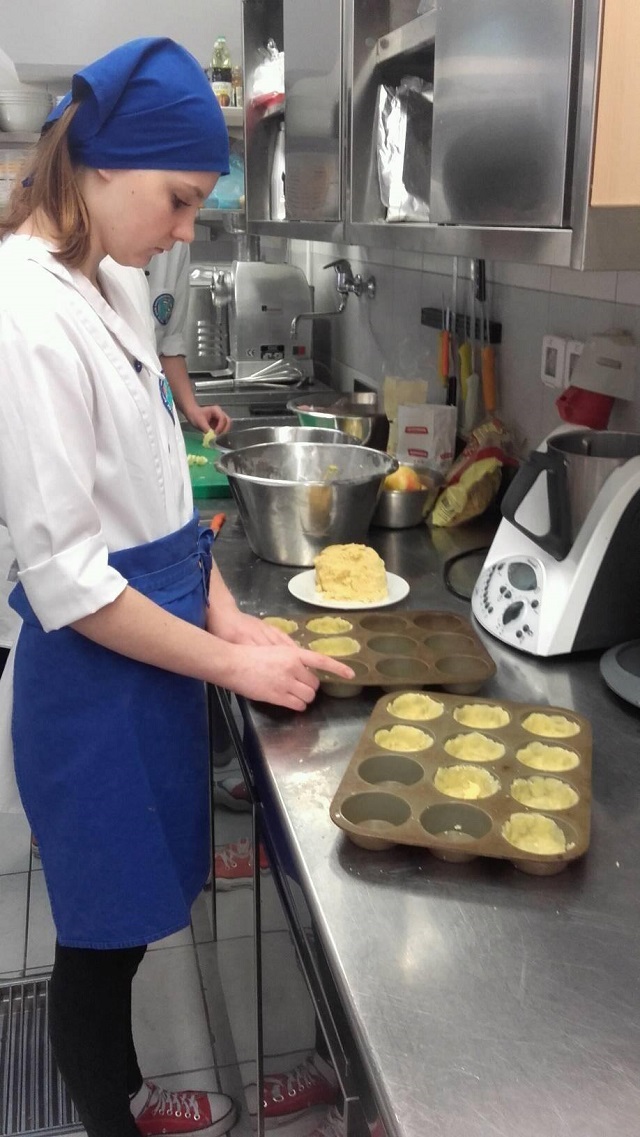
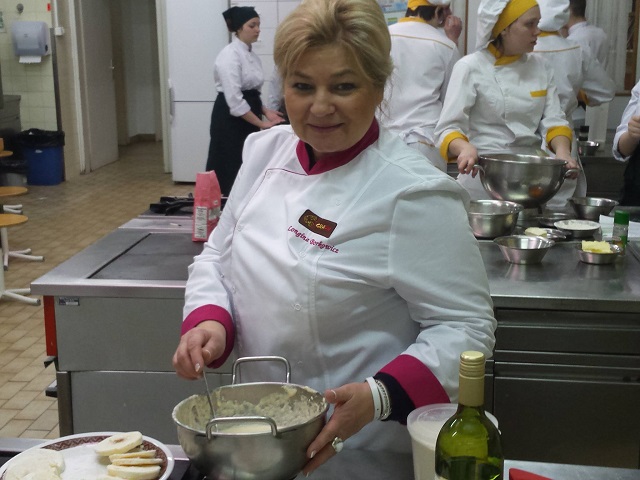
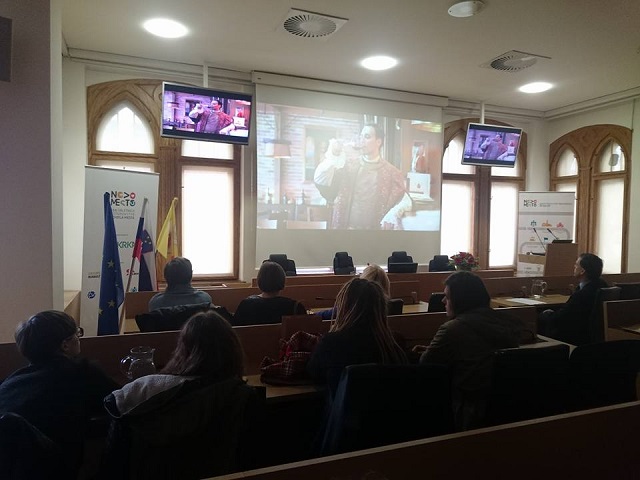
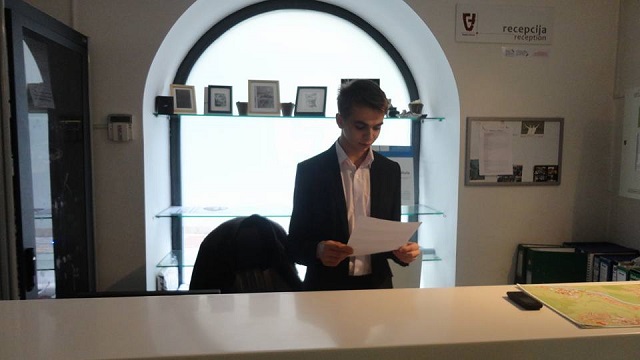
 This is the second day of our training in Novo mesto in Slovenia. We had a student guided tour around the town. We learnt about the history of the town, which is famous for its archaeological foundlings from the Bronze age. Novo mesto is the town where KRKA- the big pharmaceutical company- is located. We also took a tour round the gastronomy and hospitality school led by our tutors and Slovenian students. After that, we went to the Town Hall to meet the mayor of Novo mesto. In the afternoon we took a chance to ride a horse while visiting the farming school. We saw cheese production, cows and bees breeding. We met Edward Pałka- a retired Polish professor of pharmacy at Lubljana university and an employee of the KRKA company. We also met an experimental writer, belonging to the top ten in the world.
Today we have worked at the restaurant, confectionary, bakery and the Situla hostel. After lunch we went to see the Sruga castle where we participated in the reconstruction of the life of the castle in the Middle ages. We had fun, pretending to be knights and courtiers and gaining some knowledge on the history and culture of this region.
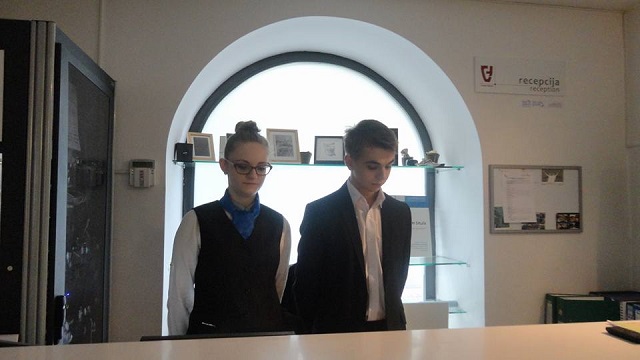
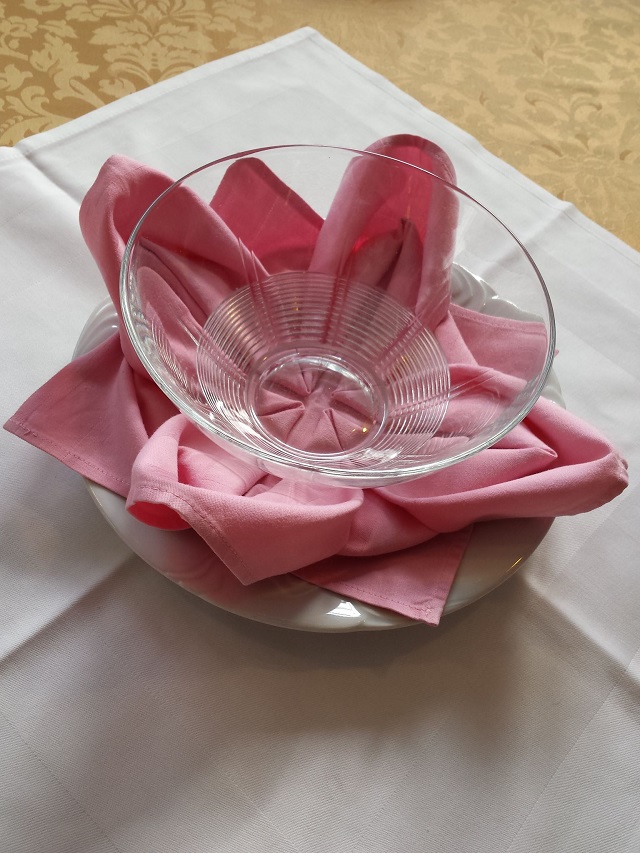
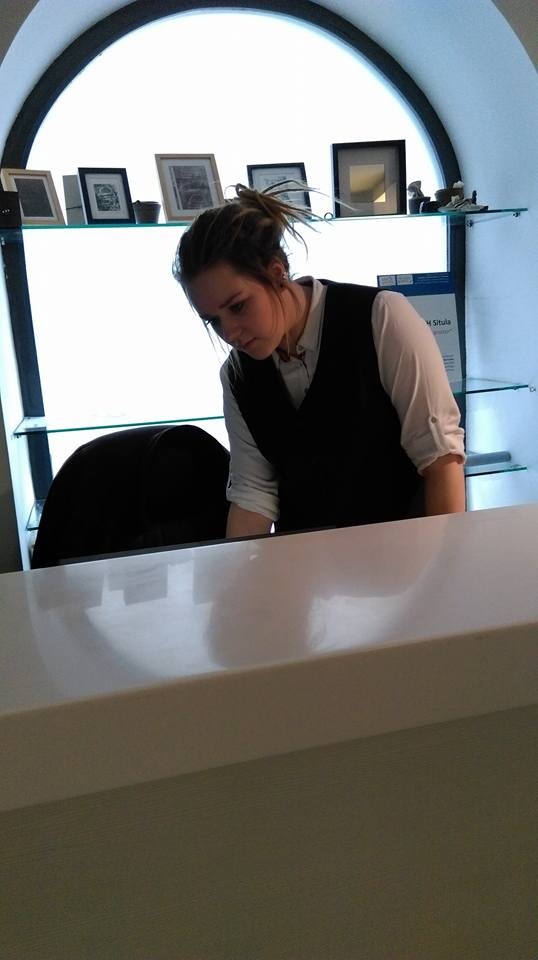
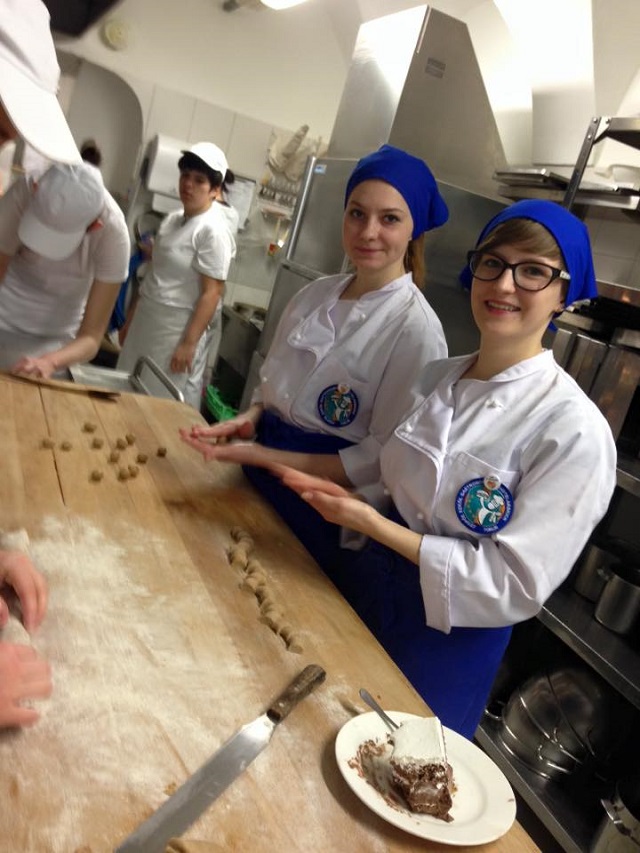
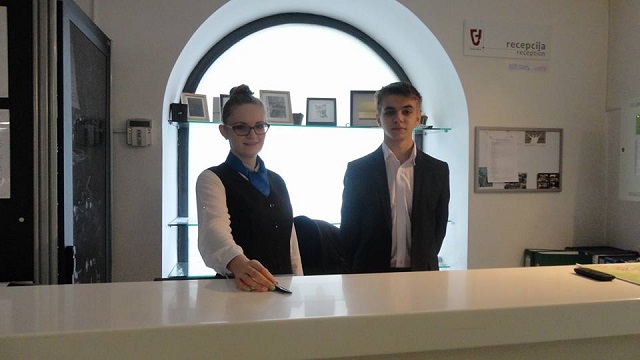
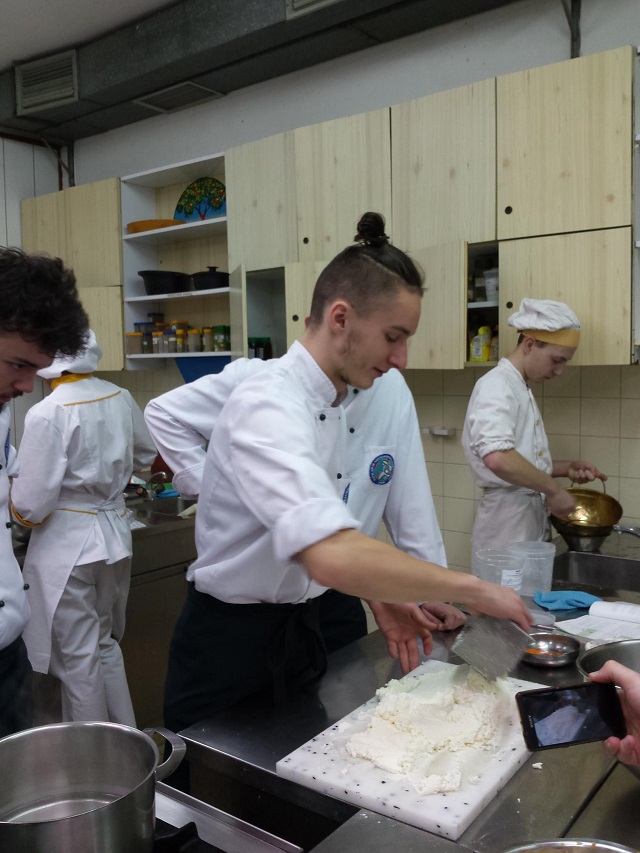
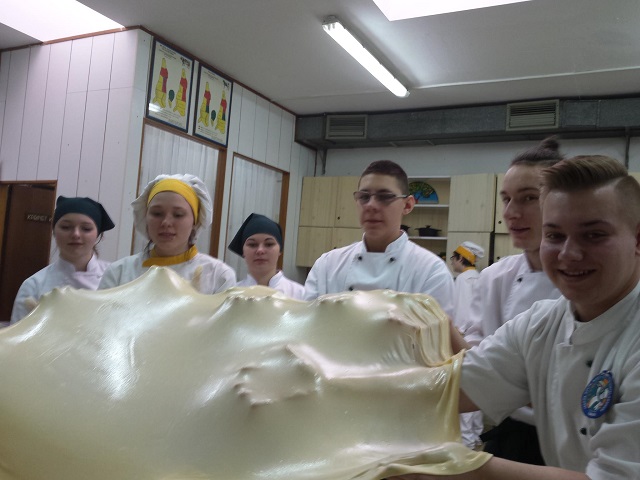
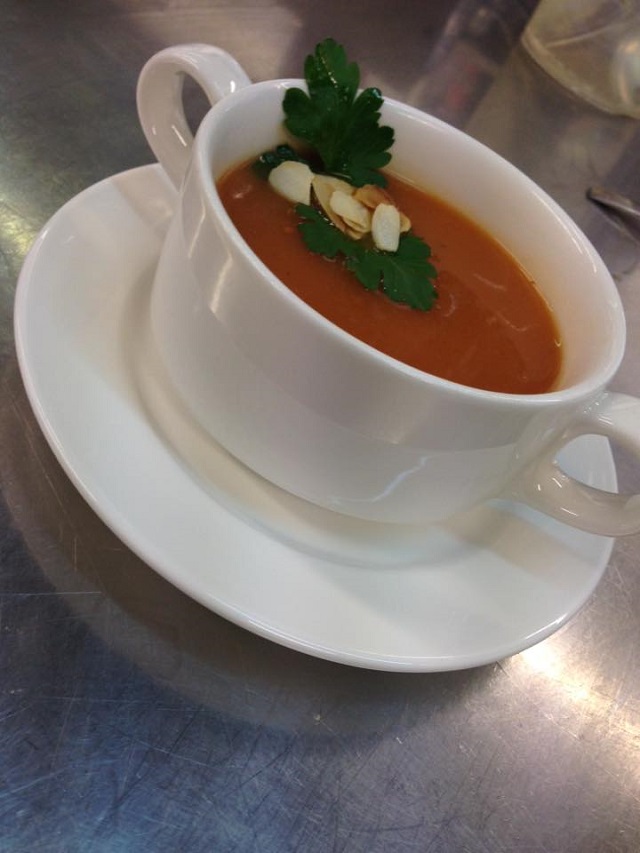
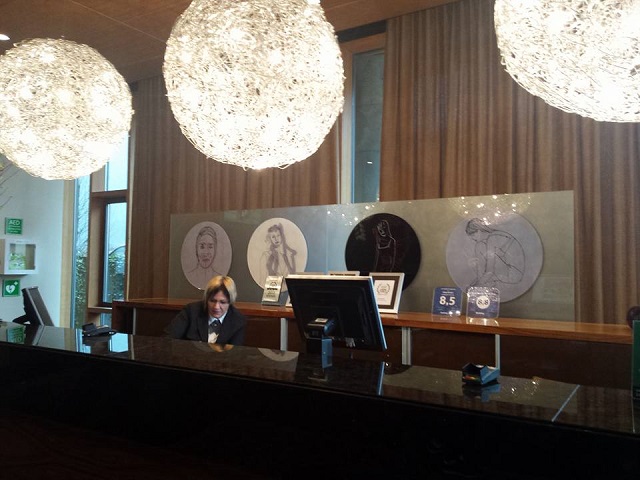
Kolejny dzień praktyk za nami. Kucharze nauczyli się jak zrobić charakterystyczne dla kuchni słoweńskiej ciasto gibanica. Jet to wielowarstwowe ciasto z różnymi masami - makową, orzechową, twarogową i jabłkową. Jego podstawą jest cieniutkie ciasto od strudla. Sporządziliśmy też poticę - zawijane ciasto drożdżowe, pieczone w charakterystyczny sposób czyli w formie do baby z kominem. Uczniowie uczestniczyli w prezentacji flambirowania (podpalania) potraw na przykładzie naleśników Suzette i obserwowali proces filetowania ryb. Cukiernicy wyprodukowali i udekorowali kilka tortów, elementami, które wcześniej samodzielnie wykonali. Hotelarze i „turyści” pracowali w recepcji w hostelu Situla i obsługiwali gości w restauracji. Część kucharzy samodzielnie przygotowywała zupę krem z zielonego groszku, która zyskała uznanie personelu i była podawana gościom w restauracji. Po obiedzie uczyliśmy się języka słoweńskiego.
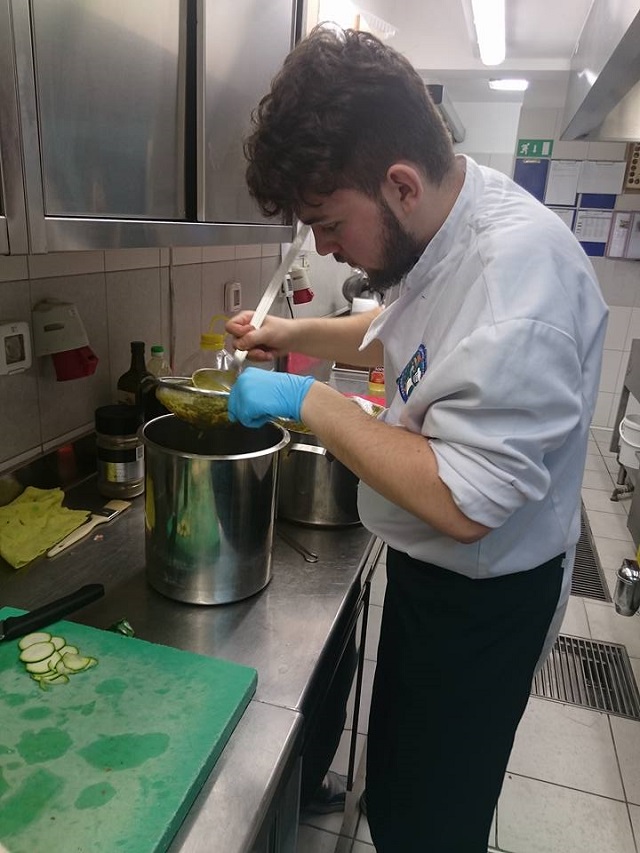
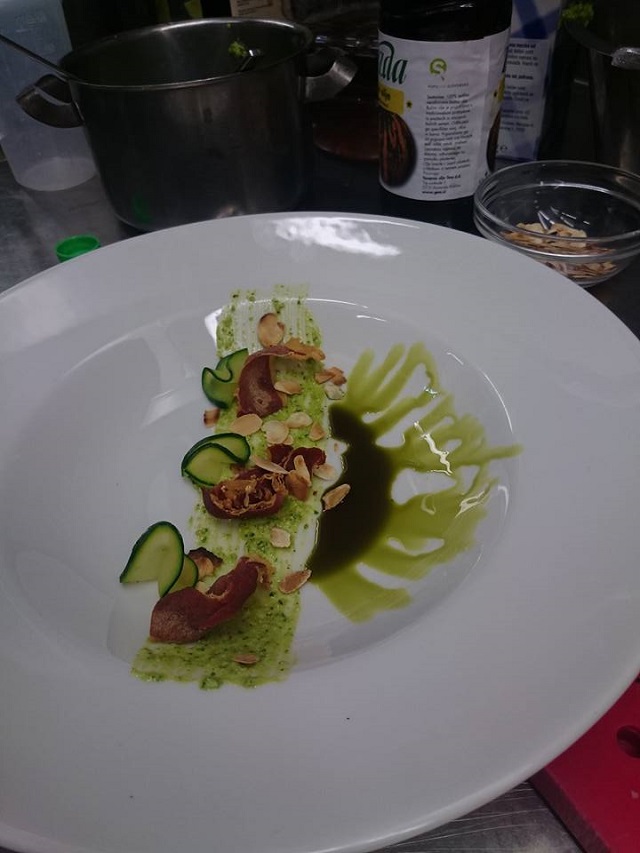
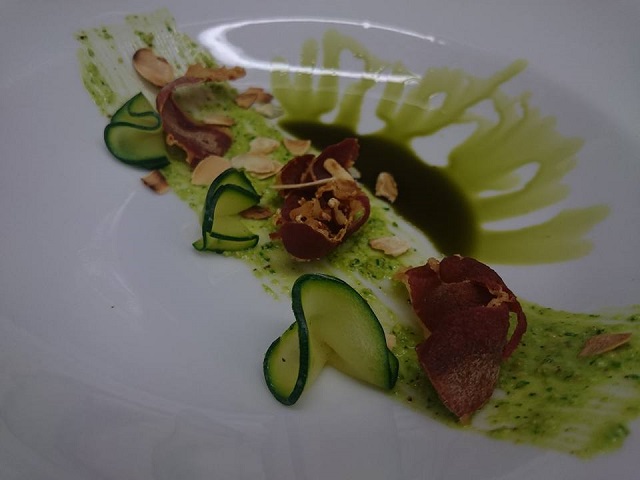
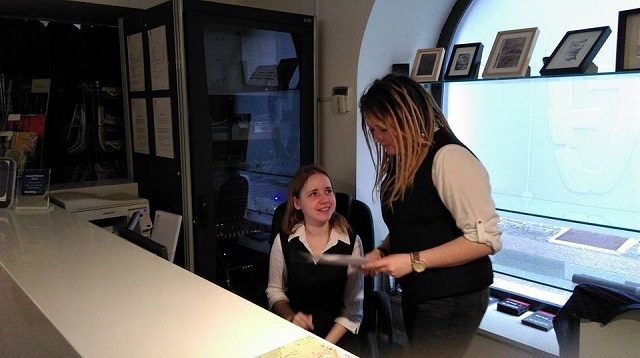
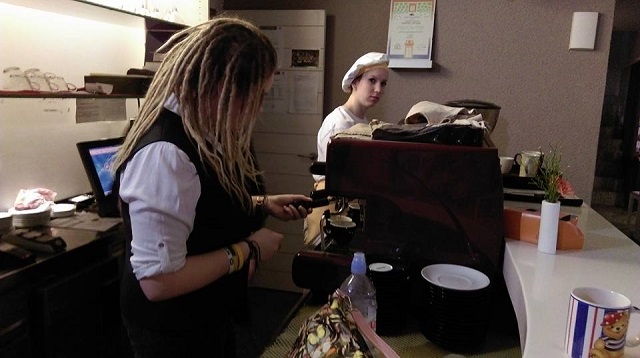
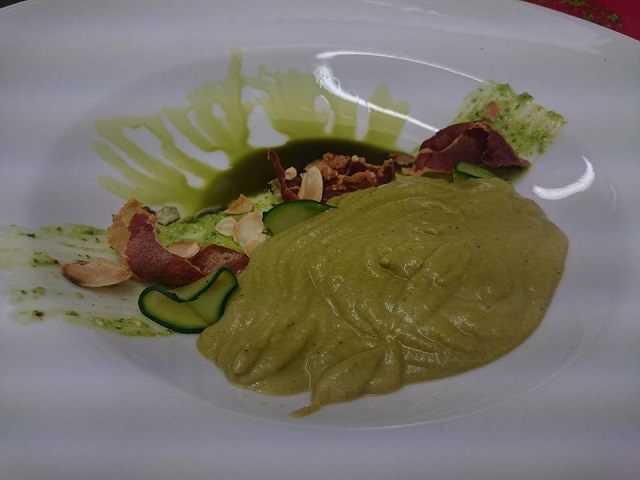
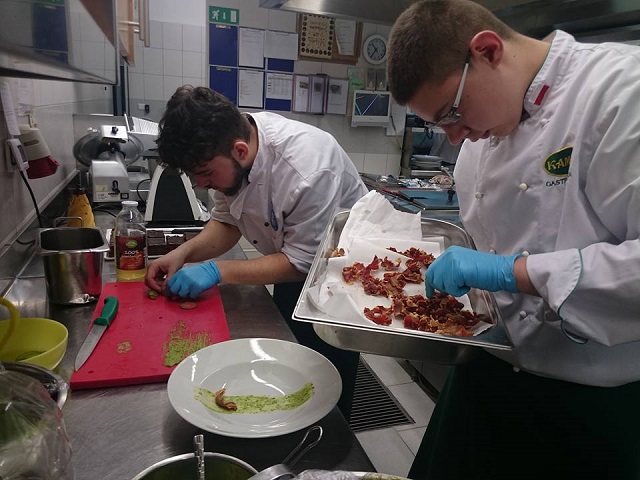
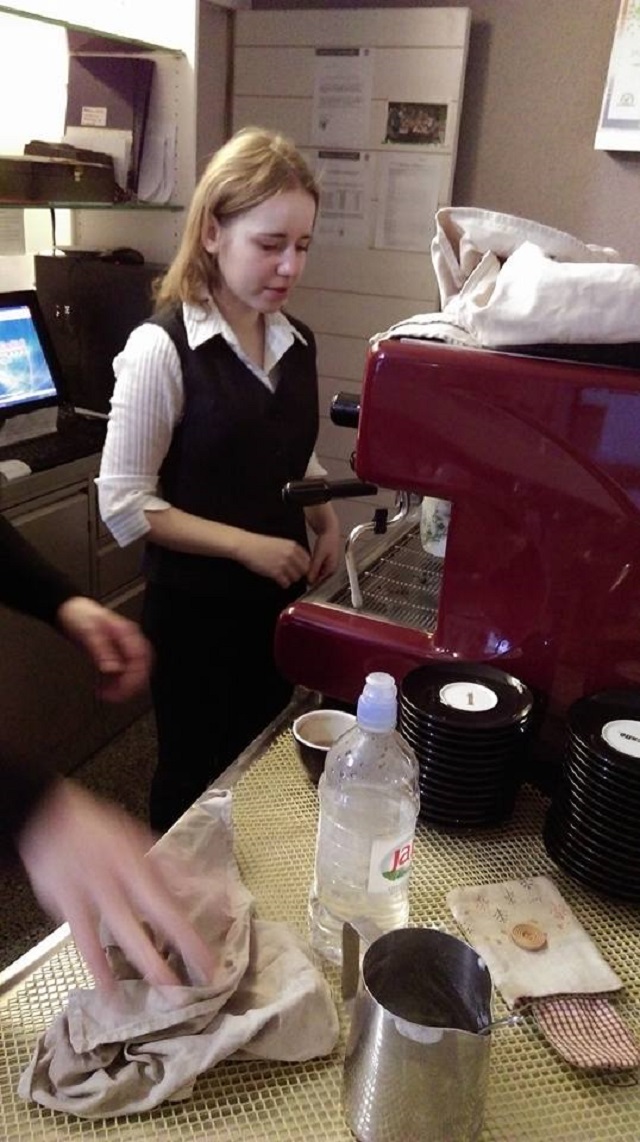
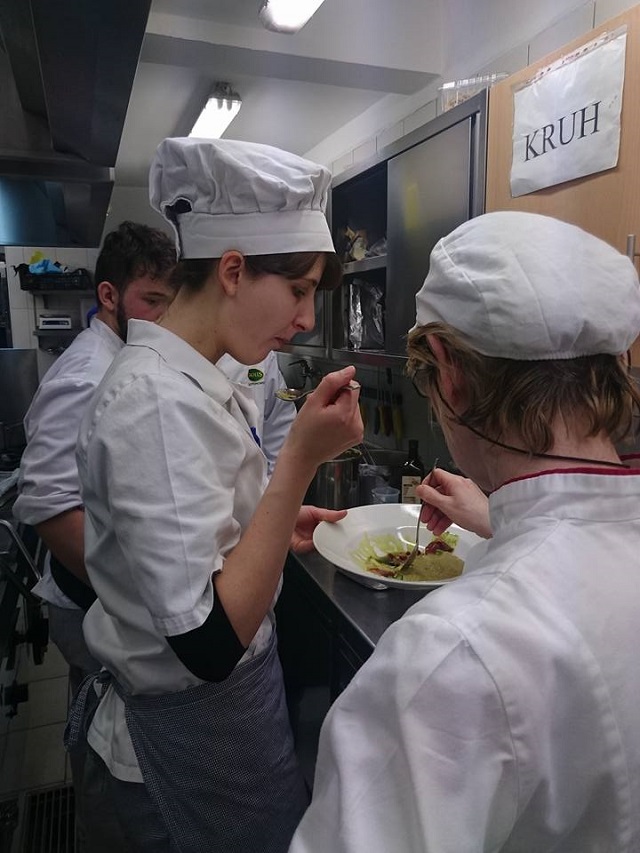

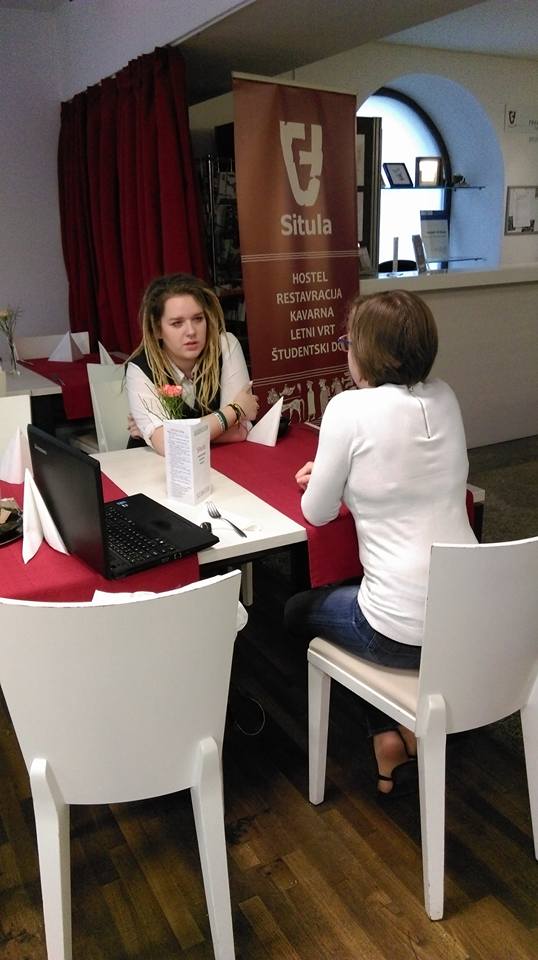
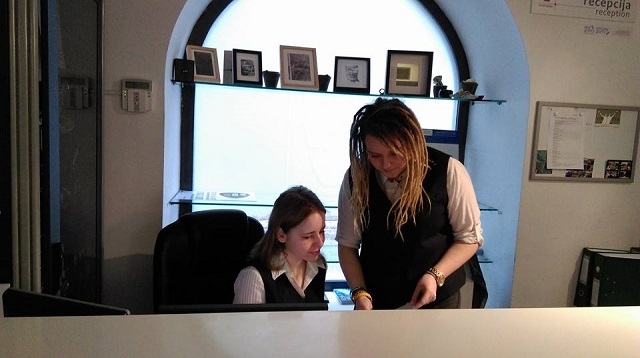
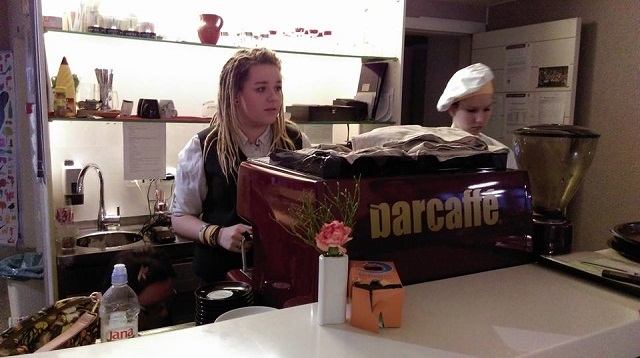
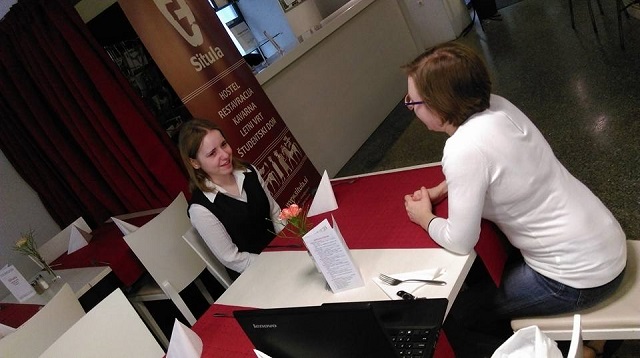
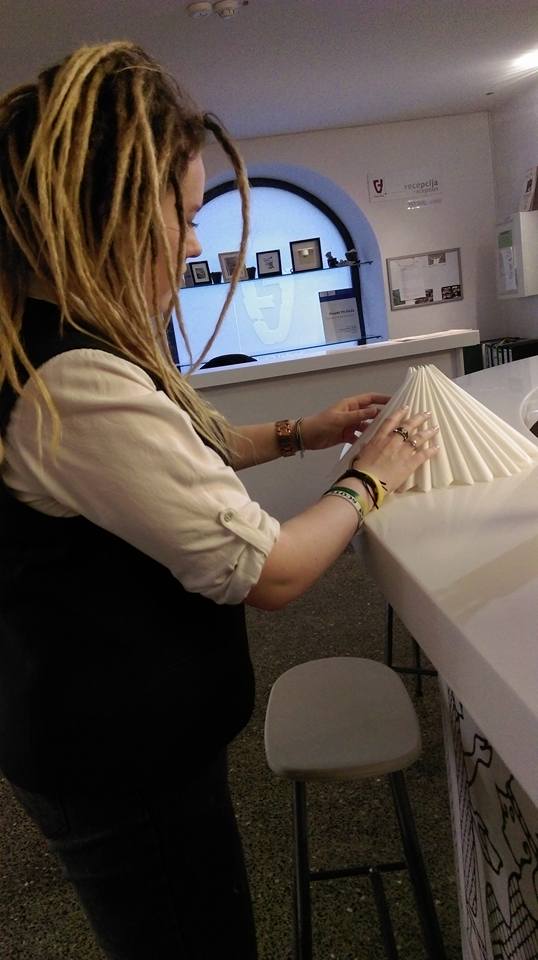
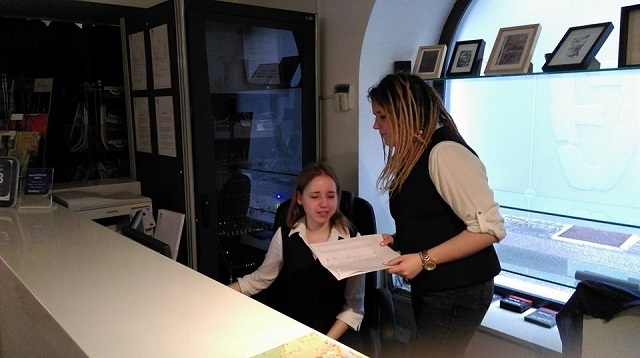
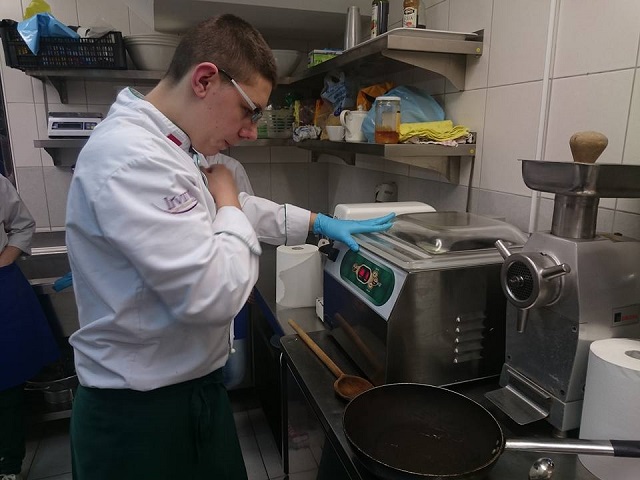
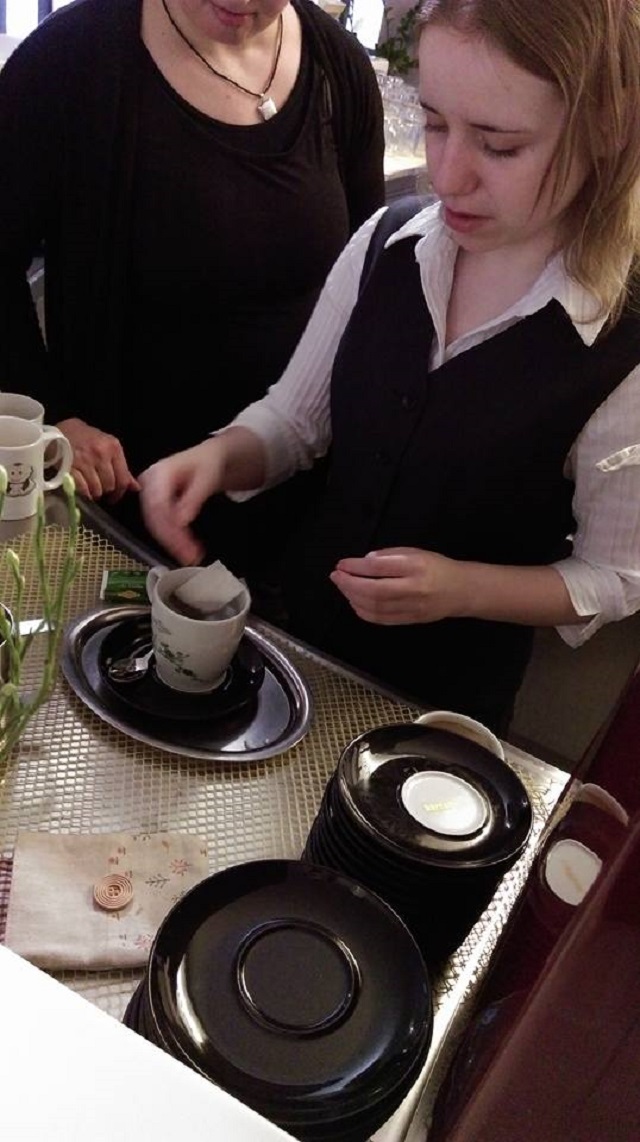
Another day of our traineeship has passed. The cooks have learnt how to make a typical Slovenian cake- gibanica. It consists of many layers with different kinds of cream- nut, poppy seed, cottage cheese and apple. The base of this cake is very thin strudel dough. We also made a potica- a rolled cake baked in a special baking form. The students participated in the presentation of flambeed Suzette pancakes and observed the process of fish fileting. Confectioners produced and decorated a few birthday cakes with elements prepared by themselves the day before. Tourists services technicians and hotel technicians worked at the reception desk of the Situla hostel and served customers at the restaurant. Some of our cooks prepared the soup by themselves. It was the cream green peas soup, which was praised by the staff and served at the restaurant.
After lunch we had Slovenian language classes.
Weekend pełen wrażeń rozpoczął się od wycieczki po jednej z największych jaskiń kresowych w Europie. Skocjanska jama (jaskinia) zaskakuje nie tylko swoim rozmiarem ale także pięknem i bogactwem form skalnych w postaci stalaktytów i stalagmitów. Wędrowaliśmy kilkadziesiąt metrów nad rwącą rzeką w dole jaskini, a odgłos bulgoczącej wody skutecznie tłumił nasze rozmowy. Następnym punktem programu było zwiedzanie niewielkiego miasteczka nad Adriatykiem - Piranu, w którym obowiązują 2 języki urzędowe - włoski i słoweński. Wpływy włoskie widoczne są też w architekturze, w bistrach na każdym rogu ulicy, w klimatycznych sklepikach z pamiątkami.
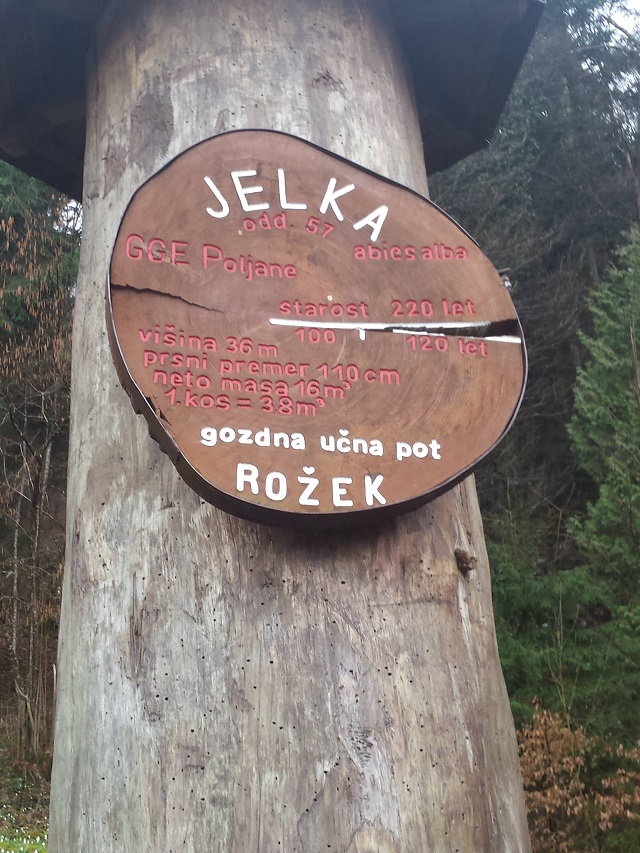
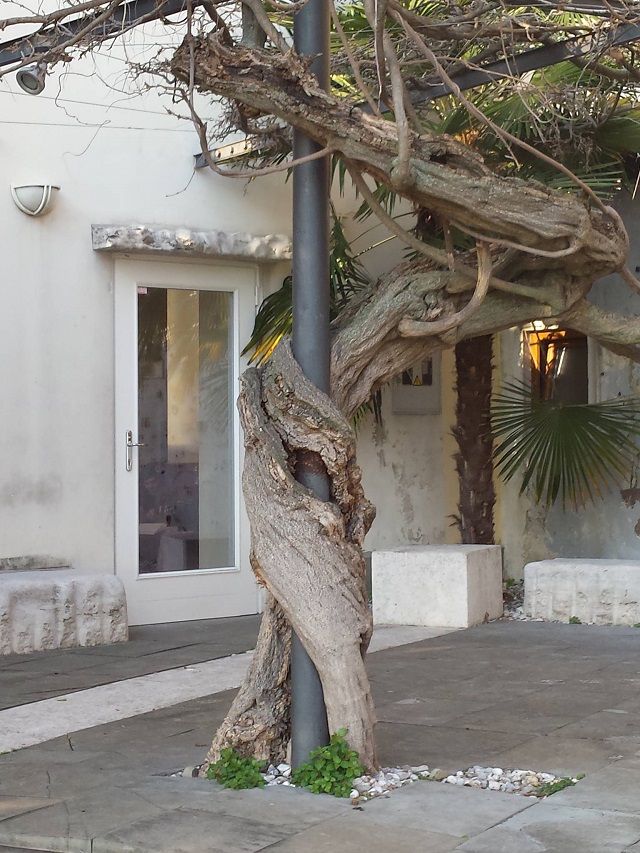
W niedzielę zwiedziliśmy rezerwat przyrody, w którym rosną egzotyczne gatunki drzew charakterystyczne dla lasów Japonii, Chin czy Ameryki, np. sekwoje. Ze względu na dużą ilość śniegu która spadła poprzedniego dnia, nie udało nam się zobaczyć najwyższego drzewa w Europie zwanego drzewem gigantycznym.
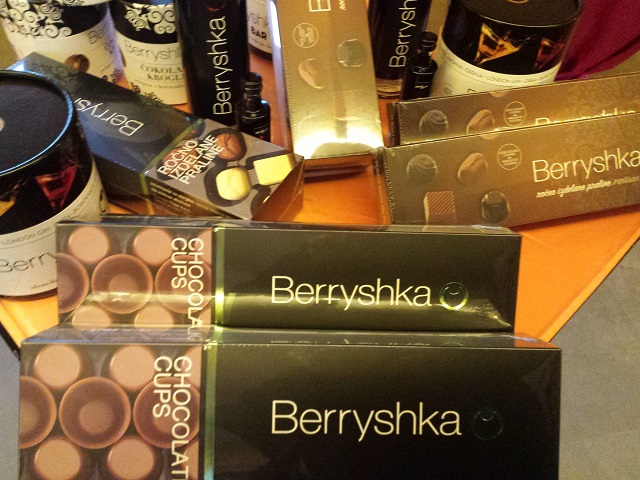
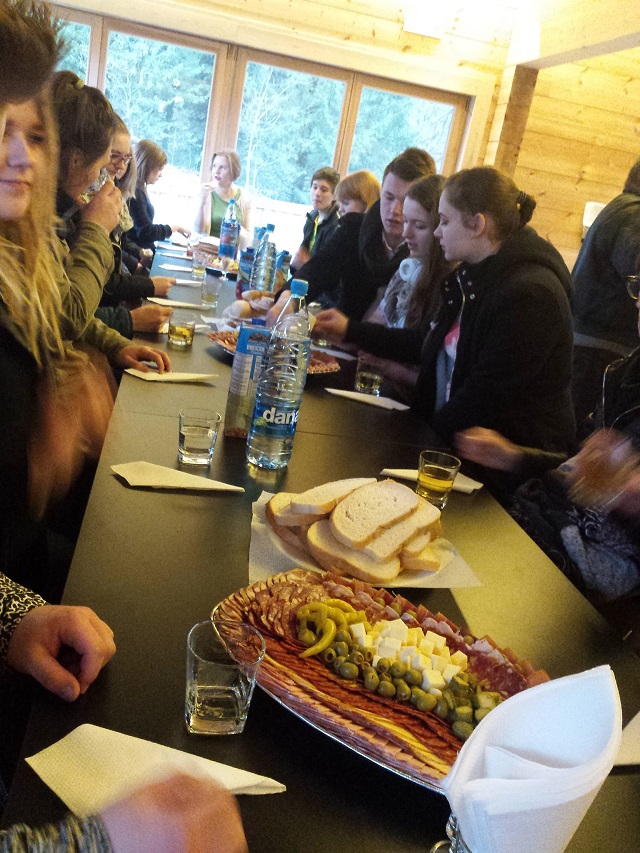
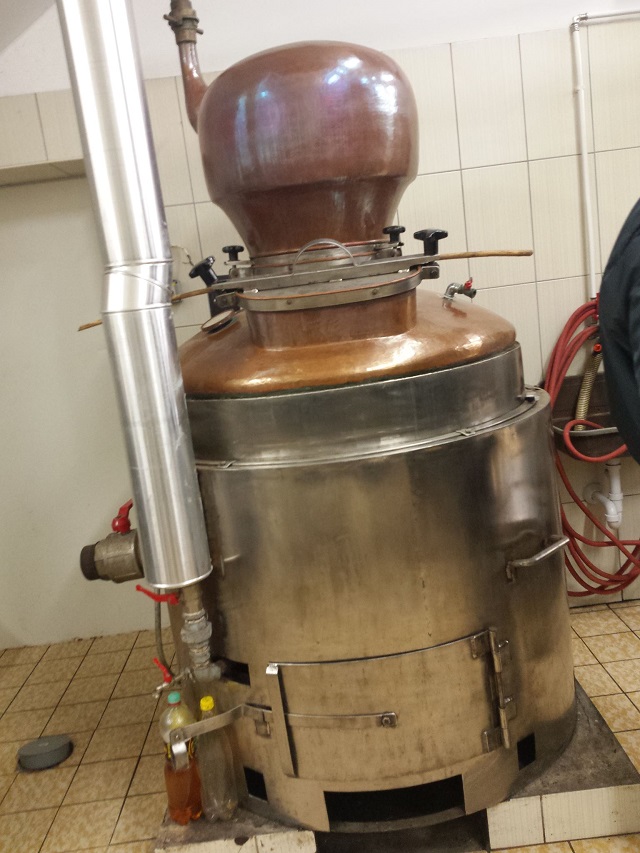
Następnym punktem programu było zwiedzenie małej destylarni i fabryczki produkującej wysokiej jakości likiery i praliny, które znajdą się wkrótce na półkach polskiej sieci handlowej „Piotr i Paweł”. Zostaliśmy ugoszczeni przez właściciela iście po królewsku dobrymi serami, wędlinami i oczywiście czekoladkami. Po południu oprowadzono nas po kompleksie hotelowym Doljenske Toplice, gdzie przez 2 godziny relaksowaliśmy się, kąpiąc się w basenach termalnych.
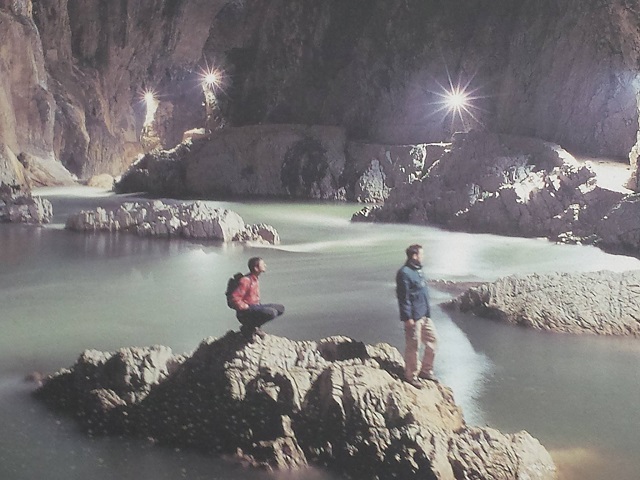
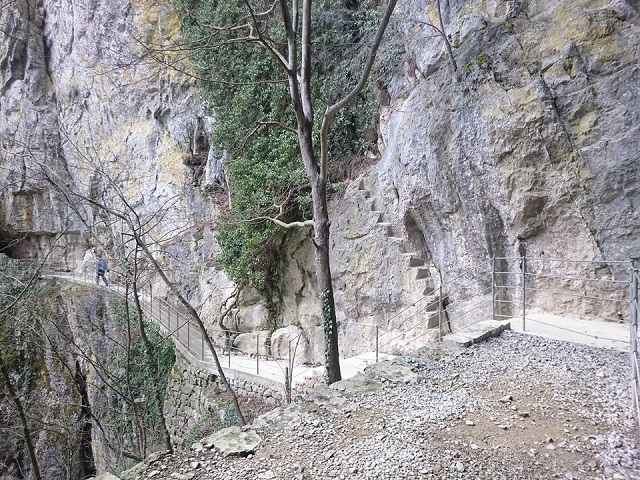
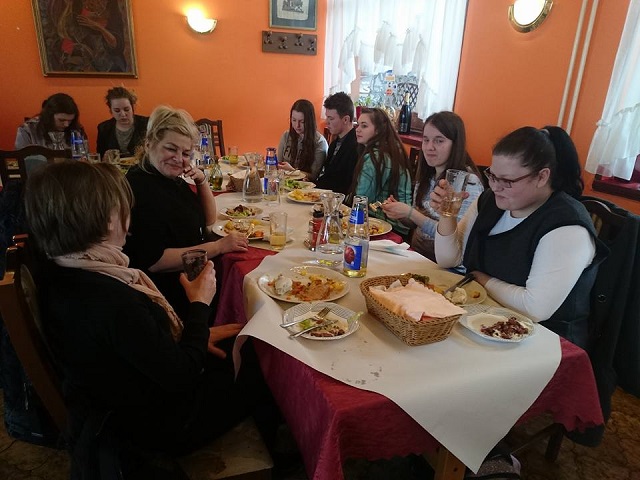
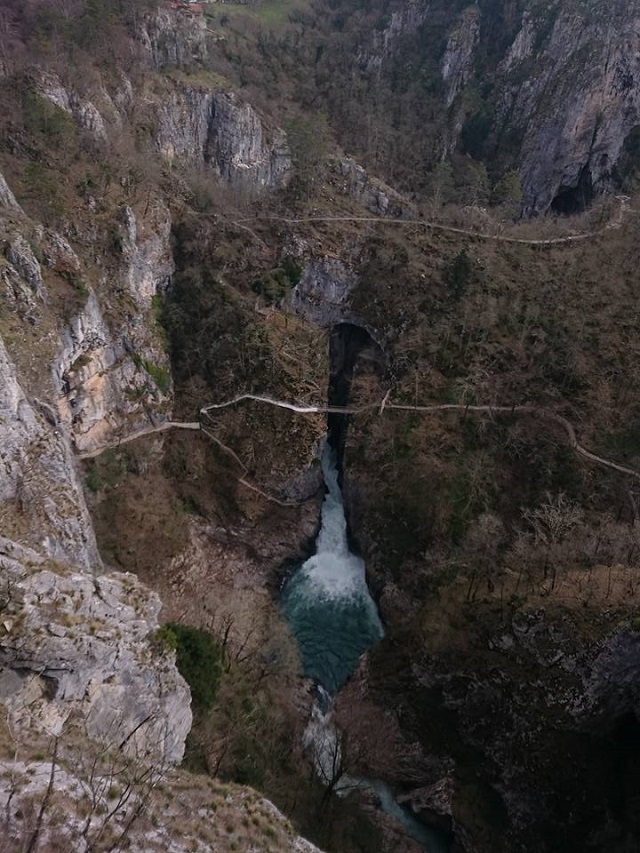
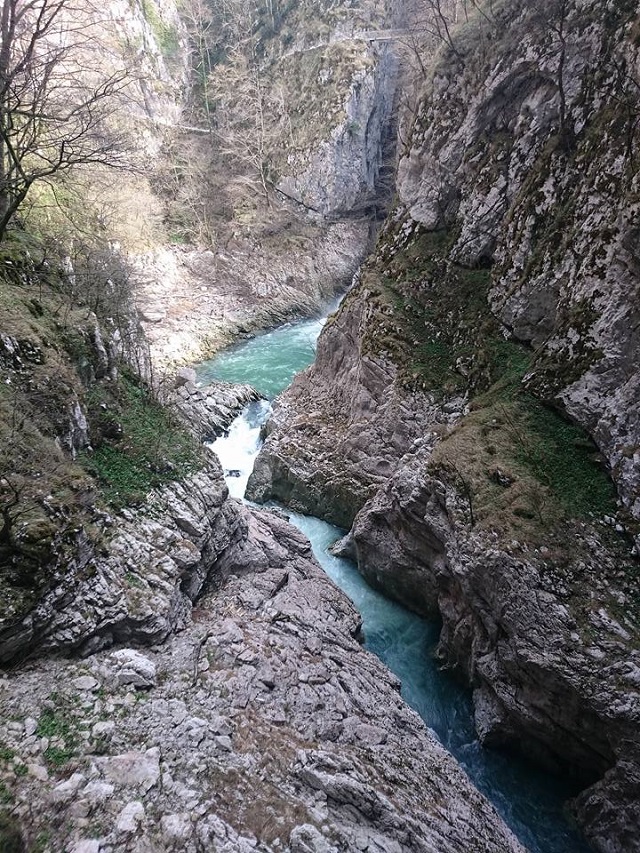
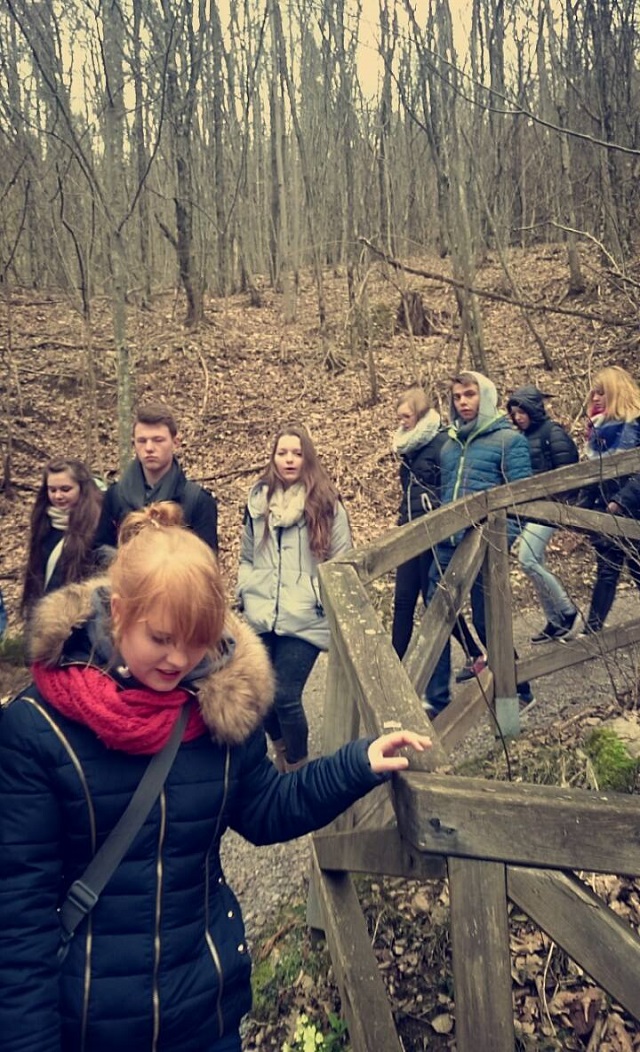
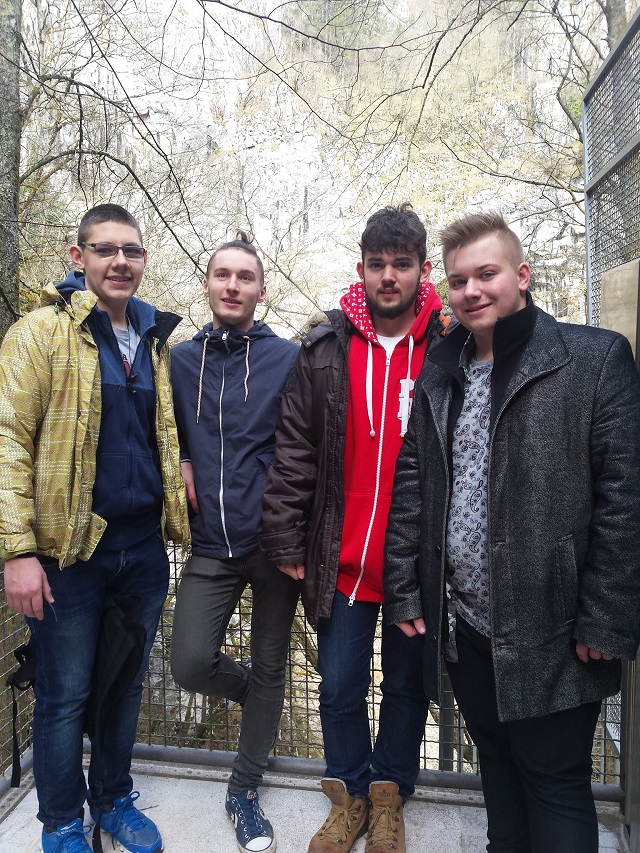
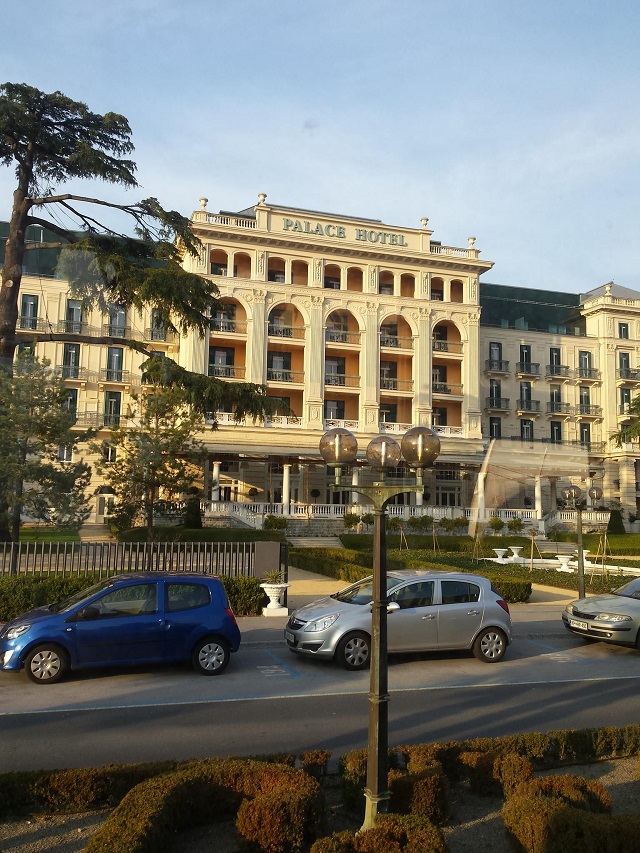
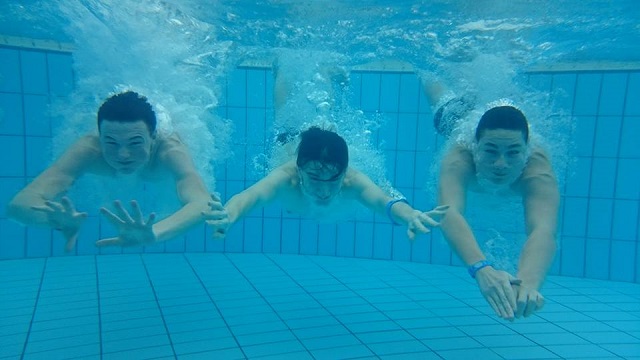
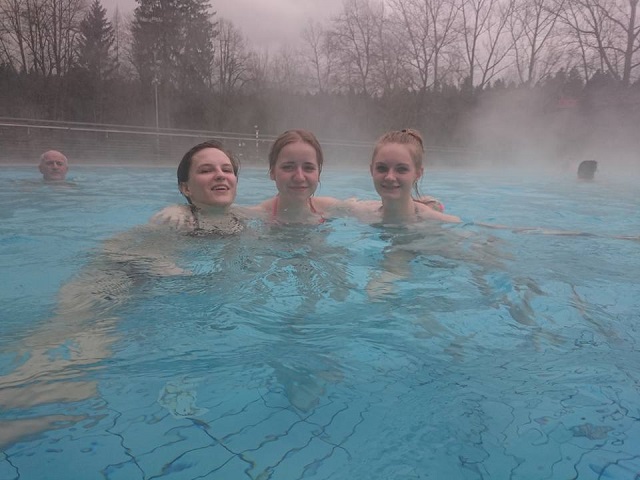
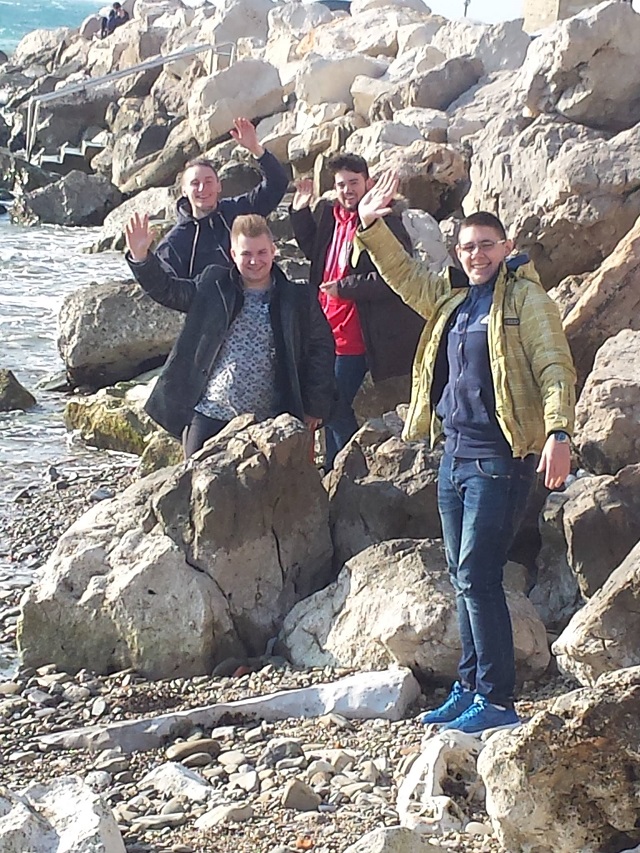
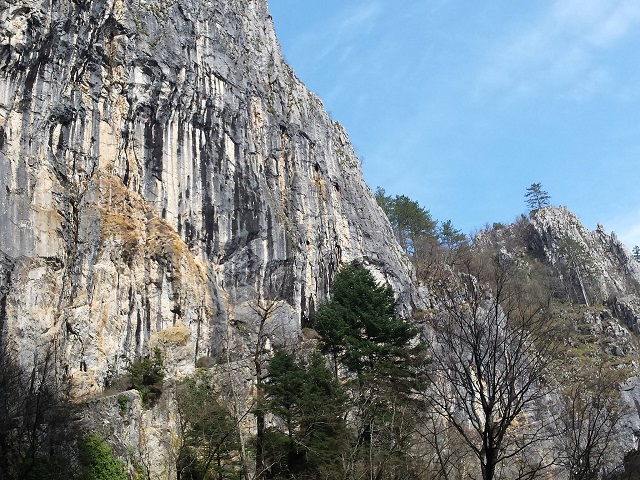
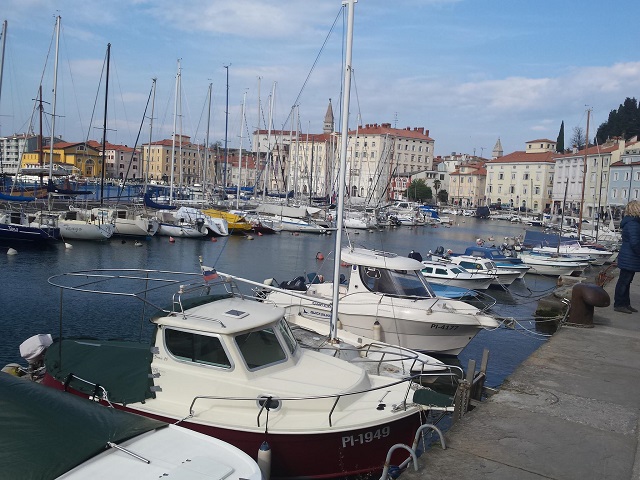
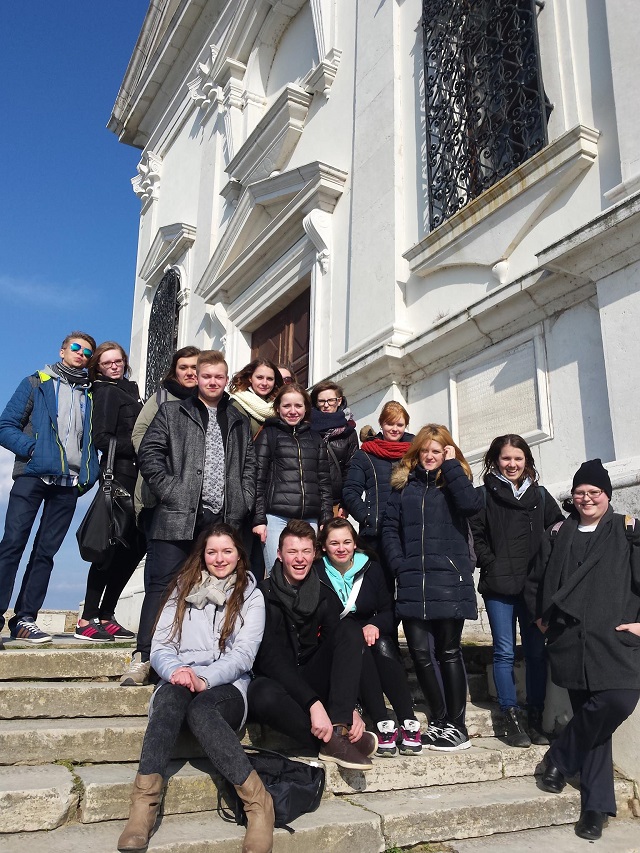
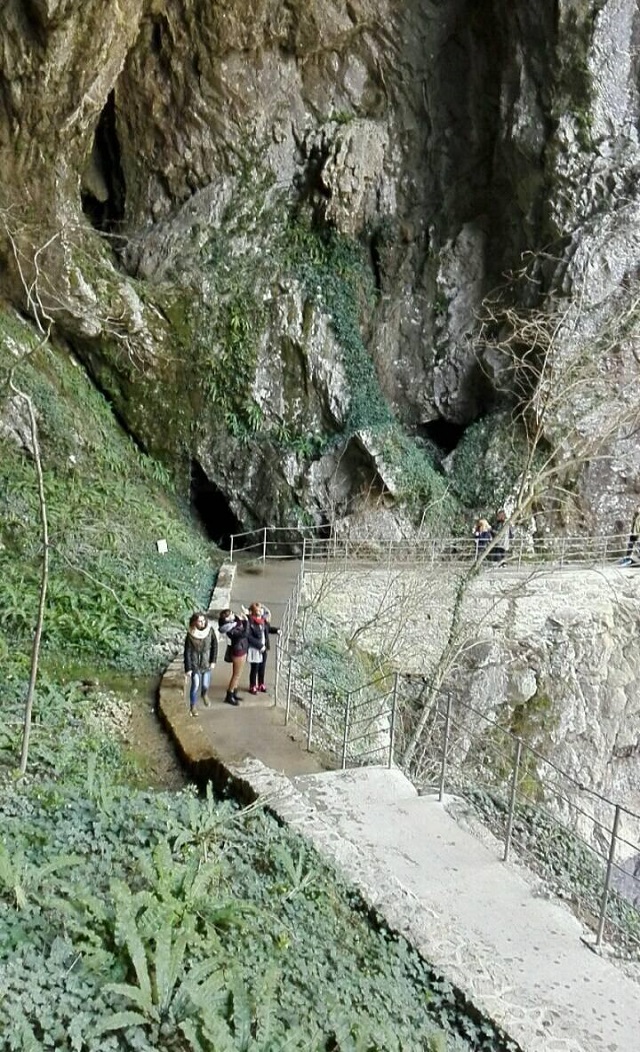
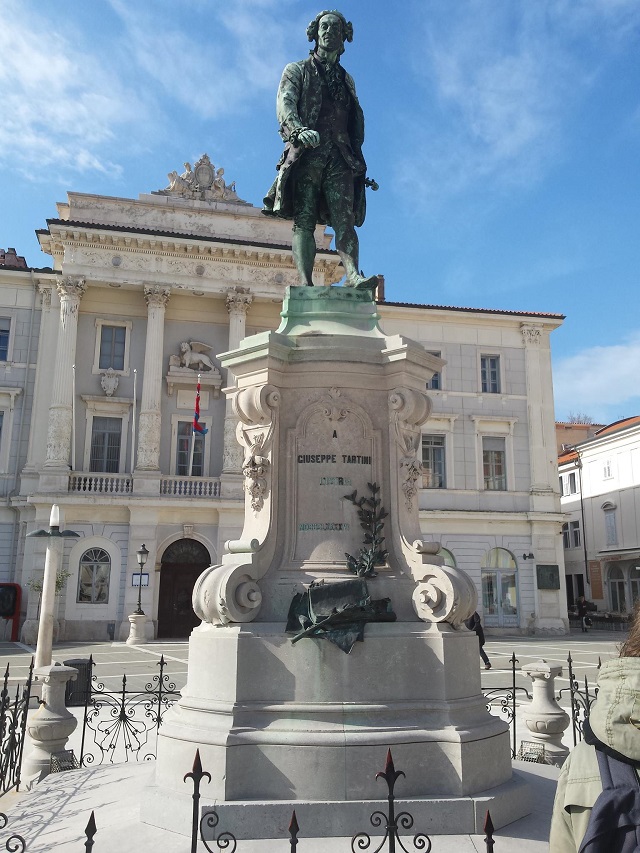
A fun-filled weekend began with a tour round one of the largest caves in Europe - Skocjanska jama . It is surprising for visitors not only because of its size but also the beauty and richness of rock formations as stalactites and stalagmites. We hiked a few dozen meters above the rushing river at the bottom of the cave, and the sound of bubbling water effectively muffled our conversations. The next point in our itinerary was a visit to a small town at the Adriatyk seaside- Piran, where there are 2 official languages - Italian and Slovenian. Italian influences are also visible in the architecture, in the bistros on every street corner, in a tiny souvenir shops.
On Sunday we visited the nature reserve, where there are exotic species of trees characteristic of forests in Japan, China or America for example- redwoods. Due to the large amount of snow that had fallen the previous day, we were unable to see the tallest tree in Europe called the giant tree. Next we “paid a visit” to the small distillery and factory producing high quality liqueurs and pralines, which will soon be on the shelves of Polish retail chain, "Peter and Paul". We were treated royally with good cheeses, cold meats and of course chocolates. In the afternoon we were shown around the hotel complex Doljenske Toplice, where we were relaxing for 2 hours , bathing in the thermal pools.

Odkrywamy coraz więcej tajników słoweńskiej kuchni. Ze względu na stopień trudności przygotowania gibanicy, poticy i strudla, powtórzyliśmy cały proces przygotowania tych ciast. Tym razem nie potrzebowaliśmy już pomocy nauczyciela i słoweńskich kolegów. Poza tym gotowaliśmy zupę krem z dyni i pomidorów, fantazyjnie doprawioną przyprawą piernikową – w końcu jesteśmy z Torunia. Inna grupa kucharzy zrobiła krem marchewkowy z dodatkiem soku pomarańczowego. Obie zupy trafiły na stoły restauracji Gostisce na Trgu. Cukiernicy upiekli niezliczone ilości kruchych ciasteczek, które przekładali różnymi kremami. Technicy hotelarstwa i turystyki obsługiwali gości w recepcji i w sali restauracyjnej, doskonaląc przy tym swój angielski.
Po obiedzie uczestniczyliśmy w wykładzie prowadzonym przez panią Longinę Borkowicz na temat jakości wina. Kolejne popołudnie poświęciliśmy na zapoznanie się z kulturą Novego mesta poprzez prace świetnego XX-wiecznego malarza Bożydara Jakaca.
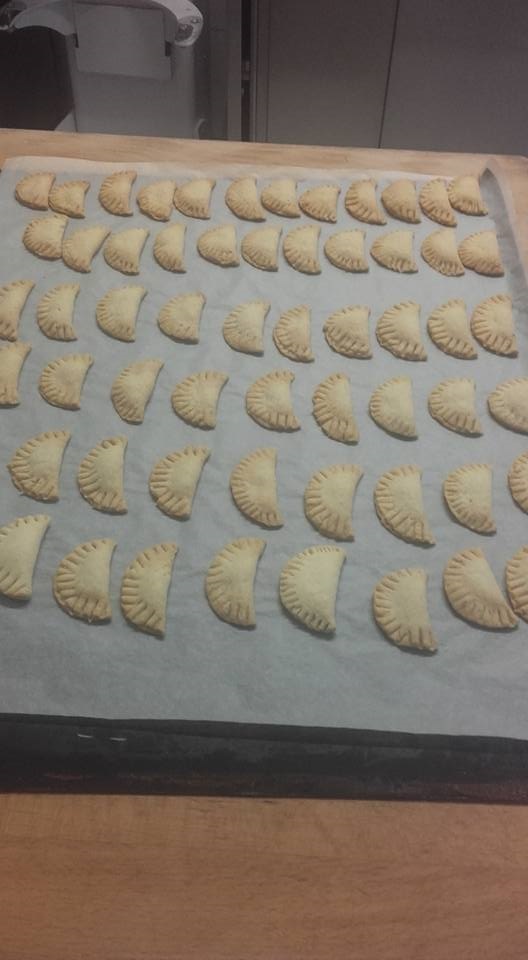
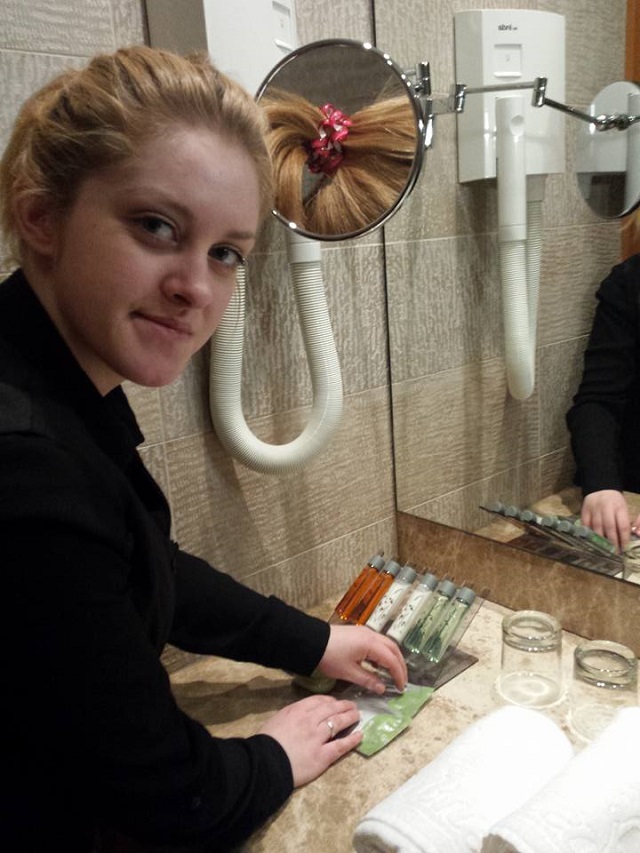
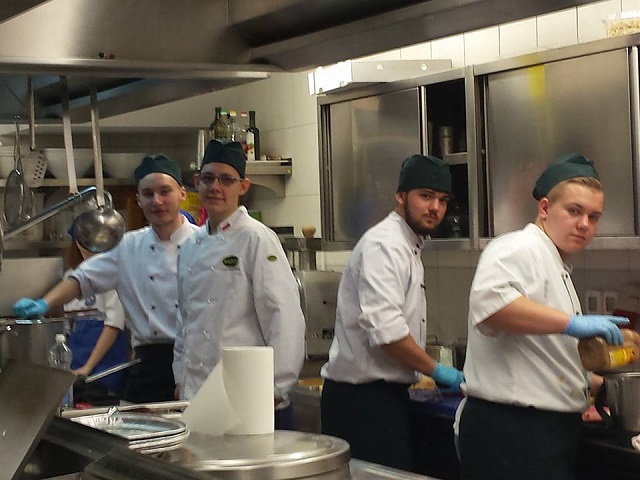
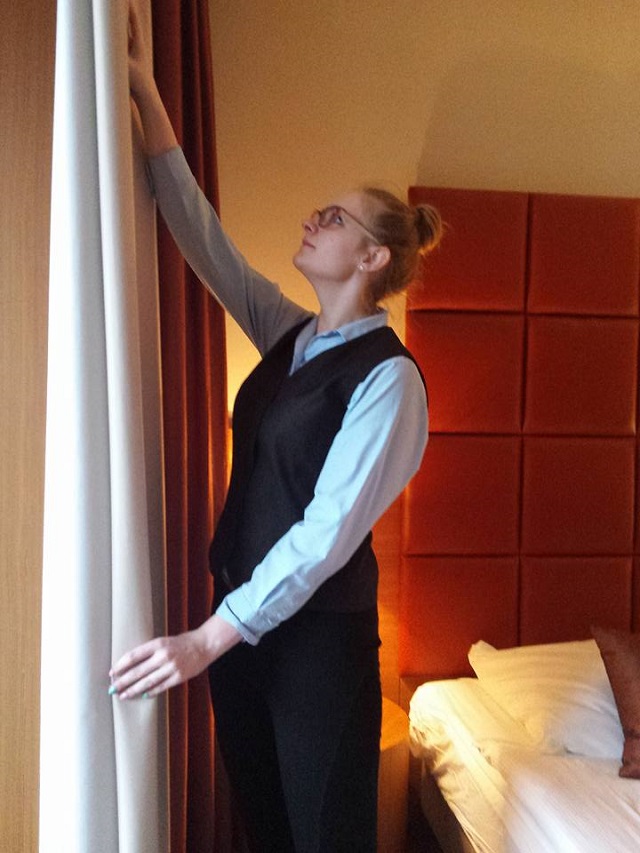
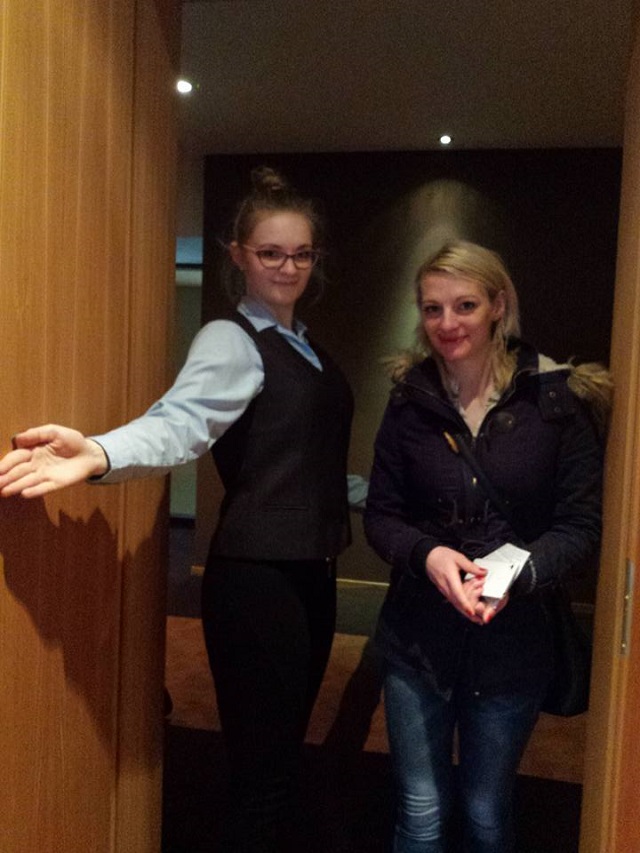
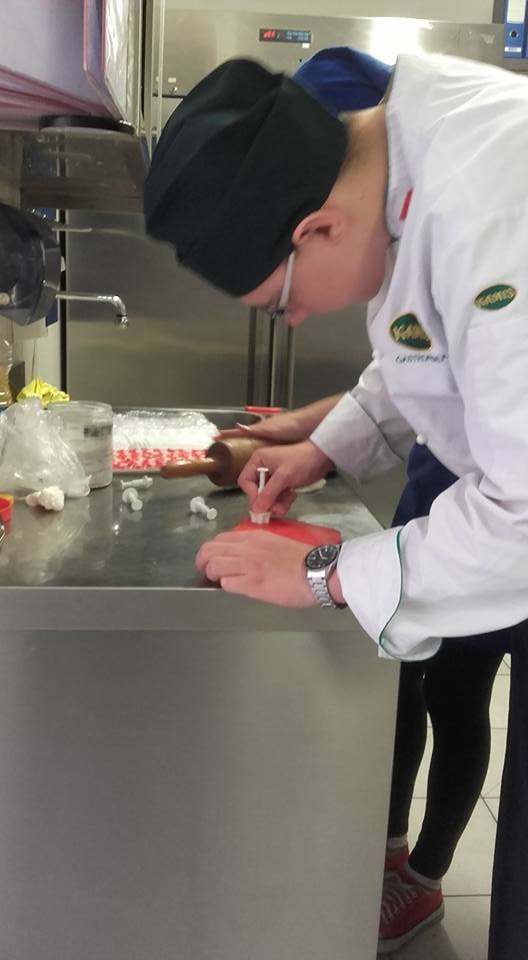
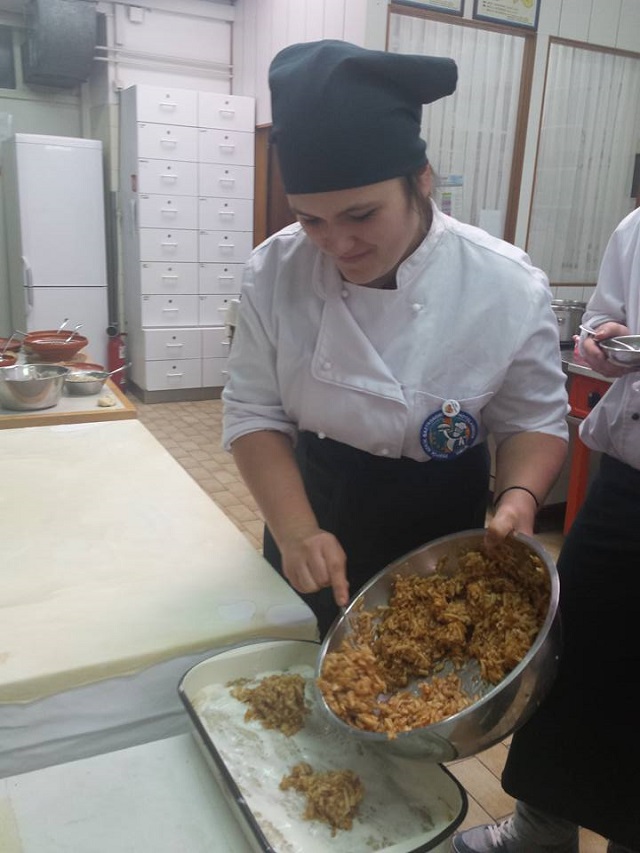
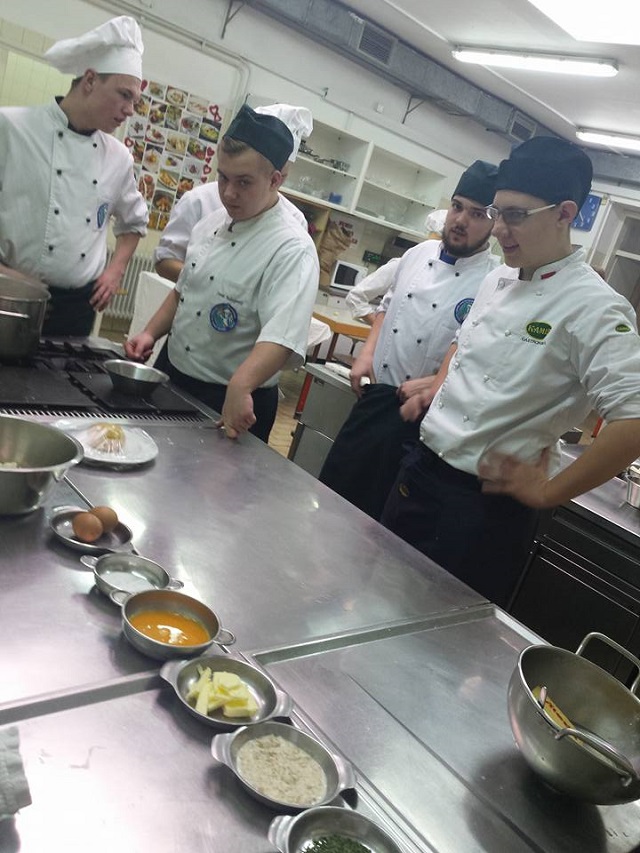
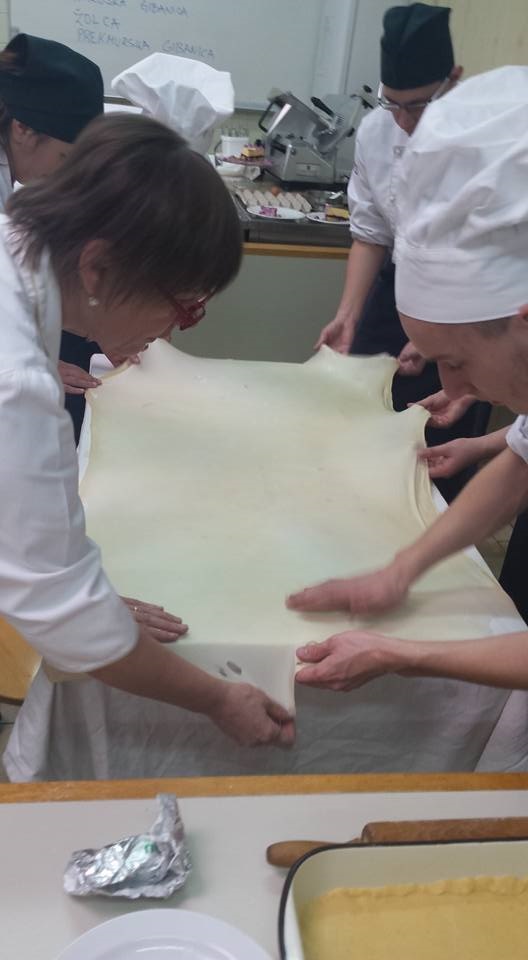
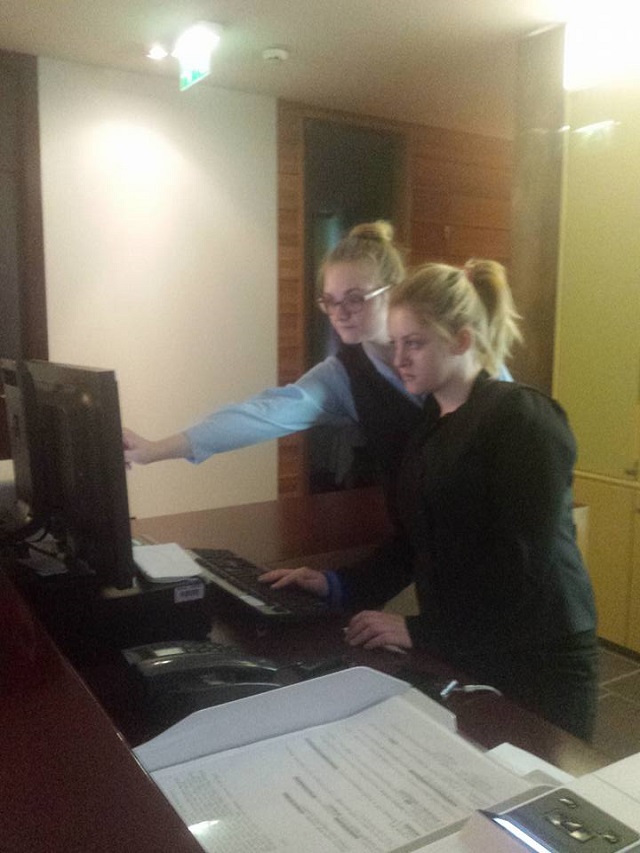
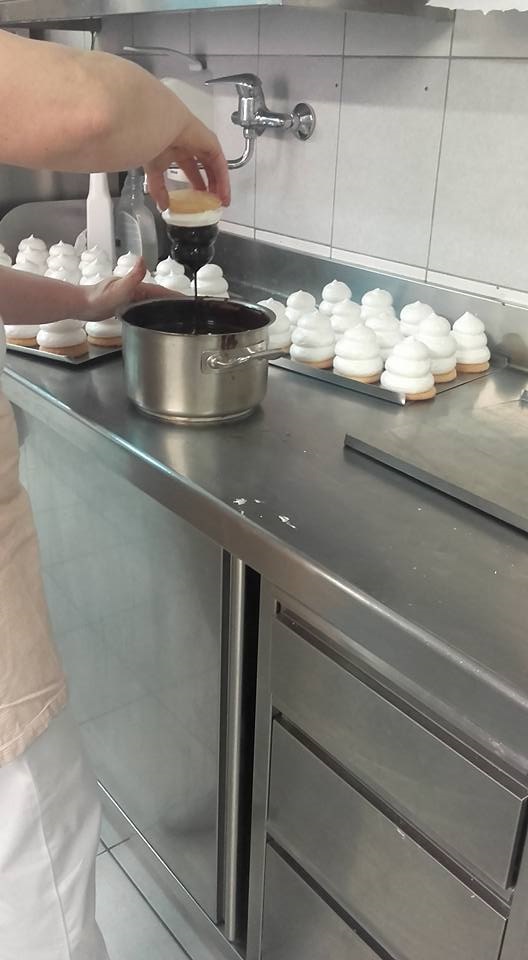
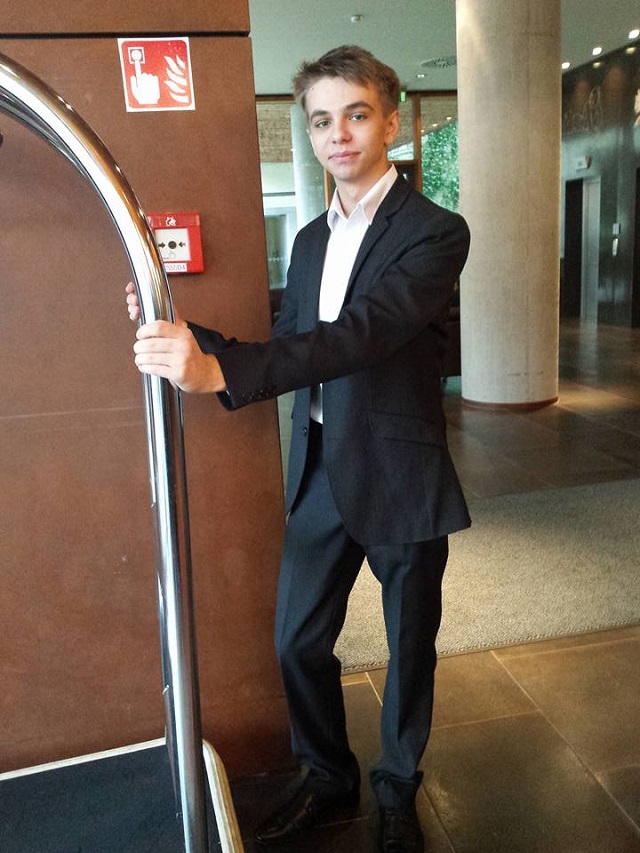
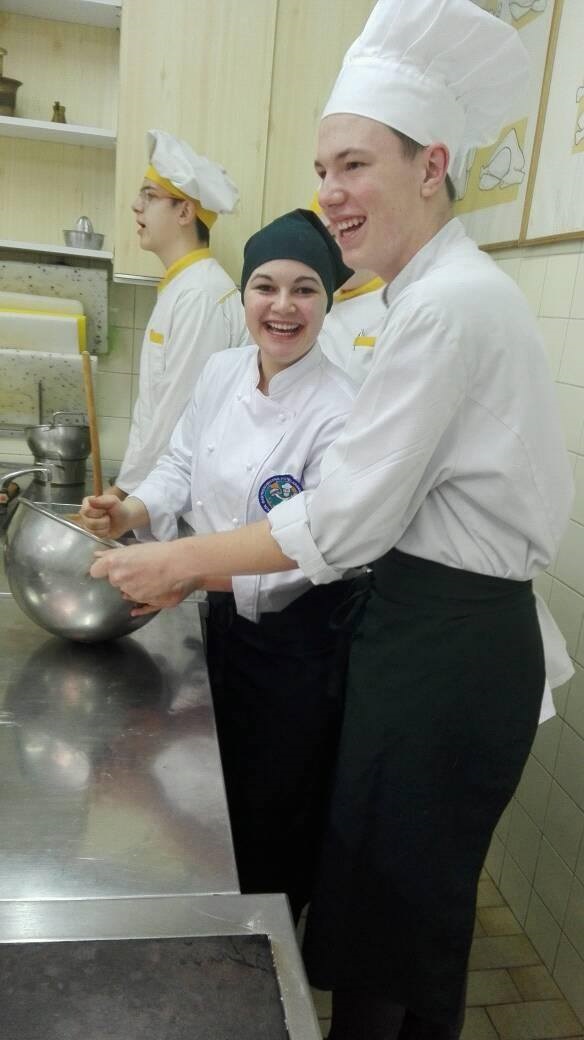
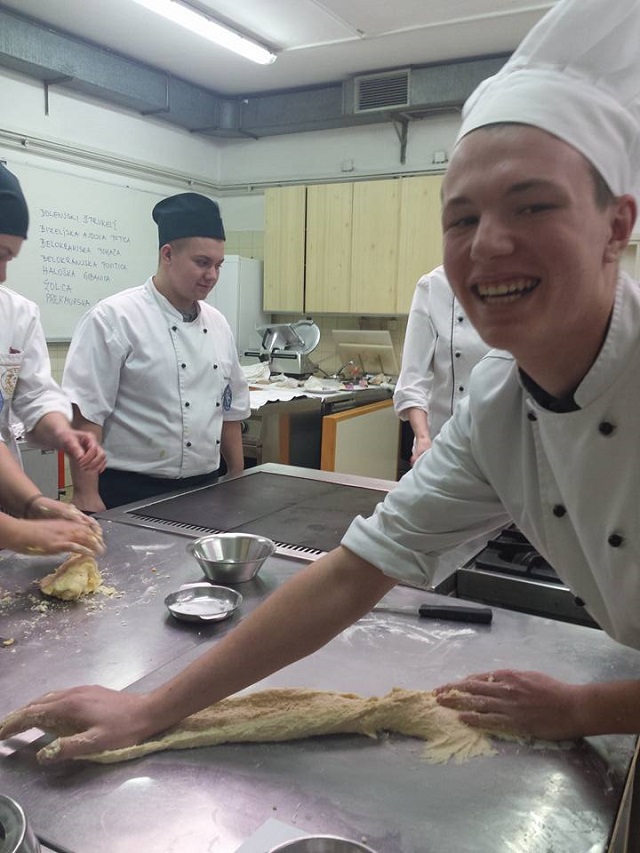
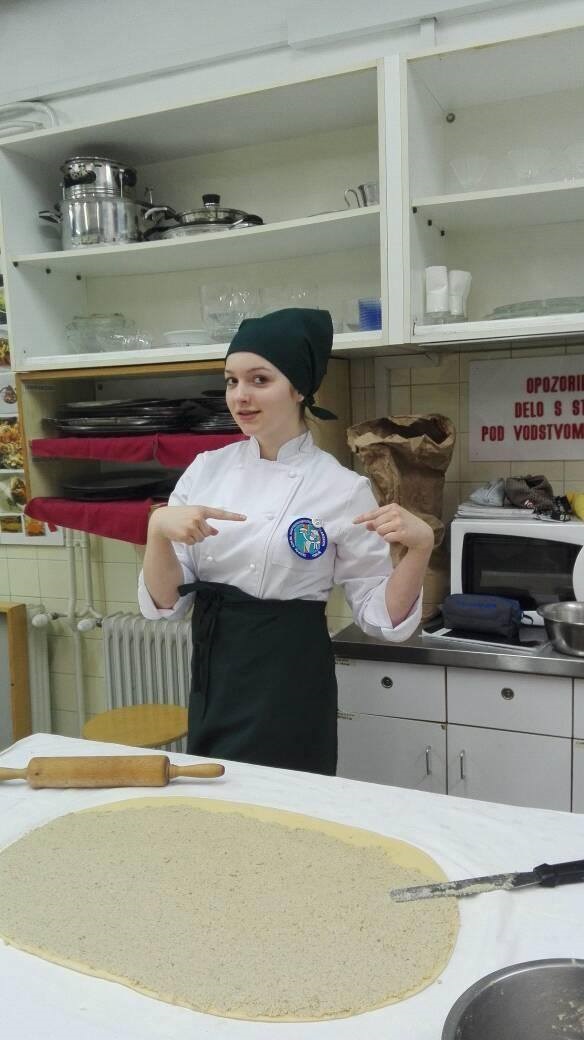

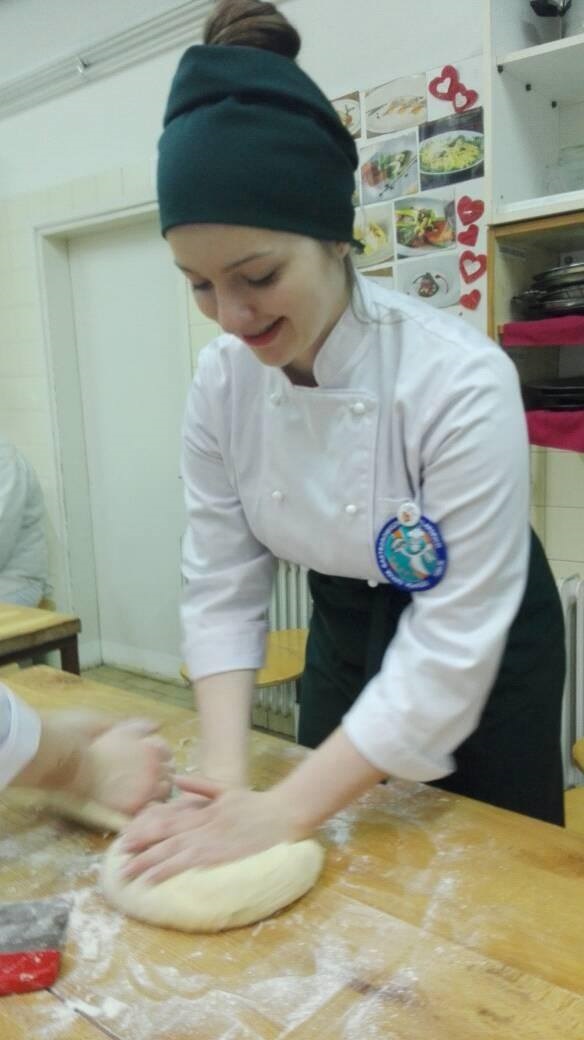
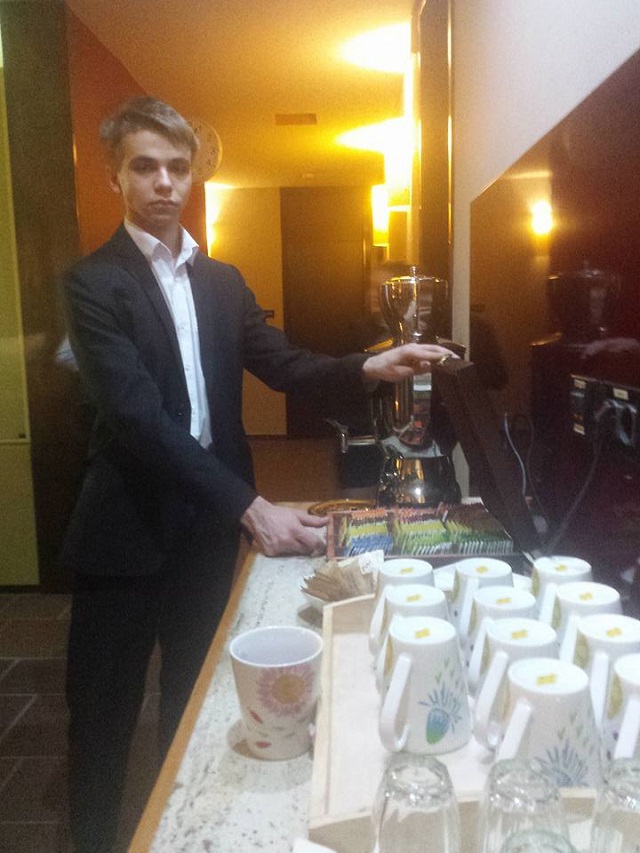
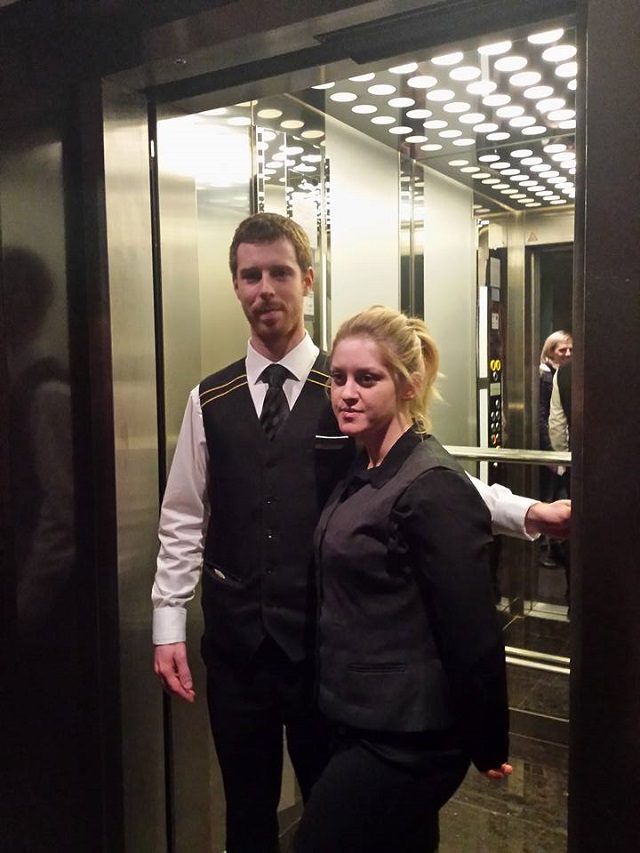
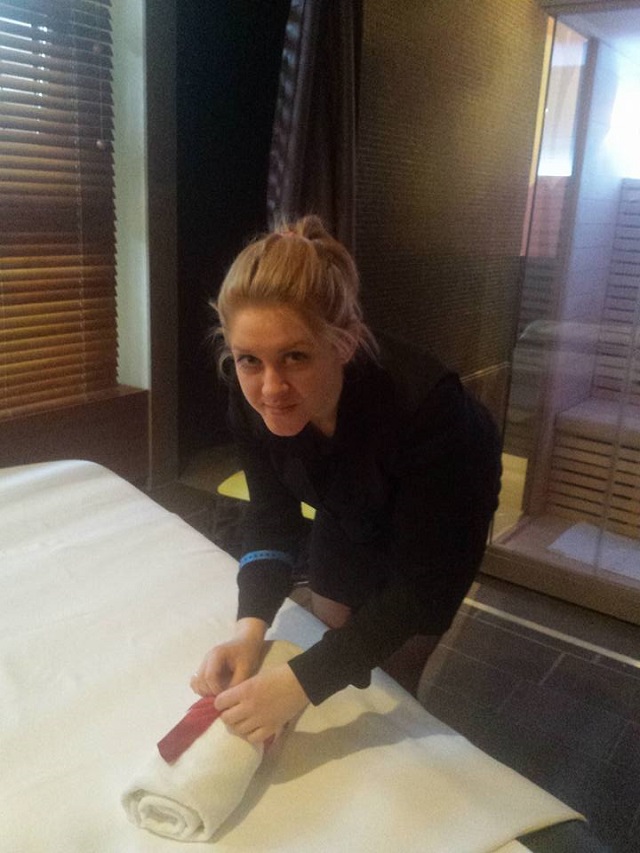
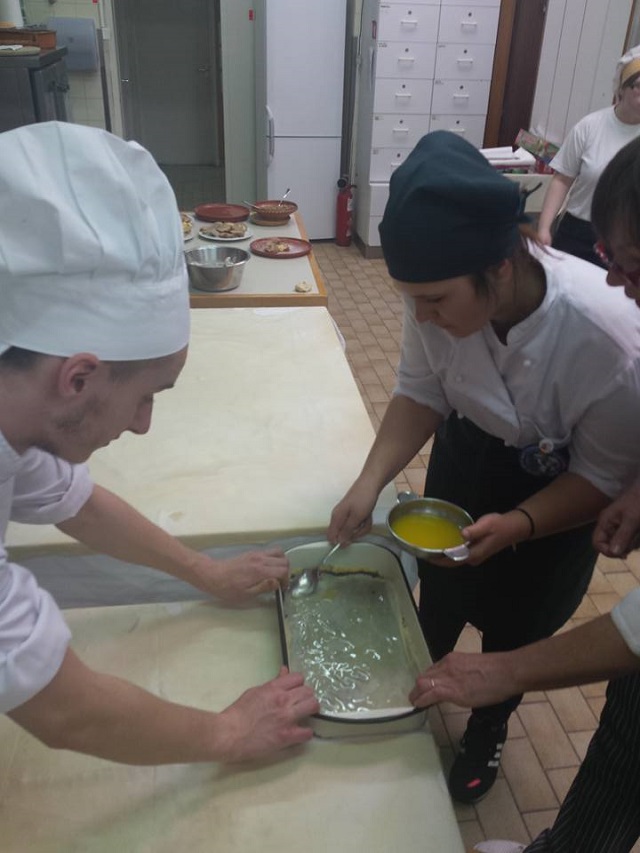
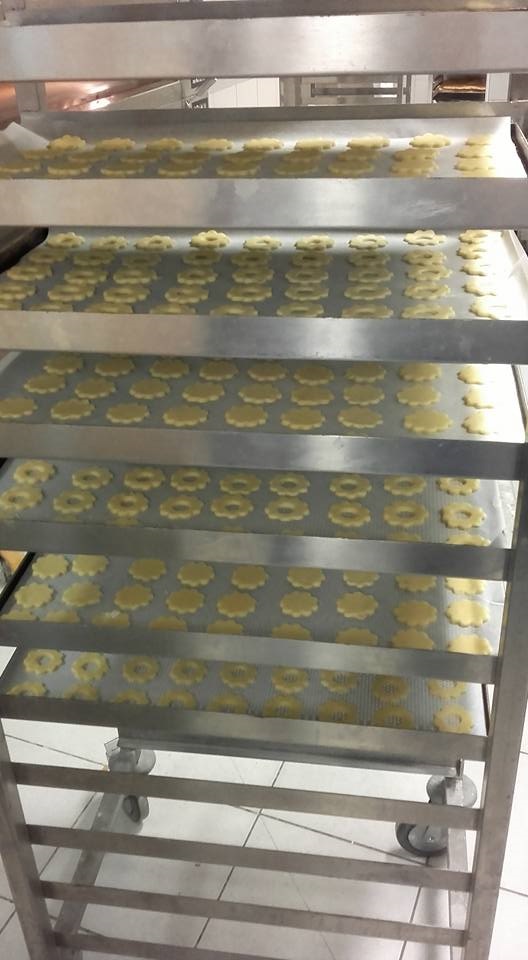
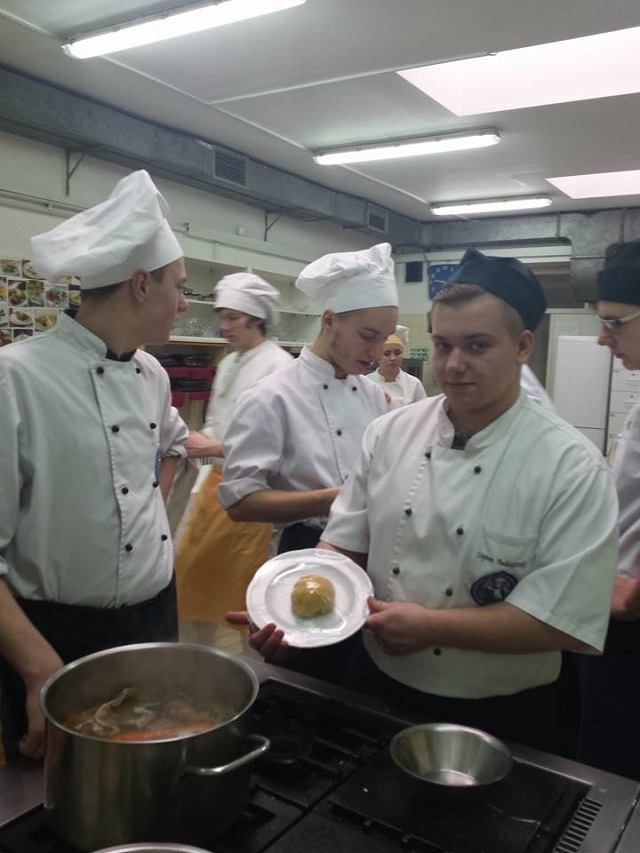
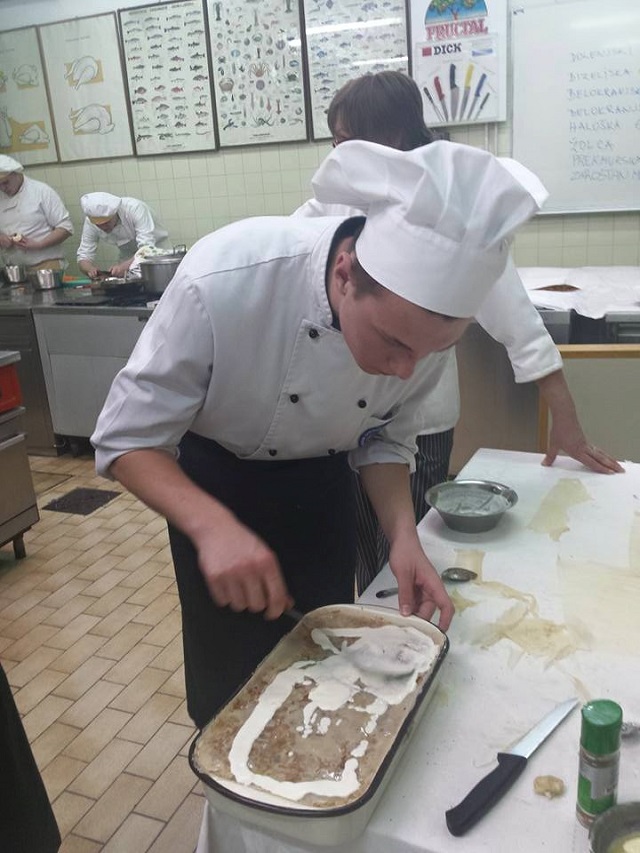
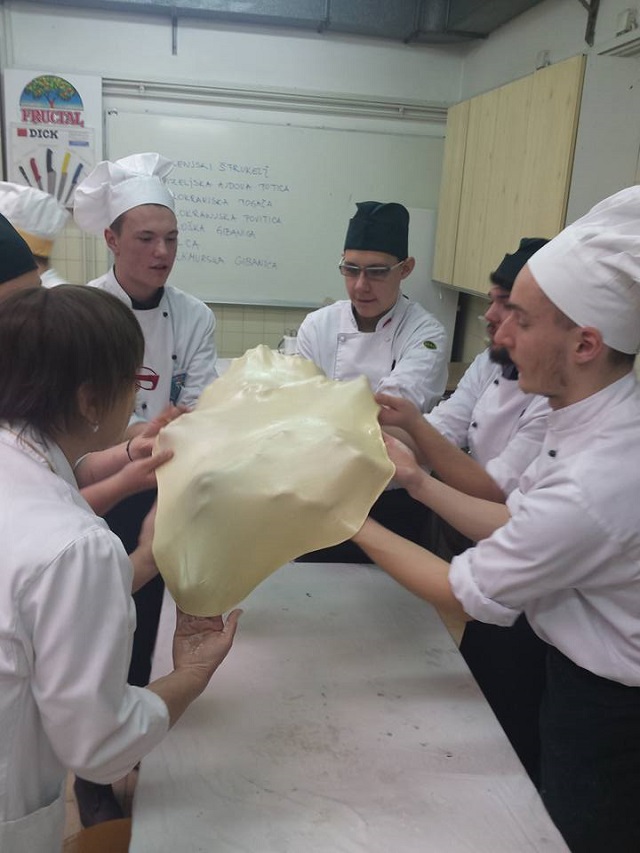
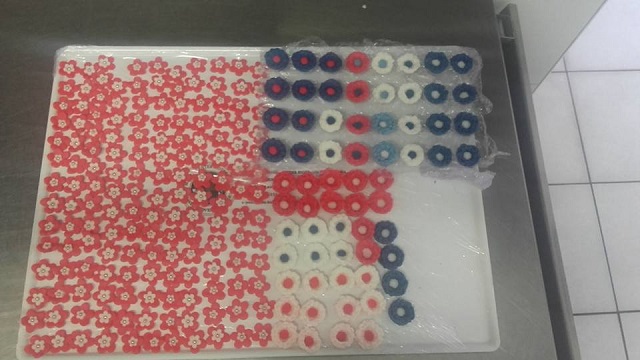
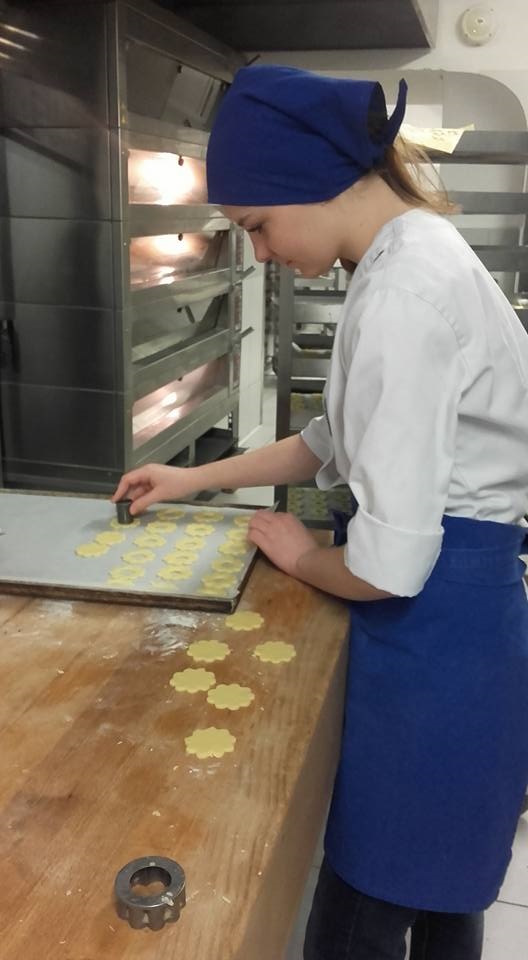
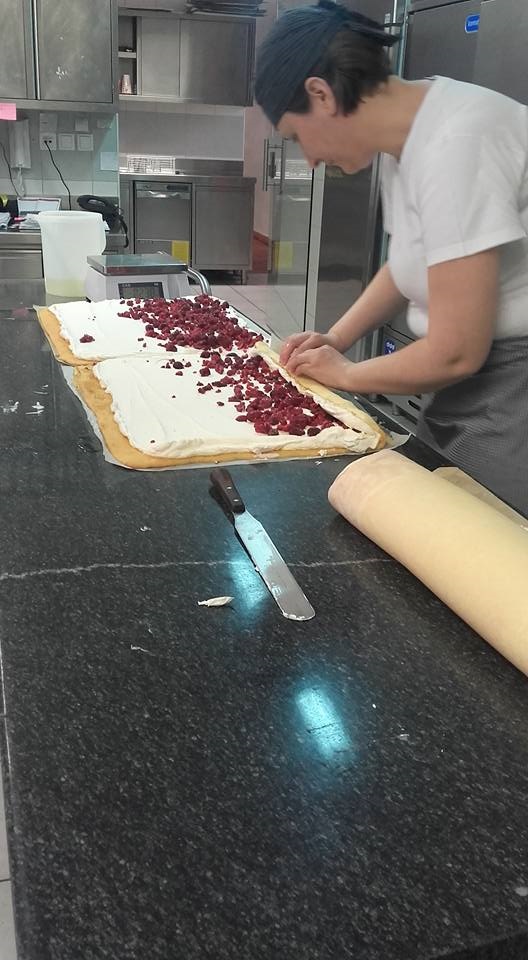
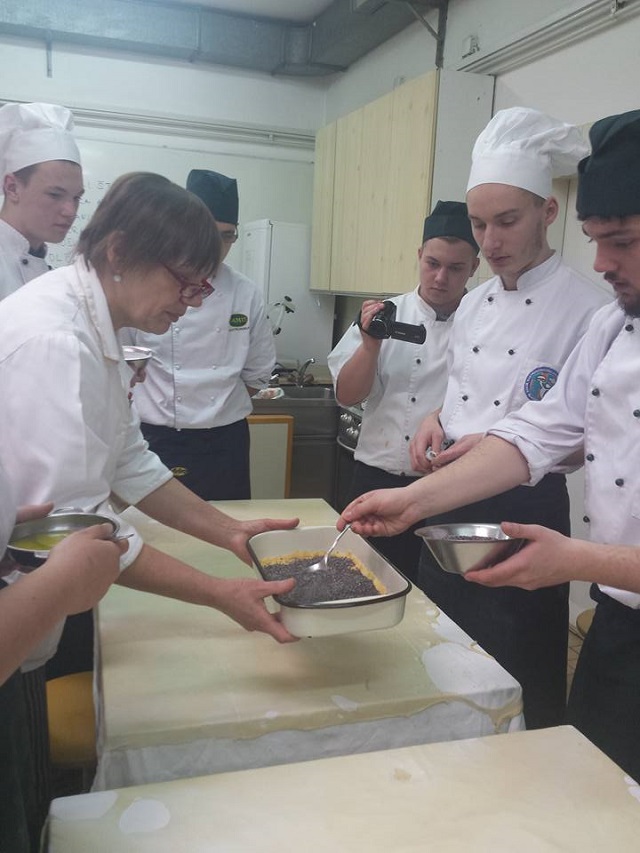
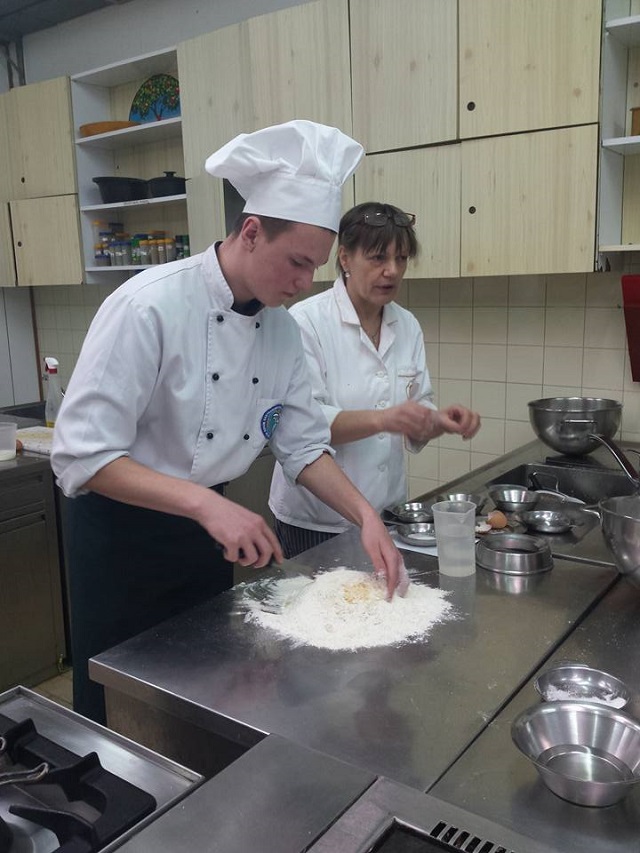
We are discovering more and more secrets of Slovenian cuisine. Due to the difficulty of preparing gibanica, potica and strudel, we repeated the whole process of preparation of these cakes. This time we didn’t need any help from our teacher and Slovenian colleagues. Apart from that , we cooked the cream soup from pumpkin and tomatoes, fancifully flavoured with gingerbread spice- all in all, we are from Torun. Another group of cooks made the carrot cream with the addition of orange juice. Both soups appeared to be a big hit with the guests of the restaurant Gostisce na Trgu. The Confectioners baked countless biscuits with various kinds of cream. Hospitality and tourism technician served guests at the reception desk and in the dining room, at the same time improving their English.
After lunch, we took part in a lecture on the quality of wine run by our Mrs Longina Borkowicz. The next afternoon, we were getting acquainted with the culture of Novo mesto through the works of a great twentieth-century painter Bożydar Jakac.
Planica, Bled, Ljubljana
Nawet specjalnie nie marudziliśmy, kiedy wstawaliśmy o 4 rano, żeby punktualnie dotrzeć na konkurs skoków narciarskich w Planicy. Z biało-czerwoną flagą, jechaliśmy kibicować naszym skoczkom. Atmosfera już podczas skoków próbnych była gorąca- flagi, okrzyki, bębenki i ogólny entuzjazm fanów, głównie Słoweńskich, bo u Słoweńców skoczkowie narciarscy to dobro narodowe. W Planicy spotkaliśmy polskich kibiców, a potem dowiedzieliśmy się, że na trybunach był również Adam Małysz. Najlepszy z Polaków, Kamil Stoch, zajął 15 miejsce, ale za to reprezentanci gospodarzy Peter Prewc i Robert Kranjec odpowiednio 1 i 3 miejsce. Cieszyliśmy się z ich sukcesu razem z naszymi słoweńskimi kolegami. Po konkursie był czas na podziwianie ośnieżonych Alp w pełnym słońcu podczas długiego spaceru przez las do miejscowości, gdzie czekał na nas dobry obiad.
Następnie pojechaliśmy do Bledu. Na jeziorze o tej samej nazwie jest wysepka, a na niej malowniczy kościółek, odbijający się w tafli wody. Widok jest niezwykły i jest zaliczany do największych atrakcji turystycznych Słowenii.
Weekend rozpoczęliśmy od zwiedzenia stolicy Słowenii - Lublany w towarzystwie uczniów ze szkoły słoweńskiej i pana Edwarda Pałki, Polaka, którego można nazwać ambasadorem kultury polskiej na Słowenii. Usłyszeliśmy historię miasta, która sięga czasów rzymskich. Spacerowaliśmy po potrójnym moście (3 mosty tuż obok siebie) i po moście zwanym żartobliwie „Mostem Teściowej”, pewnie z powodu 4 kamiennych smoków, które go strzegą. Miasto tętni życiem dzięki wielkim placom targowym, gdzie handluje się wędlinami, warzywami, owocami, kwiatami i najróżniejszymi drobiazgami. Zapach kwiatów, kawy, smażonego mięsa, gwar rozmów, wypełnione po brzegi restauracje i kafejki, melodie grajków ulicznych - wszystko to składa się na niepowtarzalną atmosferę tego miasta.
Planica, Bled, Ljubljana
We weren’t moaning even though we had to get up at 4 am to be on time for the ski jumping contest in Planica. Having prepared a white-red flag we were going to support our ski jumpers. From the very beginning you could feel the enthusiasm in the air- people were waving their national flags, screaming and drumming. They were mainly Slovenians as ski jumping is considered their national sport. Then, we met some Polish ski jumping fans and found out that even Adam Małysz was somewhere on the stands. In the Polish national team, Kamil Stoch was the star, who took the 15th place. As for Slovenians, Peter Prevc was the winner and Robert Kranjec was the third. We were celebrating their success together with our Slovenian friends. Right after the contest, we took a long walk to admire a beautiful view of snow-capped Alps in glaring sunshine. When we finally got to a small village there was a good dinner waiting for us. Then, we drove to Bled, where we admired a picturesque church being reflected in the panel of the lake. The view is breath-taking and is considered to be one of the biggest tourist attractions in Slovenia. We started our weekend off visiting Ljubljana together with students from a Slovenian school and Edward Pałka, who is the ambassador of the Polish culture in Slovenia. We learned about the city’s history which dates back to the Roman times. We were walking along the “triple- bridge” and then another one humorously called “ Mother-in-law bridge”, which is guarded by 4 rock dragons ( now you know where its name comes from…). The city is lively and vibrant thanks to the big marketplaces, where you can buy cold meat, fresh vegetables, fruit, flowers, etc. What makes this city so special? It’s the smell of flowers, coffee, fried meat, the hum of conversations, crowded restaurants and cafes and the melodies by street musicians.
Wysoka ocena wystawiona uczniom naszej szkoły przez partnerów słoweńskich
Dr Edward Pałka, wykładowca i emerytowany pracownik firmy KRKA, który towarzyszył uczniom z Torunia podczas wycieczek po Słowenii, w swoim mailu napisał:
„Uczniowie byli bardzo przyjemni, kulturalni i w ogóle na poziomie dobrze reprezentowali Toruń, jak i Polskę. Możecie nie tylko być z nich zadowoleni, ale i dumni. Dzisiaj była informacja w radiu o skończonej praktyce i bardzo dobrze oceniono uczniów, zwłaszcza współpracowanie, dyscyplinę i zainteresowanie procesem nauczania.”
Students of our school will have an opportunity to take part in a 2-week traineeship in restaurants and hotels in Slovenia and Macedonia under Erasmus+ program. Our partners, Grm Novo mesto- Center Biotehnike In Turizma in Slovenia and Naum Naumowski Borce, Krushevo in Macedonia will provide workplace for our students’ training.
There will be 32 participants of the project. 16 students of the second and third years of the following profiles: nutrition and gastronomy services technicians, pastry chefs, hospitality technicians and tourism technicians will have their training in Slovenia in 2016. Another group identical as for profiles and the number of persons is going to visit Macedonia in 2017.
The aim of our project is to improve the students' vocational competence through:
- acquiring new vocational skills: preparing dishes of Slovenian and Macedonian cuisine and selecting wines to main courses, making sweet and salty pastry typical of Slovenian and Macedonian cuisine, providing additional services for foreign guests, planning and preparing a trip for the participants of the project and operating tourism computer programmmes;
- improving the command of the English language;
- shaping the attitude of openness to other cultures and skills to share their own cultural heritage)
- improving the ability of working as team members in a foreign environment
- stimulating the participants' entrepreneurship
- improving their self- esteem
The participants will shoot short films presenting the process of preparing dishes and pastries of Slovenian and Macedonian cuisine. They will also make a multimedia presentation about the hotel complex and tourist attractions of Slovenia and Macedonia. These materials will be used to disseminate the results of the project at our school and during various events, both local and regional, among them "Tastes of Pomerania and Kujavy region"picnic, which is wildly known in the region.
Activity of the project's participants will not be limited to work. During the course of integration with the Slovenian and Macedonian youth, excursions to the most interesting places in the country, and visits to agri-tourism farms, the participants will get acquainted with cultural and culinary heritage of the country. Polish students will have the opportunity to show off our culture and cuisine during the gala dinner, which will be prepared by nutrition technicians and confectioners at the end of their stay. They will serve the regional dishes and cakes typical of Pomerania and Kujavy region cuisine. Students from hotel and tourism classes will be responsible for the musical setting of the evening (Polish folklore of Pomerania and Kujavy) and provide a presentation about our country and the region.
The project is expected to bring significant benefits. Receiving the Europass- Mobility.
W wyniku oceny wniosków złożonych w ramach sektora Młodzież – Akcja 1. – Mobilność Edukacyjna, w roku 2015, R1. wniosek nr 2015-1-PL01-KA105-014026 pt.: „Games as the most powerful learning tool on the world” złożony przez Zespół Szkół Gastronomiczno-Hotelarskich w Toruniu w dniu 17 kwietnia 2015 r. został zatwierdzony do realizacji przez Fundację Rozwoju Systemu Edukacji – Narodową Agencję Programu Erasmus+
Data rozpoczęcia projektu: 01.06.2015 r.
Data zakończenia projektu: 31.01.2016 r.
Uczestnikami projektu pt.: „Games as the most powerful learning tool on the world” jest młodzież w wieku 17-21 lat organizacji uczestniczących w projekcie: Zespołu Szkół Gastronomiczno-Hotelarskich w Toruniu, Strednej odbornej skoly obchodu a sluzieb w Słowacji, Amasya Mesleki ve Teknik Anadolu Lisesi w Turcji i Naum Naumoski Borce – Krushevo w Republice Macedonii. W sumie będzie to 32 uczniów oraz 5 opiekunów/liderów. Warto podkreślić, że wszyscy partnerzy projektu reprezentują ten sam typ organizacji, których misją jest kształcenie przedsiębiorczych absolwentów, wszechstronnie przygotowanych do pracy na zmieniającym się rynku.
Projekt związany jest z sytuacją młodych ludzi na rynku pracy, zarówno krajowym, jak i europejskim. Jednocześnie wynika on z potrzeby rozwoju osobistego młodzieży, która pragnie zwiększyć swoje szanse na zatrudnienie. Projekt wspiera rozwój postaw przedsiębiorczych wśród młodzieży, umożliwiając praktyczne poznanie funkcjonowania firmy, dając przestrzeń na kształtowanie się innowacyjnych pomysłów i rozwiązań.
Głównym celem „Games as the most powerful learning tool on the world” jest rozwijanie umiejętności i kompetencji pożądanych na rynku pracy, tzw. kompetencji miękkich, takich jak przedsiębiorczość, komunikatywność, kreatywność czy współpraca. Istotne jest też wzmacnianie w procesie kształcenia elementów przygotowujących do podejmowania samodzielnej skutecznej działalności rynkowej.
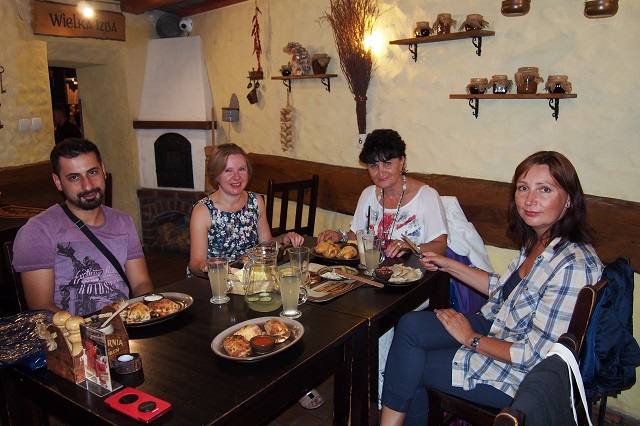
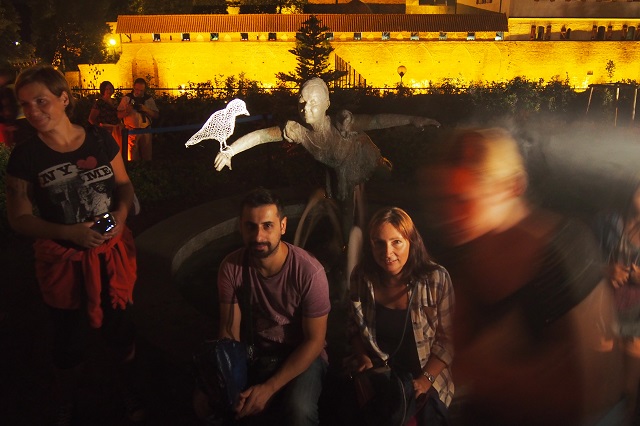
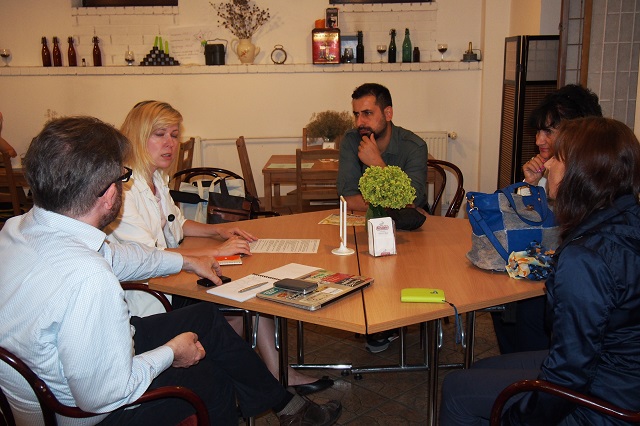
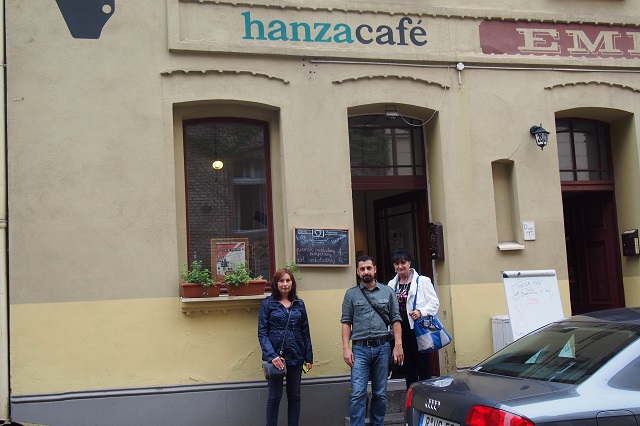
Tematem projektu jest grywalizacja. Jest to dziedzina, która wykorzystuje mechanikę gier do zmiany aktywności, które postrzegane są jako nieatrakcyjne w te angażujące uczestnika. Projekt wspiera kształcenie umiejętności kluczowych XXI w. W zrozumieniu mechanizmów rządzących grupą ma pomóc uczestnikom pierwsze zaplanowane działanie, czyli warsztaty z doradcą zawodowym nt. diagnozy ról pełnionych w zespole. Umiejętne określenie swojej dominującej roli oraz ról dodatkowych ma pogłębić wiedzę uczestników o samych sobie oraz pobudzić siłę wewnętrzną do działania – motywację. Realizacja prezentacji wybranych narodowych gier planszowych podczas „Dnia narodowych gier planszowych” stymulować będzie sytuacje, w których kształtowane będą w uczestnikach postawy wynikające z głębszego zrozumienia specyfiki innej kultury, świadomości źródeł różnic kulturowych i pozbywania się uprzedzeń wobec młodzieży z zagranicy. Uczestnicy rozwiną swoje zainteresowanie kulturowymi osobliwościami zagranicznych partnerów. Prezentacja narodowych gier planszowych będzie wstępem do kolejnej fazy projektu - wykorzystania gier symulacyjnych jako innowacyjnych narzędzi w zakresie przedsiębiorczości. Celem tego działania jest pokazanie mechanizmów rządzących gospodarką, nauka ekonomicznego myślenia. Z kolei wizyta w Akademickim Inkubatorze Przedsiębiorczości w Toruniu oraz spotkanie w Hanza Cafe mają na celu poznanie idei start-upów (Geek Carrot Girls) oraz Misji ToRun. Wszystkie poprzednie działania prowadzą do poznania przez uczestników idei oraz przykładów grywalizacji. W rezultacie stworzone zostaną międzynarodowe projekty grywalizacji.













The participants of the project: "Games as the most powerful learning tool on the world" are young people aged 17-21, who are students of the organizations participating in the project: Technical School of Hotel Managment and Catering Industry in Toruń, Stredná odborna Škola obchodu a Služieb in Slovakia, Amasya Mesleki ve Teknik Anatolian High School in Turkey and Naum Naumoski Borce - Krushevo in the Republic of Macedonia.
It is worth adding that all partners are represented by the same type of organization, whose mission is to educate enterprising graduates, well prepared for work in the changing market.
The project is related to the situation of young people in the labour market, both at national and European levels. It also meets the need for personal development of young people who want to increase their employability. The project supports the development of entrepreneurial attitudes among young people, providing practical knowledge about the company, giving space for the development of innovative ideas and solutions.
The main objective of the "Games as the most powerful learning tool" is to develop skills and competencies desired in the labour market, soft skills such as entrepreneurship, communication, creativity and collaboration. It is also important to strengthen the elements preparing for taking up economic activities during the educational process.
The theme of the project is gamification. Gamification refers to the utilization of game mechanism and dynamics in non-game settings such as social media or workplace. Gamification has been applied in several different fields to improve user’s engagement, physical exercise, and learning. Gamification techniques leverage people’s tendency to desire competition, achievements and status by rewarding players who accomplish desired tasks. The project supports the training key skills of XXI
century. To understand the mechanisms how the group works first the scheduled activity diagnoses the roles in the team. This activity helps the participants to choose its dominant role and additional roles to deepen their knowledge about themselves and boost inner strength to act - motivation. Implementation of the presentation of selected national board games during the "National Day of board games" stimulate the situations in which participants will learn attitudes resulting from a deeper understanding of the specifics of a different culture, awareness of cultural differences sources and dispose of prejudice against young people from abroad. The participants will develop their interest in the cultural peculiarities of foreign partners. The presentation of the national board games will be the first step to the next phase of the project – the use of simulation games as innovative tools in the field of entrepreneurship. The purpose of this activity is to show the mechanisms governing economics, a science of economic thinking. The visit to the Academic Business Incubator in Toruń and Hansa Cafe meeting is aimed at understanding the idea of start-ups (Carrot Geek Girls) and the Mission of Torun. All the previous actions lead to finding out other participants’ ideas and examples of gamification. As a result, international projects of gmification will be created. The task is to stimulate creativity and innovation: to demonstrate the ingenuity and originality, critical thinking and problem solving: recognizing the needs of your own and others, will demonstrate learning a lifelong and continuous skills development.
Implementation of the project entitled: "Games as the most powerful learning tool on the world" is an investment in human resources. They improve the skills of workforce. Although the results of such actions may occur over time, and the profits are visible only in the long term, they are considered to be significant and durable. Cohesion policy increases the level of employment. In the short term, it is primarily the result of increased economic activity caused by the co-financed investments. In the long term, the same investment increases labour productivity and competitiveness by improving infrastructure, manufacturing methods, the structure of the industry, the labour force, etc. This in turn leads to the further development of economic activity and employment and generally persists for a long time after the completion of the original expenditure.
PROJEKT ESP „Das Bild der Anderen”
Od stycznia 2015 r. uczniowie klasy II C wraz z p. Izabelą Koziarzewską biorą udział w projekcie pt.: "Das Bild der Anderen". Współpraca młodzieży ZSG-H oraz Højmarkskolen w Danii odbywa się za pośrednictwem mediów elektronicznych. Projekt realizowany jest w ramach European School Project.
"Das Bild der Anderen" przeznaczony jest dla grup młodzieży, które używają języka niemieckiego jako języka obcego. Działaniom ESP patronuje Goethe Institut.
Cele projektu:
- podniesienie jakości pracy na lekcjach języka niemieckiego
- wyjście poza ściany klasy w nauczaniu języka obcego
- nawiązanie nowych przyjaźni między uczniami z różnych stron świata
- nawiązanie partnerstwa między szkołami
Na czym polega współpraca?
Najpierw szkoły, które nawiązały kontakt, uzgadniają temat projektu. Następnie uczniowie dobierają się parami i wymieniają e-maile na interesujące je zagadnienia. Warunkiem przeprowadzenia projektu jest korespondencja w języku niemieckim, opracowanie wspólnych wniosków lub produktu końcowego. Dzięki wymianie wiadomości, młodzież wzbogaca swoją wiedzę o innych krajach i doskonali umiejętności językowe.
Tematem projektu ZSG-H oraz Højmarkskolen jest: „Essgewohnheiten und traditionelle Speisen in Polen und Dänemark”, czyli „Nawyki żywieniowe i tradycyjne potrawy w Polsce i Danii”. Jego rezultatem będzie opracowane przez uczniów przy pomocy technologii informacyjno-komunikacyjnych portfolio.
Deutsche Zusammenfassung:
„Das Bild der Anderen“ entstand 1989 im Rahmen des Eurpean Schools Project (ESP). ESP wurde 1988 von Mitarbeitern der Universität Amsterdam gegründet. Das Ziel des Projekts ist:
- Qualität des Unterrichts zu verbessern
- Außerschulische Realität ins Klassenzimmer zu holen
- Neue Kontakte mit Schülern aus anderen Ländern aufzunehmen
- Neue Partnerschaften mit Schulen aus aller Welt anzuknüpfen
Das Medium: E-Mail-Austausch
„Das Bild der Anderen“ ist ein Projekt für Lerngruppen, die möglichst im gleichen Alter sind und beide Deutsch als Fremdsprache benutzen. Es ist nicht für Muttersprachler aus deutschsprachigen Ländern gedacht.
Das Thema unseres Projekts ist: „Essgewohnheiten und traditionelle Speisen in Polen und Dänemark“.
Die Bedingung ist: die Schüler werden auf Deutsch schreiben und zu den vorgeschriebenen Themen korrespondieren. Die Vorteile aus dem Projekt sind viele.
- Die Schüler können ihre Schreibfertigkeiten verbessern, Wortschatz festigen und Sprachkenntnisse verbessern.
- Die Jugendlichen verlieren die Angst vor dem Schreiben und werden selbständiger.
Das Lernen wird lebendiger und die allgemeine Motivation Deutsch zu lernen steigt, da die Kommunikation echt ist.
Die Lernenden beschäftigen sich mit der Kultur und dem Alltag des Briefpartners, es werden Kontakte angeknüpft und manchmal auch Freundschaften geschlossen.
Jedes Jahr nehmen mehrere tausende Deutschlernende aus der ganzen Welt an "Bild"-Projekten teil. Die folgenden Abbildungen stellen die Entwicklung der letzten Jahre dar bzw. die Länder, aus denen die meisten ProjektemacherInnen kommen.
W wyniku oceny wniosków złożonych w ramach Akcji 1 - "Mobilność edukacyjna" Programu Erasmus+ Młodzież w roku 2014, projekt Zespołu Szkół Gastronomiczno-Hotelarskich pt.: "Smaki dzieciństwa" został zatwierdzony do realizacji.
PROFIL UCZESTNIKÓW PROJEKTU
Uczestnikami projektu pt.: "Smaki dzieciństwa" jest młodzież uczęszczająca na zajęcia kół zainteresowań w Zespole Szkół Gastronomiczno-Hotelarskich w Toruniu, młodzież zaangażowana w działalność Samorządu Szkolnego oraz redakcji gazetki szkolnej Gimnazjum im. Anny Krepsztul w Butrymańcach na Litwie oraz uczniowie klas o profilu turystycznym w Strednej Odbornej Skole w Nowym Mieście nad Wagiem w Słowacji.
TEMAT I CELE PROJEKTU
Tematem projektu jest niematerialne kulturowe dziedzictwo: zwyczaje, przekaz ustny, wiedza i umiejętności oraz związane z nimi przedmioty i przestrzeń kulturowa, które są uznane przez wspólnotę, grupę lub jednostki.
Główne cele projektu „Smaki dzieciństwa” to: kształtowanie poczucia tożsamości – własnego „ja” poprzez poznawanie dziedzictwa kulturowego oraz zbudowanie mostu pokoleniowego osób z różnych środowisk: młodzieży uczestniczącej w projekcie oraz seniorów ze Stowarzyszenia "Wspólnota Polska" w Toruniu. Inne cele to rozwijanie przedsiębiorczości i kreatywności uczestników projektu poprzez promowanie alternatywnych form twórczości artystycznej np. audycji radiowej, fotografii, sztuki kulinarnej.
OPIS DZIAŁAŃ I ZAKŁADANE REZULTATY
W czasie projektu zaplanowano warsztaty art-edukacyjne, w czasie których zewnętrzny cel edukacyjny zostanie zastąpiony celem wewnętrznym: rozwojem osobowości, wrażliwości, empatii i tolerancji. Te warsztaty mają być wstępem do realizacji międzypokoleniowej i międzyetnicznej sesji zdjęciowej. Kolejnym etapem będzie nauczenie się podstawowych technik fotografowania - korekty zdjęć i przygotowania do publikacji podczas warsztatów fotografii cyfrowej w CSW "Znaki czasu" w Toruniu. Następnie odbędzie się sesja zdjęciowa w przestrzeni Starówki Torunia - miejsca wpisanego na Listę Światowego Dziedzictwa Kulturowego i Naturalnego UNESCO. Z wykonanych w czasie sesji zdjęć powstanie wystawa prezentowana w Bibliotece Pedagogicznej w Toruniu.
Ponadto odbędą się warsztaty storytellingu, w efekcie których powstaną intertekstualne historie inspirowane baśniami krajów partnerskich. Ostatnim etapem będzie nagranie słuchowiska.Kolejną aktywnością będą warsztaty kulinarne. Będą to zajęcia praktyczne, w czasie których młodzież wraz z zaproszonymi seniorami „Wspólnoty Polskiej” będą przyrządzali specjały kuchni zaproszonych do współpracy krajów partnerskich. Każda grupa opracuje propozycję potrawy, skład surowcowy oraz technikę wykonania. Następnie odbędzie się wspólne gotowanie. W efekcie powstanie kolekcja zdjęć, które wykorzystane zostaną w książce kucharskiej online. Znajdą się tam także przygotowane przepisy oraz wspomnienia "smaków dzieciństwa" seniorów.
The participants of the project "Flavours of the Childhood" are youth from organizations of the partner countries: attending theatre and media education extracurricular classes in ZSG-H in Torun, youth involved in the activities of the Student Council and editing a school newspaper in Gymnasium of Anna Krepsztul in Butrymańce in Lithuania, youth attending classes of tourist profile at SoŠ in Nove Mesto in Slovakia. The theme of the project is the intangible cultural heritage: customs, verbal (spoken) transmission and related items and cultural space, which are accepted by the community, group or individuals.
The main objective of the project "Flavours of the childhood" is to forge a sense of identity - their "self" by exploring the cultural heritage and by building a generational bridge between people from different communities: the youth participating in the project and seniors from the "Poland Community " Association in Torun. Other goals include the development of entrepreneurship and creativity of the project participants through the promotion of alternative forms of art such as radio, photography, culinary arts. Organisations involved in the project have a common mission of strengthening young people sense of belonging to the European Union based on common values and elements of European history and cultural heritage, and the recognition of national and regional diversity, strengthening intercultural dialogue. During the project the art-educational workshops are planned, where an external educational objective will be replaced with an internal goal: development of personality, sensitivity, empathy and tolerance. These workshops are a prelude to the implementation of intergenerational and an inter-ethnic photo session. The next step will be to learn the basic photography techniques - photo correction and preparation for publication during a workshop called "Signs of the Times" at the Museum of Modern Art in Torun. This will be followed by a photo session in the old town of Toruń – the city enlisted on the UNESCO World Cultural and Natural Heritage. The pictures taken during the session will be presented in Pedagogical Library in Toruń. In addition, there will be workshops of storytelling, which will result in creating intertextual stories inspired by the tales of the participating countries. Recording podcasts will close this stage .
Cooking workshops will be a practical part, during which young people along with senior guests fromthe "Poland Community” will prepare specialities of the partner countries. Each group will develop a proposal of a dish, ingredients and a cooking technique. It will be followed by cooking selected dishes together. The senior citizens will serve as mentors during these workshops. As a result a collection of pictures will be prepared which will be used to create an online cookbook. It will also present prepared recipes and senior citizens’ memories of “Flavours of the childhood". All mentioned institutions wish to realize this particular project together. This will lead to an increase of the prestige of the abovementioned institutions and their promotion in the environment, beginning from the local and ending with the European one. This type of partnership will have a long-lasting character and contribute to the development of human capital – it will create opportunities to take part in the international exchange workshops, practical classes, etc. At the same time it should help to establish common values, standards, common working methods, based on cooperation and ties between the participants. The project will have an influence on raising national and cultural awareness of its participants. It is also expected to activate the local community for intercultural and intergenerational dialogue and to increase the awareness of the society. The youth participating in the project is at a specific stage of development, which might be described by the following catchphrases: development of the personality, job preferences, maturation process. Therefore, we assume that, the project will impact participants of the project in the abovementioned areas and it will be positive, long-term and multifaceted.
W wyniku oceny wniosków złożonych w ramach akcji 1 – Mobilność kadry edukacji szkolnej w sektorze Edukacja szkolna w roku 2015 r. wniosek pt.: „Let the play begin. Designing gamification” został zatwierdzony do realizacji przez Fundację Rozwoju Systemu Edukacji – Narodową Agencję Programu Erasmus+
Temat projektu
Tematem projektu jest grywalizacja. Jest to dziedzina, która wykorzystuje mechanikę gier do zmiany aktywności postrzeganych są jako nieatrakcyjne w – angażujące uczestnika. Planowana jest zmiana sposobu uczenia poprzez wykorzystanie mechanizmów motywacyjnych spotykanych w grach, angażujących uczniów w proces kształcenia i rozwijania swoich kompetencji oraz postaw przedsiębiorczych. Wybrano metodę gamifikacji, ponieważ może doprowadzić do zmiany w rozumieniu procesu uczenia się i organizowania środowiska edukacji dla młodzieży.
Cele projektu:
- wdrożenie nowych form nauczania i oceniania typu Game-based learning, Project-based learning, Outdoor education,eLearning, blended learning, digital literacy, cechujących się wyższą skutecznością niż formy tradycyjne;
- ograniczenie i zapobieganie przedwczesnemu kończeniu nauki szkolnej oraz zapewnianie równego dostępu do dobrej jakości kształcenia, z uwzględnieniem formalnych, nieformalnych i pozaformalnych ścieżek kształcenia;
- zwiększenie udziału nauczycieli w zewnętrznych formach edukacyjnych, głównie poprzez programy mobilności kadry edukacji szkolnej;
- rozwój kompetencji uczestników projektu z zakresu efektywnego komunikowania się w języku angielskim;
- podniesienie kompetencji miękkich, takich jaki umiejętność komunikacji, współpracy, osiągania kompromisów uczestników jako obywateli wspólnoty europejskiej poprzez inicjowanie i podejmowanie współpracy z inną narodowością;
Główne działania
W czasie projektu 9 nauczycieli ZSG-H weźmie udział w następujących mobilnościach:
- “Discover the city” Toskania/Włochy
- “Interactive technologies for the future classroom” Bruksela/Belgia
- “Digital Extra” Coventry/Zjednoczone Królestwo
- “Tap-Swipe-Pinch. Game-Based Learning and Gamification” Barcelona/Hiszpania
W ramach realizacji projektu mobilności kadry edukacji szkolnej pt.: „Let the play begin. Designing gamification” Programu Erasmus+ od 30 sierpnia do 5 września 2015 roku dwie nauczycielki naszej szkoły wzięły udział w kursie pt. "Reading the City" w Toskanii. Panie Agata Rzeszut oraz Małgorzata Sadłowska miały możliwość zdobycia wiedzy i doświadczenia nt. możliwości wykorzystania mobilnych urządzeń cyfrowych w edukacji, wymiany doświadczeń z nauczycielami z innych krajów Europy (Grecji, Szwecji, Chorwacji, Łotwy i Wielkiej Brytanii). Zwiedziły również lokalną szkołę, poznały włoski system edukacji, brały udział w wykładach nt. dziedzictwa kulturowego oraz tożsamości europejskiej, przygotowały projekt „Miasto i tożsamość” we współpracy z nauczycielami z innych krajów europejskich oraz z wykorzystaniem mobilnych urządzeń cyfrowych.
W ramach realizacji projektu pt.: "Let the play begin. Designing Gamification" mobilności kadry edukacji szkolnej Programu Erasmus+, w dniach od 16 do 20 listopada 2015 roku panie Anna Kułaczkowska i Anna Krynicka wzięły udział w kursie "Interactive Technologies for the future classroom" organizowanym przez European Schoolnet Academy oraz Future Classroom Lab w Brukseli. Szkolenie umożliwiło zdobycie wiedzy i umiejętności w zakresie stosowania różnorodnych aplikacji i programów takich jak i3LEARNHUB, Mentimeter, Kahoot, ToonDoo, Voki, Socrative, Quizlet czy Stop Motion Studio w praktyce edukacyjnej. Podczas kursu nauczyciele z wielu krajów Unii Europejskiej, takich jak Portugalia, Włochy, Cypr czy Węgry, wymieniali się wiedzą i doświadczeniem na temat wykorzystania urządzeń i programów cyfrowych na lekcjach. Uczestnicy szkolenia brali również udział w wycieczkach po starym mieście w Brukseli oraz Parlamentarium – nowoczesnym centrum dla zwiedzających przy Parlamencie Europejskim.
Interactive Technologies for the future classroom
W ramach realizacji projektu pt „ Let the play begin. Designing gamification” programu Erasmus + w dniach 10.04 – 16.04.2016 panie Alina Grudzińska, Iwona Pawlak i Alina Piekańska wzięły udział w kursie „ Tap – Swine Pinch. Game – Based Learning and Gamification” w Barcelonie.
Celem kursu było zapoznanie się z nowymi formami nauczania i oceniania opartego na grywalizacji oraz poznanie technik i narzędzi wykorzystywanych w nauczaniu tą metodą.
Miały okazję tworzyć QR kody, multimedialne quizy, wykorzystywać Skype w edukacji oraz poznały podstawy tworzenia edukacyjnych gier.
Interesującym wydarzeniem była wizyta w hiszpańskiej szkole publicznej, w której często wykorzystuje się metodę grywalizacji jako narzędzie motywujące uczniów do nauki.
Uczestnicy szkolenia, m.in. nauczyciele z Holandii, Finlandii, Turcji, Słowenii i Rumunii wymieniali się doświadczeniami, tworzyli scenariusze lekcji z zastosowaniem cyfrowych urządzeń.
Game-Based learning and Gamification
Jakie są potrzeby uczniów ery Web 2.0?
To używanie rozwiniętej technologii informatycznej, posiadanie coraz nowszych modeli laptopów, tabletów oraz smartfonów, które zawierają wiele atrakcyjnych aplikacji. Ponadto, poszukują oni interakcji i zaangażowania, swobody wypowiedzi ale przede wszystkim dużej dawki rywalizacji.
Można jednak odwrócić tendencję mówiącą, że najnowsza technologia informacyjna odciąga młodzież od wychowania fizycznego i nie sprzyja wysiłkowi. Wykorzystać w procesie nauczania multimedialne narzędzia i technologie informatyczne oraz zainteresowania uczniów ery Web 2.0. Z powodzeniem robią nauczyciele Zespołu Szkół Gastronomiczno-Hotelarskich w Toruniu.
W piątek 20 maja 2016 r. odbyła się lekcja otwarta, prowadzona w ramach realizowanego przez szkołę projektu Erasmus+ „Let the play Begin. Designing Gamification”. Wykorzystano w niej grę terenową, gdzie te technologie mogą służyć rozwijaniu pasji związanych z uczestniczeniem w kulturze fizycznej i dodatkowo wyposażać młodzież w wiedzę z różnych dziedzin życia. Geocaching jest to zabawa w poszukiwanie skarbów za pomocą odbiornika GPS. Ideą przewodnią jest znalezienie ukrytego wcześniej w terenie pojemnika (nazywanego "geocache") i odnotowanie tego faktu na specjalnej stronie internetowej. Geocaching jest zabawą międzynarodową kierowaną do poszukiwaczy przygód w każdym wieku.
Lekcję przygotował p. Paweł Lemparty.
The project: "Let the play begin. Designing gamification" is dedicated to the teachers from ZSG-H, who have experience in conducting additional teaching with the use of a foreign language and ICT or extracurricular activities for students. Participants should also have experience in international cooperation, eg. through eTwinning and develop: EU projects, school development plan, the educational program.
The project is intended to :
- implementation of new, innovative forms of teaching and assessment type of game-based learning, project-based learning, outdoor education, e-learning, blended learning, digital literacy, which are characterized by higher efficiency than traditional forms;
- reducing and preventing early school leaving and ensuring equal access to quality education, including formal, informal and non-formal learning;
- increase the participation of teachers in the external forms of education, especially through programs mobility of school education;
- development of competence in the field of project participants to communicate effectively in English;
- build the image of the school as an institution effectively undertaking Union fundraising and international cooperation;
- improving soft skills, such as communication , cooperation, reaching a compromise by initiating and cooperation with another nationality;
- strengthening self-esteem through the implementation of various actions and activities in international groups.
During the project, the participants will take part in the following mobilities:
- "Discover the city" Tuscany/Italy
- "Interactive technologies for the future classroom" Brussels/Belgium
- "Digital Extra" Istambul/Turkey
- "Tap-Swipe-Pinch. Game-Based Learning AND gamification" Malaga/Spain
Gamification is the theme of this project. This is an area that uses game mechanisms to change activities, which participants consider unattractive into more attractive ones. It is planned to change the way of learning through the use of incentive mechanisms encountered in games that involve students in the learning process and develop their competencies and entrepreneurial attitudes The method of gamification was chosen because it can lead to the change in the way of thinking about the learning process and organizing educational environment for young people.
The school will include gained experience and acquired competencies of the teachers participating in the project to develop a strategic plan for the institution in the future through activities that will have long-term impact on participants in the project, institution, policy makers / authority of the teacher and the local environment. These are:
- Implementation of new, innovative forms of teaching and assessment, which are characterized by higher efficiency than traditional forms.
- The popularization of the use of digital technologies and active participation in the digital culture. Raising awareness ZSG-H staff about the benefits of digital technology. Update the knowledge and skills of teachers in the field of ICT.
- Reducing and preventing early school leaving and ensuring equal access to quality education, including formal, informal and non-formal learning pathways. Increasing students' motivation to participate in classes.
- Improving knowledge of foreign languages among teachers. Development of participants’ language competence in effective communication in English.
W wyniku oceny wniosków złożonych w ramach akcji 1 – Mobilność uczniów i kadry w sektorze Kształcenie i Szkolenia Zawodowe w roku 2015 r. wniosek pt.: „Staż zagraniczny szansą na lepszy start zawodowy młodzieży” został zatwierdzony do realizacji przez Fundację Rozwoju Systemu Edukacji – Narodową Agencję Programu Erasmus+
Partnerzy projektu
Uczniowie naszej szkoły będą mieli możliwość odbycia dwutygodniowego stażu zawodowego w zakładach gastronomiczno- hotelarskich w Słowenii i Macedonii w ramach programu Erasmus+. Naszymi partnerami, którzy udostępnili nam miejsca praktyk, są szkoły gastronomiczno-hotelarskie Grm Novo mesto- Center Biotehnike In Turizma w Słowenii i Naum Naumowski Borce, Krushevo w Macedonii.
Uczestnicy
W projekcie weźmie udział 32 uczestników. 16 uczniów z klas drugich i trzecich, kształcących się w zawodach: technik żywienia i usług gastronomicznych, cukiernik, technik hotelarstwa i technik obsługi turystycznej wyjedzie na staż zawodowy do Słowenii w marcu 2016 roku. Druga grupa, również 16-osobowa, wyjedzie na staż do Macedonii w marcu 2017 roku.
Cele projektu
Celem projektu jest poniesienie kompetencji zawodowych uczestników poprzez:
- nabycie nowych umiejętności zawodowych takich jak: przygotowanie wybranych dań charakterystycznych dla kuchni słoweńskiej i macedońskiej i dobieranie do nich win, sporządzanie wyrobów cukierniczych słodkich i słonych, obsługa gościa zagranicznego w hotelu w zakresie usług dodatkowych, organizacja imprez turystycznych i obsługa specjalistycznych programów komputerowych;
- doskonalenie znajomości języka angielskiego;
- kształtowanie postawy otwartości na inne kultury i umiejętności dzielenia się swoim dziedzictwem kulturowym;
- kształtowanie umiejętności pracy w zespole międzynarodowym;
- pobudzenie przedsiębiorczości uczestników;
- wzmocnienie wiary we własne możliwości
Działania
Podczas pobytu na stażu młodzież nakręci filmy prezentujące proces przygotowania dań i ciast słoweńskich i macedońskich, stworzy prezentacje multimedialne o kompleksach hotelarskich i atrakcjach turystycznych Słowenii i Macedonii. Materiały te posłużą do upowszechniania rezultatów projektu w szkole, w mieście i regionie.
Aktywność uczestników projektu nie ograniczy się do pracy. Podczas zajęć integracyjnych z młodzieżą słoweńską i macedońską, wycieczek do najbardziej interesujących miejsc w kraju, wizyt w gospodarstwach agroturystycznych uczestnicy zapoznają się z dziedzictwem kulturowym i kulinarnym kraju. Polscy uczniowie będą mieli okazję pochwalić się naszą kulturą i kuchnią podczas uroczystej kolacji, którą przygotują technicy żywienia i cukiernicy na zakończenie pobytu. Przygotują i podadzą dania i ciasta typowe dla kuchni regionalnej Pomorza i Kujaw. Uczniowie klasy hotelarskiej i turystycznej zadbają o oprawę muzyczną wieczoru (polski folklor z Pomorza i Kujaw) oraz przedstawią prezentację o naszym kraju i regionie.
Wymiernym rezultatem projektu będzie podniesienie kwalifikacji uczestników, potwierdzonych dokumentem Europass- Mobilność.
Relacja uczniów biorących udział w projekcie "Staż zagraniczny szansą na sukces zawodowy młodzieży"
Mija drugi dzień pobytu na stażu zawodowym w Novo mesto w Słowenii. W towarzystwie uczniów słoweńskich zwiedziliśmy miasto, które słynie ze znalezisk archeologicznych z epoki brązu. Novo mesto jest też siedzibą koncernu farmaceutycznego KRKA. Zwiedziliśmy także szkołę gastronomiczno-turystyczną, gdzie powitał nas dyrektor, opiekunowie praktyk i uczniowie. Następnie udaliśmy się do Ratusza na spotkanie z burmistrzem miasta, gdzie poznaliśmy historię miasta. Po południu skorzystaliśmy z okazji przejażdżki konnej podczas zwiedzania szkoły rolniczej. Widzieliśmy serowarnię, hodowlę krów i pszczół. Spotkaliśmy się z panem Edwardę Pałką, Polakiem, emerytowanym wykładowcą uniwersytetu w Lubljanie i pracownikiem firmy KRKA. Mieliśmy również okazję poznać niezwykle ciekawego pisarza, który należy do pierwszej dziesiątki pisarzy eksperymentalnych na świecie.
Dzisiaj pracowaliśmy w restauracji, cukierni, piekarni i hostelu Situla. Popołudniu byliśmy w zamku Struga, gdzie uczestniczyliśmy w rekonstrukcji życia zamku z okresu średniowiecza. Świetnie się bawiliśmy udając dworzan i księżniczki, poznając przy tym historię i kulturę tego terenu. Przed nami kolejny dzień pełen wrażeń.
This is the second day of our training in Novo mesto in Slovenia. We had a student guided tour around the town. We learnt about the history of the town, which is famous for its archaeological foundlings from the Bronze age. Novo mesto is the town where KRKA- the big pharmaceutical company- is located. We also took a tour round the gastronomy and hospitality school led by our tutors and Slovenian students. After that, we went to the Town Hall to meet the mayor of Novo mesto. In the afternoon we took a chance to ride a horse while visiting the farming school. We saw cheese production, cows and bees breeding. We met Edward Pałka- a retired Polish professor of pharmacy at Lubljana university and an employee of the KRKA company. We also met an experimental writer, belonging to the top ten in the world.
Today we have worked at the restaurant, confectionary, bakery and the Situla hostel. After lunch we went to see the Sruga castle where we participated in the reconstruction of the life of the castle in the Middle ages. We had fun, pretending to be knights and courtiers and gaining some knowledge on the history and culture of this region.
Kolejny dzień praktyk za nami. Kucharze nauczyli się jak zrobić charakterystyczne dla kuchni słoweńskiej ciasto gibanica. Jet to wielowarstwowe ciasto z różnymi masami - makową, orzechową, twarogową i jabłkową. Jego podstawą jest cieniutkie ciasto od strudla. Sporządziliśmy też poticę - zawijane ciasto drożdżowe, pieczone w charakterystyczny sposób czyli w formie do baby z kominem. Uczniowie uczestniczyli w prezentacji flambirowania (podpalania) potraw na przykładzie naleśników Suzette i obserwowali proces filetowania ryb. Cukiernicy wyprodukowali i udekorowali kilka tortów, elementami, które wcześniej samodzielnie wykonali. Hotelarze i „turyści” pracowali w recepcji w hostelu Situla i obsługiwali gości w restauracji. Część kucharzy samodzielnie przygotowywała zupę krem z zielonego groszku, która zyskała uznanie personelu i była podawana gościom w restauracji. Po obiedzie uczyliśmy się języka słoweńskiego.
Another day of our traineeship has passed. The cooks have learnt how to make a typical Slovenian cake- gibanica. It consists of many layers with different kinds of cream- nut, poppy seed, cottage cheese and apple. The base of this cake is very thin strudel dough. We also made a potica- a rolled cake baked in a special baking form. The students participated in the presentation of flambeed Suzette pancakes and observed the process of fish fileting. Confectioners produced and decorated a few birthday cakes with elements prepared by themselves the day before. Tourists services technicians and hotel technicians worked at the reception desk of the Situla hostel and served customers at the restaurant. Some of our cooks prepared the soup by themselves. It was the cream green peas soup, which was praised by the staff and served at the restaurant.
After lunch we had Slovenian language classes.
Weekend pełen wrażeń rozpoczął się od wycieczki po jednej z największych jaskiń kresowych w Europie. Skocjanska jama (jaskinia) zaskakuje nie tylko swoim rozmiarem ale także pięknem i bogactwem form skalnych w postaci stalaktytów i stalagmitów. Wędrowaliśmy kilkadziesiąt metrów nad rwącą rzeką w dole jaskini, a odgłos bulgoczącej wody skutecznie tłumił nasze rozmowy. Następnym punktem programu było zwiedzanie niewielkiego miasteczka nad Adriatykiem - Piranu, w którym obowiązują 2 języki urzędowe - włoski i słoweński. Wpływy włoskie widoczne są też w architekturze, w bistrach na każdym rogu ulicy, w klimatycznych sklepikach z pamiątkami.
W niedzielę zwiedziliśmy rezerwat przyrody, w którym rosną egzotyczne gatunki drzew charakterystyczne dla lasów Japonii, Chin czy Ameryki, np. sekwoje. Ze względu na dużą ilość śniegu która spadła poprzedniego dnia, nie udało nam się zobaczyć najwyższego drzewa w Europie zwanego drzewem gigantycznym.
Następnym punktem programu było zwiedzenie małej destylarni i fabryczki produkującej wysokiej jakości likiery i praliny, które znajdą się wkrótce na półkach polskiej sieci handlowej „Piotr i Paweł”. Zostaliśmy ugoszczeni przez właściciela iście po królewsku dobrymi serami, wędlinami i oczywiście czekoladkami. Po południu oprowadzono nas po kompleksie hotelowym Doljenske Toplice, gdzie przez 2 godziny relaksowaliśmy się, kąpiąc się w basenach termalnych.
A fun-filled weekend began with a tour round one of the largest caves in Europe - Skocjanska jama . It is surprising for visitors not only because of its size but also the beauty and richness of rock formations as stalactites and stalagmites. We hiked a few dozen meters above the rushing river at the bottom of the cave, and the sound of bubbling water effectively muffled our conversations. The next point in our itinerary was a visit to a small town at the Adriatyk seaside- Piran, where there are 2 official languages - Italian and Slovenian. Italian influences are also visible in the architecture, in the bistros on every street corner, in a tiny souvenir shops.
On Sunday we visited the nature reserve, where there are exotic species of trees characteristic of forests in Japan, China or America for example- redwoods. Due to the large amount of snow that had fallen the previous day, we were unable to see the tallest tree in Europe called the giant tree. Next we “paid a visit” to the small distillery and factory producing high quality liqueurs and pralines, which will soon be on the shelves of Polish retail chain, "Peter and Paul". We were treated royally with good cheeses, cold meats and of course chocolates. In the afternoon we were shown around the hotel complex Doljenske Toplice, where we were relaxing for 2 hours , bathing in the thermal pools.
Odkrywamy coraz więcej tajników słoweńskiej kuchni. Ze względu na stopień trudności przygotowania gibanicy, poticy i strudla, powtórzyliśmy cały proces przygotowania tych ciast. Tym razem nie potrzebowaliśmy już pomocy nauczyciela i słoweńskich kolegów. Poza tym gotowaliśmy zupę krem z dyni i pomidorów, fantazyjnie doprawioną przyprawą piernikową – w końcu jesteśmy z Torunia. Inna grupa kucharzy zrobiła krem marchewkowy z dodatkiem soku pomarańczowego. Obie zupy trafiły na stoły restauracji Gostisce na Trgu. Cukiernicy upiekli niezliczone ilości kruchych ciasteczek, które przekładali różnymi kremami. Technicy hotelarstwa i turystyki obsługiwali gości w recepcji i w sali restauracyjnej, doskonaląc przy tym swój angielski.
Po obiedzie uczestniczyliśmy w wykładzie prowadzonym przez panią Longinę Borkowicz na temat jakości wina. Kolejne popołudnie poświęciliśmy na zapoznanie się z kulturą Novego mesta poprzez prace świetnego XX-wiecznego malarza Bożydara Jakaca.
We are discovering more and more secrets of Slovenian cuisine. Due to the difficulty of preparing gibanica, potica and strudel, we repeated the whole process of preparation of these cakes. This time we didn’t need any help from our teacher and Slovenian colleagues. Apart from that , we cooked the cream soup from pumpkin and tomatoes, fancifully flavoured with gingerbread spice- all in all, we are from Torun. Another group of cooks made the carrot cream with the addition of orange juice. Both soups appeared to be a big hit with the guests of the restaurant Gostisce na Trgu. The Confectioners baked countless biscuits with various kinds of cream. Hospitality and tourism technician served guests at the reception desk and in the dining room, at the same time improving their English.
After lunch, we took part in a lecture on the quality of wine run by our Mrs Longina Borkowicz. The next afternoon, we were getting acquainted with the culture of Novo mesto through the works of a great twentieth-century painter Bożydar Jakac.
Planica, Bled, Ljubljana
Nawet specjalnie nie marudziliśmy, kiedy wstawaliśmy o 4 rano, żeby punktualnie dotrzeć na konkurs skoków narciarskich w Planicy. Z biało-czerwoną flagą, jechaliśmy kibicować naszym skoczkom. Atmosfera już podczas skoków próbnych była gorąca- flagi, okrzyki, bębenki i ogólny entuzjazm fanów, głównie Słoweńskich, bo u Słoweńców skoczkowie narciarscy to dobro narodowe. W Planicy spotkaliśmy polskich kibiców, a potem dowiedzieliśmy się, że na trybunach był również Adam Małysz. Najlepszy z Polaków, Kamil Stoch, zajął 15 miejsce, ale za to reprezentanci gospodarzy Peter Prewc i Robert Kranjec odpowiednio 1 i 3 miejsce. Cieszyliśmy się z ich sukcesu razem z naszymi słoweńskimi kolegami. Po konkursie był czas na podziwianie ośnieżonych Alp w pełnym słońcu podczas długiego spaceru przez las do miejscowości, gdzie czekał na nas dobry obiad.
Następnie pojechaliśmy do Bledu. Na jeziorze o tej samej nazwie jest wysepka, a na niej malowniczy kościółek, odbijający się w tafli wody. Widok jest niezwykły i jest zaliczany do największych atrakcji turystycznych Słowenii.
Weekend rozpoczęliśmy od zwiedzenia stolicy Słowenii - Lublany w towarzystwie uczniów ze szkoły słoweńskiej i pana Edwarda Pałki, Polaka, którego można nazwać ambasadorem kultury polskiej na Słowenii. Usłyszeliśmy historię miasta, która sięga czasów rzymskich. Spacerowaliśmy po potrójnym moście (3 mosty tuż obok siebie) i po moście zwanym żartobliwie „Mostem Teściowej”, pewnie z powodu 4 kamiennych smoków, które go strzegą. Miasto tętni życiem dzięki wielkim placom targowym, gdzie handluje się wędlinami, warzywami, owocami, kwiatami i najróżniejszymi drobiazgami. Zapach kwiatów, kawy, smażonego mięsa, gwar rozmów, wypełnione po brzegi restauracje i kafejki, melodie grajków ulicznych - wszystko to składa się na niepowtarzalną atmosferę tego miasta.
Planica, Bled, Ljubljana
We weren’t moaning even though we had to get up at 4 am to be on time for the ski jumping contest in Planica. Having prepared a white-red flag we were going to support our ski jumpers. From the very beginning you could feel the enthusiasm in the air- people were waving their national flags, screaming and drumming. They were mainly Slovenians as ski jumping is considered their national sport. Then, we met some Polish ski jumping fans and found out that even Adam Małysz was somewhere on the stands. In the Polish national team, Kamil Stoch was the star, who took the 15th place. As for Slovenians, Peter Prevc was the winner and Robert Kranjec was the third. We were celebrating their success together with our Slovenian friends. Right after the contest, we took a long walk to admire a beautiful view of snow-capped Alps in glaring sunshine. When we finally got to a small village there was a good dinner waiting for us. Then, we drove to Bled, where we admired a picturesque church being reflected in the panel of the lake. The view is breath-taking and is considered to be one of the biggest tourist attractions in Slovenia. We started our weekend off visiting Ljubljana together with students from a Slovenian school and Edward Pałka, who is the ambassador of the Polish culture in Slovenia. We learned about the city’s history which dates back to the Roman times. We were walking along the “triple- bridge” and then another one humorously called “ Mother-in-law bridge”, which is guarded by 4 rock dragons ( now you know where its name comes from…). The city is lively and vibrant thanks to the big marketplaces, where you can buy cold meat, fresh vegetables, fruit, flowers, etc. What makes this city so special? It’s the smell of flowers, coffee, fried meat, the hum of conversations, crowded restaurants and cafes and the melodies by street musicians.
Wysoka ocena wystawiona uczniom naszej szkoły przez partnerów słoweńskich
Dr Edward Pałka, wykładowca i emerytowany pracownik firmy KRKA, który towarzyszył uczniom z Torunia podczas wycieczek po Słowenii, w swoim mailu napisał:
„Uczniowie byli bardzo przyjemni, kulturalni i w ogóle na poziomie dobrze reprezentowali Toruń, jak i Polskę. Możecie nie tylko być z nich zadowoleni, ale i dumni. Dzisiaj była informacja w radiu o skończonej praktyce i bardzo dobrze oceniono uczniów, zwłaszcza współpracowanie, dyscyplinę i zainteresowanie procesem nauczania.”
Students of our school will have an opportunity to take part in a 2-week traineeship in restaurants and hotels in Slovenia and Macedonia under Erasmus+ program. Our partners, Grm Novo mesto- Center Biotehnike In Turizma in Slovenia and Naum Naumowski Borce, Krushevo in Macedonia will provide workplace for our students’ training.
There will be 32 participants of the project. 16 students of the second and third years of the following profiles: nutrition and gastronomy services technicians, pastry chefs, hospitality technicians and tourism technicians will have their training in Slovenia in 2016. Another group identical as for profiles and the number of persons is going to visit Macedonia in 2017.
The aim of our project is to improve the students' vocational competence through:
- acquiring new vocational skills: preparing dishes of Slovenian and Macedonian cuisine and selecting wines to main courses, making sweet and salty pastry typical of Slovenian and Macedonian cuisine, providing additional services for foreign guests, planning and preparing a trip for the participants of the project and operating tourism computer programmmes;
- improving the command of the English language;
- shaping the attitude of openness to other cultures and skills to share their own cultural heritage)
- improving the ability of working as team members in a foreign environment
- stimulating the participants' entrepreneurship
- improving their self- esteem
The participants will shoot short films presenting the process of preparing dishes and pastries of Slovenian and Macedonian cuisine. They will also make a multimedia presentation about the hotel complex and tourist attractions of Slovenia and Macedonia. These materials will be used to disseminate the results of the project at our school and during various events, both local and regional, among them "Tastes of Pomerania and Kujavy region"picnic, which is wildly known in the region.
Activity of the project's participants will not be limited to work. During the course of integration with the Slovenian and Macedonian youth, excursions to the most interesting places in the country, and visits to agri-tourism farms, the participants will get acquainted with cultural and culinary heritage of the country. Polish students will have the opportunity to show off our culture and cuisine during the gala dinner, which will be prepared by nutrition technicians and confectioners at the end of their stay. They will serve the regional dishes and cakes typical of Pomerania and Kujavy region cuisine. Students from hotel and tourism classes will be responsible for the musical setting of the evening (Polish folklore of Pomerania and Kujavy) and provide a presentation about our country and the region.
The project is expected to bring significant benefits. Receiving the Europass- Mobility.
W wyniku oceny wniosków złożonych w ramach sektora Młodzież – Akcja 1. – Mobilność Edukacyjna, w roku 2015, R1. wniosek nr 2015-1-PL01-KA105-014026 pt.: „Games as the most powerful learning tool on the world” złożony przez Zespół Szkół Gastronomiczno-Hotelarskich w Toruniu w dniu 17 kwietnia 2015 r. został zatwierdzony do realizacji przez Fundację Rozwoju Systemu Edukacji – Narodową Agencję Programu Erasmus+
Data rozpoczęcia projektu: 01.06.2015 r.
Data zakończenia projektu: 31.01.2016 r.
Uczestnikami projektu pt.: „Games as the most powerful learning tool on the world” jest młodzież w wieku 17-21 lat organizacji uczestniczących w projekcie: Zespołu Szkół Gastronomiczno-Hotelarskich w Toruniu, Strednej odbornej skoly obchodu a sluzieb w Słowacji, Amasya Mesleki ve Teknik Anadolu Lisesi w Turcji i Naum Naumoski Borce – Krushevo w Republice Macedonii. W sumie będzie to 32 uczniów oraz 5 opiekunów/liderów. Warto podkreślić, że wszyscy partnerzy projektu reprezentują ten sam typ organizacji, których misją jest kształcenie przedsiębiorczych absolwentów, wszechstronnie przygotowanych do pracy na zmieniającym się rynku.
Projekt związany jest z sytuacją młodych ludzi na rynku pracy, zarówno krajowym, jak i europejskim. Jednocześnie wynika on z potrzeby rozwoju osobistego młodzieży, która pragnie zwiększyć swoje szanse na zatrudnienie. Projekt wspiera rozwój postaw przedsiębiorczych wśród młodzieży, umożliwiając praktyczne poznanie funkcjonowania firmy, dając przestrzeń na kształtowanie się innowacyjnych pomysłów i rozwiązań.
Głównym celem „Games as the most powerful learning tool on the world” jest rozwijanie umiejętności i kompetencji pożądanych na rynku pracy, tzw. kompetencji miękkich, takich jak przedsiębiorczość, komunikatywność, kreatywność czy współpraca. Istotne jest też wzmacnianie w procesie kształcenia elementów przygotowujących do podejmowania samodzielnej skutecznej działalności rynkowej.
Tematem projektu jest grywalizacja. Jest to dziedzina, która wykorzystuje mechanikę gier do zmiany aktywności, które postrzegane są jako nieatrakcyjne w te angażujące uczestnika. Projekt wspiera kształcenie umiejętności kluczowych XXI w. W zrozumieniu mechanizmów rządzących grupą ma pomóc uczestnikom pierwsze zaplanowane działanie, czyli warsztaty z doradcą zawodowym nt. diagnozy ról pełnionych w zespole. Umiejętne określenie swojej dominującej roli oraz ról dodatkowych ma pogłębić wiedzę uczestników o samych sobie oraz pobudzić siłę wewnętrzną do działania – motywację. Realizacja prezentacji wybranych narodowych gier planszowych podczas „Dnia narodowych gier planszowych” stymulować będzie sytuacje, w których kształtowane będą w uczestnikach postawy wynikające z głębszego zrozumienia specyfiki innej kultury, świadomości źródeł różnic kulturowych i pozbywania się uprzedzeń wobec młodzieży z zagranicy. Uczestnicy rozwiną swoje zainteresowanie kulturowymi osobliwościami zagranicznych partnerów. Prezentacja narodowych gier planszowych będzie wstępem do kolejnej fazy projektu - wykorzystania gier symulacyjnych jako innowacyjnych narzędzi w zakresie przedsiębiorczości. Celem tego działania jest pokazanie mechanizmów rządzących gospodarką, nauka ekonomicznego myślenia. Z kolei wizyta w Akademickim Inkubatorze Przedsiębiorczości w Toruniu oraz spotkanie w Hanza Cafe mają na celu poznanie idei start-upów (Geek Carrot Girls) oraz Misji ToRun. Wszystkie poprzednie działania prowadzą do poznania przez uczestników idei oraz przykładów grywalizacji. W rezultacie stworzone zostaną międzynarodowe projekty grywalizacji.
The participants of the project: "Games as the most powerful learning tool on the world" are young people aged 17-21, who are students of the organizations participating in the project: Technical School of Hotel Managment and Catering Industry in Toruń, Stredná odborna Škola obchodu a Služieb in Slovakia, Amasya Mesleki ve Teknik Anatolian High School in Turkey and Naum Naumoski Borce - Krushevo in the Republic of Macedonia.
It is worth adding that all partners are represented by the same type of organization, whose mission is to educate enterprising graduates, well prepared for work in the changing market.
The project is related to the situation of young people in the labour market, both at national and European levels. It also meets the need for personal development of young people who want to increase their employability. The project supports the development of entrepreneurial attitudes among young people, providing practical knowledge about the company, giving space for the development of innovative ideas and solutions.
The main objective of the "Games as the most powerful learning tool" is to develop skills and competencies desired in the labour market, soft skills such as entrepreneurship, communication, creativity and collaboration. It is also important to strengthen the elements preparing for taking up economic activities during the educational process.
The theme of the project is gamification. Gamification refers to the utilization of game mechanism and dynamics in non-game settings such as social media or workplace. Gamification has been applied in several different fields to improve user’s engagement, physical exercise, and learning. Gamification techniques leverage people’s tendency to desire competition, achievements and status by rewarding players who accomplish desired tasks. The project supports the training key skills of XXI
century. To understand the mechanisms how the group works first the scheduled activity diagnoses the roles in the team. This activity helps the participants to choose its dominant role and additional roles to deepen their knowledge about themselves and boost inner strength to act - motivation. Implementation of the presentation of selected national board games during the "National Day of board games" stimulate the situations in which participants will learn attitudes resulting from a deeper understanding of the specifics of a different culture, awareness of cultural differences sources and dispose of prejudice against young people from abroad. The participants will develop their interest in the cultural peculiarities of foreign partners. The presentation of the national board games will be the first step to the next phase of the project – the use of simulation games as innovative tools in the field of entrepreneurship. The purpose of this activity is to show the mechanisms governing economics, a science of economic thinking. The visit to the Academic Business Incubator in Toruń and Hansa Cafe meeting is aimed at understanding the idea of start-ups (Carrot Geek Girls) and the Mission of Torun. All the previous actions lead to finding out other participants’ ideas and examples of gamification. As a result, international projects of gmification will be created. The task is to stimulate creativity and innovation: to demonstrate the ingenuity and originality, critical thinking and problem solving: recognizing the needs of your own and others, will demonstrate learning a lifelong and continuous skills development.
Implementation of the project entitled: "Games as the most powerful learning tool on the world" is an investment in human resources. They improve the skills of workforce. Although the results of such actions may occur over time, and the profits are visible only in the long term, they are considered to be significant and durable. Cohesion policy increases the level of employment. In the short term, it is primarily the result of increased economic activity caused by the co-financed investments. In the long term, the same investment increases labour productivity and competitiveness by improving infrastructure, manufacturing methods, the structure of the industry, the labour force, etc. This in turn leads to the further development of economic activity and employment and generally persists for a long time after the completion of the original expenditure.
Turniej unihokeja
- Szczegóły
- Opublikowano: czwartek, 02, czerwiec 2016 00:08
 W poniedziałek 30 maja 2016 r. odbyły się w naszej szkole Mistrzostwa w unihokeju chłopców. Po kilku godzinach zmagań, zaciętych i często wyrównanych meczach, turniej wygrała drużyna z połączonych klas I B i I HB w składzie:
Kacper Porowiński, Piotr Krempeć, Dawid Frąk, Dawid Michałkiewicz i Łukasz Jaworski.
GRATULUJEMY ZWYCIĘZCOM!
Projekty 2016
- Szczegóły
- Opublikowano: środa, 01, czerwiec 2016 22:58
contact person: Ms. ANITA STREICH
email: Ten adres pocztowy jest chroniony przed spamowaniem. Aby go zobaczyć, konieczne jest włączenie w przeglądarce obsługi JavaScript.
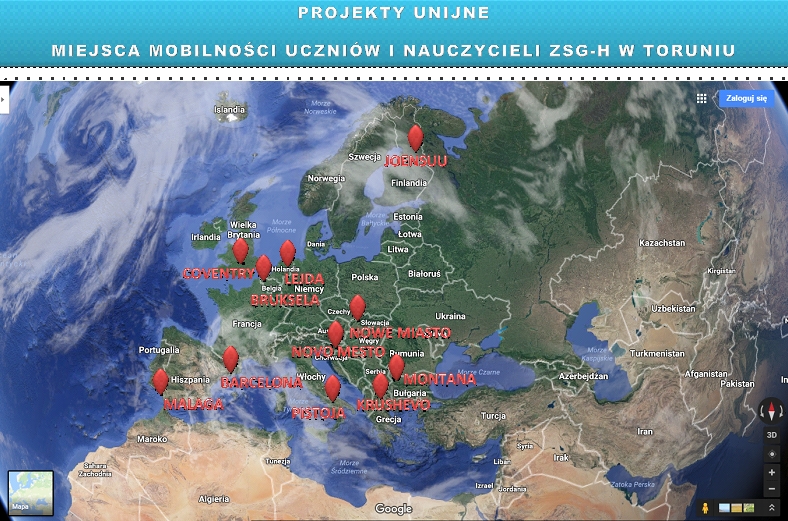
Na zaproszenie Fundacji Rozwoju Systemu Edukacji – Narodowej Agencji Programu Erasmus+ w dniach 04.05-07.05.2016 r. reprezentantka ZSG-H Anita Streich wzięła udział w międzynarodowym szkoleniu „Quality Matters Seminar – A cross sectoral approach to mobility projects within Erasmus+ programme”.
Zgłoszenie udziału w spotkaniu miało formę konkursu dla koordynatorów najlepszych projektów realizowanych w ramach programu Erasmus+.
Tematyka seminariumdotyczyła aspektów jakościowych m.in. przygotowania kulturowego, transferu wiedzy i doświadczenia, planowania mobilności jako procesu uczenia się, związanych z realizacją projektów akcji KA1 w ramach programu Erasmus+.
Moje oczekiwania wobec udziału w seminarium zostały spełnione. Dzięki uczestnictwu w Quality Matters Seminar usystematyzowałam swoją wiedzę nt. zarządzania cyklem projektu. Poszerzyłam także swoje wiadomości nt. aspektów jakościowych związanych z przygotowywaniem uczestników i ewaluacji mobilności.
Ponadto miałam okazję indywidualnych rozmów z pracownikami narodowych agencji programu Erasmus+ różnych krajów Europy, m.in. Polski, Czech, Szwecji, Norwegii, Wielkiej Brytanii oraz podzielenia się spostrzeżeniami i doświadczeniami z realizacji projektów kilku sektorów programu Erasmus+, których beneficjentem jest ZSG-H.
Najcenniejszą jednak dla mnie wartością seminarium było poznanie ciekawych ludzi reprezentujących szkoły, centra edukacyjne oraz organizacje non-profit. Pozyskane w czasie Quality Matters kontakty mam zamiar wykorzystać do prowadzenia współpracy międzynarodowej ZSG-H w przyszłości.
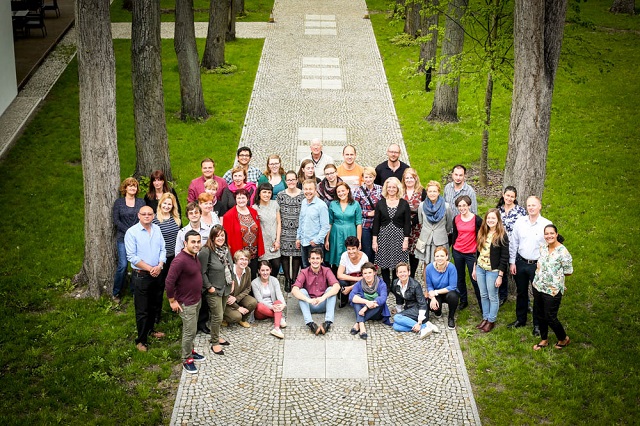
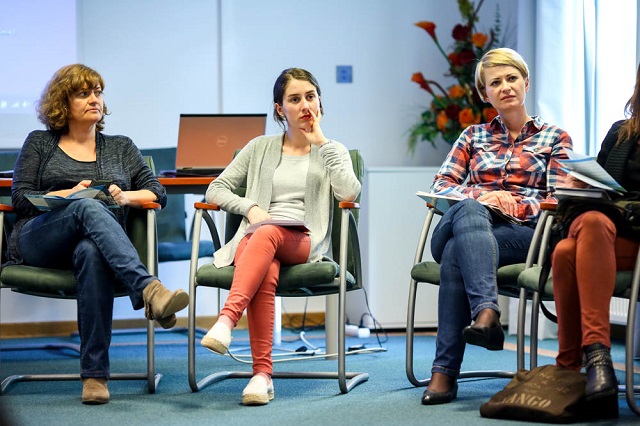
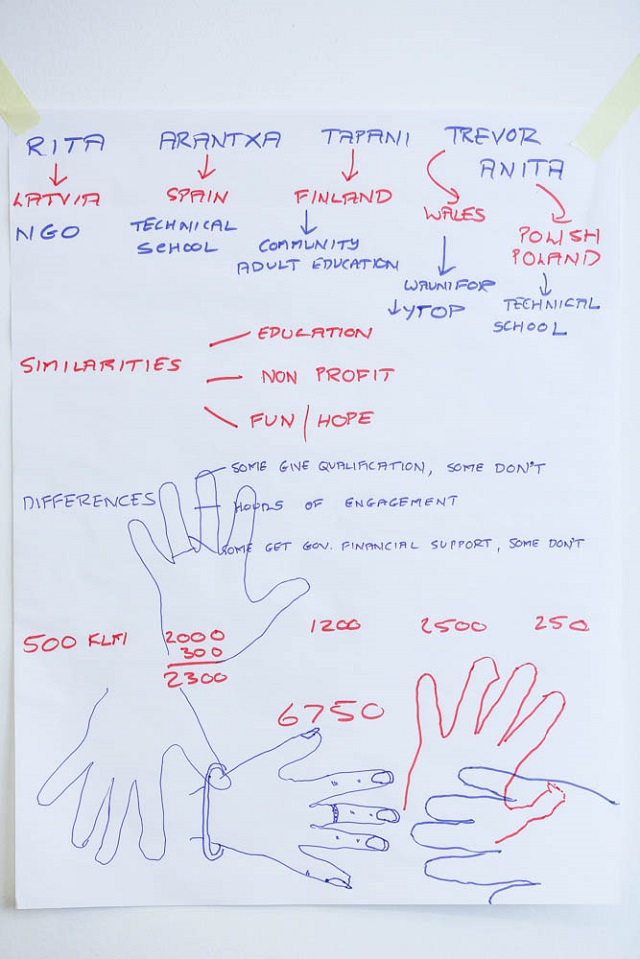
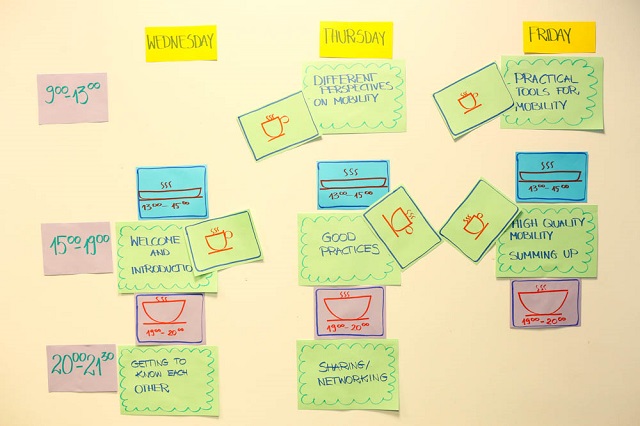
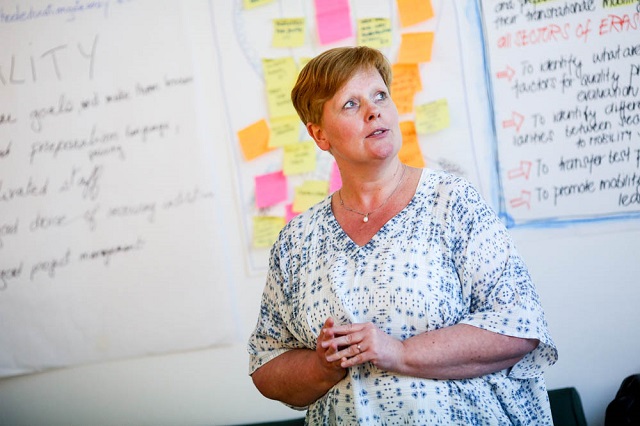
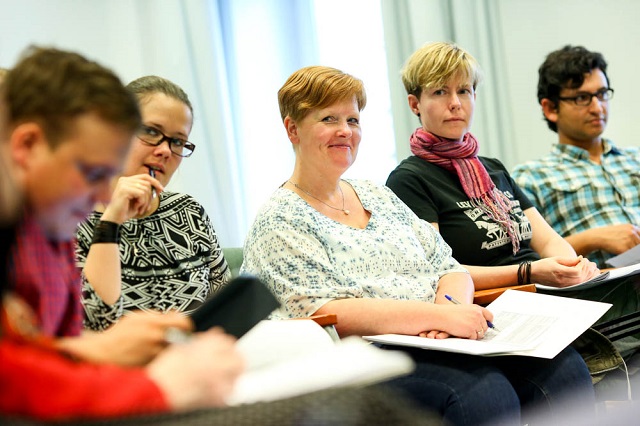
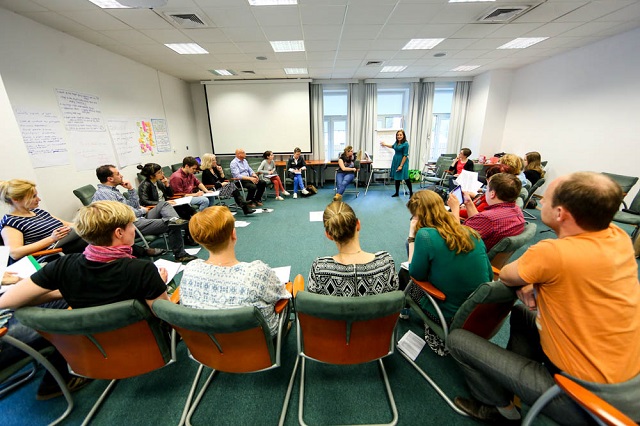
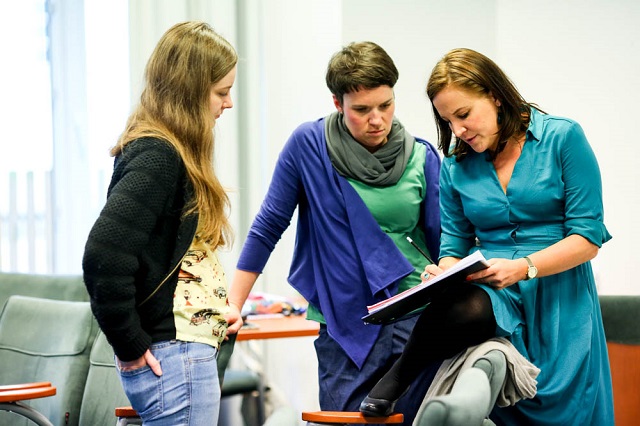
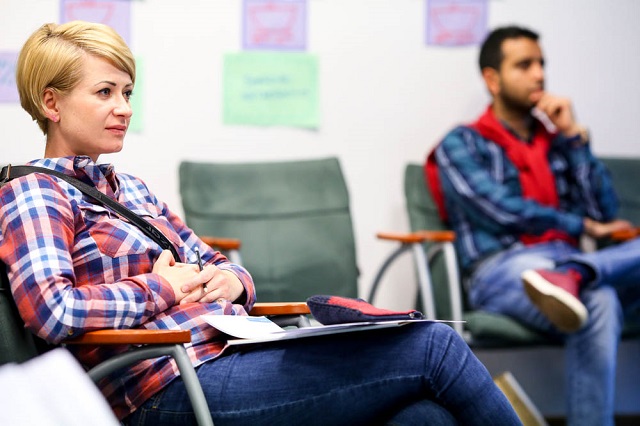
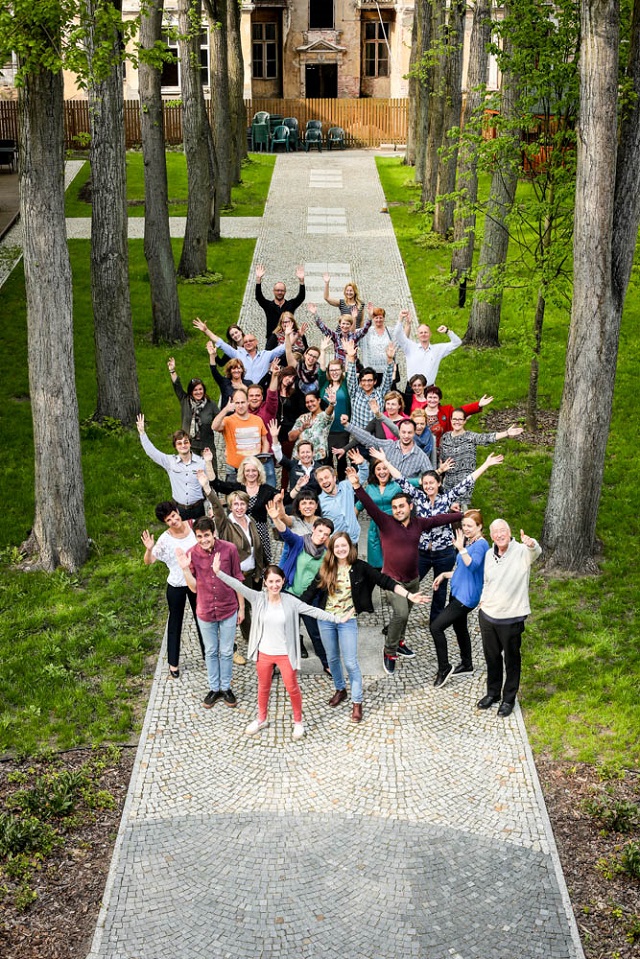
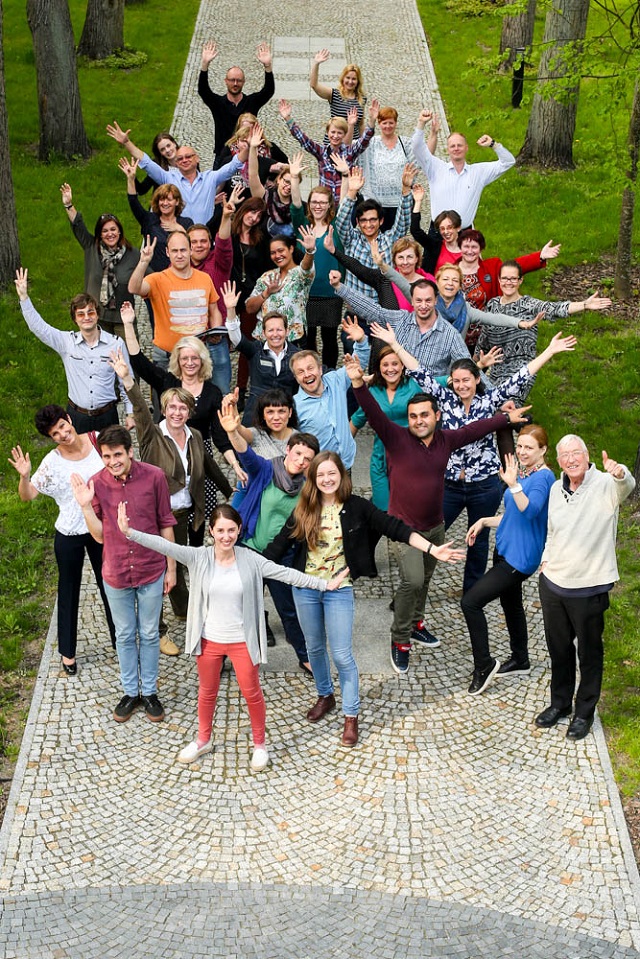
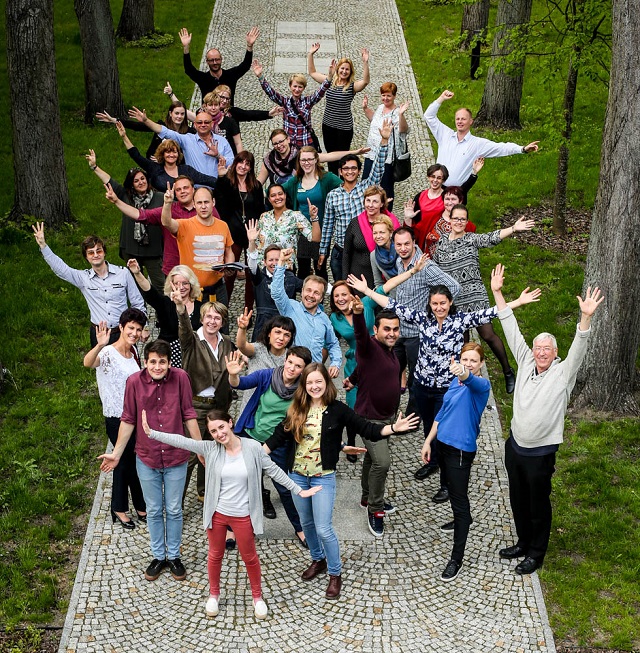
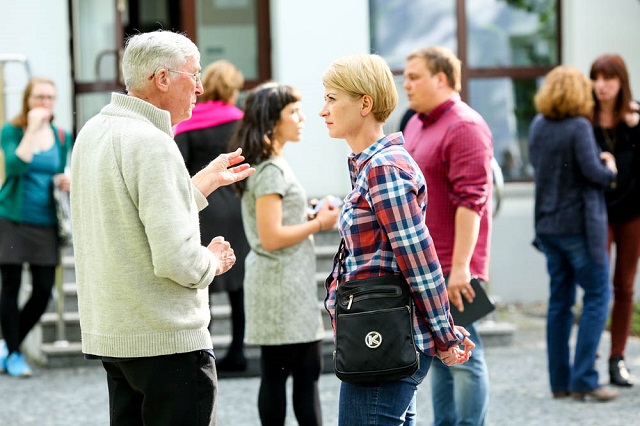
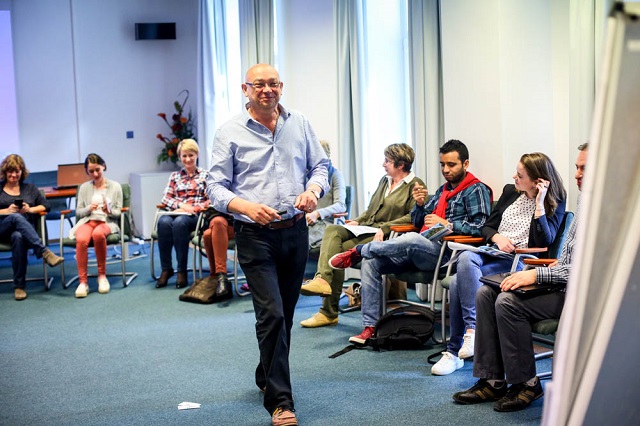
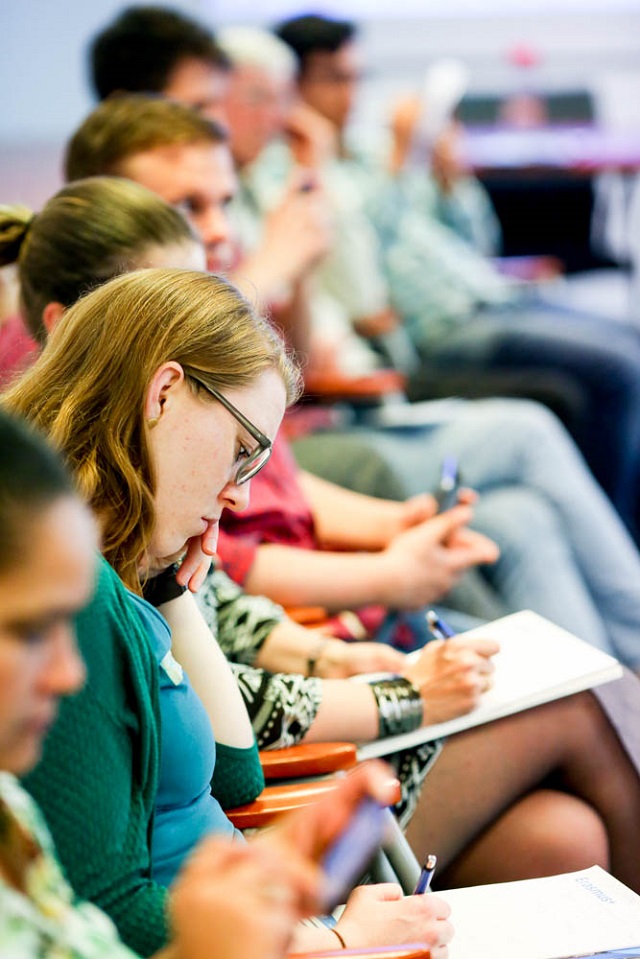


Anita Streich, a ZSG-H representative was invited by the Fundation for the Development of Educational System- the National Agency of the Erasmus+ Programme to take part in the international training „Quality Matters Seminar – A cross sectoral approach to mobility projects within Erasmus+ programme” which took place from 4th to 7th May 2016.
Application for the participation in the meeting took the form of a competition for the best coordinators of projects in the Erasmus +
During the seminarthe quality issues connected with the realization of the projects KA1 within Erasmus+ projects were discussed, among others, cultural preparation, transfer of knowledge and experience, the planning of mobility.
My expectations related to the seminar have been met. By participating in the Quality Matters Seminar I systematized my knowledge on the project management. I also broadened my knowledge on quality aspects related to the preparation of participants and the evaluation of mobility.
In addition, I had an opportunity to talk to the employees of the national agencies of Erasmus + programme of various European countries, including Poland, Czech Republic, Sweden, Norway, Great Britain, and share opinions and experiences on project management in several sectors of the Erasmus + programme.
Meeting interesting people, representing schools, educational centres and non-profit organizations is the biggest value of this seminar. I intend to use these contacts for the international cooperation of ZSG - H in the future.
W wyniku oceny wniosków złożonych w ramach akcji 1 – Mobilność kadry edukacji szkolnej w sektorze Edukacja szkolna w roku 2016 r. wniosek pt.: „Visible learning” został zatwierdzony do realizacji przez Fundację Rozwoju Systemu Edukacji – Narodową Agencję Programu Erasmus+
Wniosek był oceniany zgodnie z kryteriami podanymi w Przewodniku po programie Erasmus+.
Ocena eksperta:
Projekt jest bardzo dobry. Plan projektu i jego realizacji jest spójny z postawionymi sobie celami i może gwarantować osiągnięcie efektów, które przełożą się na pracę szkoły i jej dalszy rozwój w wymiarze europejskim. Wnioskowane mobilności, zarówno typu kurs jak i typu job shadowing są zasadne i służą doskonaleniu zawodowemu nauczycieli. Wniosek jest przygotowany bardzo starannie i planowane działania są jasno, wyczerpująco opisane. W przygotowaniu wniosku szkoła potrafi wykorzystać dotychczasowe bogate doświadczenie we współpracy europejskiej.
Cele projektu:
- Skuteczniejsze przygotowanie absolwentów do aktywnego funkcjonowania na rynku pracy poprzez modernizację oferty edukacyjnej szkoły, w której stosowane są nowoczesne metody nauczania typu CLIL, pozwalające na kształcenie umiejętności kluczowych zawartych w podstawie programowej;
- Wyrównanie dysproporcji edukacyjnych w procesie nauczania poprzez wdrożenie nowych, skutecznych form pomocy uczniom o specjalnych potrzebach edukacyjnych;
- Dzielenie się doświadczeniami dydaktyczno-wychowawczymi i formułowanie w oparciu o nie strategii użytecznych działań;
- Budowanie świadomości różnorodności i otwartości na odrębności kulturowe;
- Budowanie wizerunku szkoły jako placówki skutecznie pozyskującej fundusze unijne i podejmującej współpracę międzynarodową;
- Zdobycie kompetencji językowych zapewniających sprawne posługiwanie się językiem obcym. Rozwój kompetencji uczestników z zakresu efektywnego komunikowania się w języku angielskim na poziomie B2.
- Doskonalenie kadry wynikające z potrzeb szkoły i istotny sposób wpływające na podniesienie jakości kształcenia, wychowania i opieki.
Uczestnictwo w kursach:
8 uczestników projektu weźmie udział w kursach, które dadzą im możliwość doskonalenia umiejętności językowych, metodycznych oraz merytorycznych z zakresu CLIL oraz pracy z uczniami o specjalnych potrzebach edukacyjnych.
Job shadowing
6 uczestników job shadowing będzie miało możliwość zapoznania się z fińskim, tureckim i macedońskim systemem edukacji oraz bazą dydaktyczną szkół partnerskich. Dzięki obserwacji i uczestnictwu w zajęciach zapoznają się z metodami pracy w różnych środowiskach kulturowych oraz znajdą pomysły na wprowadzenie nowych narzędzi do swojego warsztatu oraz na wdrożenie rozwiązań edukacyjnych obserwowanych za granicą.
DESCRIPTION
1. Name of the good practice (title, year):
Project „Visible Learning"
2. General objective of the good practice:
- getting acquainted with modern methods of equaling pupil’s educational disparities in the learning process and effective form of helping students with special educational needs.
- Gaining experience in teaching Ethic lessons in different cultural environment by sharing teaching-education experience
3. Name of the Host Institution:
SOU SV.NAUM OHRIDSKI secondary school
4. City and country:
Partizanska 22 , 6530 Makedonski Brod
Macedonia / MACEDONIA
5. Name and email of the Contact Person in the host institution:
Jacquelina Ivanovska, Ten adres pocztowy jest chroniony przed spamowaniem. Aby go zobaczyć, konieczne jest włączenie w przeglądarce obsługi JavaScript.
6. Name
Roman Wojda / Aleksander Marcinkowski
7. Dates of the job shadowing:
12.03-17.03. 2018
8. Topic to which the GP (Good Practice) is related:
Assessing of one’s teaching process and work organisation in order to achieve better teaching results, taking into account student’s abilities and teacher’s professional competencies
9. Reason for choosing the GP:
Macedonian educational system that offers equal and completely free opportunities of education for all, irrespective of matters of residency, sex, economic situation or linguistic and cultural background.
However, this policy also have some disadvantages and many Macedonian schools faces some problems. In Macedonia every pupil and student of primary and secondary school, no matter what cultural and religious background one comes from, has the right to educational financial support.
10. Description of the GP (+/-500 words):
During the visit to Macedonia on the days from 12th.03 to 17th.03. 2018 we had possibility to get acquainted with the organizational structure of hosting school, its didactic base, Macedonian System of Education as well as cooperation between the school and local institutions such as social assistance. We also had the chance to compare the supervisory process made by regional education authority inspector.
During our stay in the school we met with Teachers Council of the hosting school, the principal of the school, the students, regional director of the social assistance, local education authority inspector and the major of the town. During our discussion with the Teachers Council we talked about learning difficulties, interests and we exchanged teaching experiences a well as issues of diminishing number of students and the ways of coping with the situation. Attending in lessons of Ethics, Philosophy and English has given us possibility of comparing the national syllabuses in both educational systems on the level of high schools. We analyzed school records such as class registers and observed Ethic, Philosophy and English lessons.
The School visit has increased our knowledge about school interior design, friendly for students and school employees. We learned that special needs education is generally provided in conjunction with mainstream education. The aim is to prevent existing problems from becoming more serious or expansive. If children cannot adequately cope with mainstream education, in spite of general or intensified form of support, they must be given special support. However the most important problem in this case is unwillingness of parents who don't want to confess that they have children with some mental disabilities what is caused by cultural background. As the result they don't want to cooperate with the schools in such situations.
The visit in the Macedonian school has broadened our knowledge about the educational system of the countries which have been building their national identity shortly after the colapse of The Republic of Yugoslavia and aspiring to access to European Union. In Macedonia education is free of charge, the students get free students books, they don't have to pay for accommodation and food in dormitories. However, it has main disadvantage which is uncontrolled flow of students from small towns such as Makedonski Brod to bigger towns , where the students have better possibilities of getting job in future. It leads to drastical decreasing number of students in schools from small towns, which have no economical possibilities to attract the students to their schools.
11. Description of target group:
Students with special educational needs: students with mild mental retardation
Students with mild mental retardation have problems with logical, abstract, mathematical, analog thinking. Mechanical and cognitive memory can be on average level. The volume of words is poor. There are often problems with attention. Students have difficulty in mastering the content from the core program. It is often harder for them to control emotions. They are usually critical of themselves. They see that they are different from the environment. This students have low self-esteem.
12. Skills involved for the staff:
Both primary and secondary teachers must have a master's degree to qualify. Teaching is a respected profession and entrance to university programs is highly competitive. However the sallaries are inadequate to the qualifications of the teachers. Teachers in Macedonia are given a great deal of responsibility and are allowed unfettered flexibility in what and how they teach. Performance is observed and graded similarly to Polish assessing system. Detailed plans and lessons scenarios are obligatory.
13. Resources (Human, technical and other needs to implement the GP):
- Comprehensive stimulation of cognitive development and enrichment
- Vocabulary resource to suit the child's ability during classes revalidation and didactic
- Personalized working methods with the student, how to check messages and ratings, also during external exams
- Inclusion in various forms of activity, support of strengths, perceiving and rewarding achievements - to build positive self-esteem and to learn motivation
- Guidance and counselling aims is very important to support, help and guide pupils and students so that they can all perform as well as possible in their studies and be able to make correct and appropriate decisions concerning their education and careers.
- Teachers should treat children and young people as individuals and help them to proceed according to their own capabilities.
- Learners should also experience success and joy of learning.
- Teachers enter the profession full of drive and enthusiasm. They are in the job for the right reasons. We must trust them and keep that drive alive. To do this, we must give them the tools and time they need to recover after a hard day at work. If teachers aren’t encumbered by tasks that don’t benefit them or their students, they’ll be able to do a better job.
|
|
14. External conditions needed to be met for implementing the GP:
Not all the classrooms equipped with latest generation equipment, mulitmedia equipment, lack of school Internet access. Tere is a gym, small number of toilets, art room, work space for each teacher
15. Risk related to implementation of the GP:
Not enough time to support pupils, small teacher involvement to help student with special needs, student's unwillingness to work, lack of parental support, not enough money to buy equipment
16. Expected results of the GP for the clients (or staff):
Participation in the project affected the professional development of the teachers participating in the project. We have learned the specifics of working with young people in other countries, and have also established a number of useful contacts that can transform into later successes in the implementation and organization of international projects. Such meetings are also a source of inspiration - the time when interesting ideas are born for further action. We are teachers looking for new teaching styles that meet the interests of the students, so the course I want to take part in is in line with our teaching. For example, in English, there are many words of English that I use during class. With this knowledge students are more likely to absorb new lexical material and are more likely to learn the language. Proposing new alternative teaching methods is a great incentive for learning for students with different educational needs. The various extracurricular activities that I lead can be one of these methods. As a result of the program, students are offered other interesting forms of extracurricular activities and I hope to find inspiration in participating in the project. We also plan to create a work program with a gifted student. As class tutors we are interested in solving the problems of youth in other countries. Ethical issues are dealt with during the classes with the tutor, so it is important to be able to transfer the knowledge acquired to the school in Poland and to the Polish educational realities. On the other hand, documenting my professional achievements with the Europass document will increase our attractiveness in the labor market. In addition, participation in the project will be a continuation of the course in which we took part in getting to know the modern school and working methods in Macedonia. It will greatly affect our professional development and at the same time develop the competence of communicative communication in English so much needed in the current times.
17. Can the GP be measured? Which can be the indicators?:
- 100 percent students motivated to learn, feeling good and safe at school
- More tasks to motivate students and less ask for lesson and quizzes
- All children, clever or not, are taught in the same classrooms
- 100 percent of children receive extra help
- The difference between weakest and strongest students will be smaller
- 100 percent of students with mild mental retardation graduate from the high school.


DOBRA PRAKTYKA - GOOD PRACTICE
DESCRIPTION:
1.Name of the good practice (title, year):
Społeczność szkolna fundamentem w procesie nauki czytania uczennicy ze specjalnymi potrzebami edukacyjnymi, 2017;
2.General objective of the good practice:
Mobilizacja społeczna i wsparcie uczennicy szkoły średniej do opanowania umiejętności czytania bez wykluczenia jej ze społeczności szkolnej.
3. Name of the Host Institution: Nazwa instytucji goszczącej
Joensuun, yhteiskoulun lukio;
4. City and country:
Joensuu, Finlandia;
5. Name and email of the Contact Person in the host institution
Esa Raty, Ten adres pocztowy jest chroniony przed spamowaniem. Aby go zobaczyć, konieczne jest włączenie w przeglądarce obsługi JavaScript.
6. Name
Agnieszka Dutkiewicz, Iwona Pawlak;
7. Dates of the job shadowing:
11.09.2017-16.09.2017;
8. Topic to which the GP (Good Practice) is related:
Zaangażowanie społeczności jako metoda.
9. Reason for choosing the GP:
Podczas naszego pobytu w szkole średniej w Joensuu w czasie rozmowy z nauczycielem SPE zaskoczyła nas informacja, ze ok. 8% uczniów tejże placówki w pierwszej klasie ma problemy z umiejętnością czytania lub pisania. Zastanowiło nas, jak uczeń w szkole średniej może nauczyć się czytać nie mając dodatkowych zajęć edukacyjnych w tym zakresie. Po wnikliwej rozmowie oraz wywiadach z kadrą pedagogiczną uczącą w tej klasie udało nam się zebrać informacje na temat form pomocy i technik nauczania, jakimi objęci są uczniowie z takimi problemami
10. Description of the GP (+/-500 words):
Uczennica rozpoczęła naukę w szkole średniej z diagnozą bardzo słabych umiejętności czytania. W związku z tym została skierowana do nauczyciela SPE. Przeprowadzono testy dotyczące czytania i rozumienia języka fińskiego oraz logicznego myślenia:
- podział ciągu literowego na wyrazy z wzrastającym stopniem trudności;
- znalezienie błędów literowych w wyrazach;
- dyktando;
- rozumienie i odpowiedź na pytania na podstawie tekstu źródłowego.
- zadania z matematyki.
Wyniki przeprowadzonych testów potwierdziły duże problemy u uczennicy w czytaniu oraz problemy z matematyki wynikające z braku możliwości przeczytania zadania.
Odbyła się rozmowa na poziomie nauczyciel SPE - rodzice uczennicy, których poinformowano o problemach, zebrano wywiad oraz poproszono o pomoc w nauce czytania ich córce poprzez rozwiązywanie udostępnionych przez szkołę zadań w różnych formach.
Dziewczynce nie oferowano żadnych dodatkowych zajęć z nauki czytania ponieważ fiński system edukacji zakłada, że każde dziecko rozpoczynając naukę na obecnym poziomie edukacyjnym powinno umieć czytać i pisać.
Odbyły się konsultacje z dyrektorem, doradcą zawodowym, uczącymi nauczycielami i opiekunem grupy, których głównym zadaniem było wsparcie uczennicy m.in. poprzez:
- motywowanie,
- dostosowanie ilości i rodzaju materiału do możliwości edukacyjnych dziecka,
- udostępnienie przez nauczyciela języka fińskiego materiałów do wykorzystania w pracy w domu (także z rodzicami).
Jedną z metod pracy z uczennicą było czytanie przez nauczycieli testów wewnętrznych sprawdzających wiedzę oraz możliwość rozwiązywania ich ustnie przez dziecko.
Uczennica brała udział w wielogodzinnych indywidualnych spotkaniach z doradcą zawodowym, który pokazał jej m.in. drogi rozwoju kiedy osiągnie ona swój sukces nabywając umiejętności czytania jak również poinformował ją co się może wydarzyć gdy tych umiejętności nie nabędzie. Jednocześnie wskazał jej możliwości zawodowe w obu przypadkach zgodnie z jej predyspozycjami.
Uczennica miała zindywidualizowany system nauczania dostosowany do jej problemów edukacyjnych. Uczestniczyła we wszystkich zajęciach z rówieśnikami z grupy. Jej grupa rówieśnicza także wspierała ją w pokonywaniu problemów i mobilizowała do nauki czytania.
W ciągu roku szkolnego problem braku umiejętności czytania został rozwiązany dzięki wspólnej pracy i wsparciu wszystkich zainteresowanych stron.
11. Description of target group:
Uczniowie nie umiejący czytać, którzy rozpoczynają naukę w szkole średniej.
12. Skills involved for the staff:
- umiejętności dialogu motywującego oraz pokazywanie ścieżki rozwoju zawodowego;
- umiejętności pracy z uczniem nie umiejącym czytać na poziomie szkoły średniej;
- zobrazowanie przyszłości ucznia w każdym z wariantów.
13. Resources (Human, technical and other needs to implement the GP):
Organizacja pracy z uczniem nie potrafiącym czytać:
- testy diagnozujące problem oraz skalę deficytów edukacyjnych uczennicy;
- spotkanie i przekaz wskazówek rodzicom pracy dzieckiem w domu;
- informacja dla pracowników szkoły oraz ich ścisła współpraca mająca na celu wsparcie uczennicy (dyrektor, nauczyciele, opiekun grupy, doradca zawodowy, nauczyciel SPE);
- ustne rozwiązywanie wewnętrznych testów sprawdzających;
- obniżenie wymagań edukacyjnych;
- pomoc rówieśników przy pracach wymagających umiejętności czytania;
- używanie e- booków.
14. External conditions needed to be met for implementing the GP:
Diagnozująca dokumentacja ze szkoły podstawowej trafia do kolejnej placówki edukacyjnej razem z uczniem. Zostają przeprowadzone testy językowe, z matematyki, logicznego myślenia, które pokazują wielkość problemu. Przeprowadza się rozmowę z rodzicami w celu przedstawienia i pomocy w rozwiązaniu problemu. O deficytach edukacyjnych ucznia z problemami zostają szczegółowo poinformowani wszyscy zainteresowani, którzy będą pracować z dzieckiem.
15. Risk related to implementation of the GP:
Uczennica nieświadoma konieczności umiejętności czytania nie odczuwa potrzeby własnego rozwoju w tej dziedzinie. Gdyby nie zdiagnozowano jej braków nie można by jej pomóc i nie zdałaby końcowych egzaminów państwowych w szkole średniej, podczas których niezbędna jest umiejętność biegłego czytania i pisania, co zamknęłoby jej możliwość dalszego rozwoju edukacyjnego.
16. Expected results of the GP for the clients (or Staff):
Uczennica w ciągu roku nauczyła się biegle czytać dzięki czemu nauczyciele mogli podnieść dla niej poziom wymagań edukacyjnych.
17. Can the GP be measured? Which can be:
Opisany przypadek może być zmierzony opracowanymi przez fiński system edukacji testami.


|
DESCRIPTION
|
|
|
1.Name of the good practice (title, year): |
|
|
Project “Visible learning” 2017
|
|
|
2.General objective of the good practice: |
|
|
Getting acquainted with the methods how to balance pupil’s educational disparities in the learning process
|
|
|
3. Name of the Host Institution: |
|
|
Joensuun yhteiskoulun lukio
|
|
|
4. City and country: |
|
|
Joensuu / Finland
|
|
|
5. Name and email of the Contact Person in the host institution: |
|
|
Esa Raty / Ten adres pocztowy jest chroniony przed spamowaniem. Aby go zobaczyć, konieczne jest włączenie w przeglądarce obsługi JavaScript.
|
|
|
6. Name: |
|
|
Małgorzata Sadłowska / Ewa Wierzbicka
|
|
|
7. Dates of the job shadowing: |
|
|
20-26.08.2017
|
|
|
8. Topic to which the GP (Good Practice) is related: |
|
|
New, effective ways to help students with special educational needs
|
|
|
9. Reason for choosing the GP: |
|
|
Finnish educational system that offers equal opportunities of education for all, irrespective of matters of residency, sex, economic situation or linguistic and cultural background. Finland's education policies have been highly praised and the country has started to export its model around the world. In Finland every pupil and student has the right to educational support. The current thinking in Finland is that the potential of each pupil should be maximited. Therefore educational guidance is seen as essential. Today all pupils and students have the right to educational support. This support can be remedial instruction or support for the pupil’s special needs.
|
|
|
10. Description of the GP (+/-500 words): |
|
|
During practice we got acquainted with the organizational structure and tasks of the host institution, didactic base of the school, Finnish educational system, innovative teaching methods such CLIL, the methods how to balance pupil’s educational disparities in the learning process. We met with teachers, principal, students and talked about learning difficulties, interests and we exchanged teaching experiences. We analyzed school records and observed art lessons, Finnish language lesson, math lesson, “natur and trip” lesson, ethics lesson and German language lesson. The School visit has increased our knowledge about school interior design, friendly for students and school employees. We learned that special needs education is generally provided in conjunction with mainstream education. In Finland the ideology is to provide special needs education primarily in mainstream education. All pupils of compulsory school age have the right to general support, that is, high-quality education as well as guidance and support. Intensified support must be given to those pupils who need regular support measures or several forms of support at the same time. The aim is to prevent existing problems from becoming more serious or expansive. If children cannot adequately cope with mainstream education in spite of general or intensified form of support, they must be given special support. The main purpose of special support is to provide pupils with broadly based and systematic help so that they can complete compulsory education and be eligible for upper secondary education. Special needs support is also provided in upper secondary education. In vocational education and training, students in need of special needs education are provided with an individual education plan. This plan must for example set out details of the qualification to be completed, the requirements observed and support measures provided for the student.
|
|
|
11. Description of target group: |
|
|
Students with special educational needs: students with mild mental retardation Students with mild mental retardation have problems with logical, abstract, mathematical, analog thinking. Mechanical and cognitive memory can be on average level. The volume of words is poor. There are often problems with attention. Students have difficulty in mastering the content from the core program. It is often harder for them too control emotions. They are usually critical of themselves. They see that they are different from the environment. This students have low self-esteem.
|
|
|
12. Skills involved for the staff: |
|
|
Both primary and secondary teachers must have a master's degree to qualify. Teaching is a respected profession and entrance to university programs is highly competitive. A prospective teacher must have very good grades and must combat fierce opposition in order to become a teacher. Only about 10% of applicants to certain programs are successful. The respect accorded to the profession and salaries higher than the OECD average lead to higher performance levels and larger numbers applying for the positions, and this is reflected in the quality of teachers in Finland. Teachers in Finland are given a great deal of responsibility and are allowed unfettered flexibility in what and how they teach. Performance isn’t observed and graded. Instead, annual development discussions with school leaders provide feedback on a teacher’s own assessment of their strengths and weaknesses. Detailed plans are not expected either. The notion that a teacher should provide evidence to prove what they’ve done is ludicrous. Each teacher marks work when it benefits them or the student, but not for anyone else’s sake.
|
|
|
13. Resources (Human, technical and other needs to implement the GP): |
|
|
|
|
|
14. External conditions needed to be met for implementing the GP: |
|
|
rooms equipped with latest generation equipment, mulitmedia equipment, gym, relaxation area for students and teachers, large number of toilets, art room, work space for each teacher
|
|
|
15. Risk related to implementation of the GP: |
|
|
not enough time to support pupils, small teacher involvement to help student with special needs, student's unwillingness to work, lack of parental support, not enough money to buy equipment
|
|
|
16. Expected results of the GP for the clients (or staff): |
|
|
Participation in the project affected the professional development of the teachers participating in the project. We have learned the specifics of working with young people in other countries, and have also established a number of useful contacts that can translate into later successes in the implementation and organization of international projects. As a member of the EU projects, I have the task of seeking contacts with other teachers, schools and other institutions supporting education and ideas that facilitate the development of new projects that support the work of teachers, their interests, and the interests of their students. Such meetings are also a source of inspiration - the time when interesting ideas are born for further action. We are teachers looking for new teaching styles that meet the interests of the students, so the course I want to take part in is in line with our teaching. For example, in German, there are many words of English that I use during class. With this knowledge students are more likely to absorb new lexical material and are more likely to learn the language. Proposing new alternative teaching methods is a great incentive for learning for students with different educational needs. The various extracurricular activities that I lead can be one of these methods. As a result of the program, students are offered other interesting forms of extracurricular activities and I hope to find inspiration in participating in the project. We also plan to create a work program with a gifted student. As class tutors we are interested in solving the problems of youth in other countries. Ethical issues are dealt with during the classes with the tutor, so it is important to be able to transfer the knowledge acquired to the school in Poland and to the Polish educational realities. On the other hand, documenting my professional achievements with the Europass document will increase our attractiveness in the labor market. In addition, participation in the project will be a continuation of the course in which we took part in getting to know the modern school and working methods in Finland. It will greatly affect our professional development and at the same time develop the competence of communicative communication in English so much needed in the current.
|
|
|
17. Can the GP be measured? Which can be the indicators?: |
|
|
|
|
W ramach realizacji projektu „Visible learning” Erasmus+ dyrektor Zespołu Szkół Gastronomiczno-Hotelarskich w Toruniu: Roman Wojda oraz nauczyciel języka angielskiego Aleksander Marcinkowski uczestniczyli w wizycie typu job-shadowing w Sveti Naum Ohridski High School w Makedonski Brod w Macedonii.
W czasie wyjazdu do Macedonii w dniach 12.03-17.03.2018 r. mieliśmy możliwość zapoznania się ze strukturą organizacyjną goszczącej nas szkoły, bazą dydaktyczną, macedońskim systemem edukacji oraz współpracą szkoły z instytucjami środowiska lokalnego, takimi jak pomoc społeczna. Mieliśmy również możliwość porównania procesu nadzoru nad szkołą sprawowanego przez lokalnego inspektora oświaty.
W czasie pobytu spotkaliśmy się z radą pedagogiczną, dyrektorem szkoły, uczniami, miejskim dyrektorem pomocy społecznej oraz miejskim inspektorem oświaty, a także burmistrzem miasta. W czasie rozmów z radą pedagogiczną poruszyliśmy kwestie zmniejszającej się liczby uczniów i sposobów radzenia sobie z tą sytuacją. Udział w lekcjach etyki, filozofii oraz języka angielskiego dał nam możliwość porównania programów w obu systemach oświaty na poziomie szkół średnich.
Wizyta w macedońskiej szkole poszerzyła nasz światopogląd związany z systemem oświaty krajów budujących swoją tożsamość narodową krótko po rozpadzie Jugosławii i aspirujących do przyłączenia do Unii Europejskiej.
W Macedonii edukacja jest bezpłatna, uczniowie otrzymują bezpłatne zestawy podręczników, nie płacą także na zakwaterowanie oraz wyżywienie w internatach szkolnych. Prowadzi to jednak do niekontrolowanego odpływu uczniów z mniejszych miejscowości do większych miast, gdzie uczniowie mają w przyszłości większe możliwości znalezienia pracy.

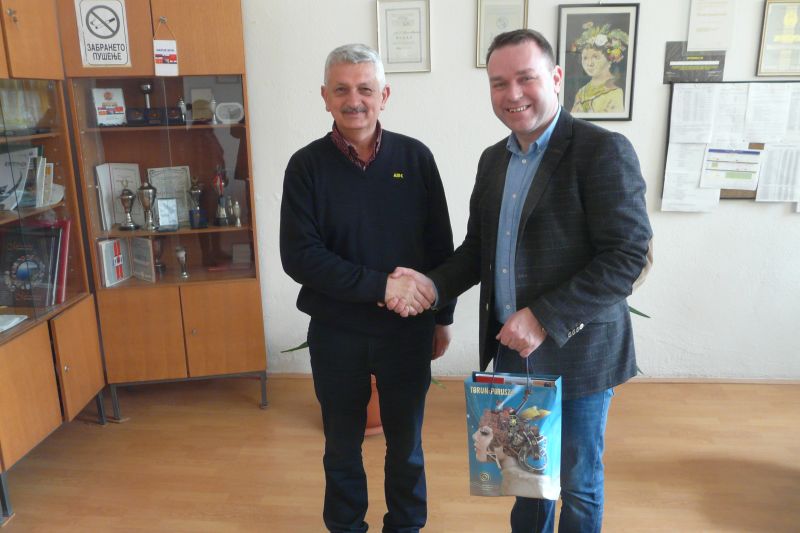
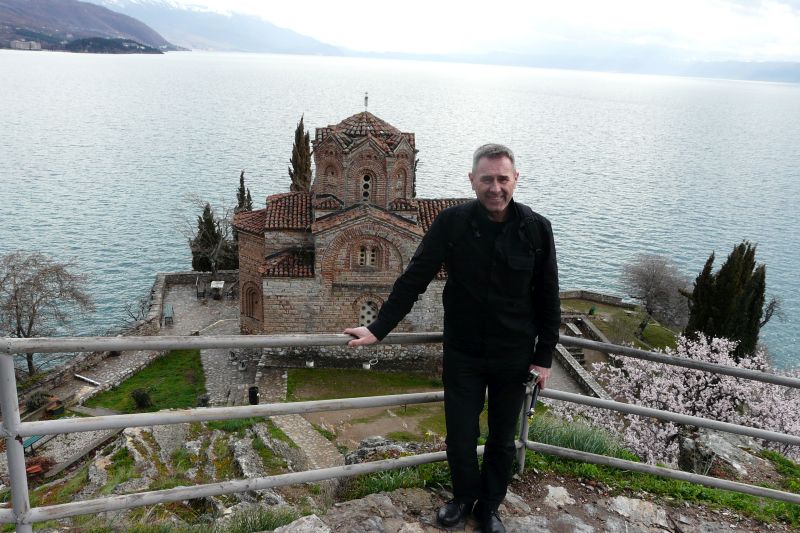
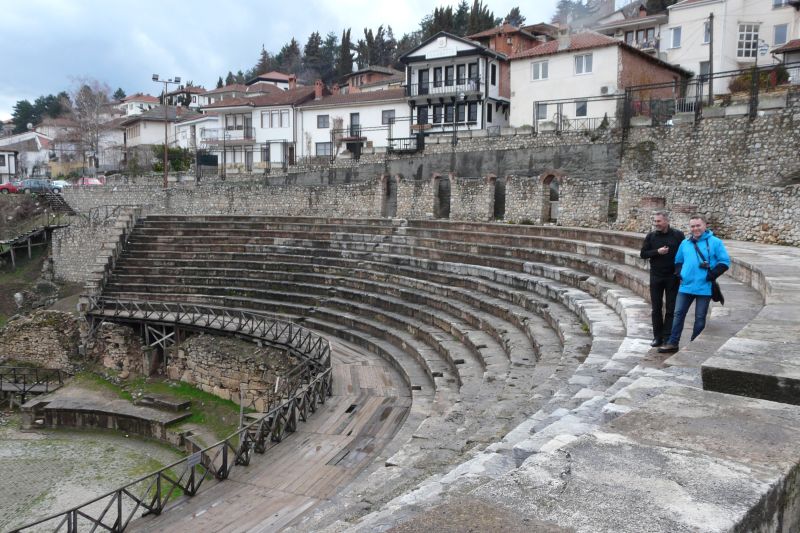
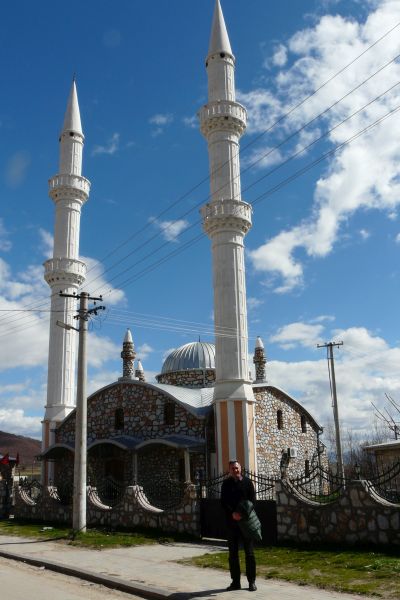
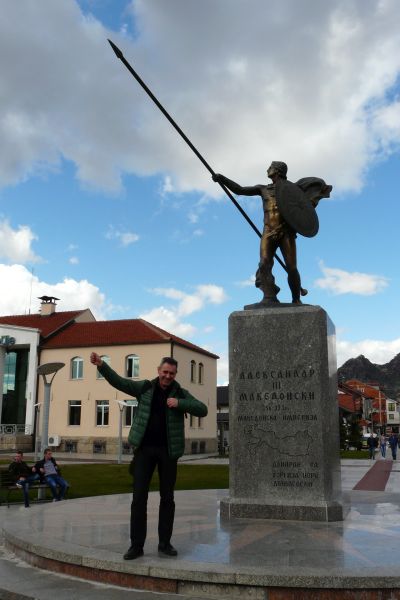
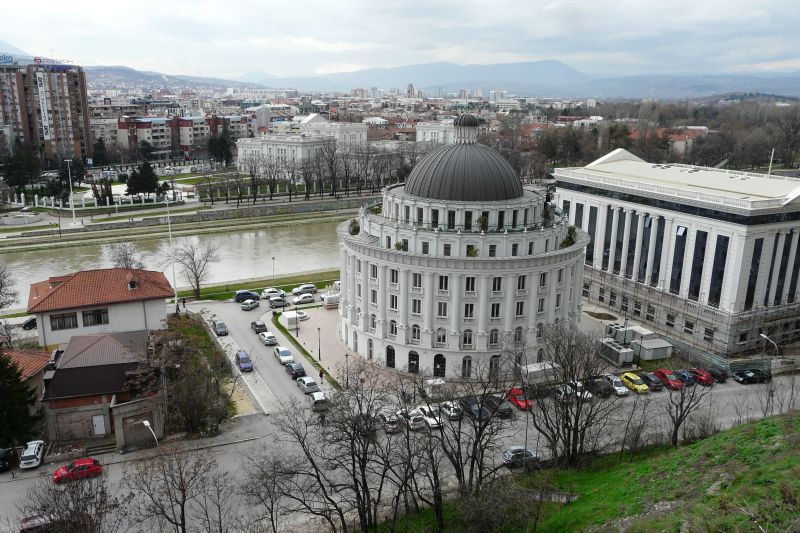
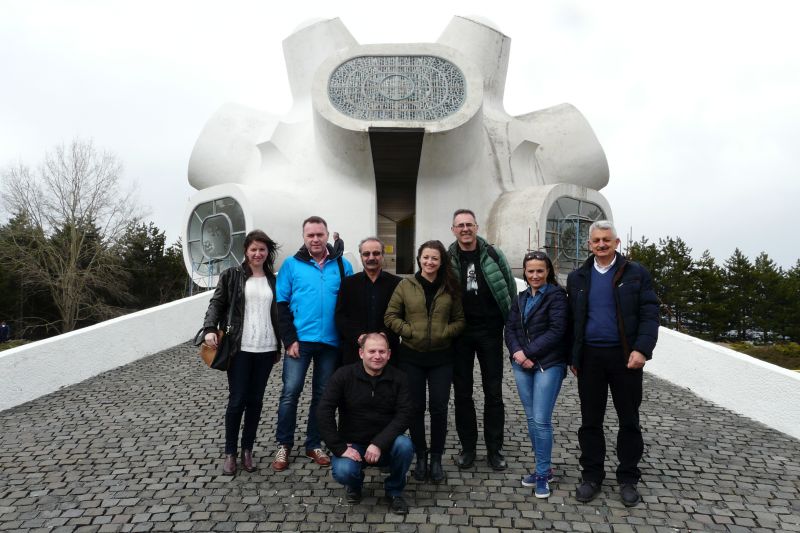
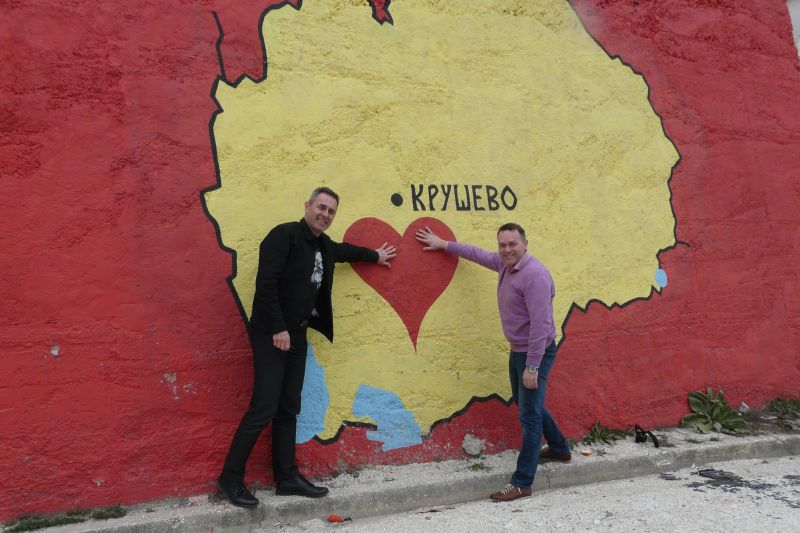
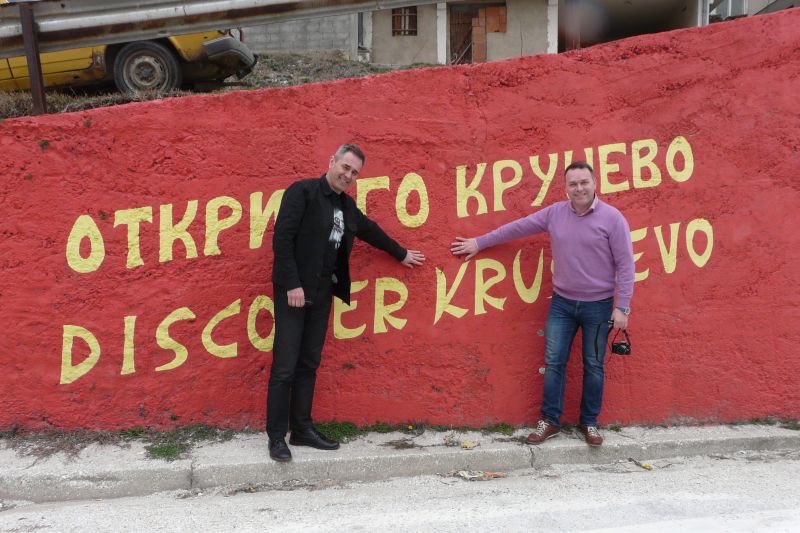
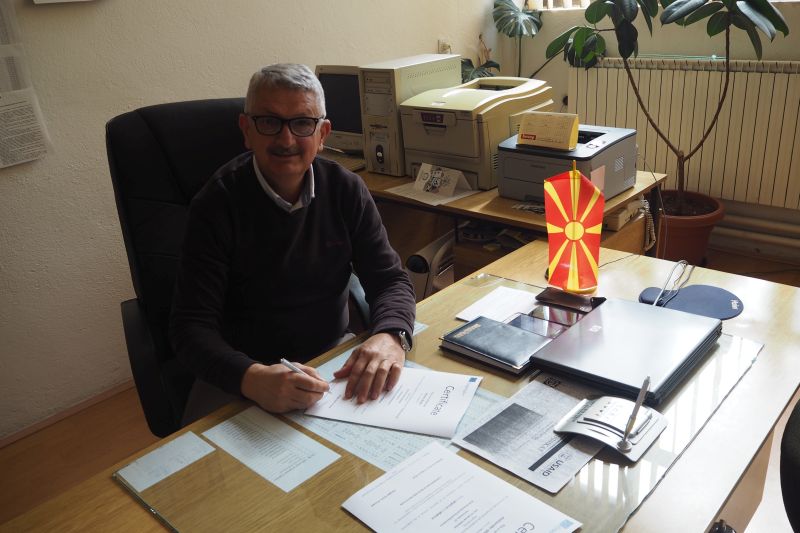
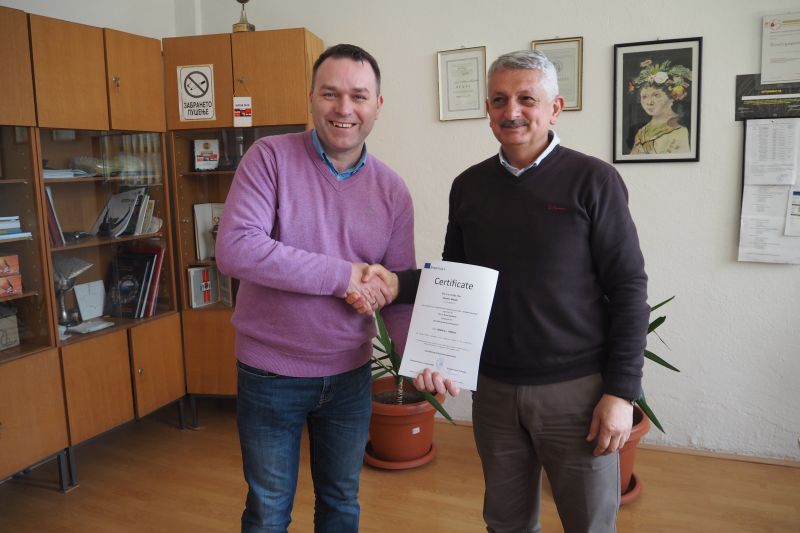

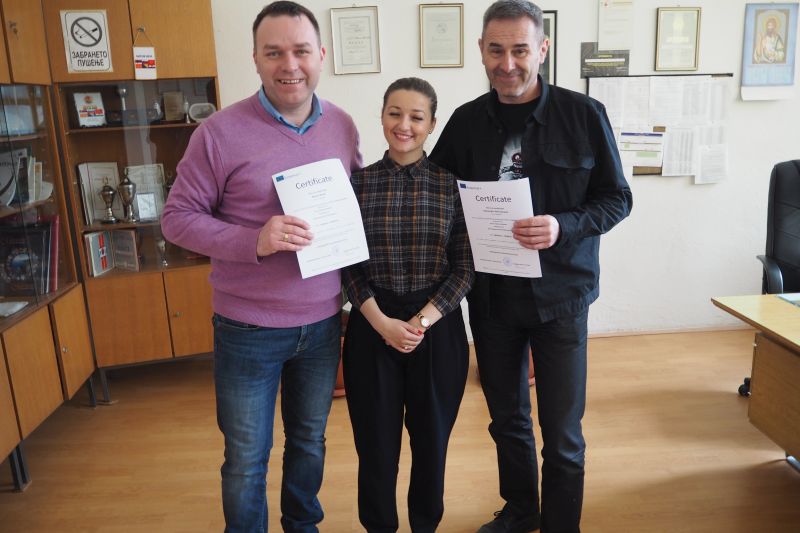
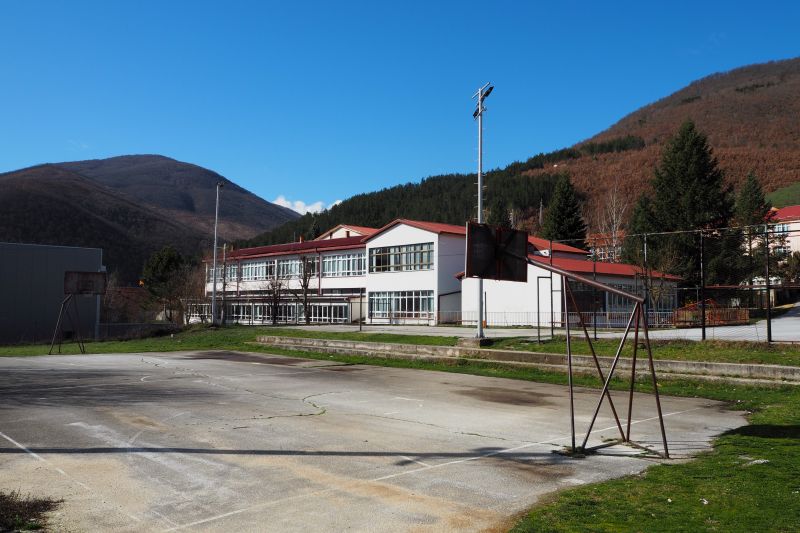
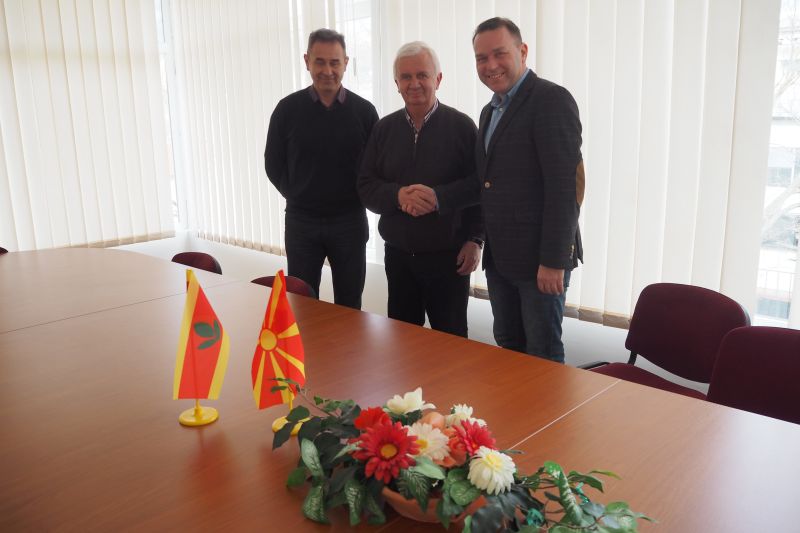
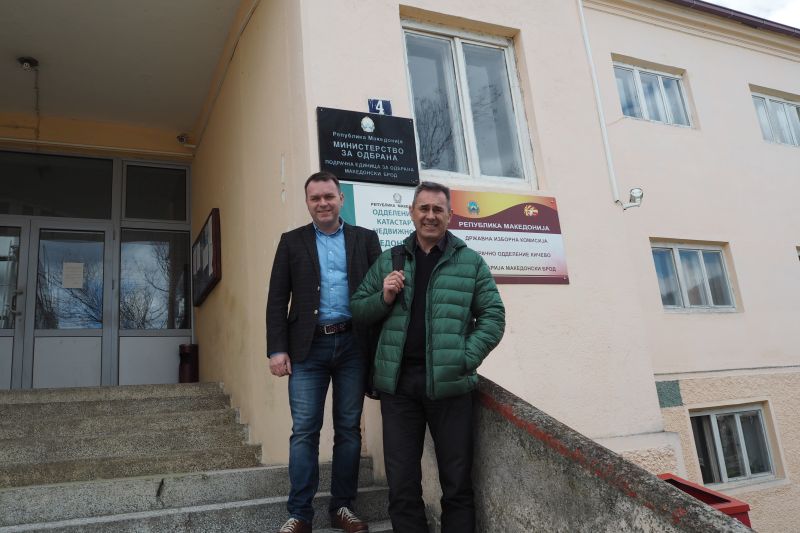
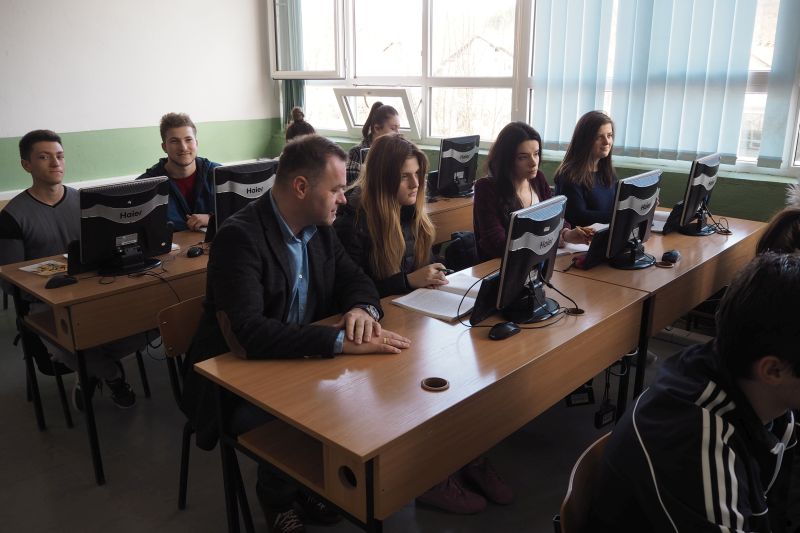
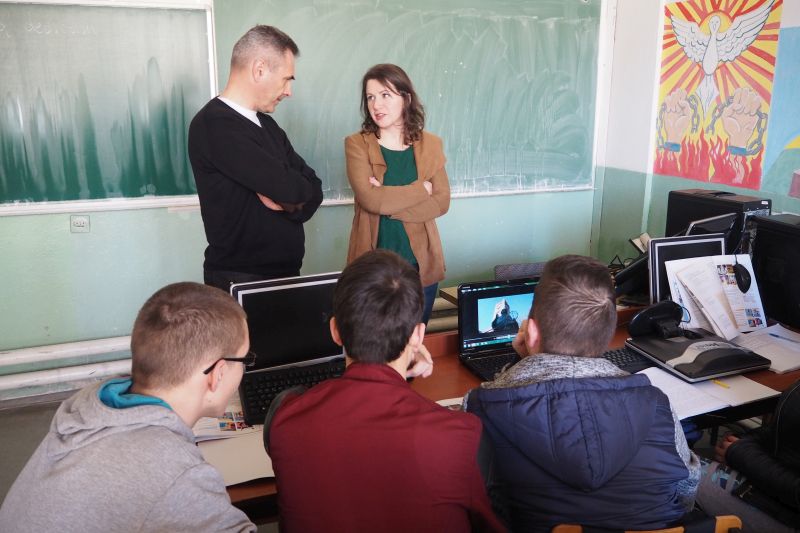

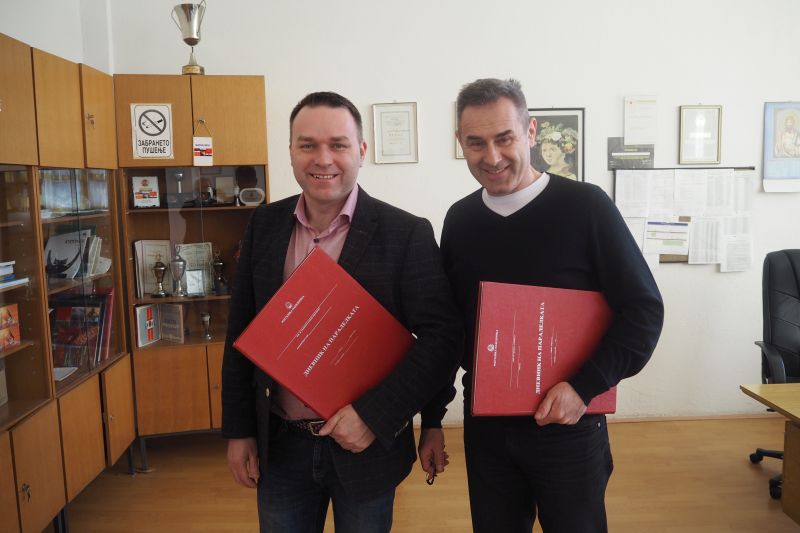
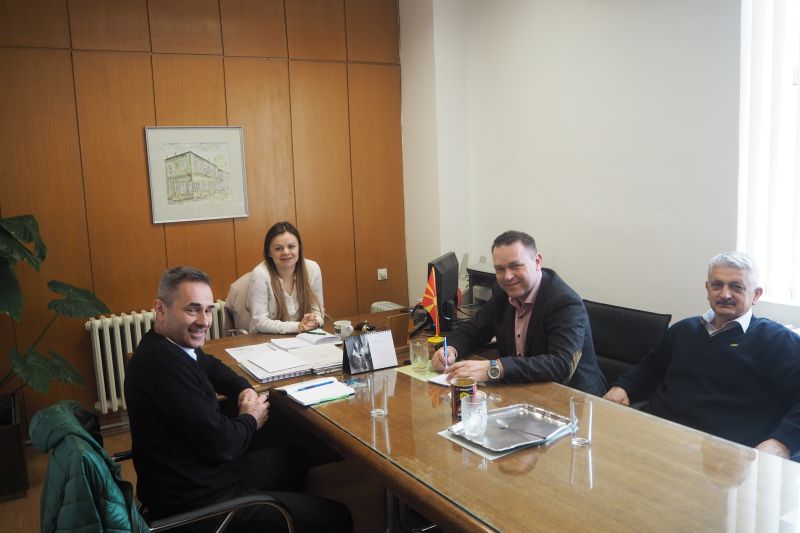
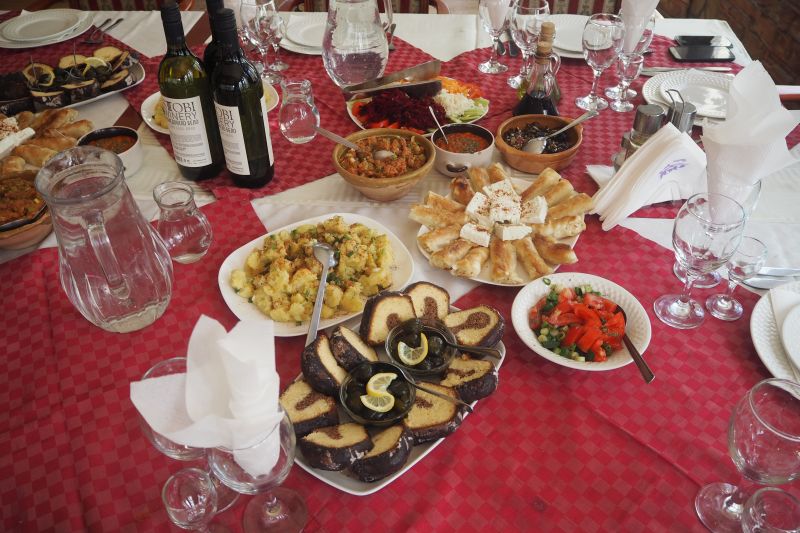

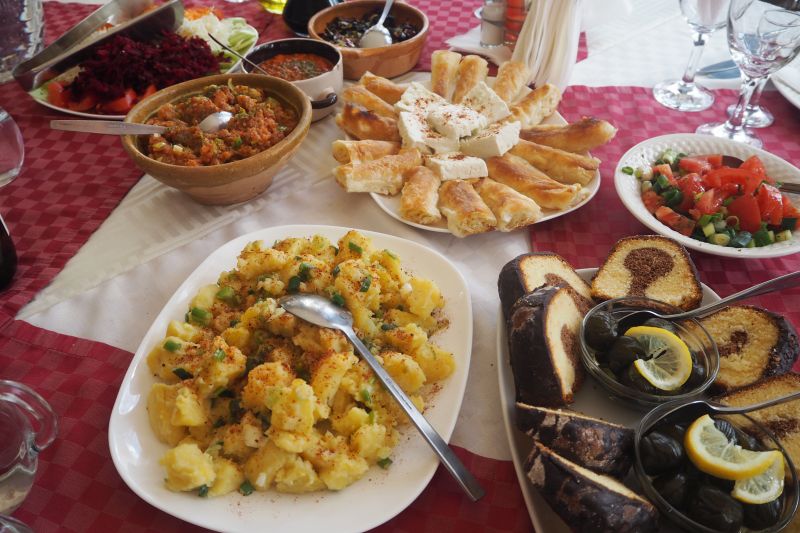
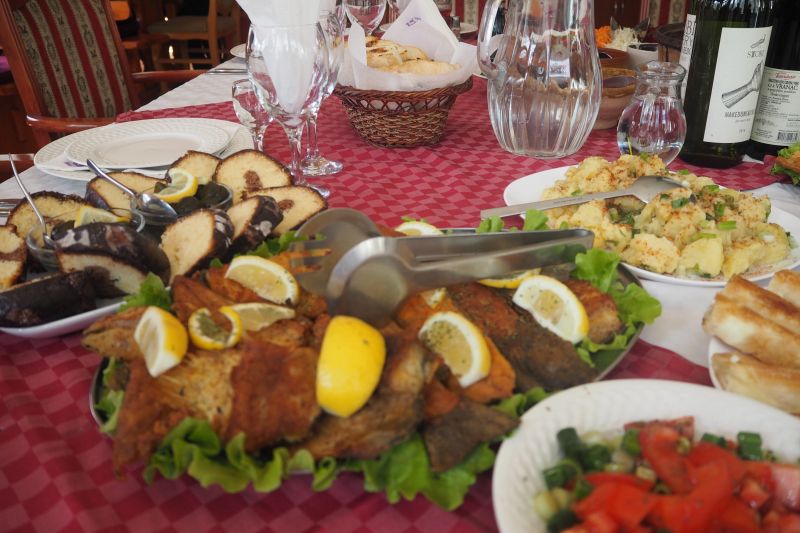
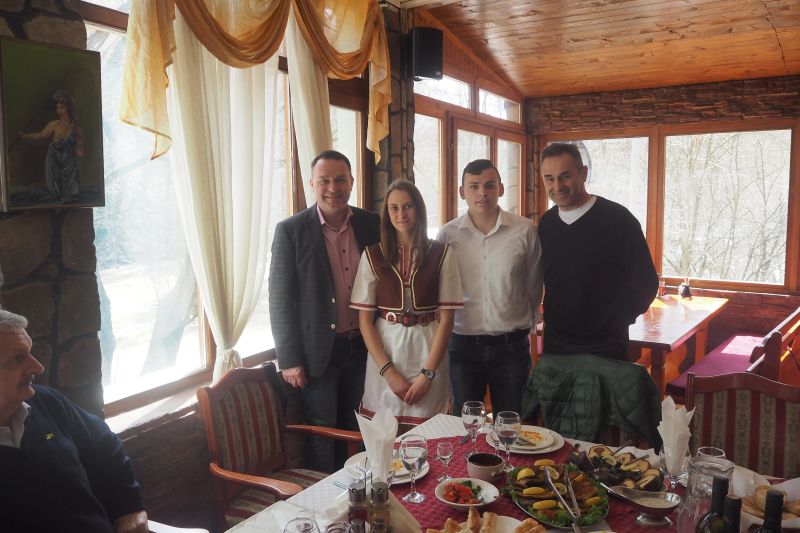
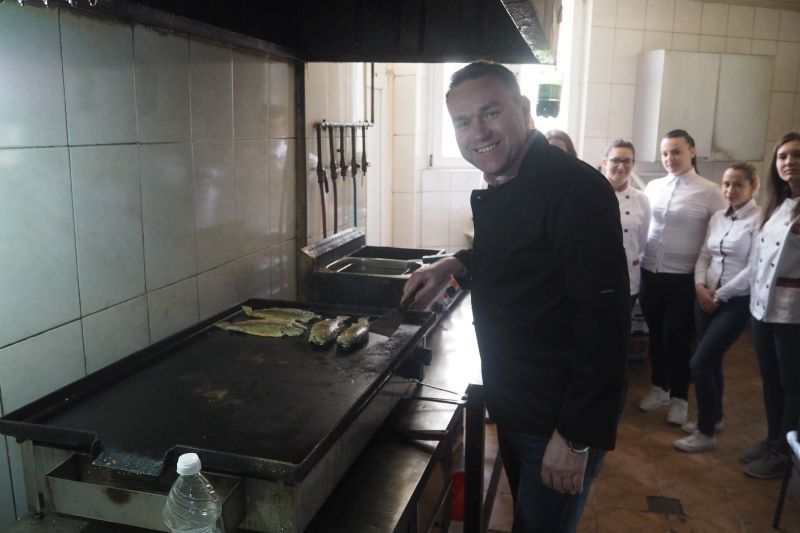
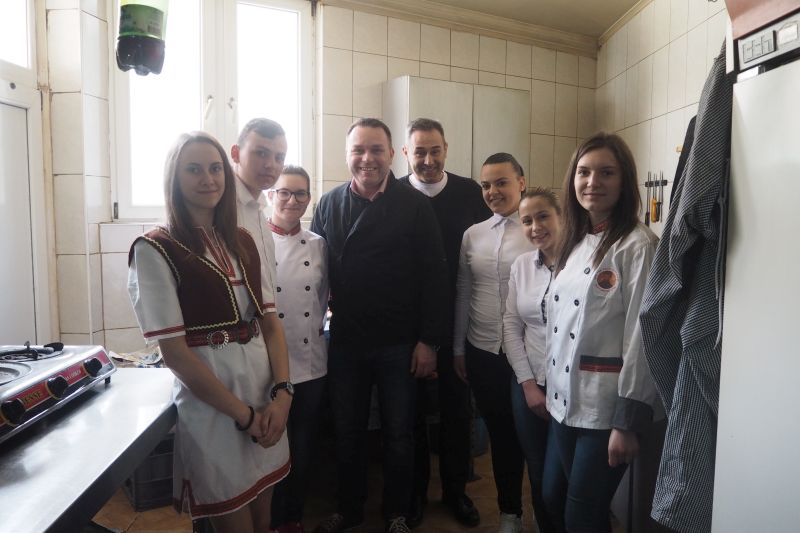
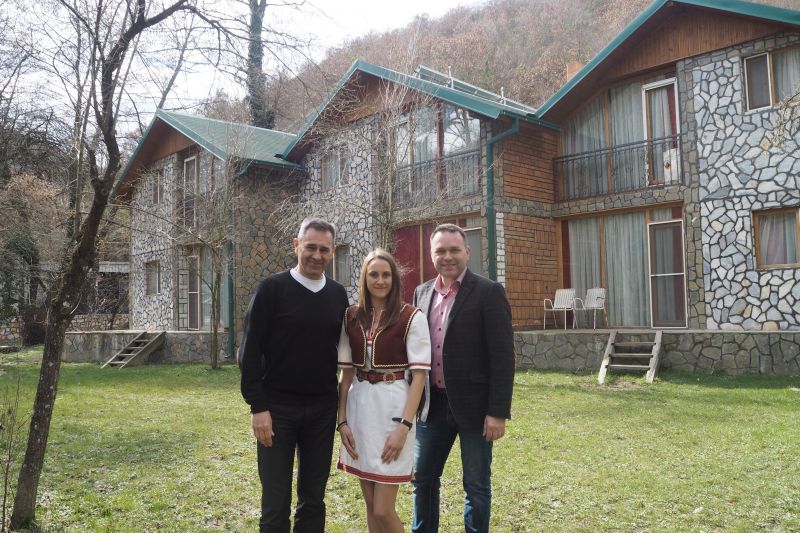
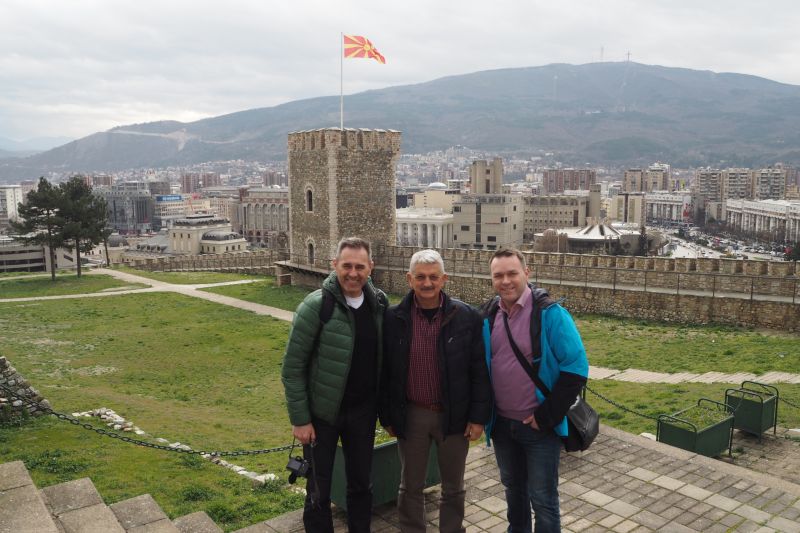
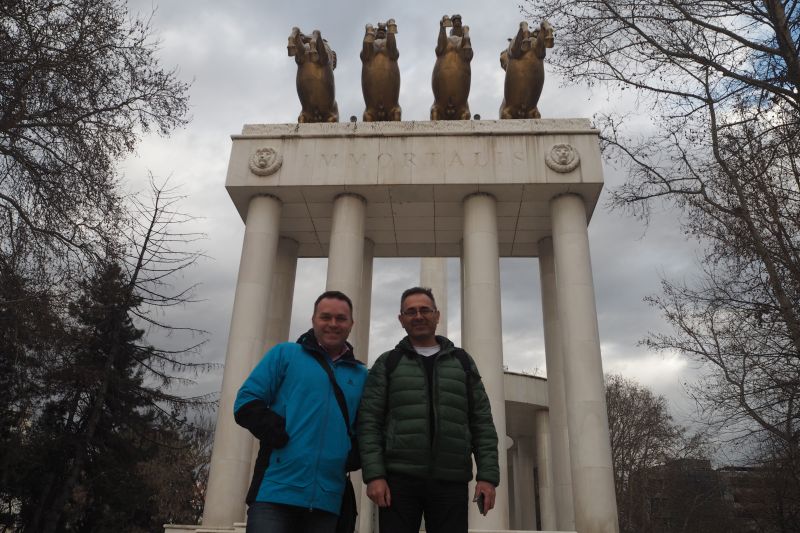
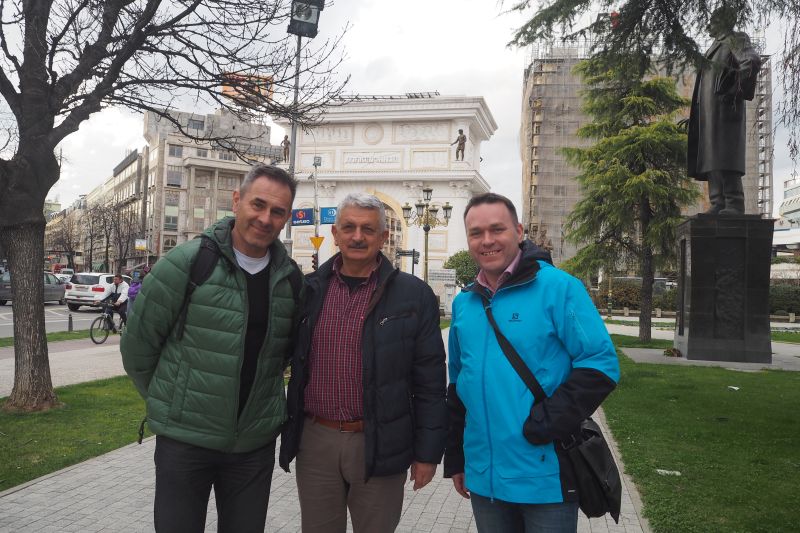
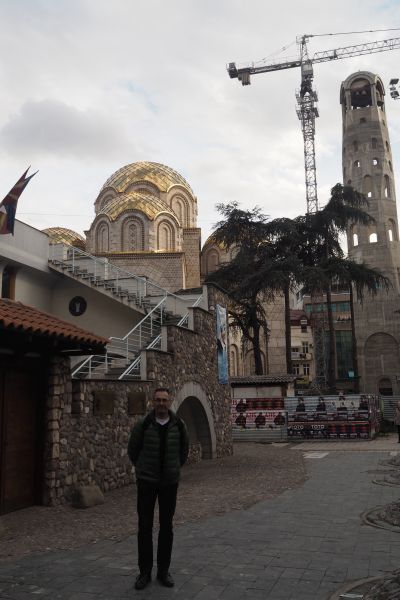
During the project „ Visible Learning” implementation the principal of Technical High School of Hotel Management and Catering Industry in Toruń Roman Wojda and a teacher of English Language Aleksander Marcinkowski took part in job shadowing visit in Sveti Naum Ohridski High School in Makedonski Brod in Macedonia. Durin the visit to Macedonia on the days from 12th.03 to 17th.03 we had possibility to get acquainted with the organizational structure of hosting school, its didactic base, Macedonian System of Education as well as cooperation between the school and local institutions such as social assistance. We also had the chance to compare the supervisory process made by regional education authority inspektor. During our stay in the school we met with Teachers Council of the hosting school, the principal of the school, the students, regional director of the social assistance, local education authority inspector and the major of the town. During our discussion with the Teachers Council we discussed issues of diminishing number of students and the ways of coping with the situation. Attending in lessons of Ethics, Philosophy and English has Niven us possibility of comparing the national syllabuses in both educational systems on the level of high schools. The visit in the Macedonian school has broadened our knowledge about the educational system of the countries which have been building their national identity shortly after the colapse of The Republic of Yugoslavia and aspiring to access to European Union. In Macedonia education is free of charge, the students get free students books, they don’t have to pay for accommodation and food in dormitories. However, it has main disadvantage which is uncontrolled flow of students from small towns such as Makedonski Brod to bigger towns, where the students hve better possibilities of getting job in future. It leads to drastically decreasing number of students in schools from small towns, which have no economical possibilities to attract the students to their schools.
W ramach realizacji projektu „Visible learning” Erasmus+ nauczycielki Zespołu Szkół Gastronomiczno-Hotelarskich w Toruniu: Agnieszka Dutkiewicz i Iwona Pawlak w dniach 11.09-16.09.2017 r. uczestniczyły w wizycie typu job-shadowing w Joensuun yhteiskoulun lukio w Joensuu Finlandii.
Głównym celem job shadowing było poznanie skutecznych form pomocy uczniom o specjalnych potrzebach edukacyjnych oraz wyrównanie dysproporcji edukacyjnych w procesie nauczania.
Panie podczas obserwacji zajęć oraz rozmów z kadrą pedagogiczną szkoły miały możliwość poszerzenia wiedzy na temat nowoczesnych metod oraz technik nauczania, które wspierają proces innowacji w szkole oraz są przydatne w codziennej pracy z uczniami o SPE. Doskonaliły również swój warsztat pracy w oparciu o nowoczesne technologie informacyjno-komunikacyjne. Pozyskały też ciekawe materiały diagnozujące uczniów z SPE w fińskich szkołach średnich.
Nauczycielki miały możliwość uczestniczenia w zajęciach i poznania programów nauczania z etyki, filozofii, zajęć artystycznych, zajęć przyrodniczych, wychowania fizycznego, geografii i języka angielskiego, dzięki czemu poszerzyły swoją wiedzę na temat kształtowania postawy nowoczesnego nauczyciela świadomego modyfikacji systemu edukacji.
During realisation the Erasmus project „ Visible Learning – teachers from Technical School of Hotel Management and Catering Industry in Toruń Agnieszka Dudkiewicz and Iwona Pawlak took part in a job – shadowing visit in Joensuu in Finland. The stay was organized from 11th Sept to 16th Sept in Joensuun yhteiskoulun lukio. Its main aim was learning about effective forms of help for students with special educational needs and equalizing the educational disproportions in the teaching process. The teachers while observing the classes and talks to school teachers could develop their knowledge about modern methods and techniques of teaching that support the innovation process in the school and are useful to everyday work with students with special educational needs. They improved their teaching workshop based on modern IT technologies. Also, they got useful materials for diagnosing students in Finnish schools. The teachers had a possibility to take part in lessons and learning about syllabuses of teaching ethics, philosophy, art, science, PE, geography and English. Thanks to that they widened their knowledge about creating a modern teacher model who is aware of the modification of system of education.


Panie Małgorzata Sadłowska oraz Ewa Wierzbicka, nauczycielki ZSG-H w Toruniu, wzięły udział w mobilności job shadowing w Finlandii w ramach projektu „Visible learning” programu Erasmus +. Job shadowing odbył się w szkole średniej Joensuun yhteiskoulun lukio w Joensuu w dniach 21-26.08.2017. Nauczycielki zapoznały się z fińskim systemem nauczania, bazą dydaktyczną i architekturą szkoły przyjaznej uczniom i pracownikom , nowoczesnymi metodami nauczania typu CLIL oraz z metodami wyrównywania dysproporcji edukacyjnych uczniów w procesie nauczania i formami pomocy uczniom o specjalnych potrzebach. Brały udział w różnych zajęciach edukacyjnych, w tym z etyki. Nauczycielki wymieniły się doświadczeniem dydaktyczno-wychowawczym z nauczycielami z Finlandii i nawiązały osobiste kontakty, poznały kulturę i realia życia w Finlandii poprzez poznanie tradycji, obyczajów oraz kuchni fińskiej.
Ms. Małgorzata Sadłowska and Ewa Wierzbicka, an German and Polish teacher at ZSG-H in Toruń, have been involved in mobility job shadowing in Finland under the “Visible learning” project of the Erasmus + program. Job shadowing was held at Joensuun yhteiskoulun lukio in Joensuu on August 21-26, 2017. The teachers got acquainted with the Finnish educational system, with school interior design, friendly for students and school employees, with innovative teaching methods such CLIL and with the methods how to balance pupils’ educational disparities in the learning process and new, effective ways to help students with special educational needs. They observed ethics lessons. The teachers exchanged of teaching experiences during the meetings with teachers and made personal contacts with teachers from Finland, got to know with culture and the reality of living in Finland – with tradition, culture and Finnish kitchen.


Pani Danuta Szychulska, nauczycielka języka angielskiego w ZSGH, odbyła szkolenie na Malcie w ramach projektu „Visible learning” programu Erasmus +. Kurs odbył się w Executive Training Institute w St.Julian's w dniach 12-16 czerwca 2017 i dotyczył eksperymentalnej metody nauczania przedmiotów wyłącznie w języku obcym, zwanej CLIL. Metoda ta sprawia, że uczniowie jednocześnie zdobywają wiedzę z konkretnych dziedzin i doskonalą swoje kompetencje językowe, co umożliwia im podjęcie pracy w dowolnym kraju, w międzynarodowym środowisku. Podczas kursu pani Szychulska została zapoznana nie tylko z teorią metody CLIL, lecz przede wszystkim zdobyła wiele praktycznych umiejętności dotyczących prowadzenia lekcji, odpowiedniego doboru narzędzi i technik, a także integrowania nauczania przedmiotowego, językowego i kulturowego.
Bezcenna okazała się również wymiana doświadczeń z nauczycielami z Włoch, Czech oraz szkoły o podobnym profilu w Janowie Lubelskim.
Podczas pobytu na Malcie oprócz wytężonej pracy, znalazł się też czas na wycieczki do stolicy wyspy Valletty, najstarszego miasta Mdiny oraz spotkania integracyjne z uczestnikami kursu.
Ms. Danuta Szychulska, an English teacher at ZSGH, has been trained in Malta under the "Visible learning" project of the Erasmus + program. The course was held at St.Julian`s Executive Training Institute on June 12-16, 2017 and was about an experimental method of teaching subjects exclusively in a foreign language, called CLIL. This method enables students to gain knowledge in specific fields and improve their language skills, enabling them to work in any country in an international environment. During the course Ms. Szychulska was introduced not only to the theory of the CLIL method, but first of all, gained a lot of practical skills related to conducting lessons, the appropriate selection of tools and techniques, as well as integration of subject, linguistic and cultural teaching.
Equally priceless has been an exchange of experiences with teachers from Italy, Czech Republic and a similar Polish school in Janów Lubelski.
During the stay in Malta, apart from hard work, there was also time for trips to the capital of the island Valletta, the oldest city of Mdina, and integration meetings with participants in the course.


Metoda zintegrowanego kształcenia przedmiotowo-językowego oraz techniki wykorzystywane w CLIL były tematem zorganizowanego przez akredytowane przez British Council The International Projects Centre kursu metodyczno-językowego, w którym w dniach 13.03-24.03.2017 r. wzięli udział p. Anita Streich i p. Paweł Lemparty. Szkolenie odbyło się w pięknym mieście Exeter, położonym w południowo-wschodniej Anglii, hrabstwie Devon.
W czasie pobytu nauczyciele ZSG-H zdobyli umiejętność planowania i prowadzenia lekcji metodą CLIL oraz poznali wiele atrakcyjnych dla uczniów, aktywnych technik nauczania. Pobyt w Wielkiej Brytanii był także okazją do doskonalenia kompetencji językowych, głównie w zakresie mówienia. Niemniej ważnym rezultatem szkolenia są nawiązane przez p. A. Streich i p. P. Lempartego przyjaźnie z nauczycielami z Francji, Reunion oraz Hiszpanii.
The Content Language Integrated Learning metod was a subject of a language and methodical course organized by British Council The International Projects Centre, in which Mrs Anita Streich and Mr Paweł Lemparty took part in from 13th March to 24th March, 2017. The workshop was held in a beautiful city Exeter, located in the south-east England, the county Devon.
During the stay the teachers got the ability to use CLIL method in the teaching process and learned a lot of attractive for students active teaching methods, the stay in Great Britain was also the occasion to improve language competences, mainly speaking. An important point of the course are contacts with French and Spanish teachers made by Mrs Anita Streich and Mr Paweł Lemparty.
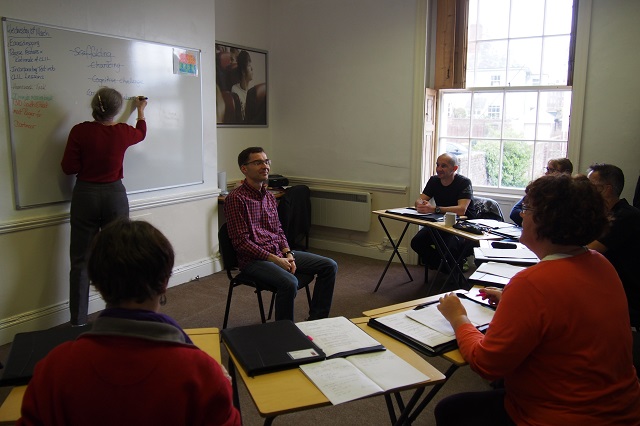
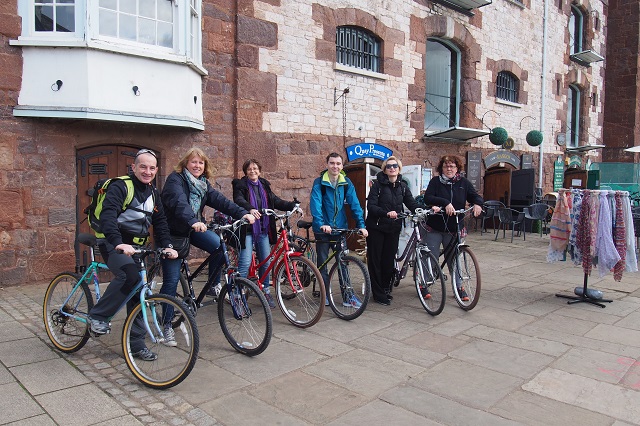
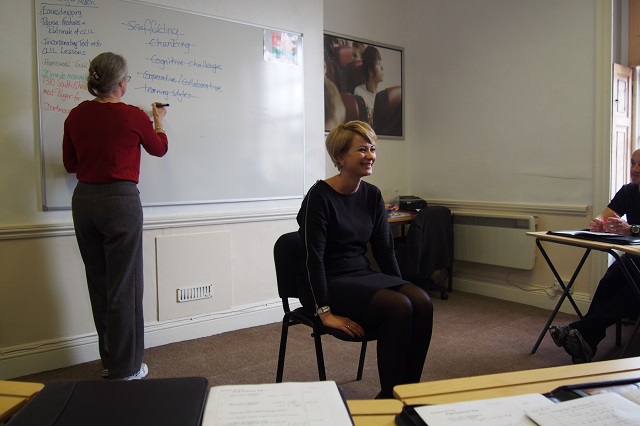
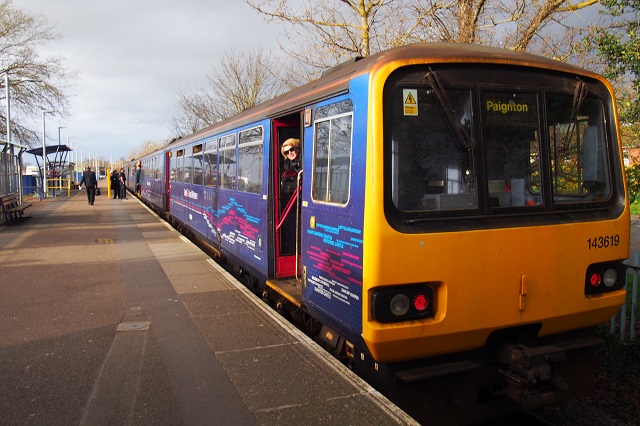
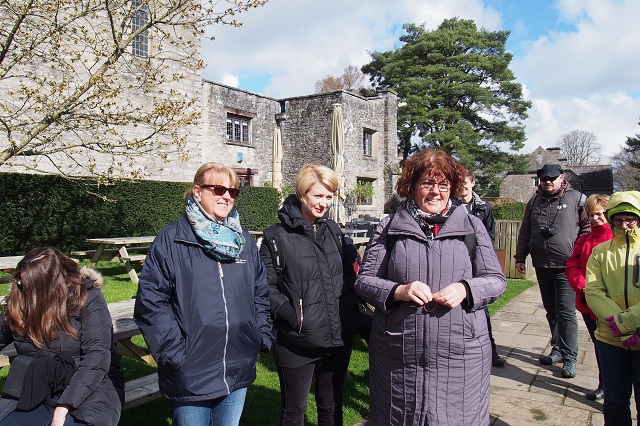
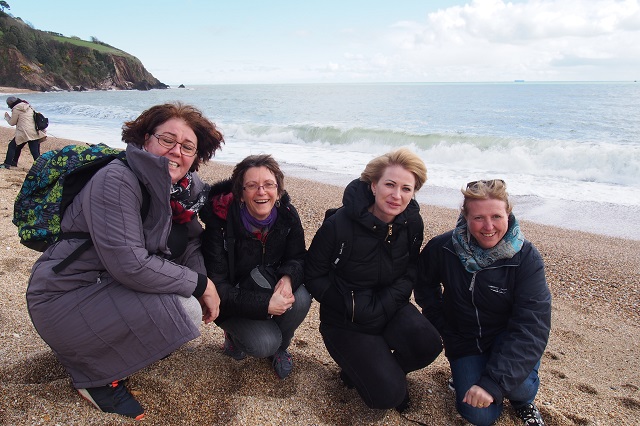
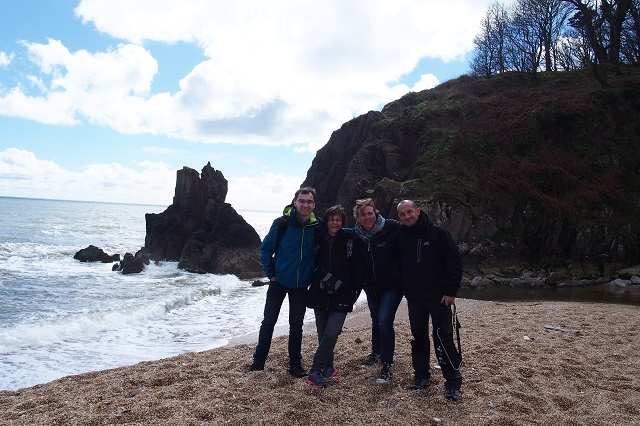
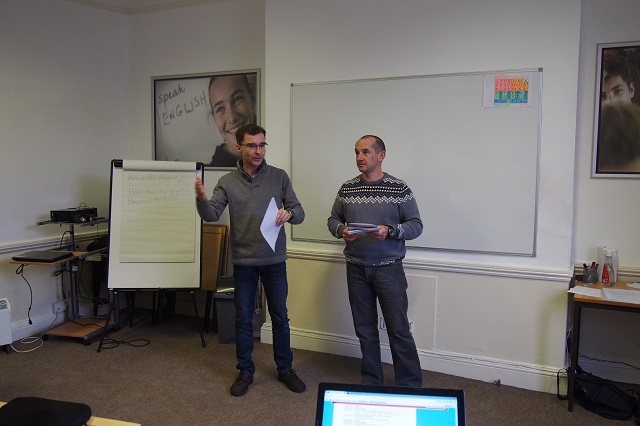
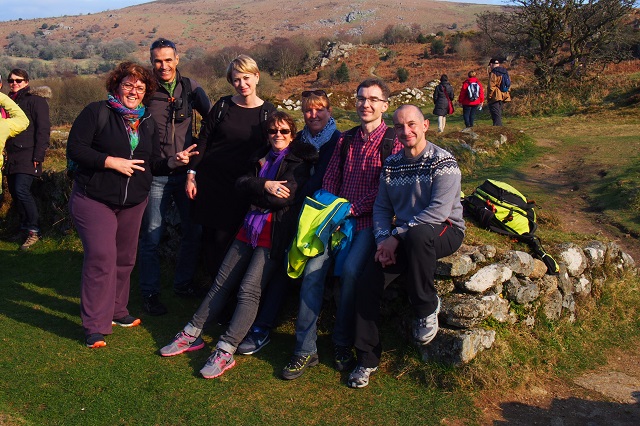
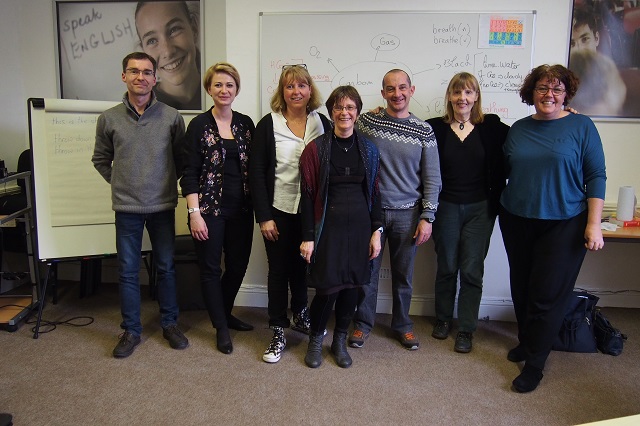
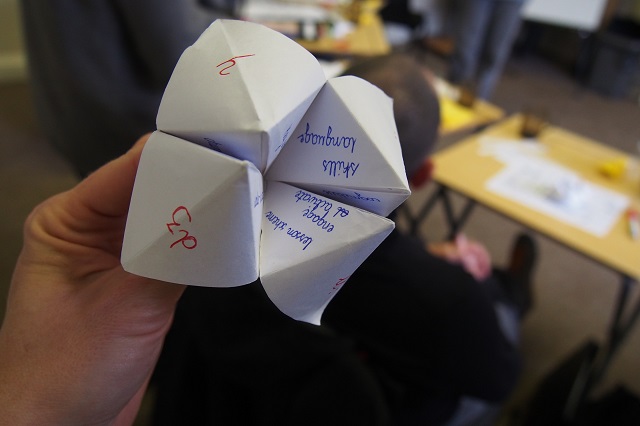
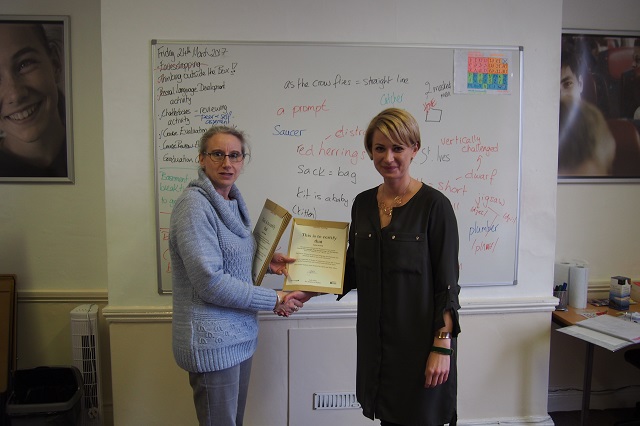
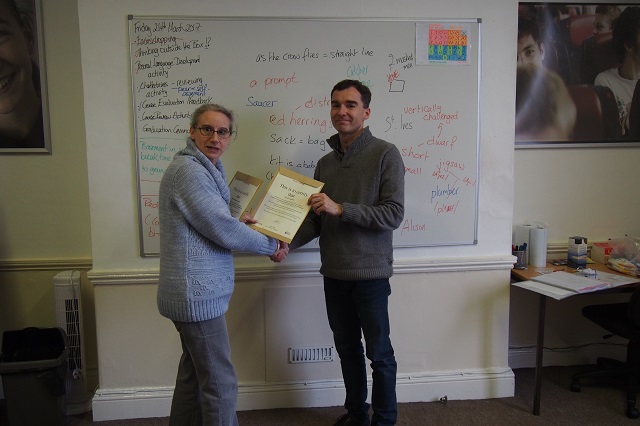
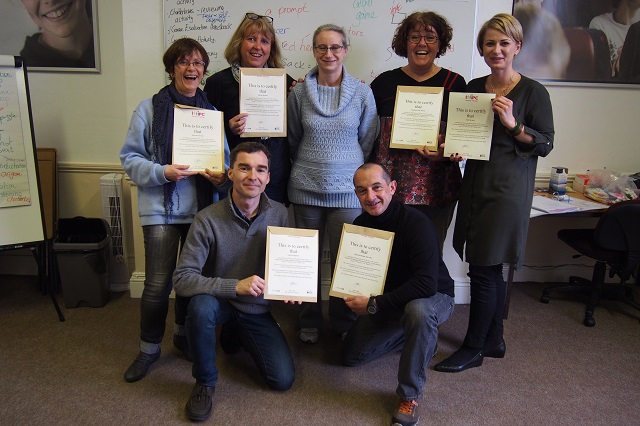
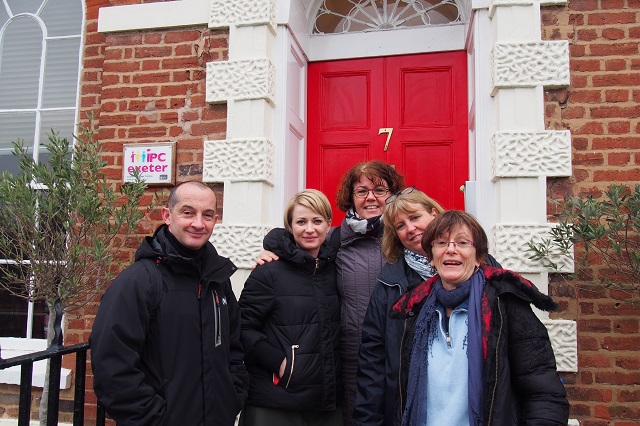
W ramach realizacji projektu pt. „Visible Learning” Programu Erasmus + w dniach od 6.03.2017 do 10.03.2017 dwie nauczycielki języka angielskiego: Alina Grudzińska i Anna Kułaczkowska wzięły udział w kursie metodycznym dotyczącym wykorzystania metody CLIL w pracy dydaktycznej, który odbył się na Malcie.
Panie miały możliwość zapoznać się z założeniami tej innowacyjnej metody, doskonalić swój warsztat pracy w oparciu o CLIL. Uzyskały dostęp do materiałów wspomagających nauczanie. Mogły dzielić się swoimi doświadczeniami dydaktyczno-wychowawczymi oraz przyczyniły się do budowania wizerunku szkoły jako placówki podejmującej współpracę międzynarodową.
Miały możliwość zwiedzić piękne miejsca Malty i nawiązać kontakty z nauczycielami z Danii i Niemiec.
Within the realization of the Erazmus + project “ Visible Learning” two teachers of English Alina Grudzińska and Anna Kułaczkowska took part in the methodical course about using CLIL method in the classroom. It was held from 6th March to 10th March in Malta.
The teachers had a chance to learn about assumptions of this innovative method, improve their teaching on the base of CLIL. They got the access to a lot of materials supporting teaching and could share experiences. The teachers helped to build the image of the school as a place developing the international cooperation.
Alina Grudzińska and Anna Kułaczkowska could visit beautiful sites of Malta and make friends with Danish and German teachers.
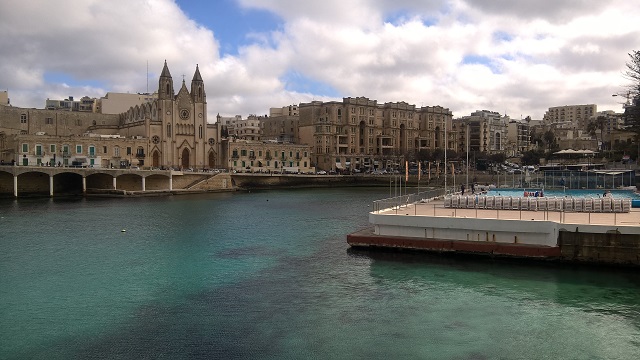
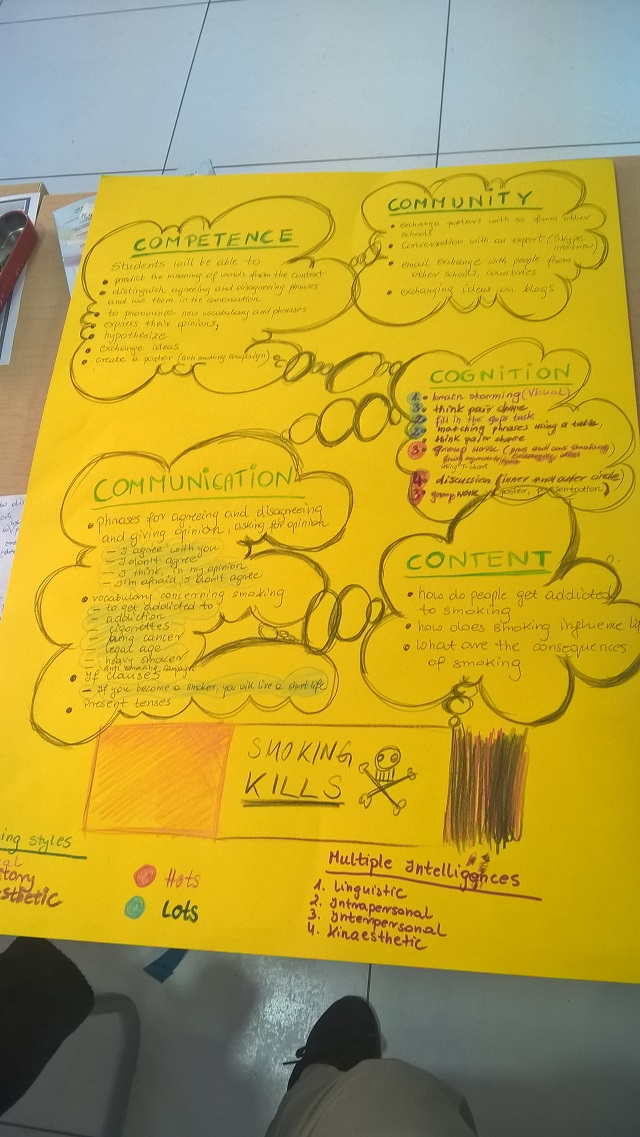

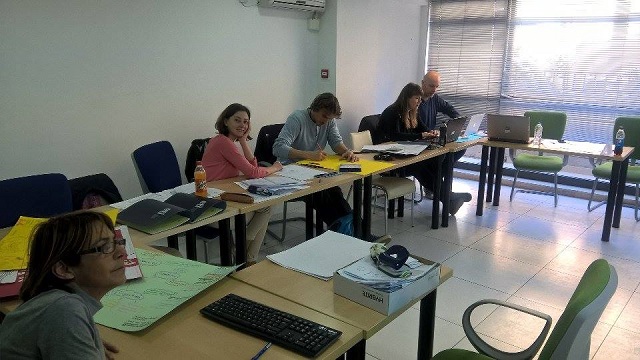


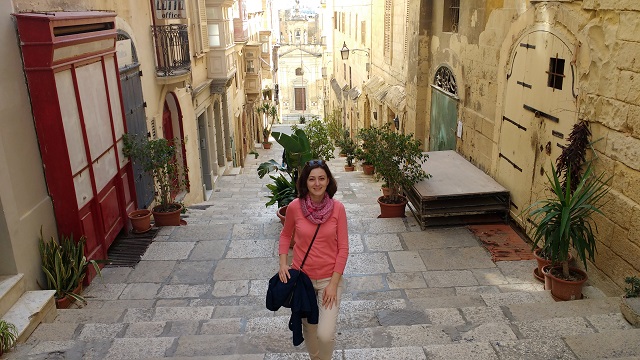

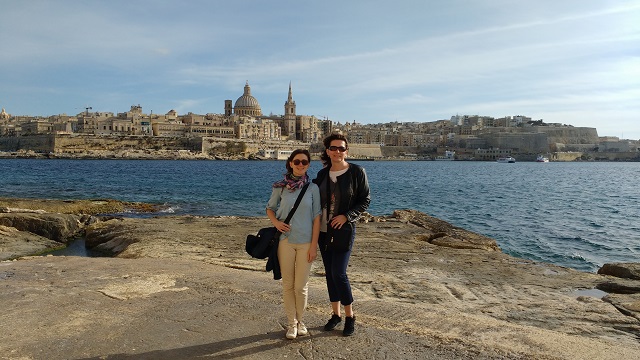


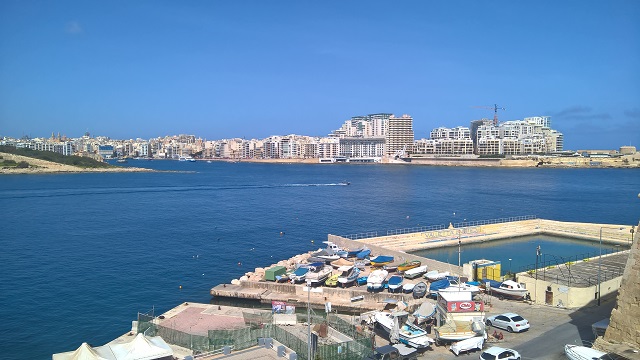

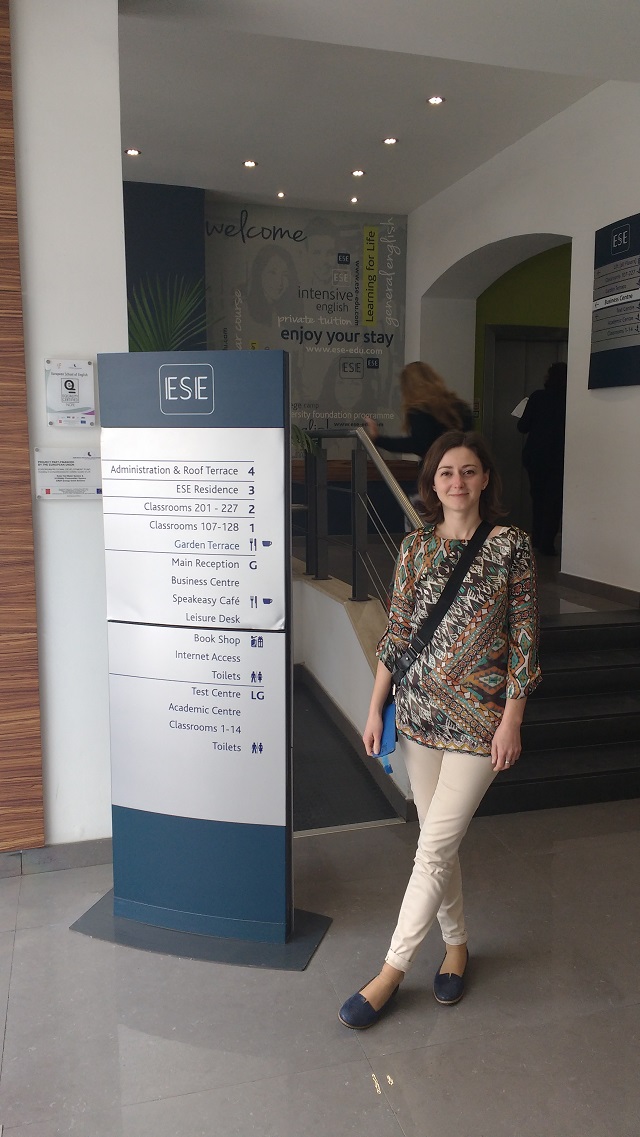
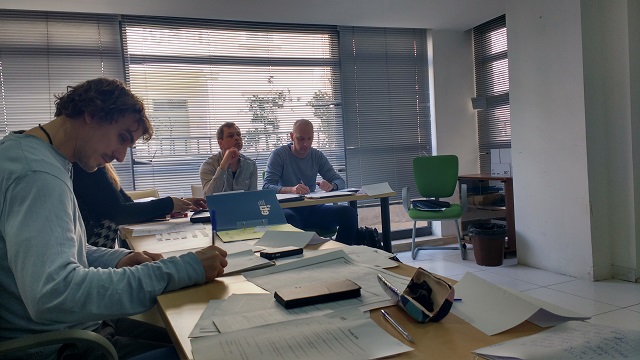
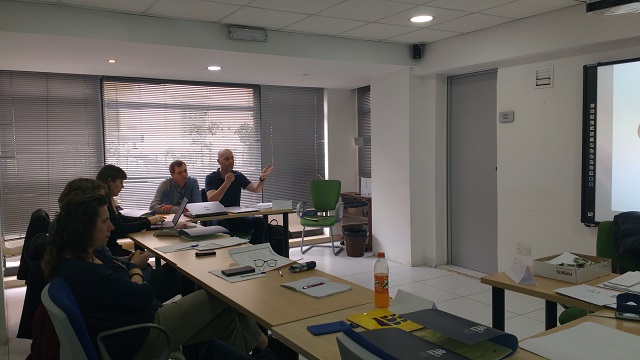
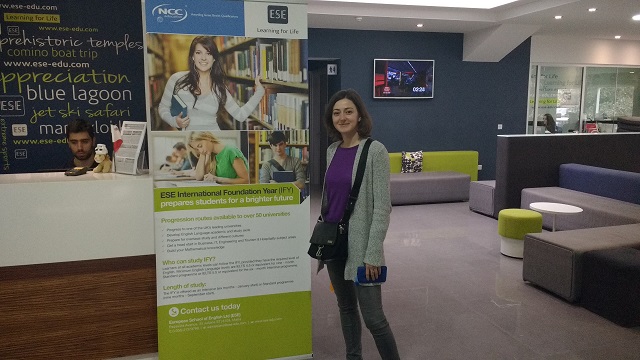
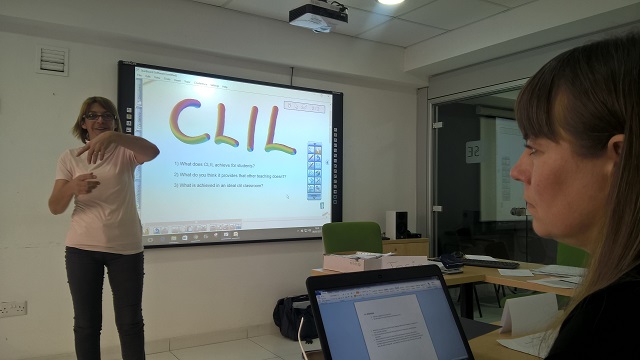
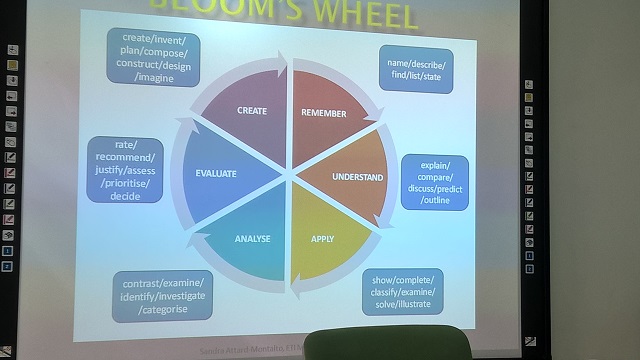
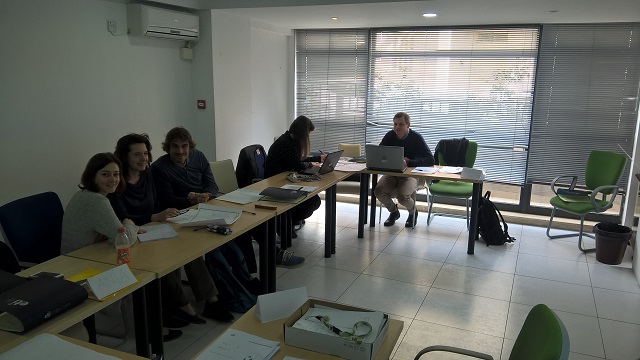
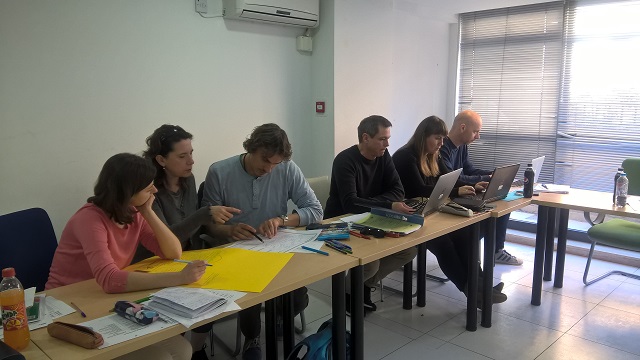
W ramach realizacji projektu Mobilność kadry edukacji szkolnej w sektorze Edukacja szkolna w roku 2016 r. pt.:„Visible learning” Programu Erasmus+ nauczycielki Zespołu Szkół Gastronomiczno-Hotelarskich w Toruniu: Anna Grabowska, Alina Piekańska, Barbara Willmann uczestniczyły w kursie Every pupil is important – special education in Finland and Europe.
Szkolenie odbyło się w terminie 03–07.10.2016 r. w Instytucie EduKarjala w Finlandii. Jego głównym celem było wyrównanie dysproporcji edukacyjnych w procesie nauczania poprzez wdrożenie nowych, skutecznych form pomocy uczniom o specjalnych potrzebach edukacyjnych.
Panie Anna Grabowska, Alina Piekańska, Barbara Willmann podczas kursu miały możliwość poszerzenia wiedzy nt. wykorzystania nowoczesnych narzędzi informacyjno-komunikacyjnych, które wspierają proces innowacji w szkole oraz są przydatne w codziennej praktyce dydaktycznej z uczniami SPE. Praca w międzynarodowych zespołach umożliwiła wymianę doświadczeń z nauczycielami z innych krajów Europy m.in. w zakresie metod wspierania uczniów o specjalnych potrzebach edukacyjnych
 Under the project: Mobility school education staff, in the sector School education in 2016, entitled ''Visible learning'' of the Erasmus + programme, teachers of Technical High Schol of Hotel Management and Catering Industry in Toruń: Anna Grabowska, Alina Piekańska and Barbara Willmann have taken part in the course Every pupil is important – special education in Finland andEurope.
The training took place from 3 to 7 October, 2016 in Edukurjala Institute in Finland. Its main aim was eliminating disproportions in the process of teaching by implementation new effective forms of helping students with special educational needs. Ms Anna Grabowska, Ms Alina Piekańska and Ms Barbara Willmann during the course had a chance to expand their knowledge of using modern information and communication tools which support the innovation process in school and which are useful in every day teaching practice with students who have special educational needs. Working in international teams enabled the exchange of experience with teachers from other European countries in terms of methods of supporting students with special educational needs.

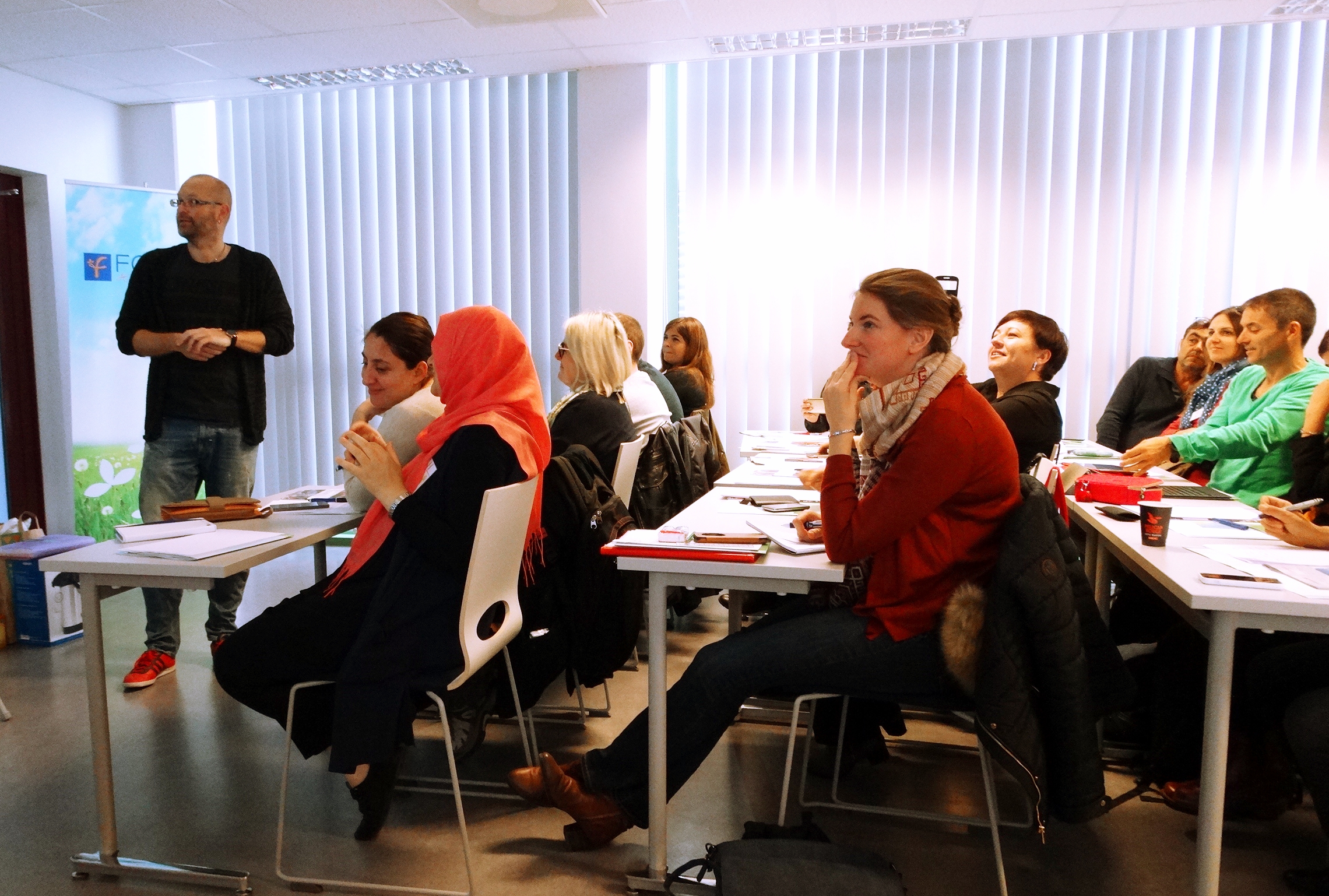
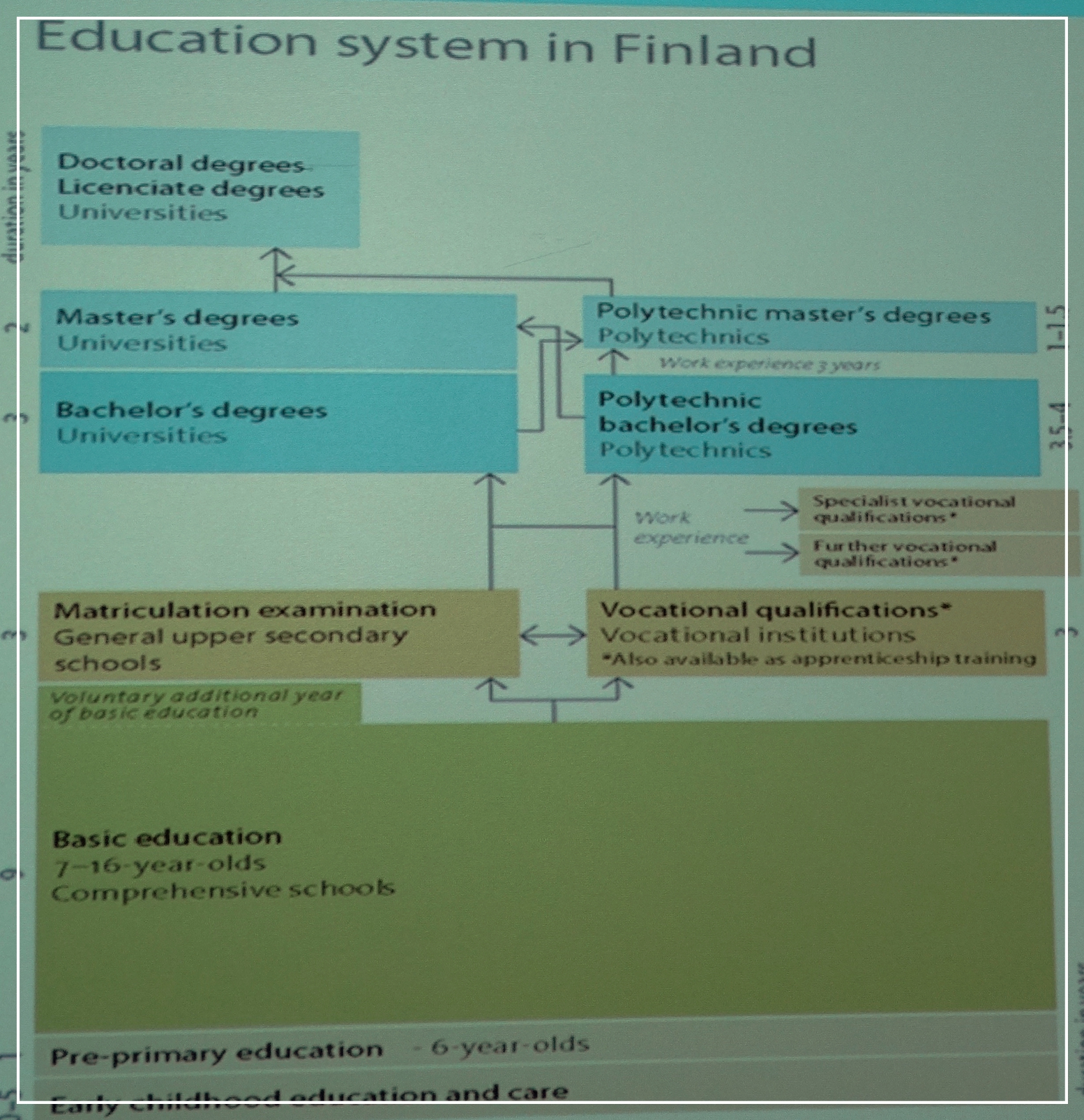
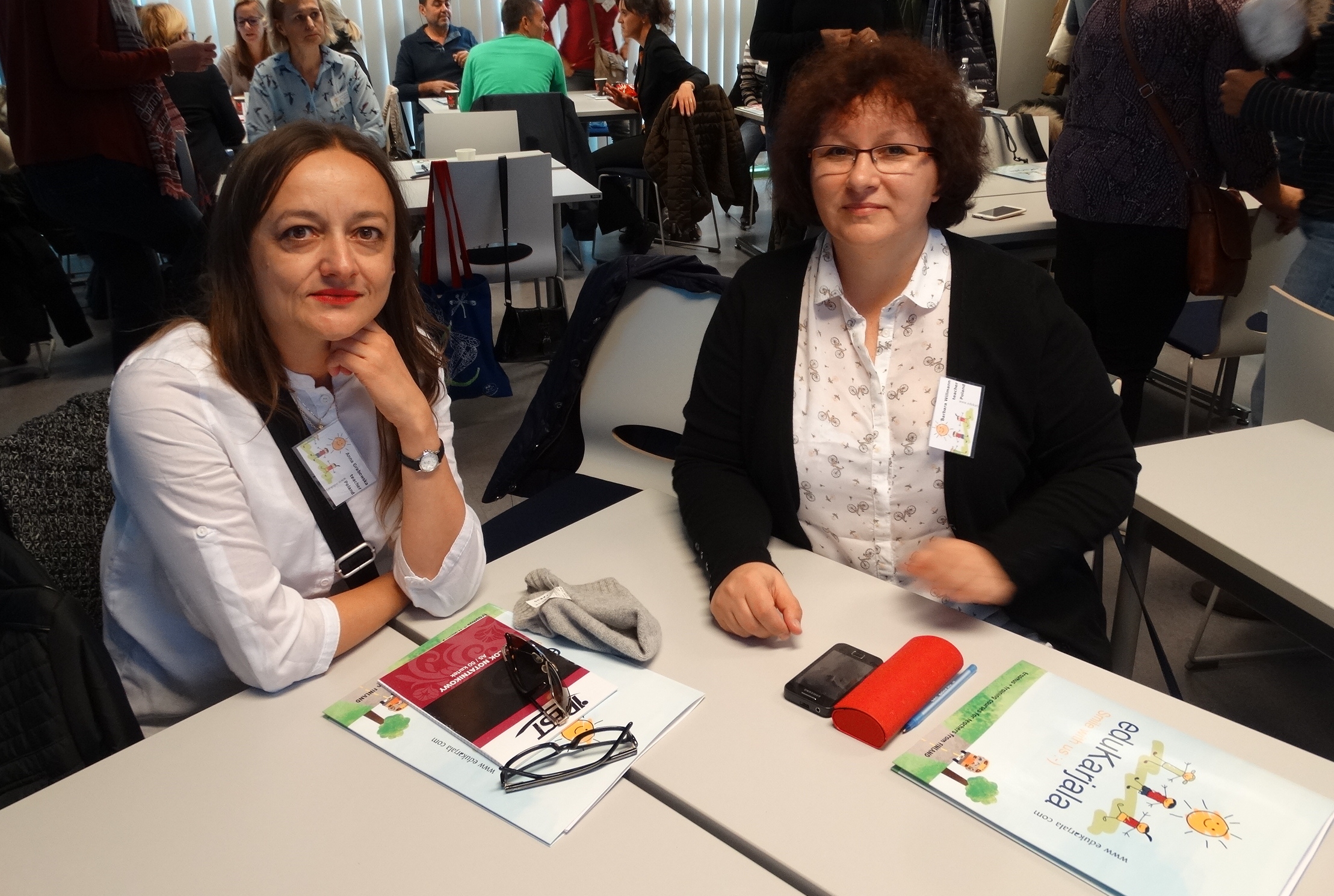
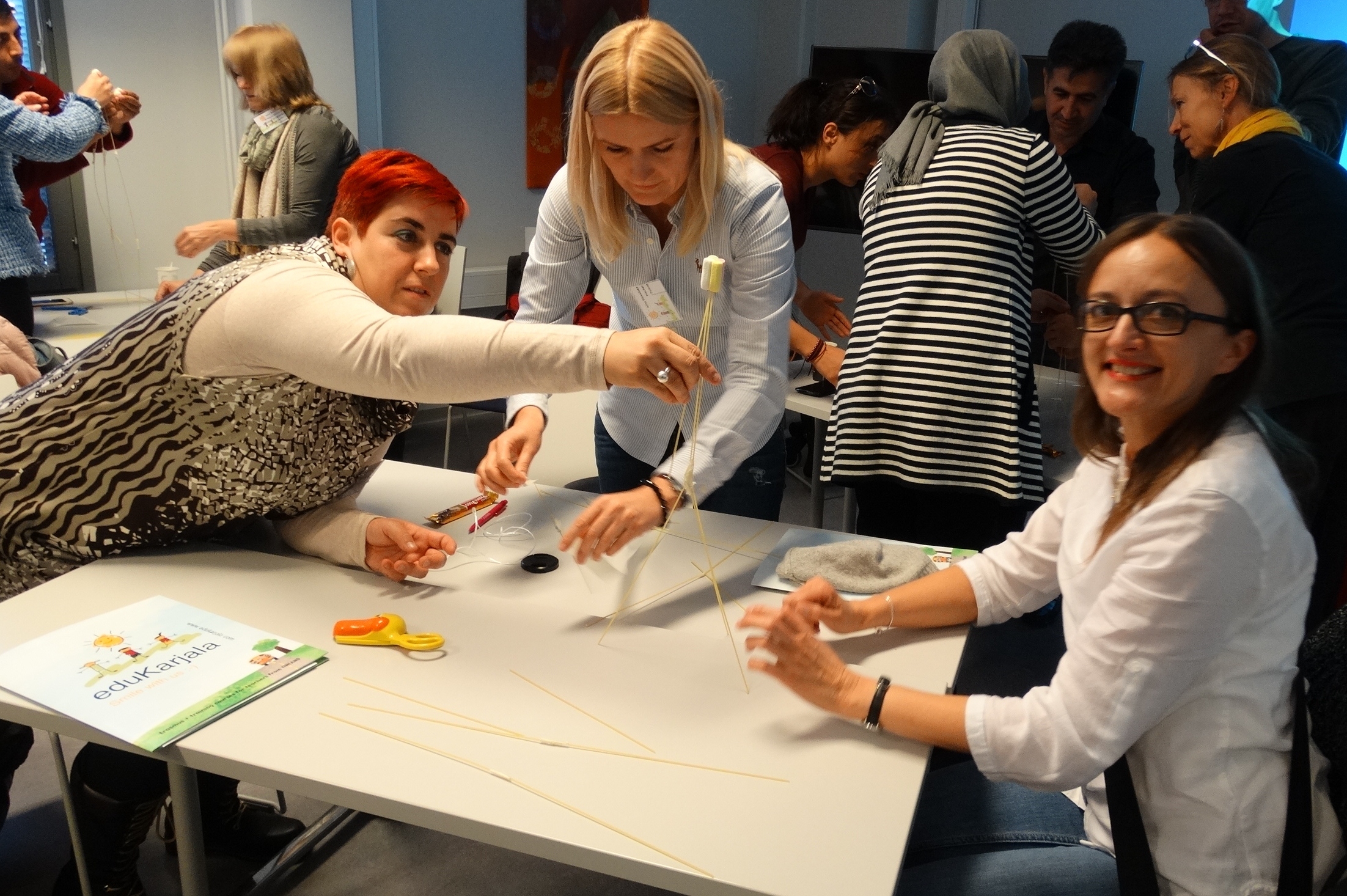
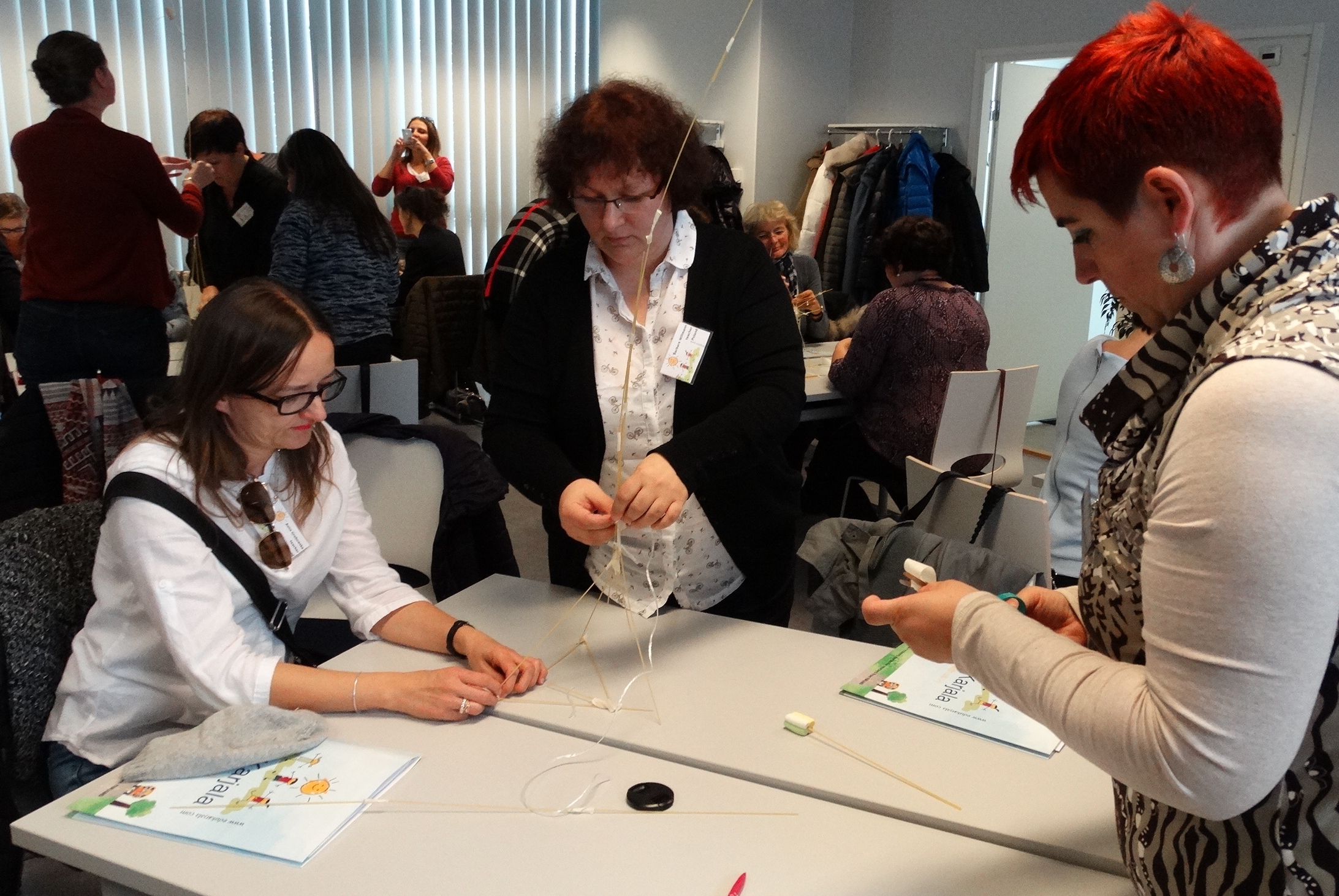
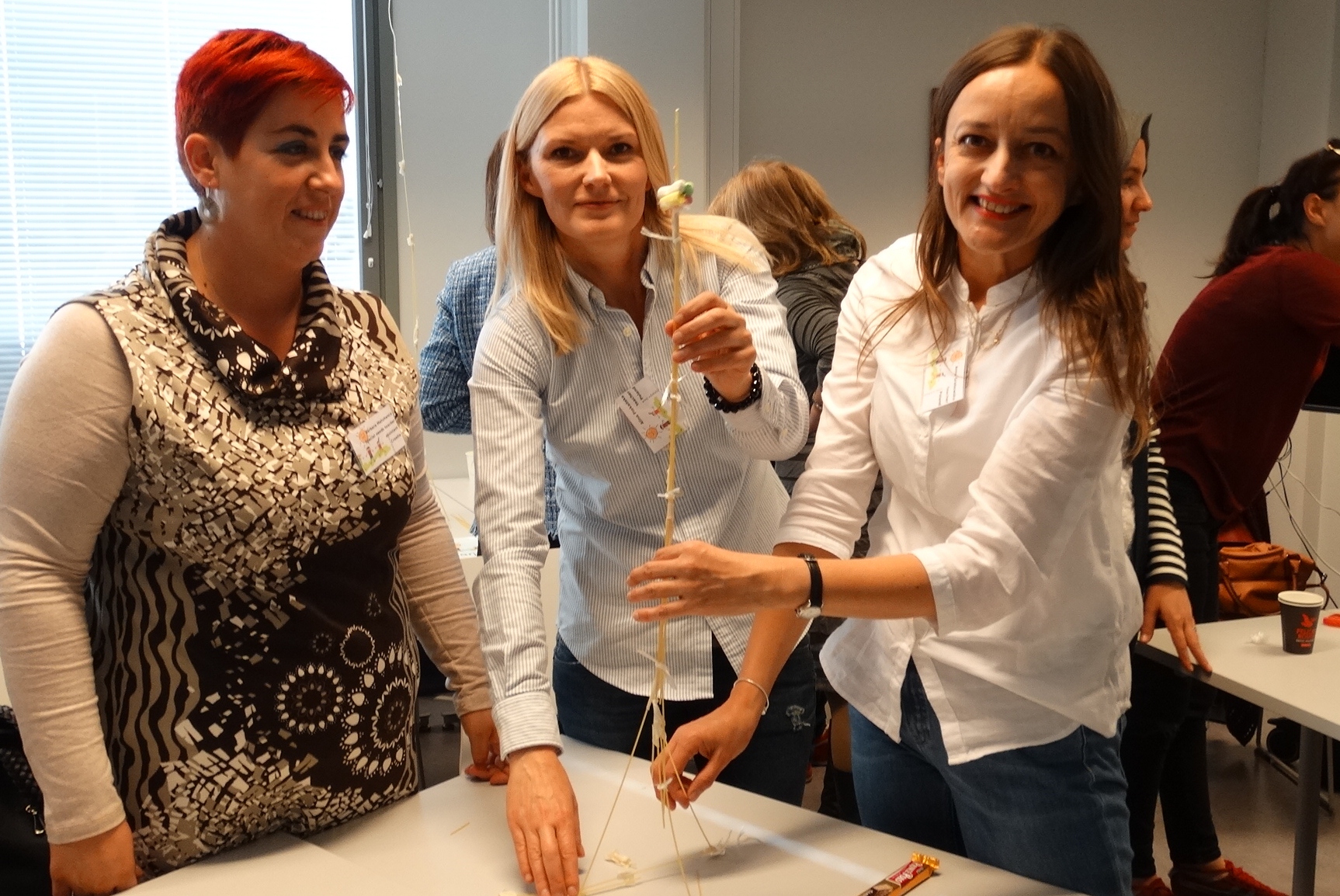


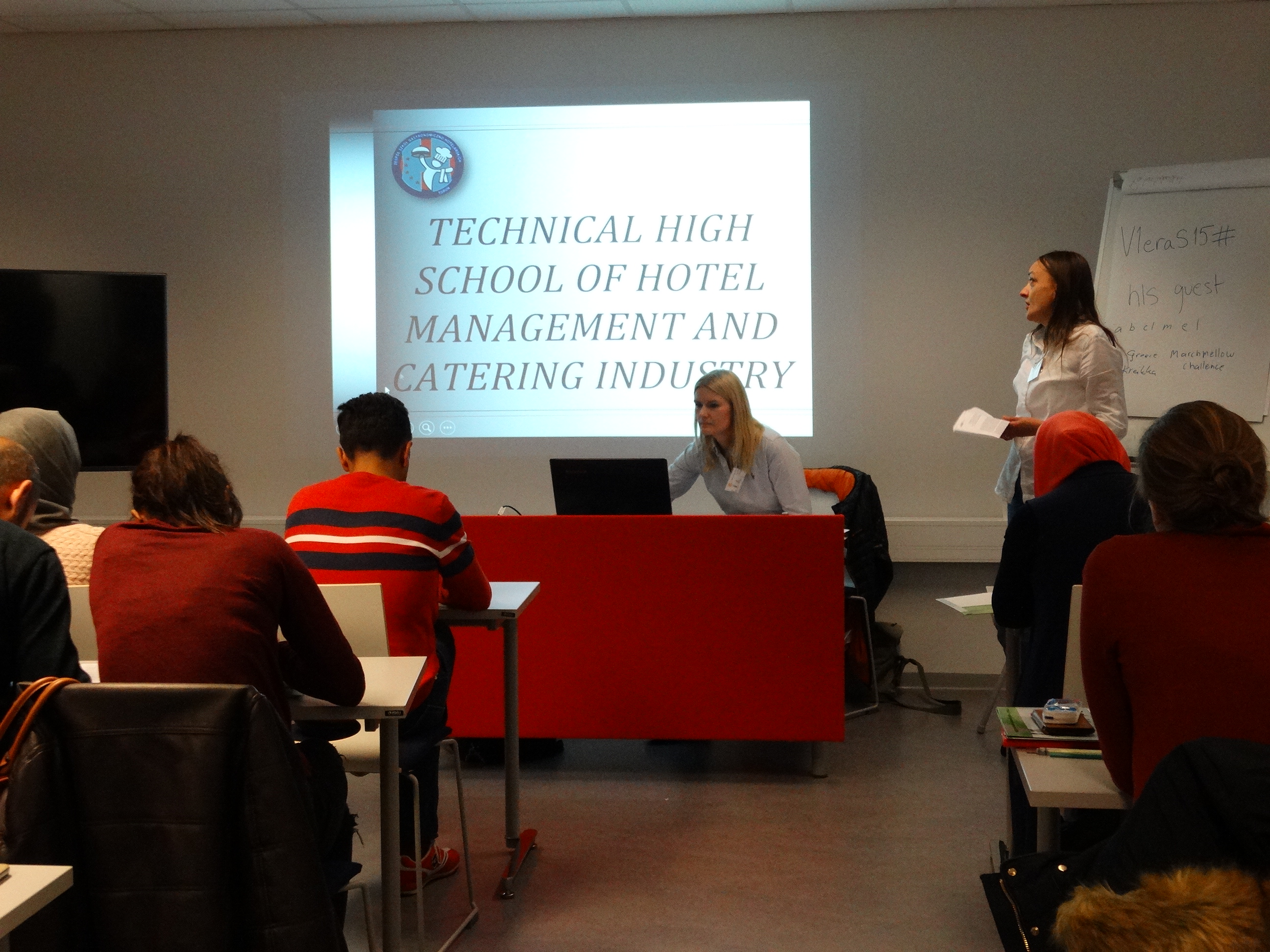
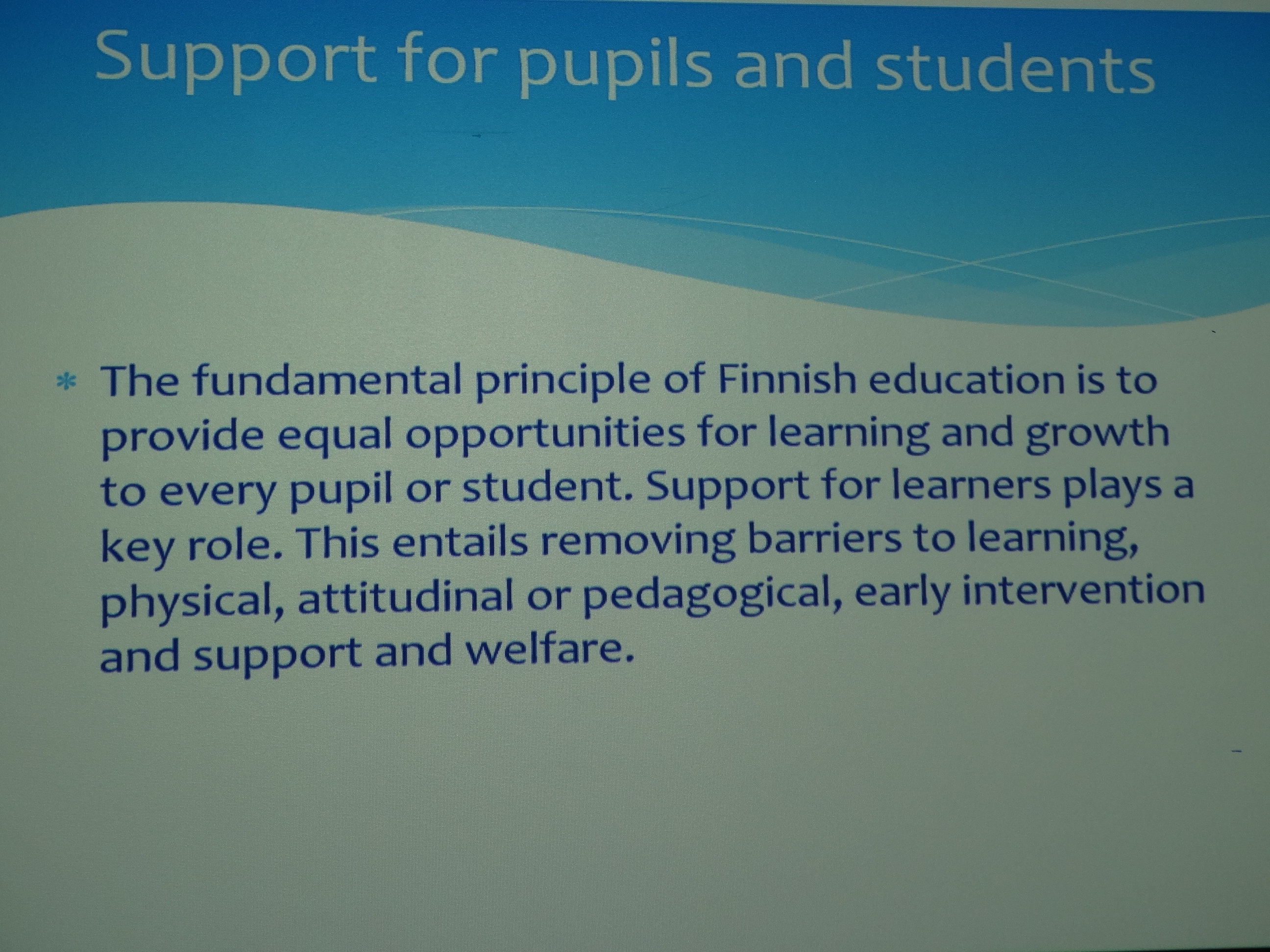
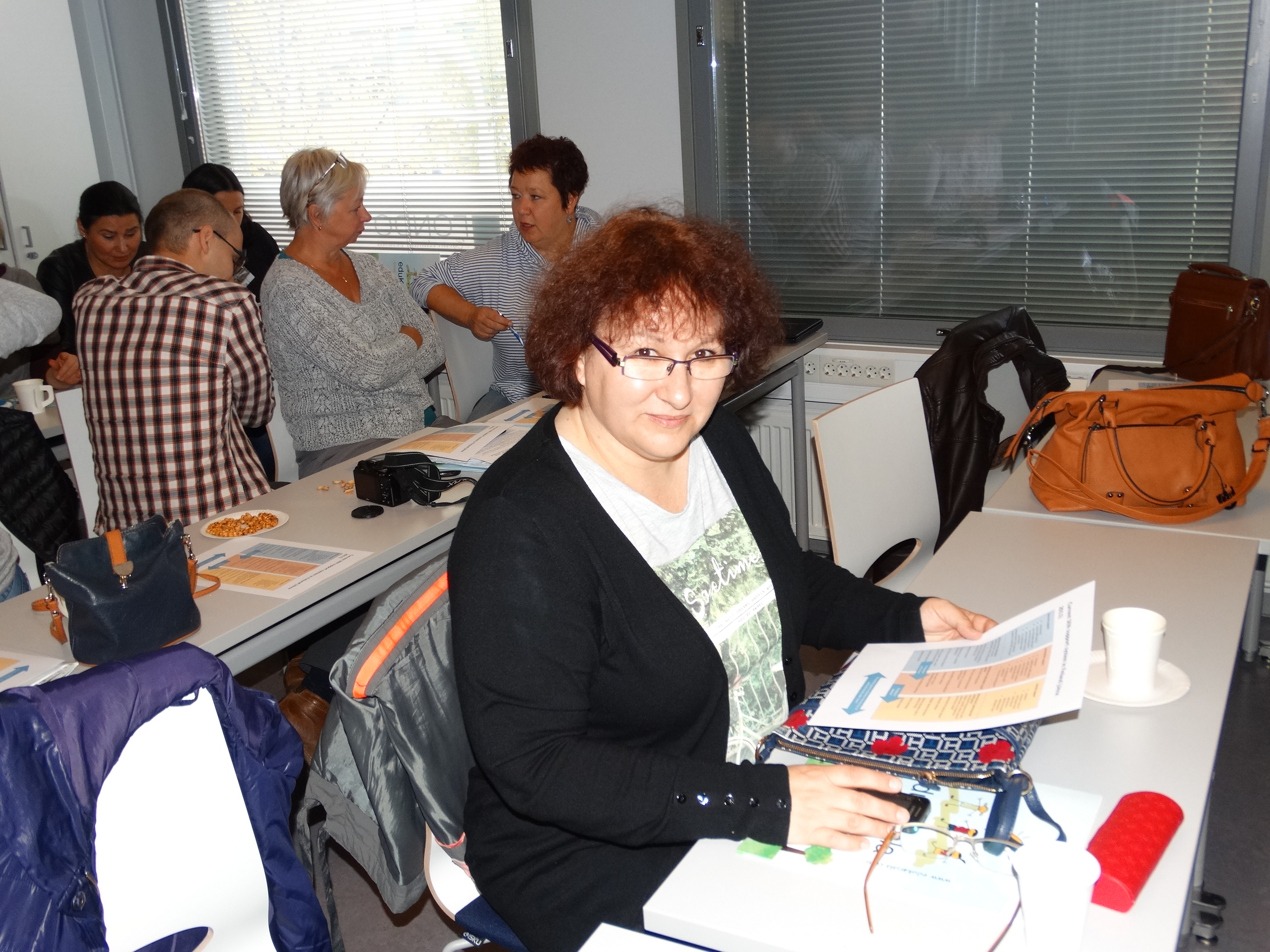
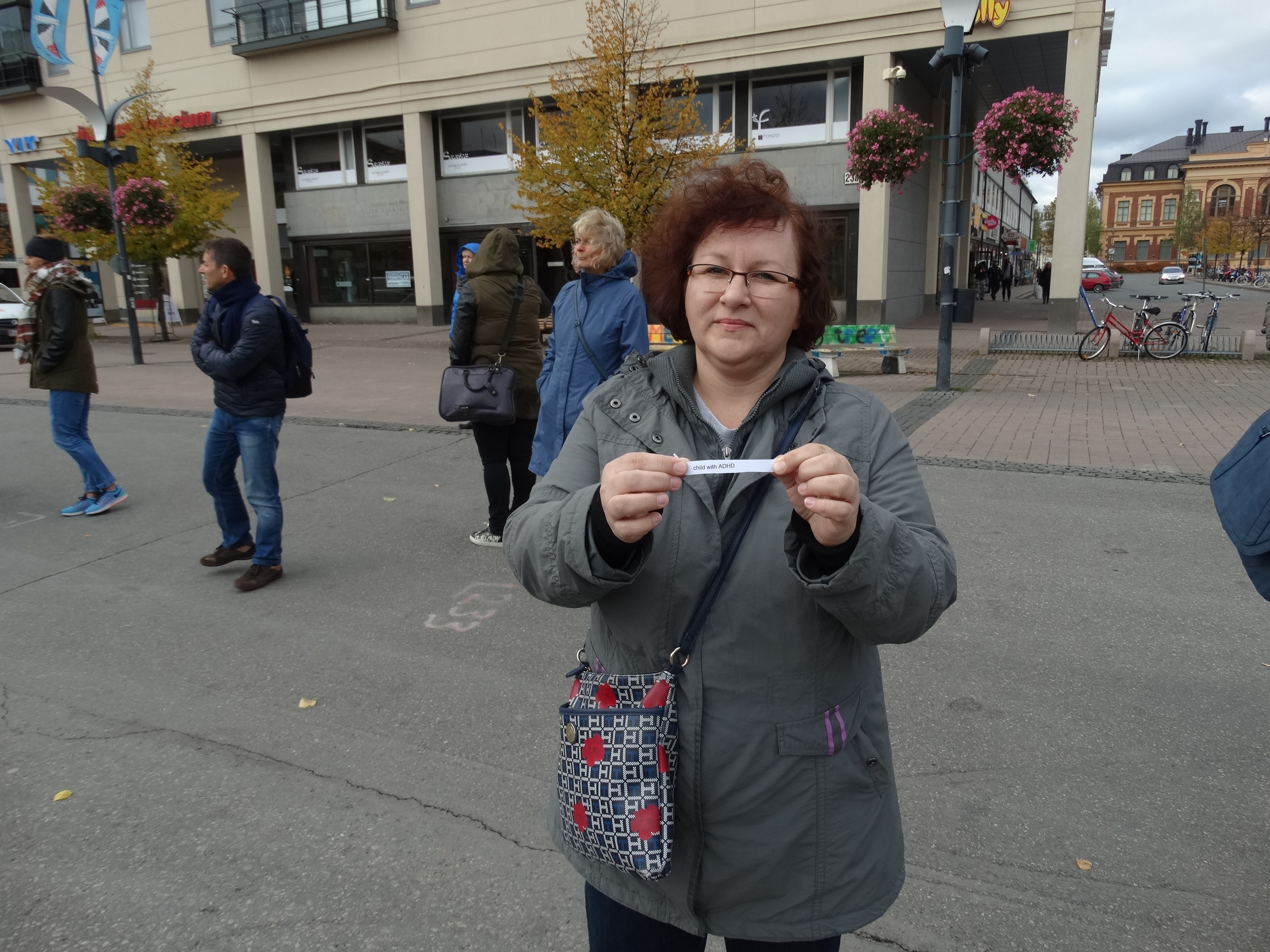
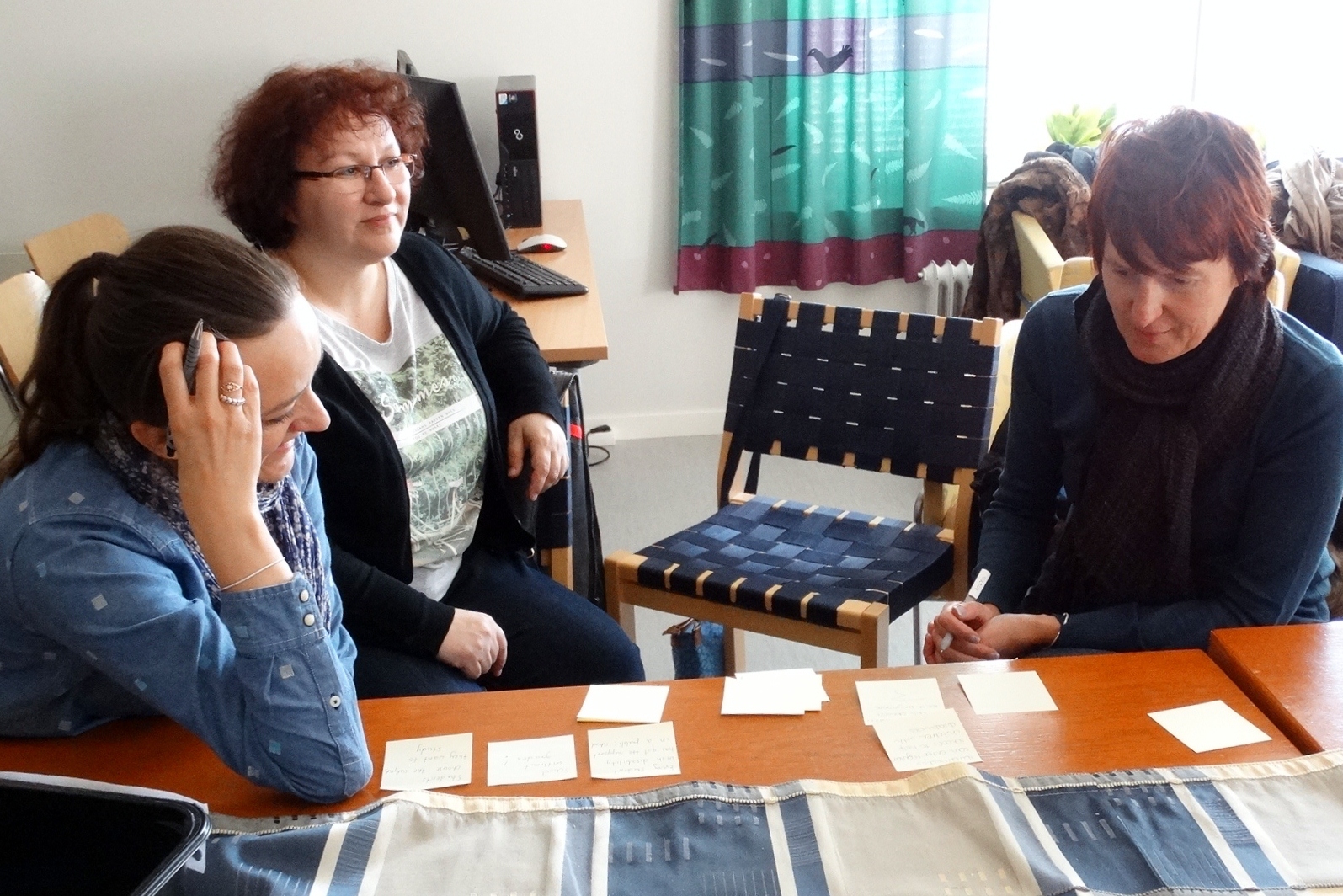
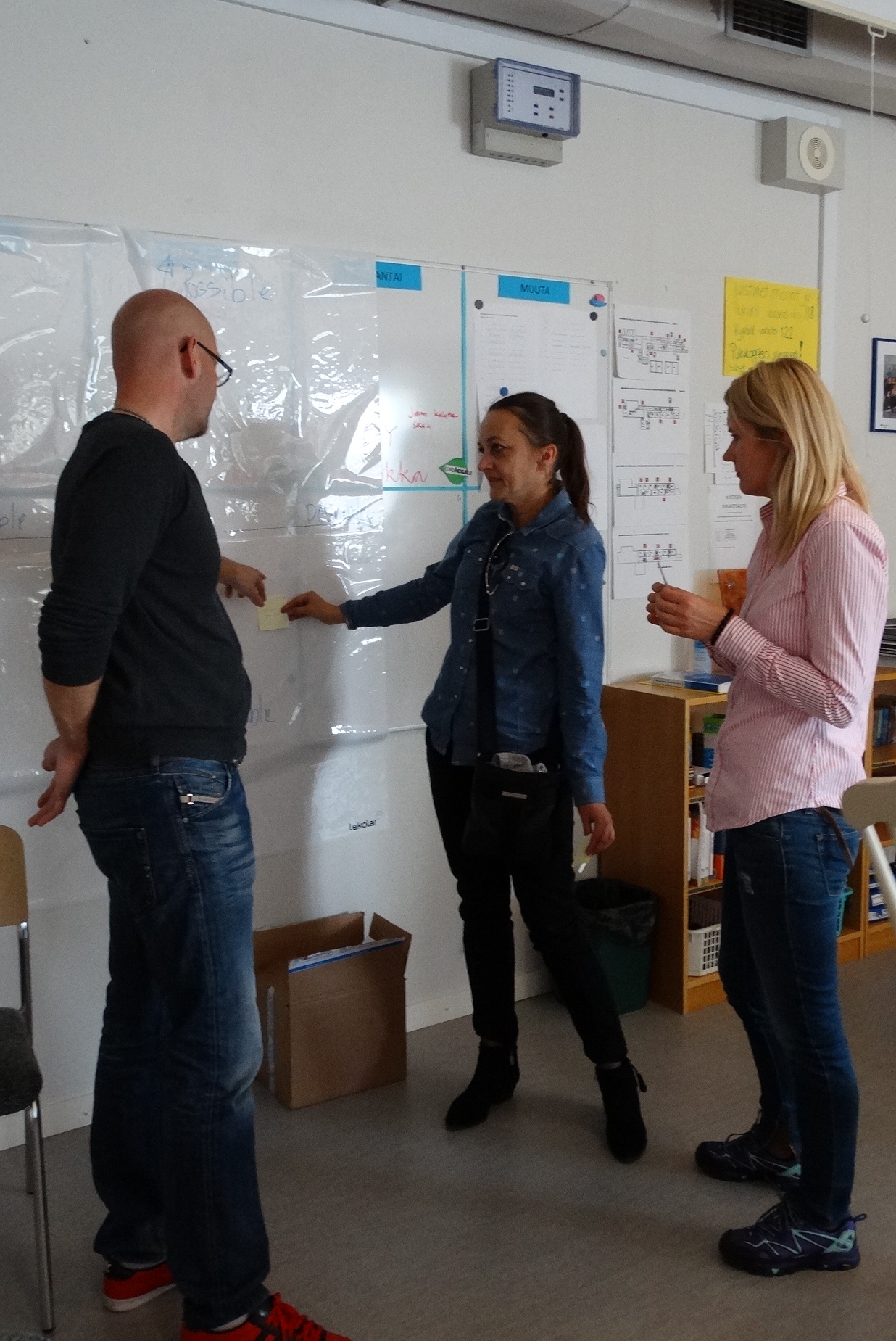
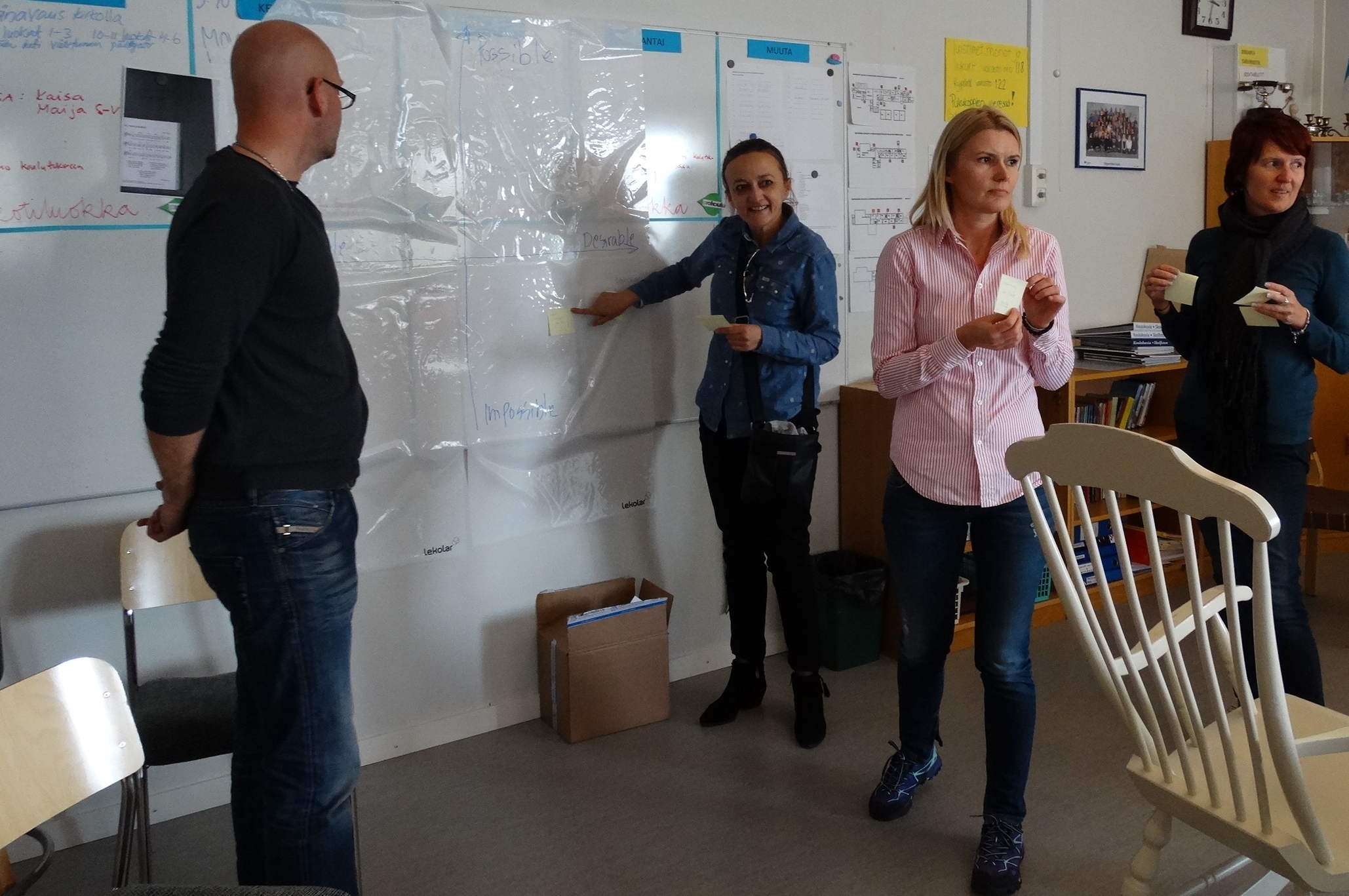
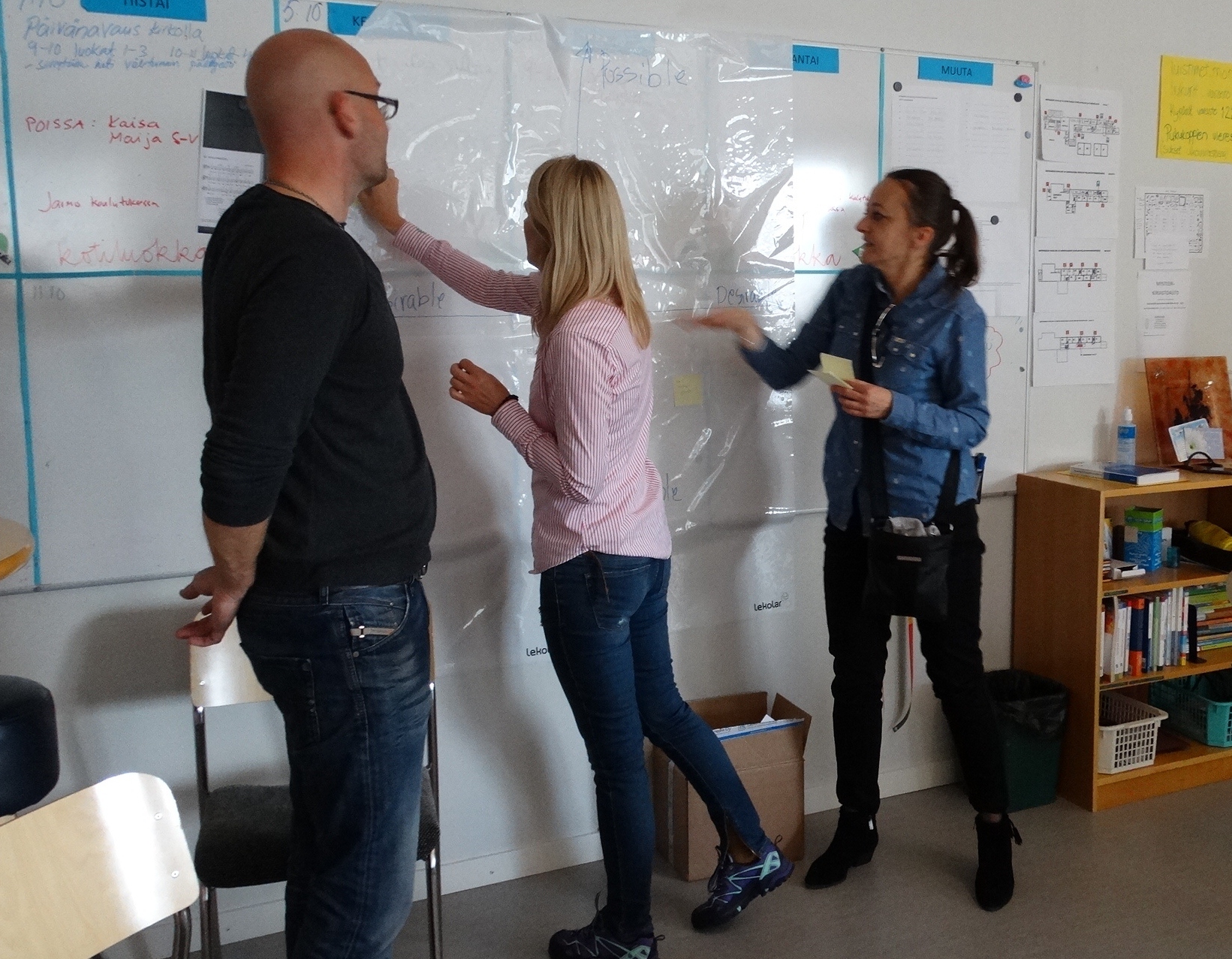
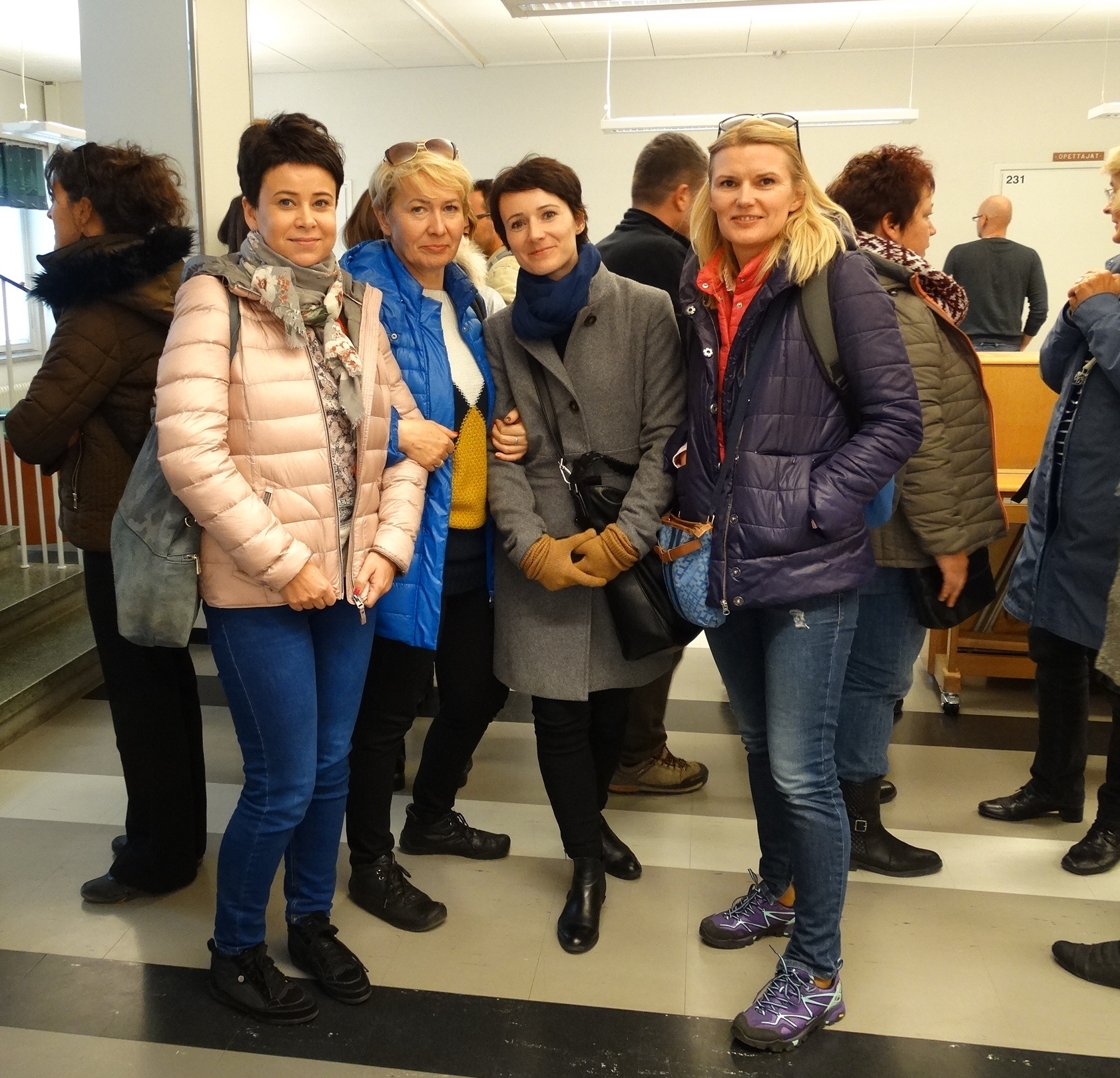
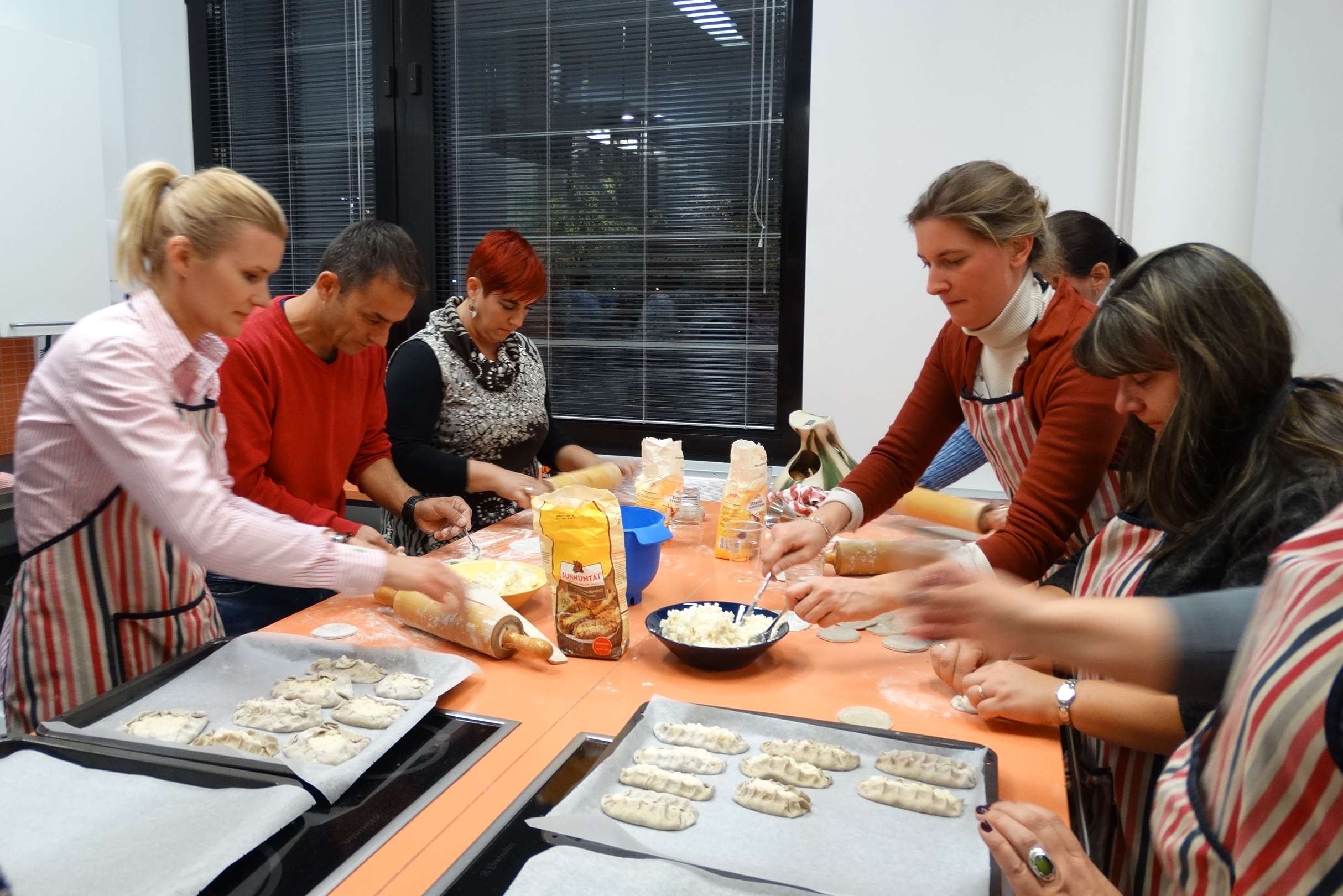
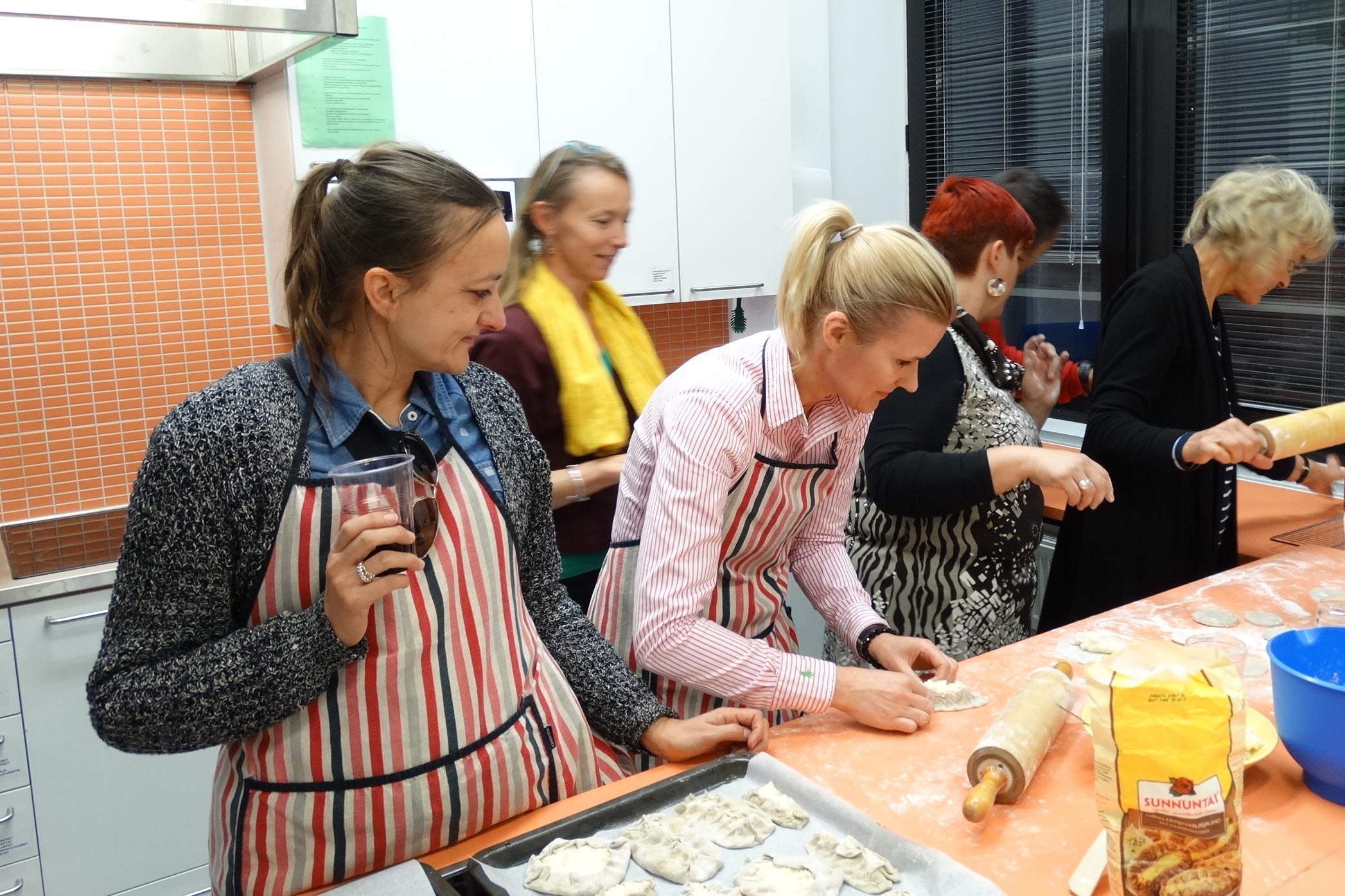
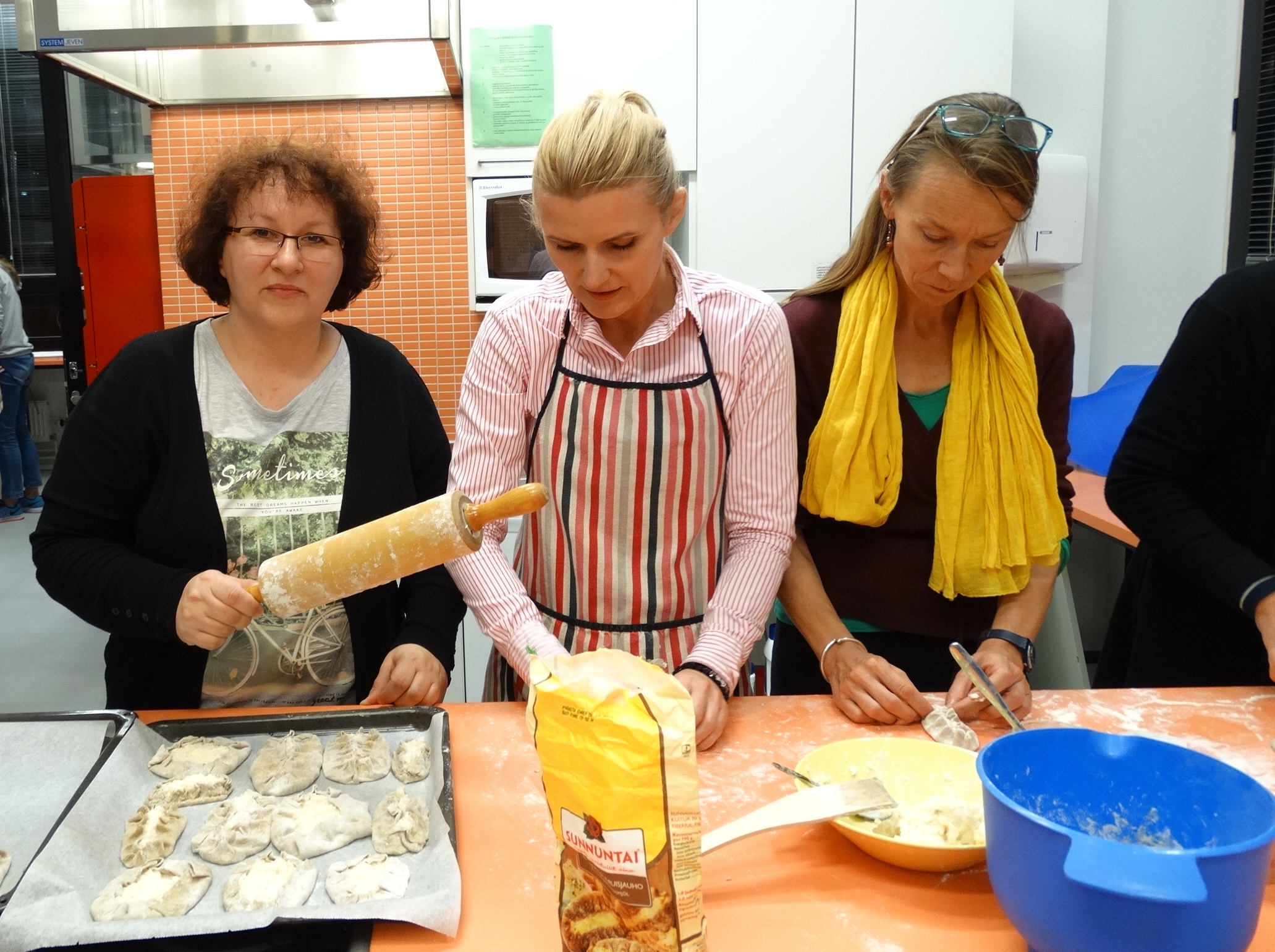
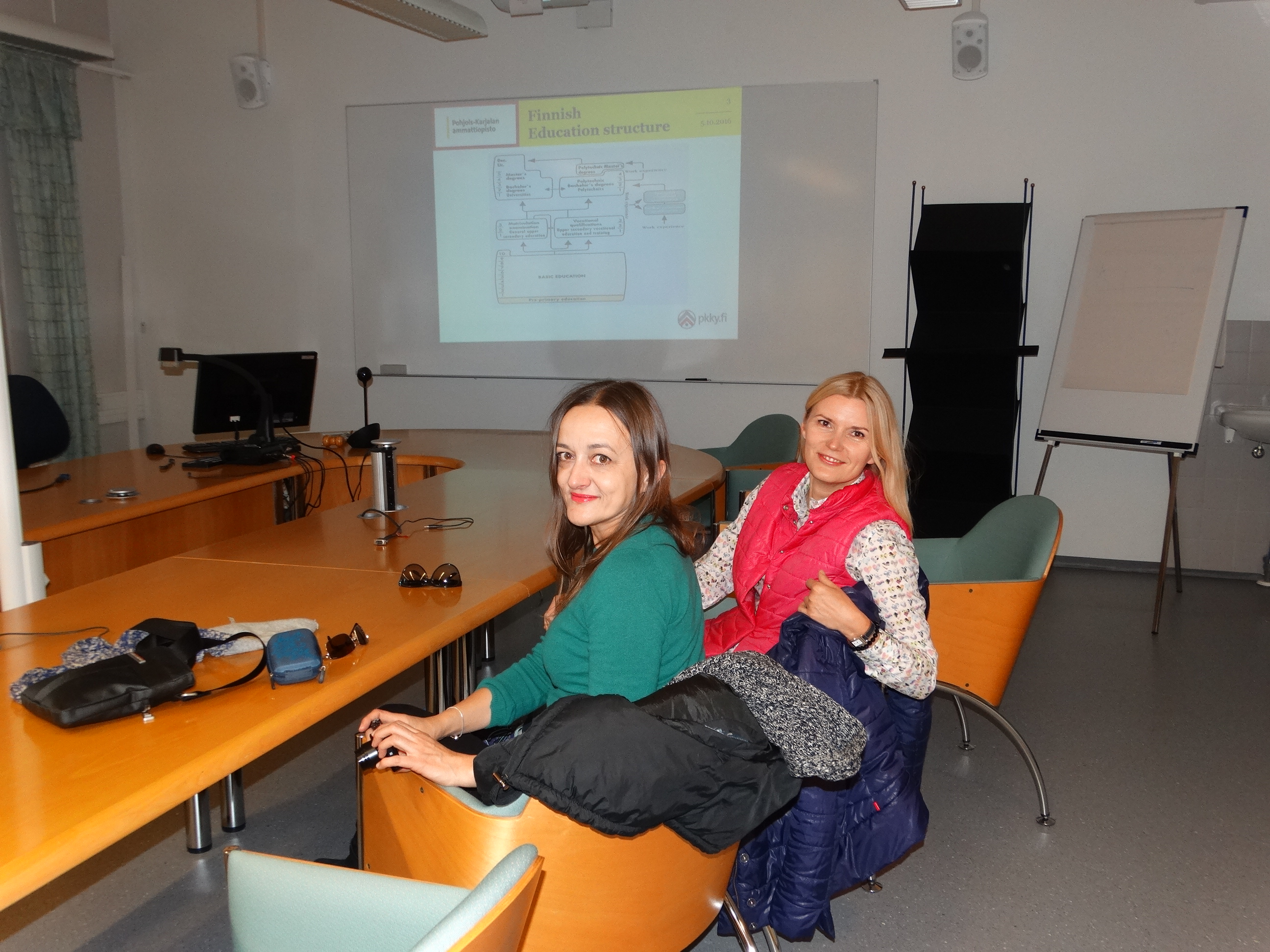
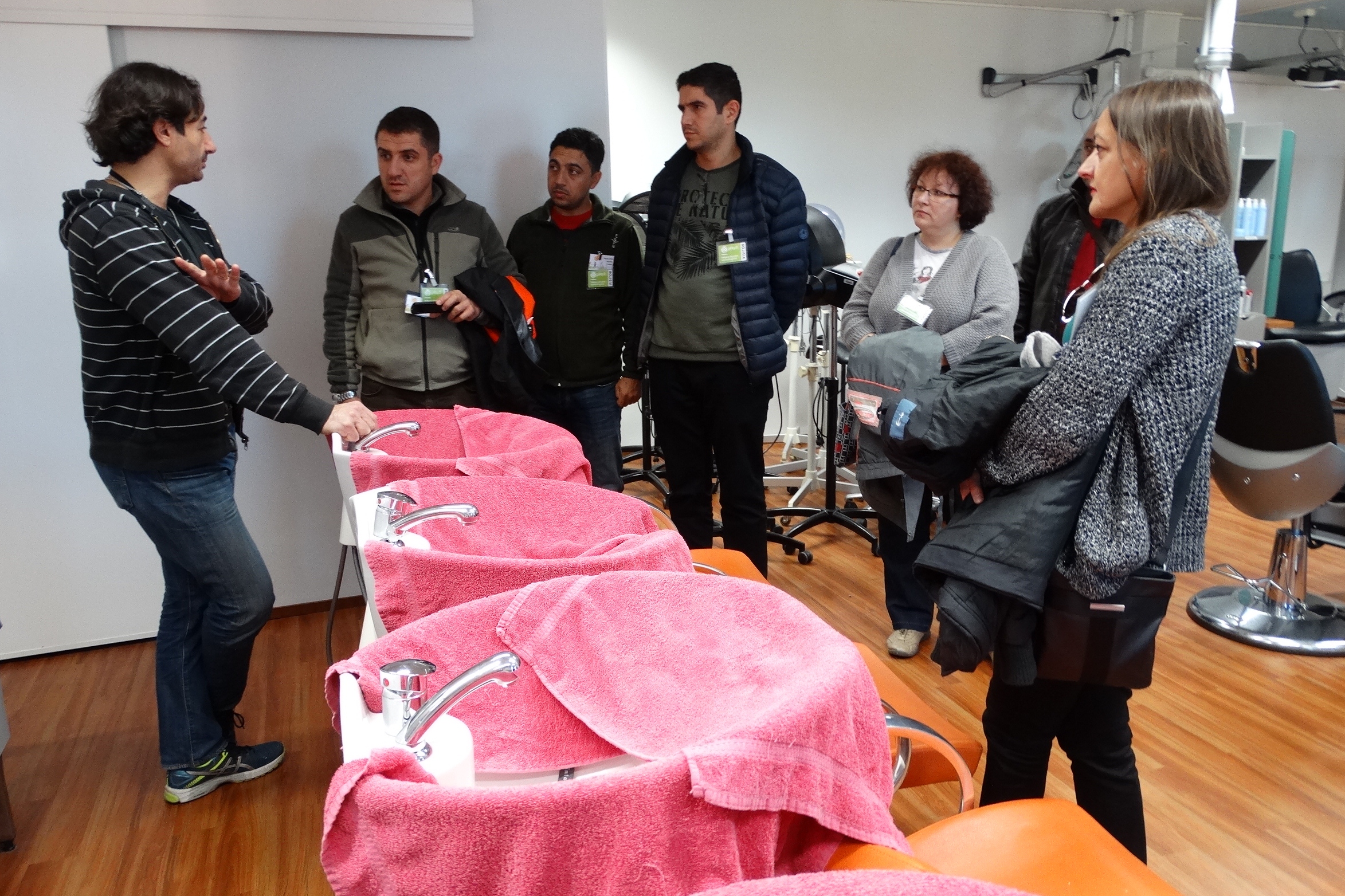
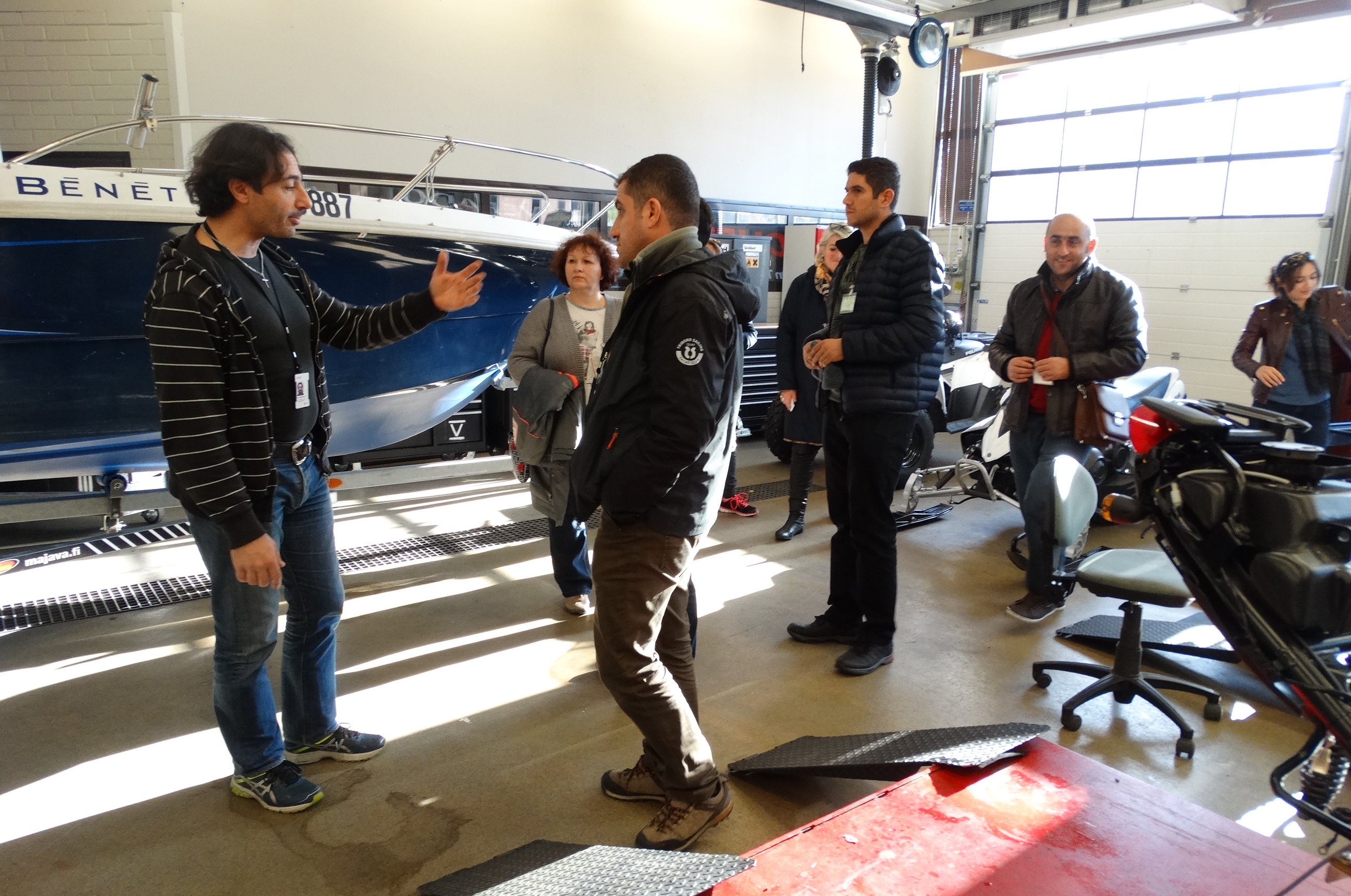
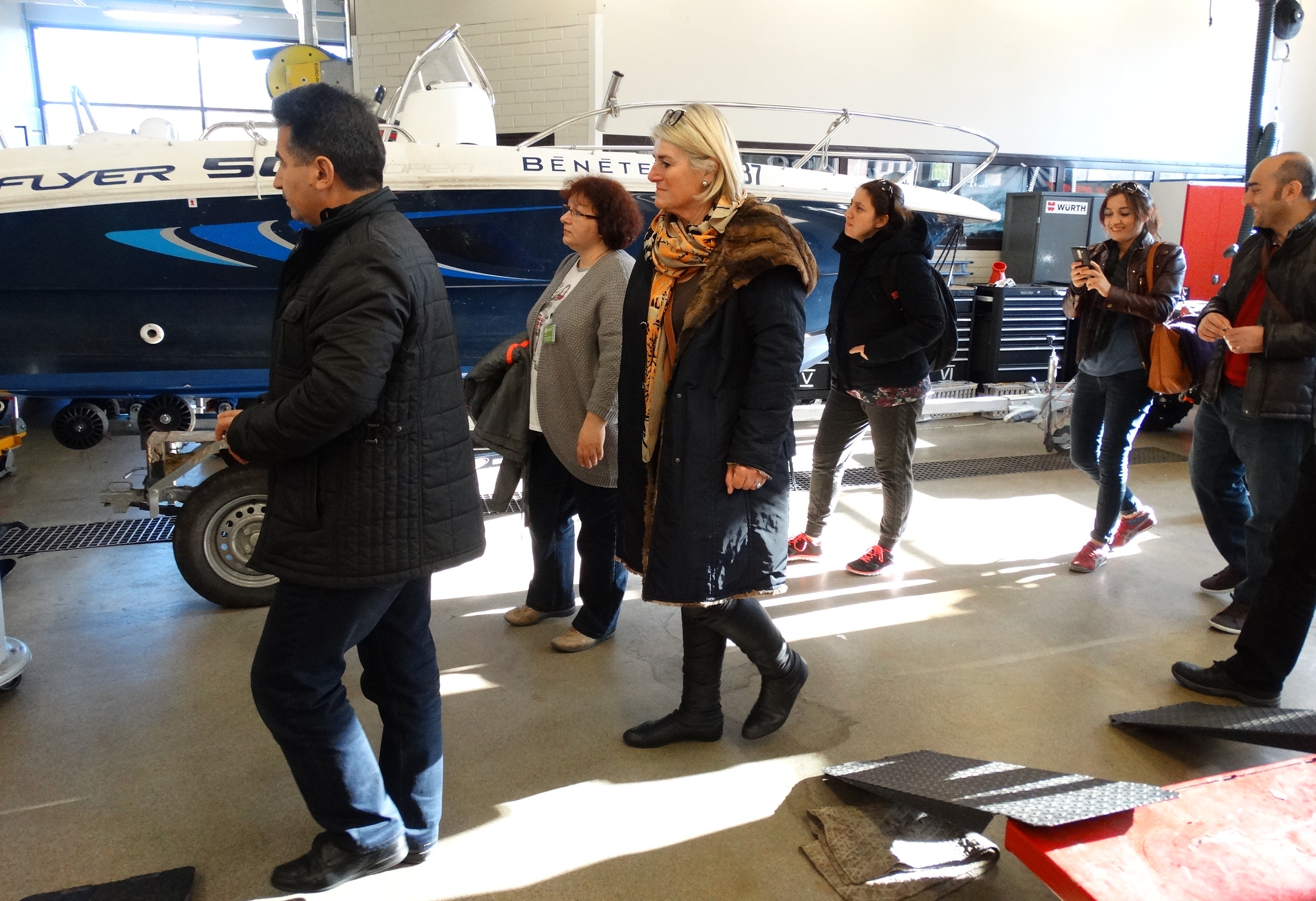
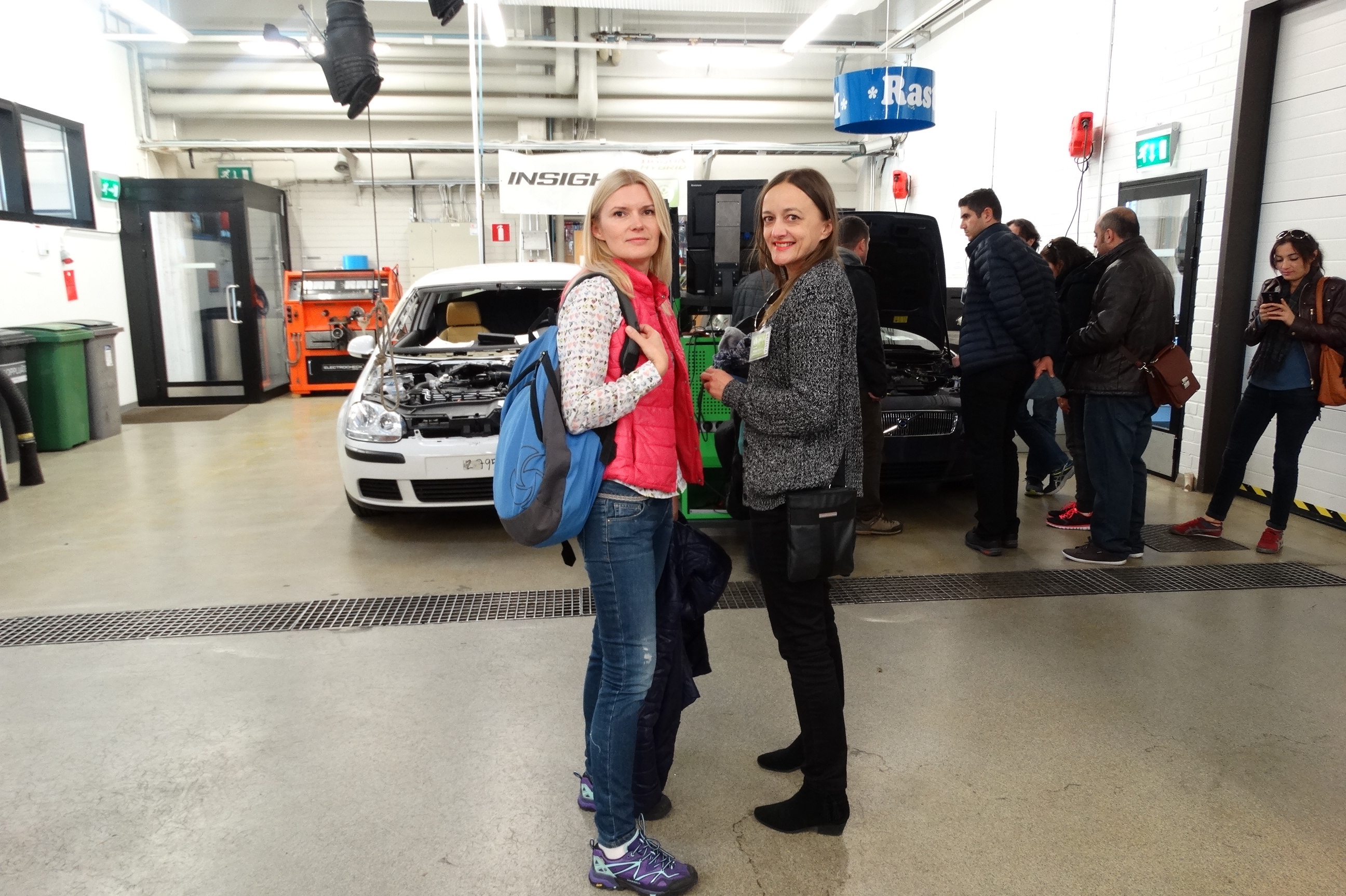
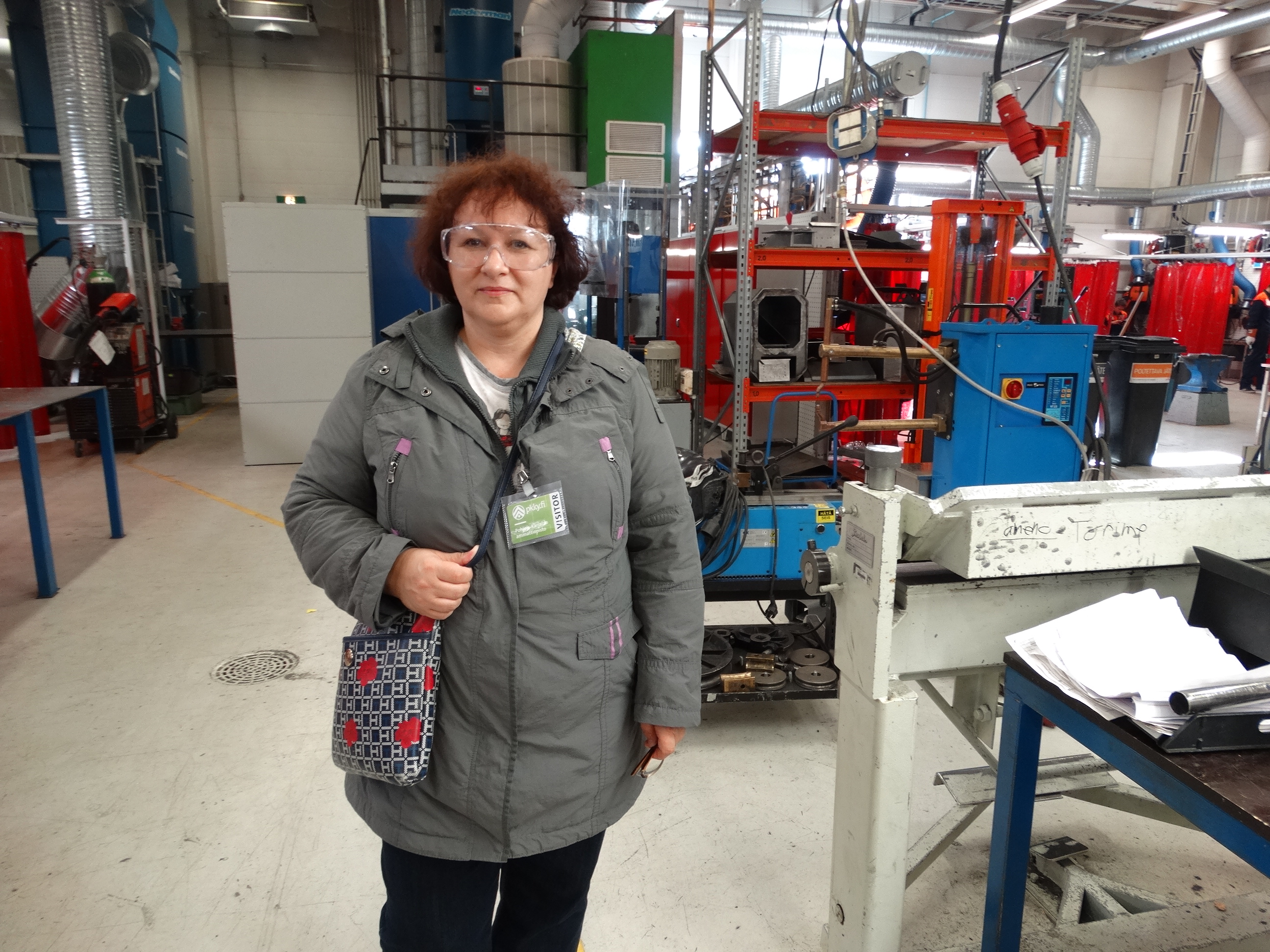
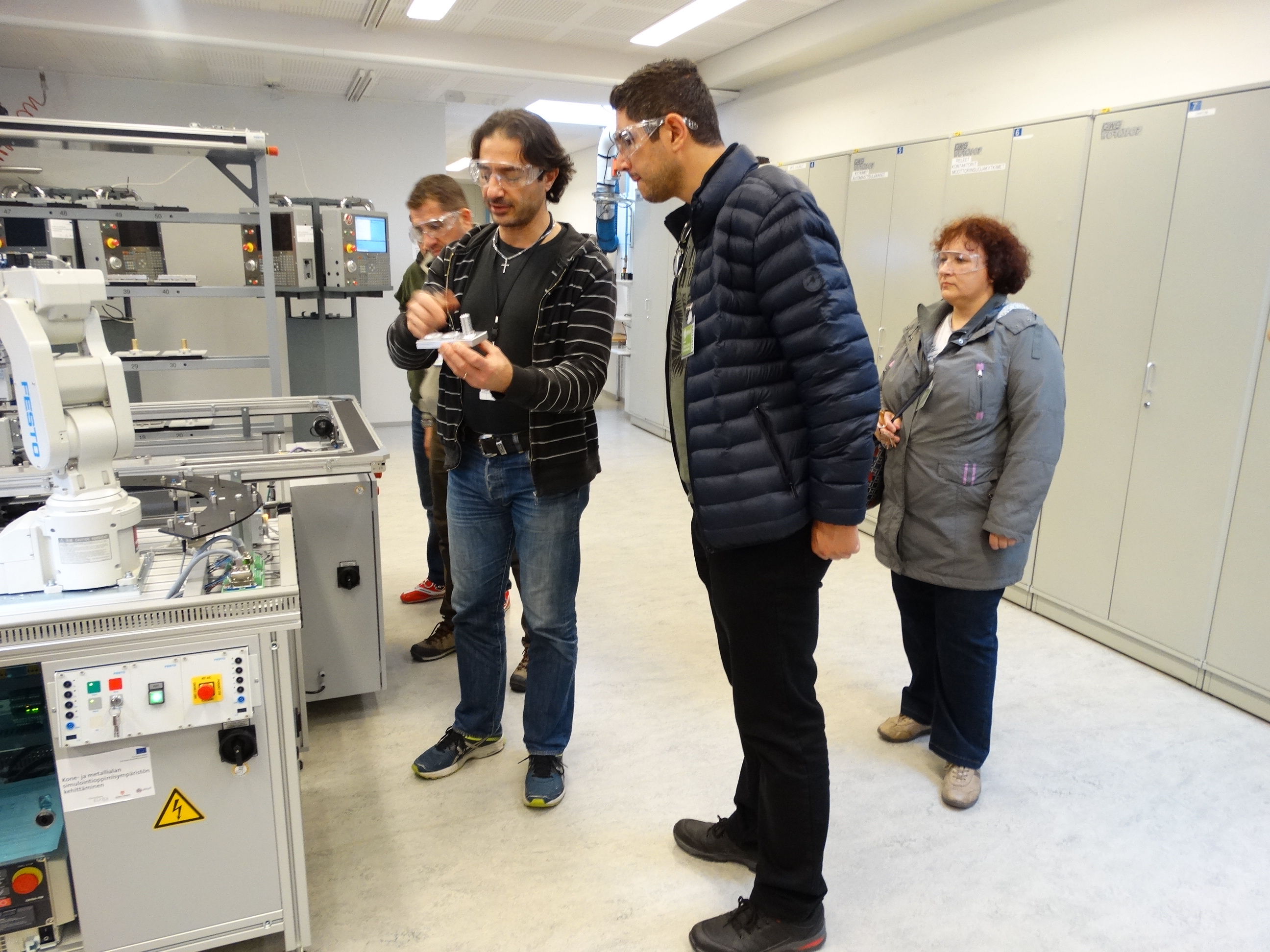

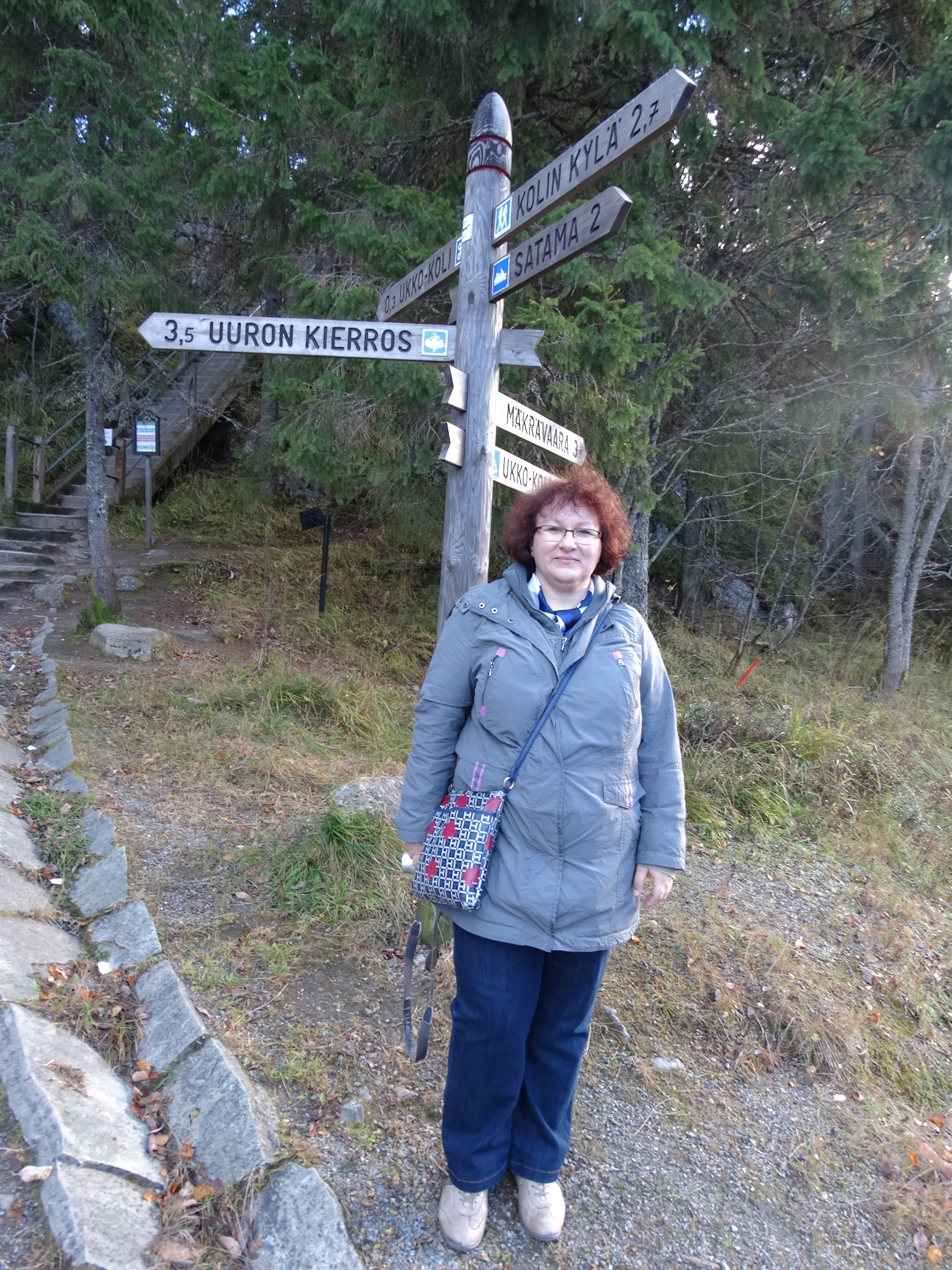
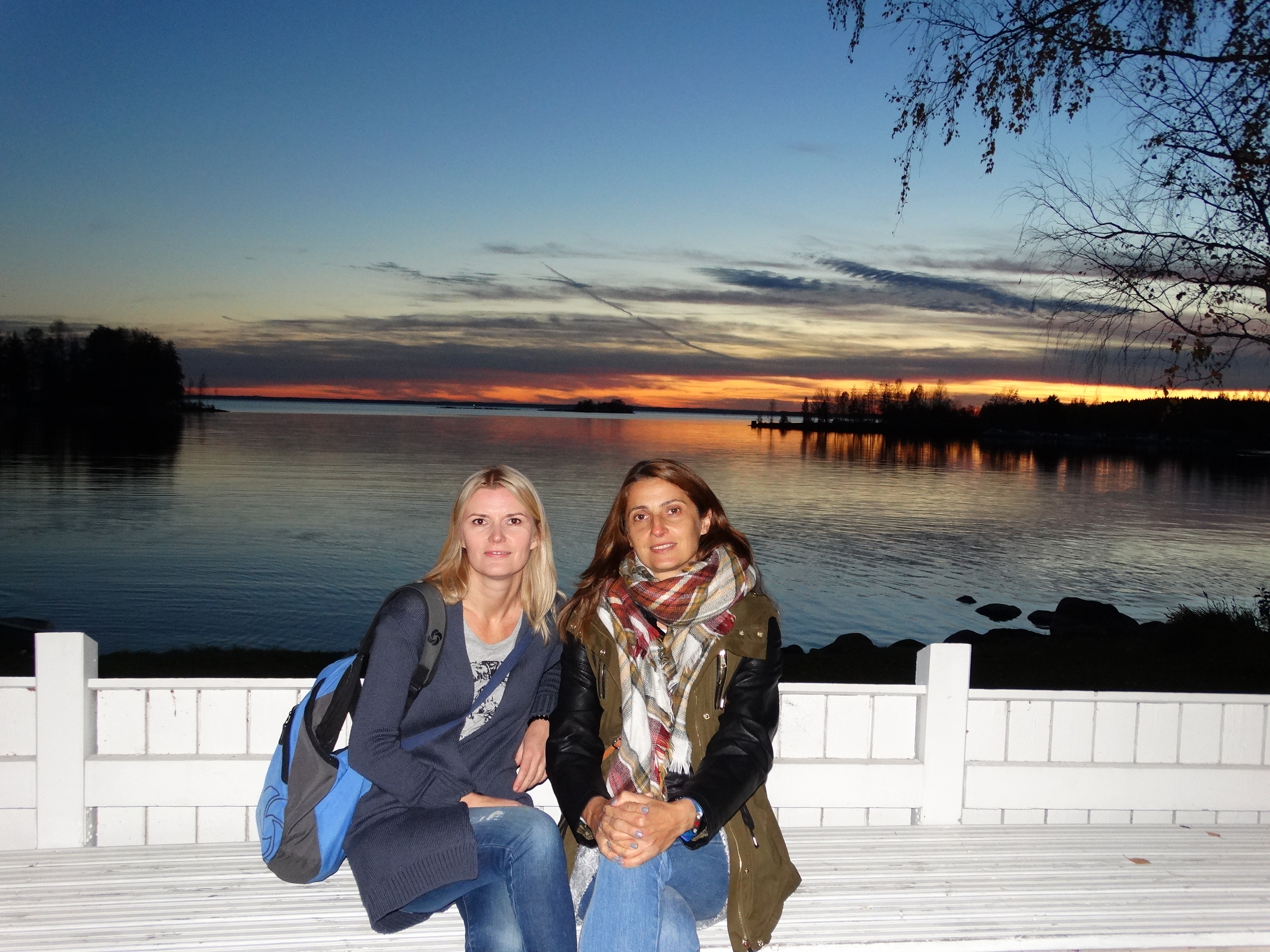
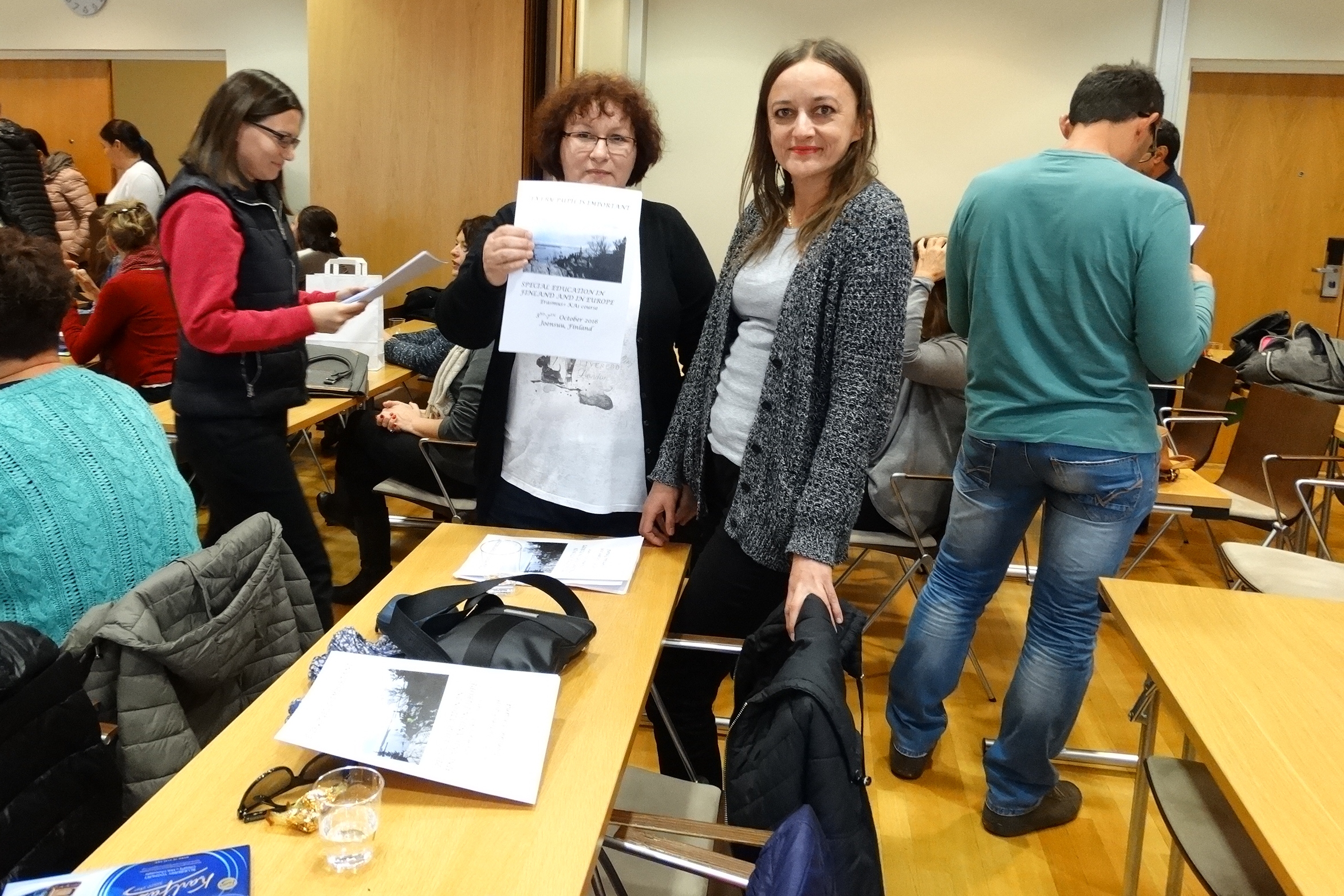

Przygotowanie kulturowe do projektu: Malta

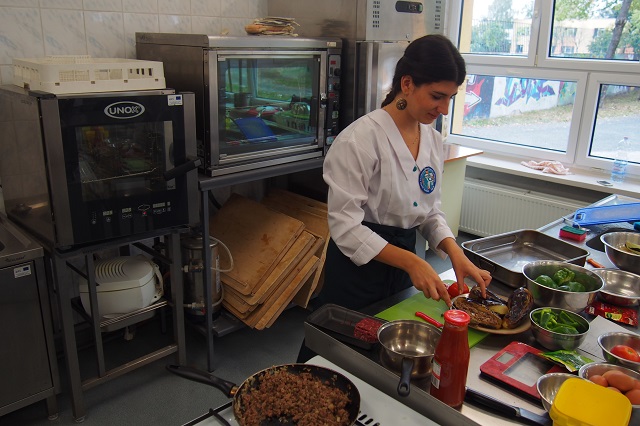
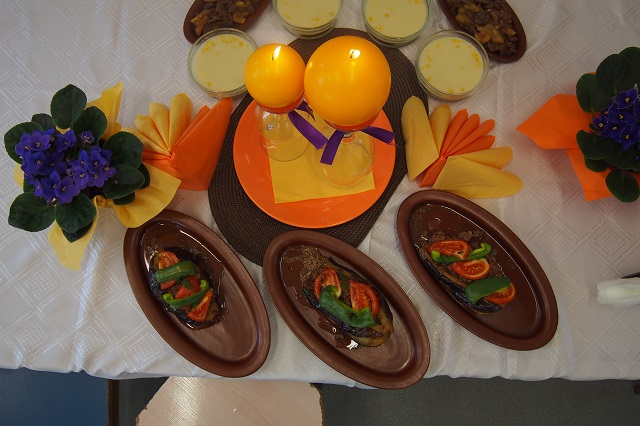
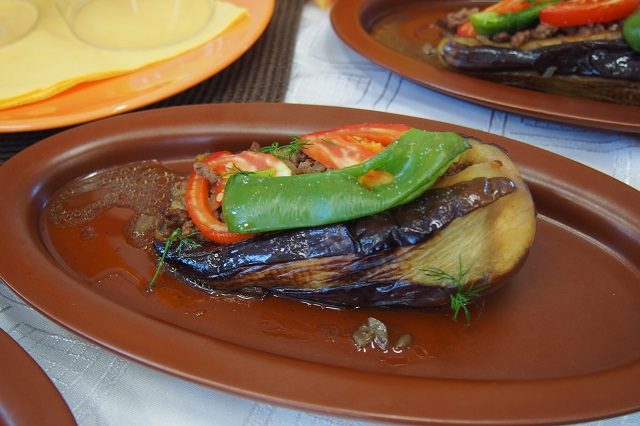
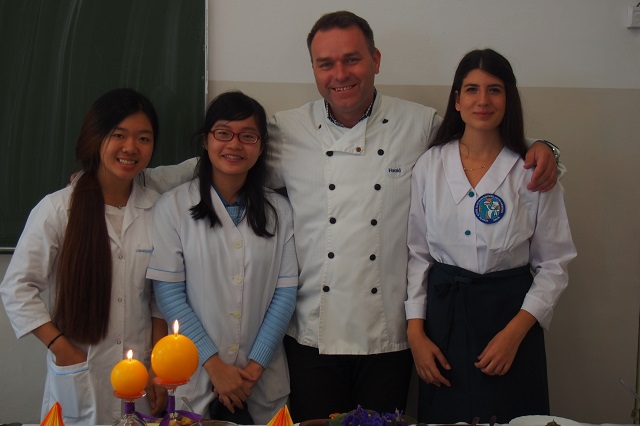
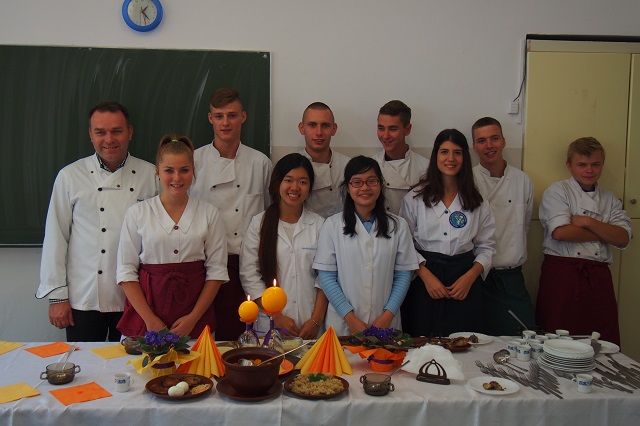


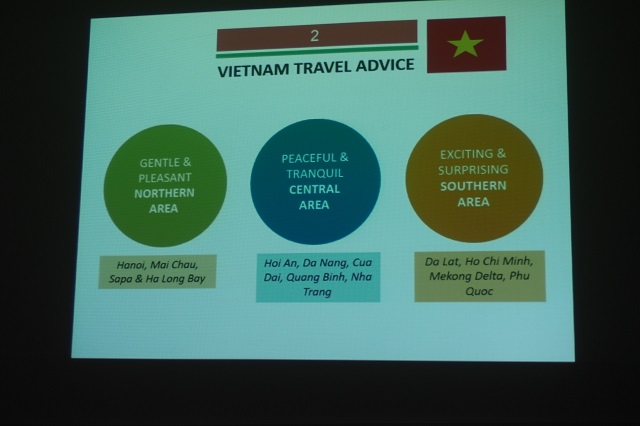
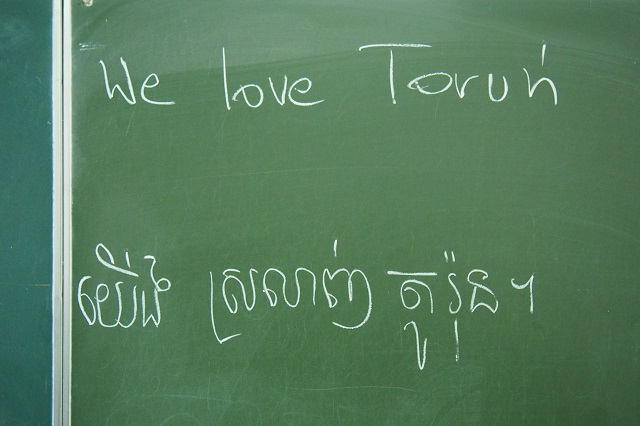
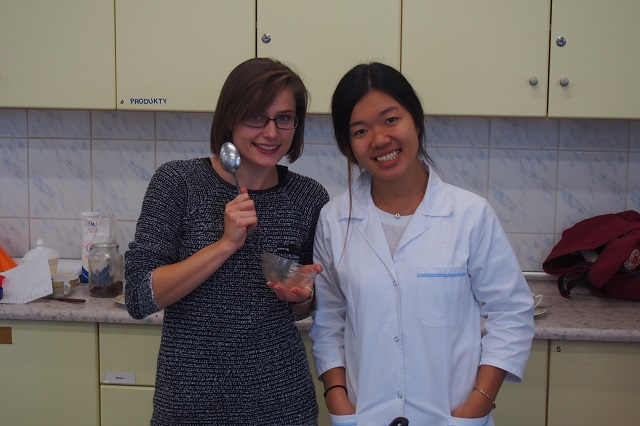
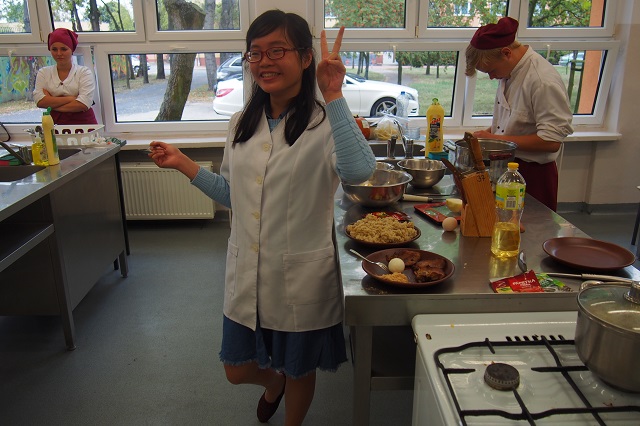
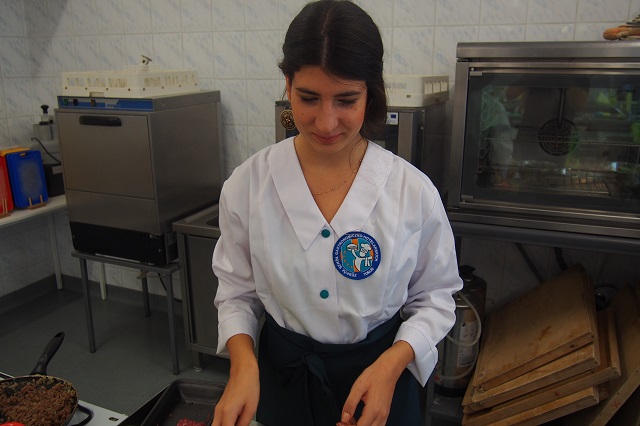
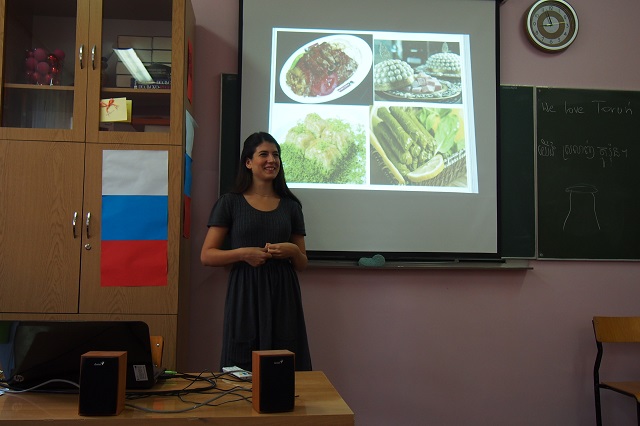
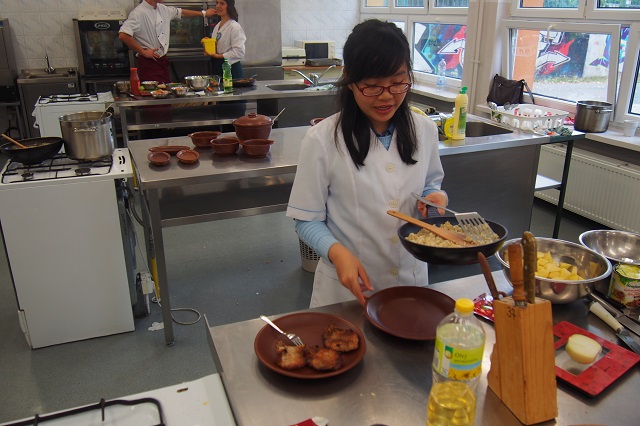
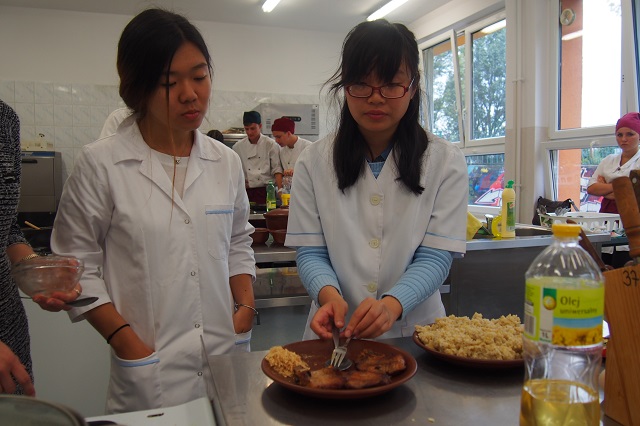
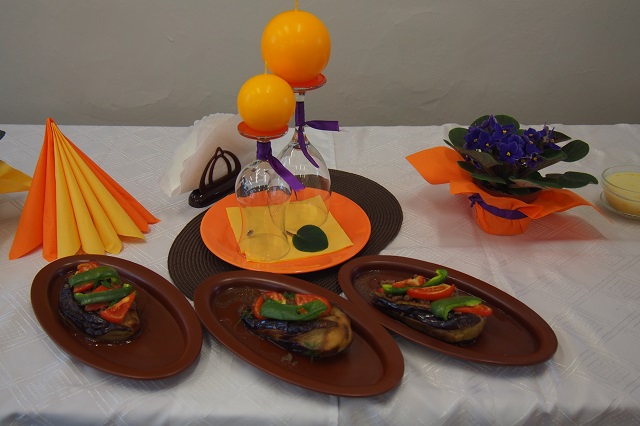
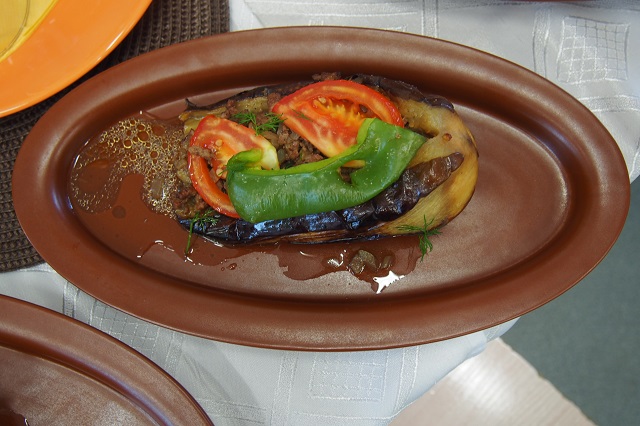
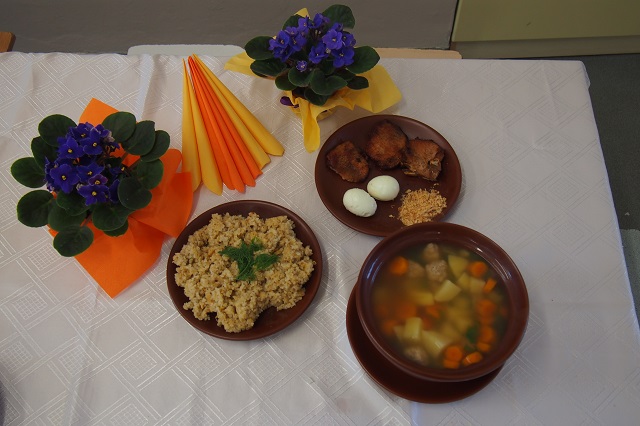
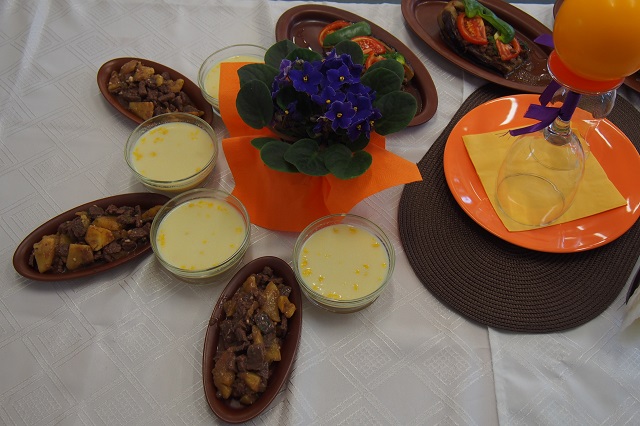
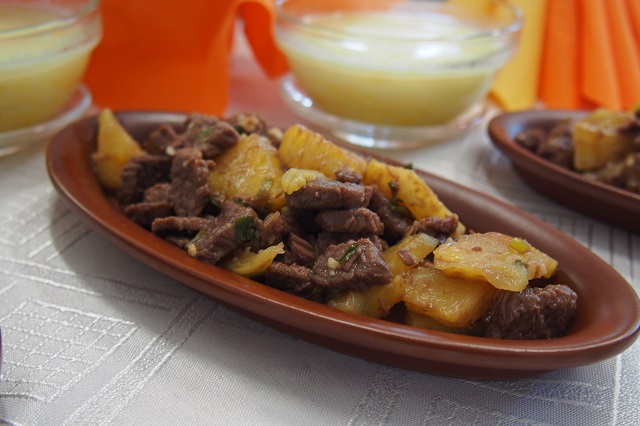
W związku z realizacją projektu 2014-1-PL01-KA101-001662 "Jaka będzie szkoła przyszłości?" ze środków programu Erasmus+, Zespół Szkół Gastronomiczno-Hotelarskich wziął udział w badaniu wpływu projektów mobilności kadry w sektorze edukacji szkolnej.
Badanie było realizowane wspólnie przez Narodowe Agencje Programu Erasmus+ z Polski, Litwy, Finlandii, Estonii oraz Niemiec. Dzięki badaniu możliwa była ocena jakościowa programu Erasmus+, a uzyskane wyniki przyczyniły się również do większego dostosowania wsparcia oferowanego przez Narodową Agencję do potrzeb zarówno beneficjentów, jak i uczestników projektów.
Klauzula informacyjna dotycząca przetwarzania danych osobowych
- Szczegóły
- Opublikowano: wtorek, 31, maj 2016 08:26
Klauzula informacyjna dotycząca przetwarzania danych osobowych
Regulamin funkcjonowania monitoringu wizyjnego w Zespole Szkół Gastronomiczno-Hotelarskich w Toruniu
Informacje dotyczące przetwarzania danych osobowych z monitoringu wizyjnego